

How To Make Wax Melts Smell Stronger: 9 Proven Fixes
You bought wax melts expecting your room to fill with fragrance, but after an hour on the warmer, you can barely smell anything. If you've been searching for how to make wax melts smell stronger, you're not alone, weak scent throw is one of the most common complaints among wax melt users, and it almost always has a fixable cause.
At Small Flame Candle Company, we hand-pour every candle and wax product we sell, so we've spent years testing fragrance loads, wax blends, and pouring techniques to get scent throw right. That hands-on experience taught us exactly where things go wrong, and what to do about it.
This guide covers nine proven fixes that address both how wax melts are made and how they're used at home. Whether you're crafting your own melts or just trying to get more fragrance out of store-bought ones, you'll walk away with clear, actionable steps to boost the scent in any room.
What controls scent throw in wax melts
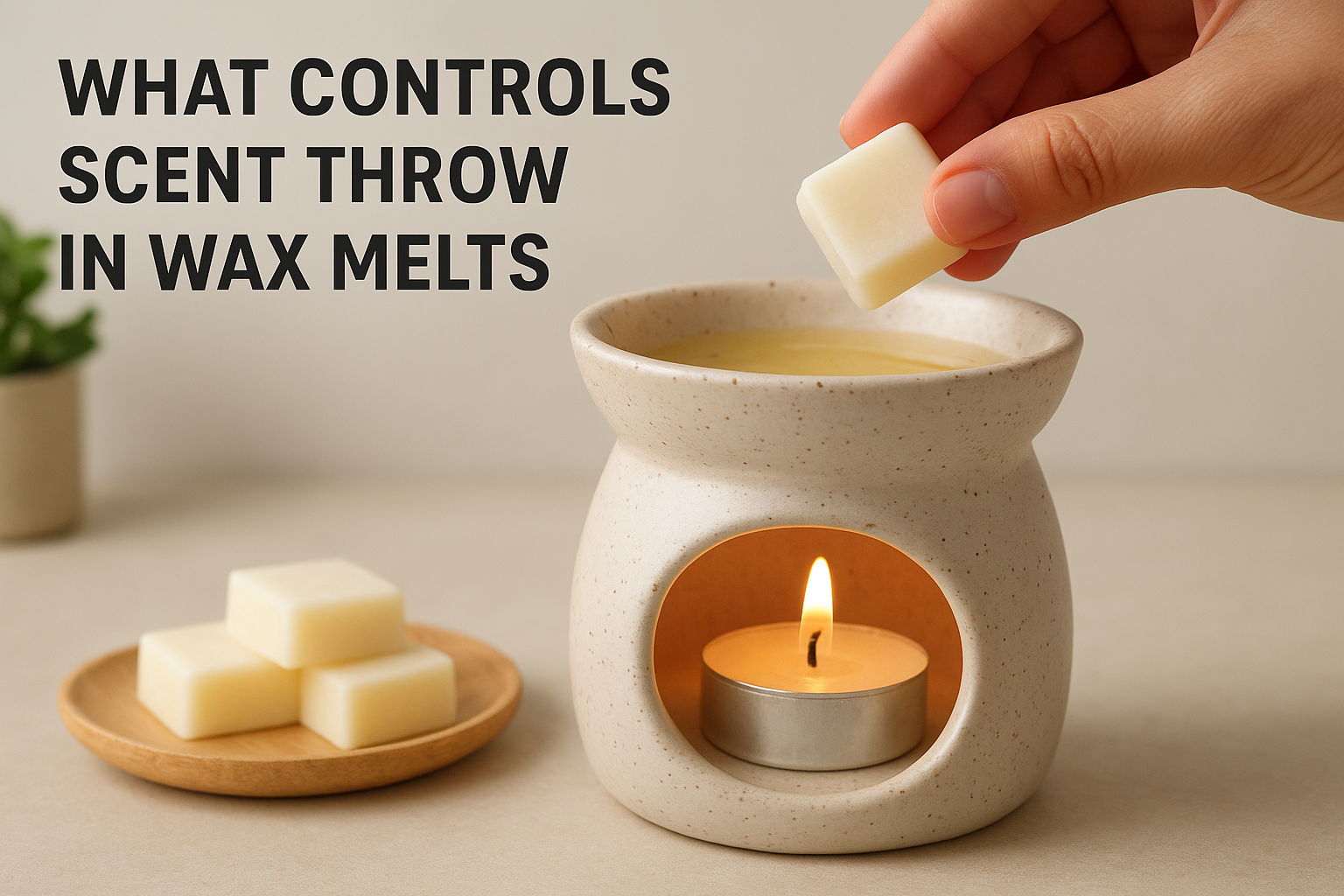
Before you can fix weak scent throw, you need to understand what drives it. Scent throw is how effectively a wax melt releases fragrance into your space, and it depends on several variables working together. Getting even one of them wrong can leave your room smelling like nothing, regardless of how good the product looked on the shelf.
The wax base you use
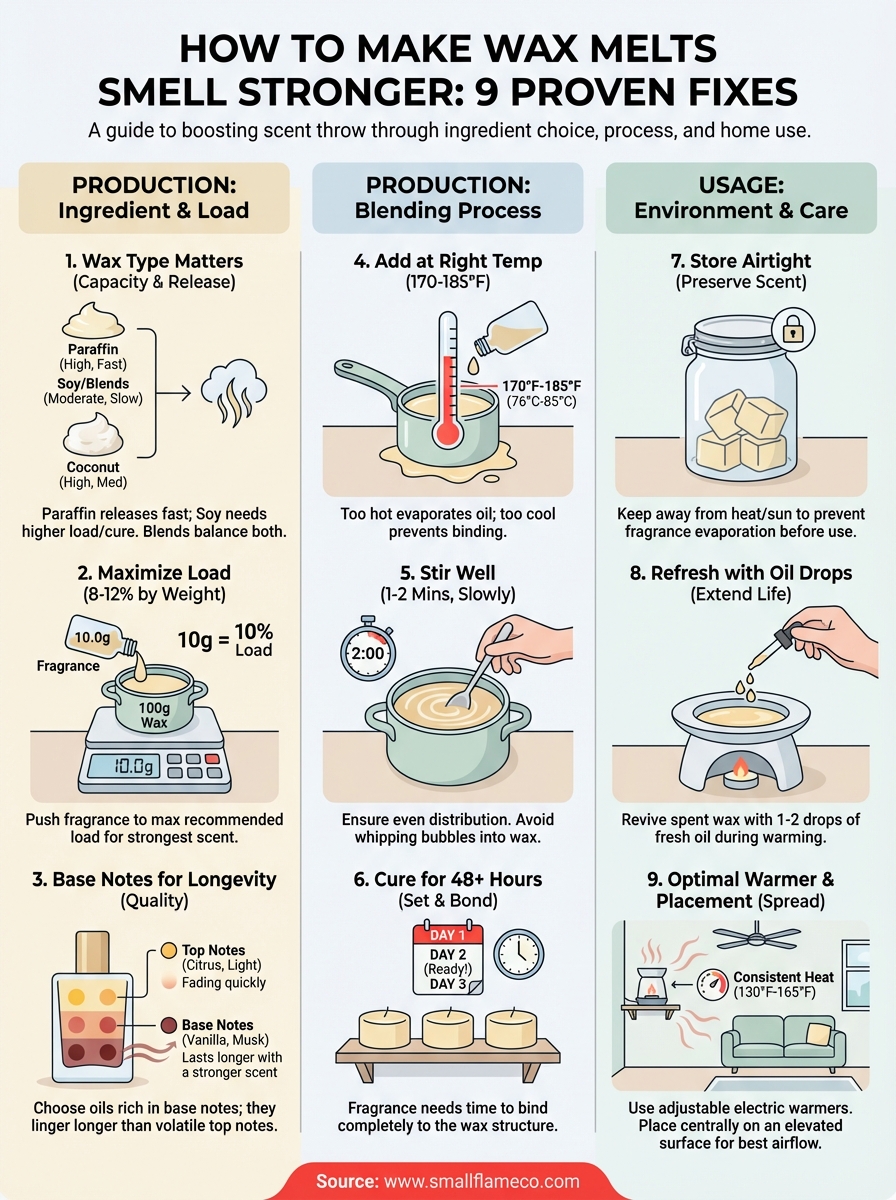
Soy wax and paraffin wax behave very differently when it comes to scent release. Paraffin has a high fragrance binding capacity and releases scent aggressively, which is why many commercial wax melts rely on it. Soy wax runs cooler and holds fragrance well, but it needs a higher fragrance load and more cure time before it throws scent at full strength. Coconut wax and blended waxes sit somewhere in between. Picking the wrong wax for your goal is one of the most common reasons wax melts underperform.
| Wax Type | Scent Throw Strength | Notes |
|---|---|---|
| Paraffin | High | Releases fast, strong hot throw |
| Soy | Moderate | Needs higher fragrance load, longer cure |
| Coconut | Moderate-High | Strong cold throw, blends well |
| Blended | Varies | Depends heavily on blend ratio |
Fragrance oil concentration and quality
Fragrance load is the ratio of fragrance oil to wax by weight, and it's one of the biggest factors when you're learning how to make wax melts smell stronger. Most wax types hold between 6% and 12% fragrance oil, and pushing toward the upper end of that range directly increases output. Beyond concentration, fragrance oil quality matters just as much. Oils heavy in top notes (citrus, light florals) evaporate fast, while base notes (vanilla, musk, sandalwood) linger. A low-quality oil delivers weak results even at a 10% load.
The most common scent throw mistake is using a high fragrance percentage with a low-quality oil. You end up with a strong version of something that smells flat.
Using a scale to measure your fragrance by weight, rather than volume, gives you accurate load percentages every time. Eyeballing it almost always leads to inconsistent results.
Heat level and room conditions
Warmer temperature directly controls how fast fragrance molecules leave the wax and enter the air. A warmer that runs too cool releases fragrance slowly or barely at all, regardless of how well the melt was made. Room size, airflow, and humidity shape how far that scent actually travels once it's released. A small enclosed bathroom will feel intensely scented while the same melt in a large open living room barely registers. Both the production side and the environmental side need to work together to get strong, consistent scent throw.
Fix 1-3: Get your wax and fragrance load right
The foundation of stronger scent throw starts with what's in your melt before it ever hits a warmer. Fixes 1 through 3 focus on the wax you choose and how much fragrance oil you're blending into it. These are the variables you control during production, and getting them right makes every other fix more effective.
Fix 1: Choose a wax with high fragrance capacity
Paraffin wax holds up to 12% fragrance oil and releases it fast once heated, making it the strongest choice for hot throw. Soy or coconut melt blends also work well when you use a formula designed for warmers rather than candles, since melt-specific blends are softer and release fragrance at lower temperatures. Look for packaging that says "melt blend" rather than "container blend" to make sure you're starting with the right base.
Fix 2: Push your fragrance load toward the maximum
Most wax types perform best at 8% to 12% fragrance load by weight. If you're currently sitting at 6%, bump it up and test the difference in the same warmer and room. Use this simple formula to stay accurate:
Fragrance oil (g) = Total wax weight (g) × fragrance load percentage
For 100g of wax at a 10% load, you need 10g of fragrance oil. Knowing how to make wax melts smell stronger often comes down to simply using more oil within your wax's safe binding range.
Going above the maximum fragrance load doesn't increase scent output. It causes oil to pool on the surface instead of binding with the wax.
Fix 3: Weigh every batch on a kitchen scale
Measuring by volume produces inconsistent results because fragrance oils vary in density. Switch to a digital kitchen scale accurate to 0.1 grams for every batch you pour.
Consistent measurements prevent accidental under-loading and let you replicate a strong-performing batch exactly, so you're not guessing why one tray smells better than another.
Fix 4-6: Add fragrance the right way
Getting your wax and fragrance load right sets the foundation, but how you add the fragrance oil into the wax is just as important. Small mistakes during blending, like adding oil at the wrong temperature or skipping a thorough stir, can cut your scent throw significantly even when your formula is correct.
Fix 4: Add fragrance oil at the right temperature
Wax temperature at the time you add fragrance oil directly affects how well it binds. Most fragrance oils should be added when your wax sits between 170°F and 185°F (76°C to 85°C). Too hot and volatile compounds evaporate before the wax sets. Too cool and the oil won't fully incorporate, leaving unbound fragrance that pools on the surface instead of releasing evenly during warming.
A simple candy or probe thermometer removes the guesswork from this step and costs less than five dollars.
Fix 5: Stir slowly and thoroughly
Stirring for a full 1 to 2 minutes after adding fragrance oil ensures even distribution throughout the entire batch. Use a slow, steady motion rather than whipping the mixture, which introduces air bubbles that weaken the finished melt's surface.
Consistent stirring is one of the simplest answers to how to make wax melts smell stronger without changing your formula at all. Fragrance oil that isn't fully incorporated settles unevenly, so some melts in the same pour will smell noticeably weaker than others.
Fix 6: Choose fragrance oils built on base notes
Fragrance oils anchored in base notes like vanilla, amber, and musk release slowly and last longer on a warmer. Oils dominated by top notes such as citrus or light herbs smell strong upfront but fade within 20 to 30 minutes.
When selecting oils, look for products labeled specifically for wax melts, since candle-grade fragrance oils aren't always formulated for the lower heat that warmers produce.
Fix 7-8: Cure, store, and refresh wax
Freshly poured wax melts often smell weaker than expected because the fragrance oil hasn't fully bonded with the wax yet. Curing and storing your melts correctly gives the fragrance time to set and prevents premature scent loss before the melt ever reaches a warmer.
Fix 7: Cure your wax melts before using them
Curing means letting your freshly poured melts rest at room temperature for at least 48 hours before using them. During this window, fragrance oil finishes binding to the wax structure, which directly strengthens hot throw once heated. Soy wax benefits most from this process, often needing 72 to 96 hours to reach full scent output.
Skipping cure time is one of the easiest ways to underestimate how good your wax melts actually are.
Store cured melts in an airtight container away from direct sunlight and heat sources. Proper storage keeps fragrance molecules locked inside the wax instead of slowly off-gassing into the air before you're ready to use them.
Fix 8: Refresh spent wax to extend scent life
When wax on your warmer stops releasing fragrance, the wax itself isn't done. The fragrance oil has simply burned off while the wax remains intact. Add 1 to 2 drops of fresh fragrance oil directly onto the warm liquid wax in your warmer dish to revive the scent without swapping out the whole melt.
Learning how to make wax melts smell stronger also means getting more from what you already have. Replace the wax entirely once it no longer responds to refresh drops, which typically happens after three to four full warming sessions.
Fix 9: Use the right warmer and placement
Even a perfectly made wax melt will underperform if your warmer runs at the wrong temperature or sits in the wrong spot. The warmer and its placement are the final variables in how to make wax melts smell stronger, and both are easy to adjust without spending much money.
Choose a warmer with the right heat output
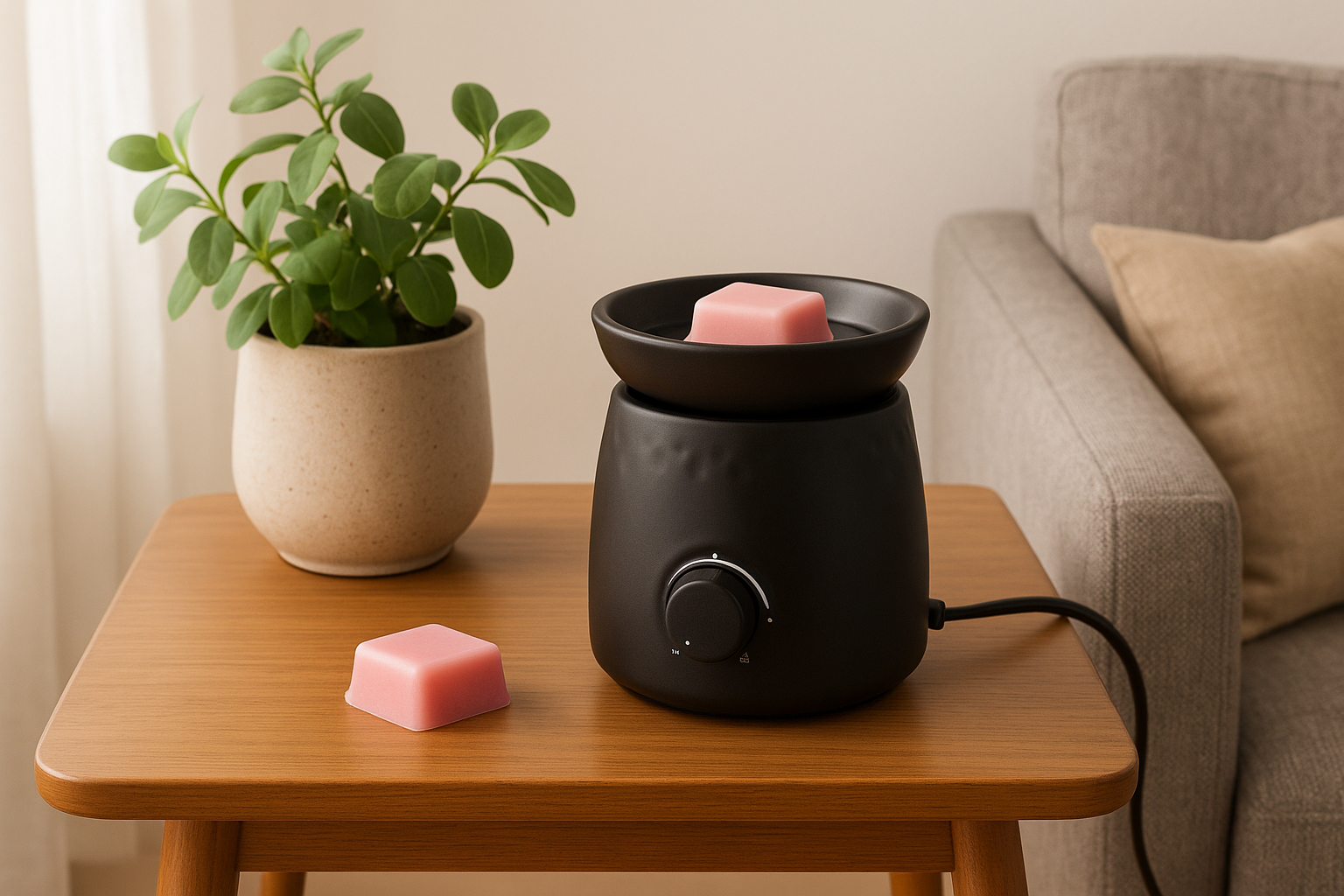
Electric warmers generally outperform tea light warmers because they maintain a consistent dish temperature, typically between 130°F and 165°F. Tea light warmers run hotter depending on the flame size, which burns off fragrance too quickly and shortens your melt's effective life. Look for an electric warmer with an adjustable temperature dial so you can tune the heat to match your wax type.
A warmer that runs too hot is just as problematic as one that runs too cool. High heat evaporates fragrance fast, leaving you with scent that peaks in the first 20 minutes and fades completely before the hour is up.
Position your warmer for maximum scent spread
Placement within the room controls how far the scent travels once it leaves the wax. Set your warmer on a hard, elevated surface such as a side table or shelf, since warm fragrance air rises and disperses more evenly from height than from the floor. Keep the warmer away from open windows, ceiling fans, and HVAC vents that pull air out of the room before the scent has a chance to circulate. In a large room, placing the warmer near the center rather than against a wall gives the fragrance more directions to travel and fills the space more completely.
Quick wrap-up
Knowing how to make wax melts smell stronger comes down to controlling the right variables at every stage, from the wax you choose to where you set your warmer. The nine fixes in this guide cover both production decisions and everyday usage habits, so you have clear options whether you make your own melts or buy them ready to use.
Start with the fixes that are easiest to test: check your fragrance load percentage, cure your melts for at least 48 hours, and move your warmer to a central, elevated spot. Those three changes alone often produce a noticeable difference without any extra cost.
If you want wax melts made with carefully measured fragrance loads and quality ingredients from the start, browse the Small Flame Candle Company collection to find hand-poured options designed to fill your space with real, lasting scent.