

Paraffin Wax Candles Pros and Cons: Safety, Soot, Value
If you've ever stood in a candle aisle wondering what's actually in those jars, you're not alone. The debate around paraffin wax candles pros and cons has been burning for years, with strong opinions on both sides. Some swear by paraffin's unbeatable scent throw and affordability, while others worry about soot, air quality, and petroleum-based ingredients.
At Small Flame Candle Company, we hand-pour every candle we sell, which means we've spent a lot of time working with different wax types and understanding how each one performs. We know that choosing the right candle isn't just about picking a pretty scent, it's about knowing what you're bringing into your home.
This guide breaks down the real benefits and drawbacks of paraffin wax candles, including their burn characteristics, safety considerations, and environmental impact. By the end, you'll have the information you need to decide whether paraffin belongs in your space, or whether a different wax type might serve you better.
Why paraffin wax candles matter
Paraffin wax dominates the candle market for one simple reason: it accounts for roughly 90% of all candles sold in the United States. When you buy a candle at a big-box store, gas station, or even many boutique shops, you're likely bringing home a paraffin-based product. That sheer market presence means understanding what you're actually burning becomes critical for your indoor environment.
Health and household impact
Your home's air quality changes every time you light a candle. Paraffin wax releases compounds into your living space, and if you burn candles regularly (multiple times per week), those cumulative emissions add up faster than you might think. Families with young children, pets, or members who have respiratory sensitivities need to pay especially close attention to what's in their candles.
The frequency of your candle use matters more than the occasional burn when it comes to indoor air exposure.
Beyond health considerations, paraffin wax candles affect your wallet and values. The petroleum-derived nature of paraffin makes it a non-renewable resource, which conflicts with sustainability goals many households are trying to meet. At the same time, paraffin's low production cost keeps candle prices accessible for budget-conscious shoppers. Understanding the full picture of paraffin wax candles pros and cons helps you balance these competing priorities.
Making informed purchasing decisions
You can't make a smart candle choice without knowing what you're comparing. Paraffin wax serves as the baseline standard against which soy, beeswax, and coconut wax are measured. Learning how it performs, what it costs, and where it falls short gives you the reference point you need when evaluating alternatives or deciding whether to stick with what you already know.
Pros: performance and price
Paraffin wax delivers advantages that keep it at the top of the candle market, particularly when you measure scent throw and cost efficiency. These benefits explain why so many candle makers continue choosing this petroleum-based wax despite the ongoing debate around paraffin wax candles pros and cons.
Superior scent throw
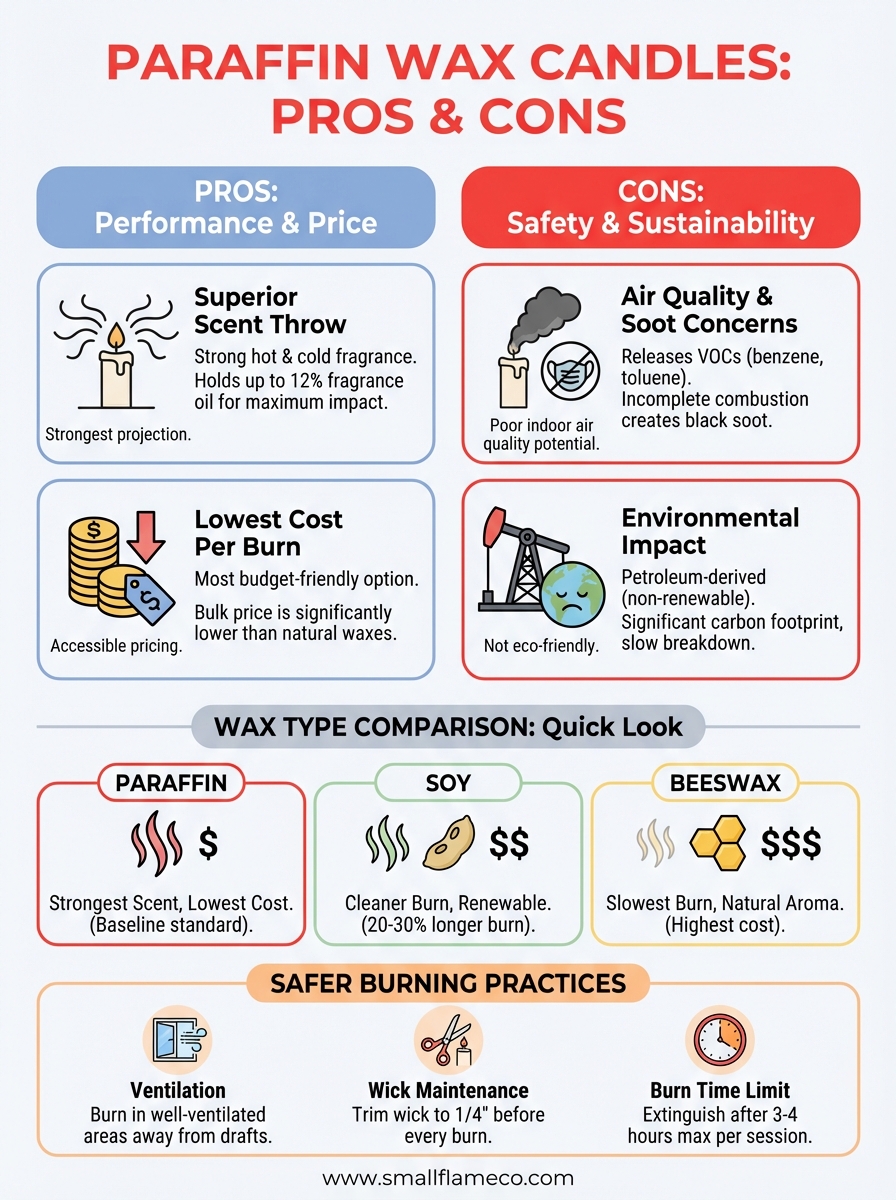
Your candle's scent throw (how far the fragrance travels) reaches its peak with paraffin wax. This wax type holds up to 12% fragrance oil, which exceeds what natural waxes can accommodate without compromising burn quality. When you light a paraffin candle, the molecular structure releases scent more aggressively than soy or beeswax, filling rooms faster.
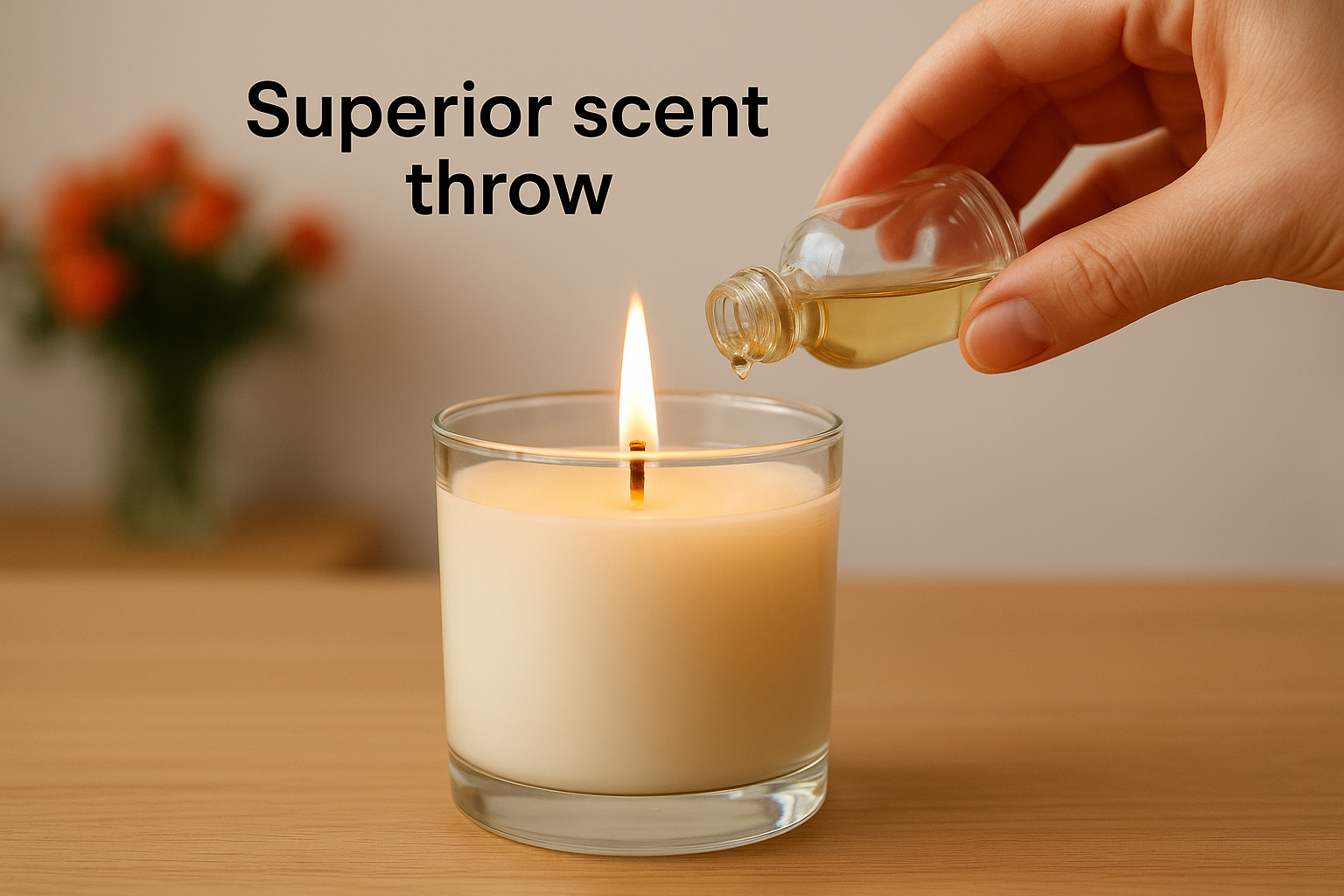
Paraffin wax holds more fragrance and projects it farther than any natural alternative.
Hot throw (scent while burning) from paraffin creates that immediate fragrance impact you notice within minutes. Cold throw (scent before lighting) also stays stronger, which matters when you're deciding which candle to buy in a store with dozens of options.
Lowest cost per burn
Bulk paraffin wax costs roughly $2 to $4 per pound, compared to $6 to $15 per pound for soy or beeswax. That price difference translates directly to your wallet, making paraffin candles the most budget-friendly option on store shelves. You can burn candles regularly without the financial stress that comes with premium wax alternatives.
Cons: indoor air, soot, and sustainability
The drawbacks of paraffin wax become clear when you examine what happens during combustion. While scent throw and affordability create strong advantages, paraffin wax candles pros and cons include legitimate concerns about your indoor environment and the environmental footprint of petroleum-derived products.
Air quality and soot concerns
Burning paraffin releases volatile organic compounds (VOCs) into your home, including trace amounts of benzene and toluene. These compounds build up over time if you burn candles in poorly ventilated spaces, particularly small rooms like bathrooms or bedrooms. You'll also notice black soot accumulating on walls, ceilings, and candle jars when you burn paraffin candles regularly.
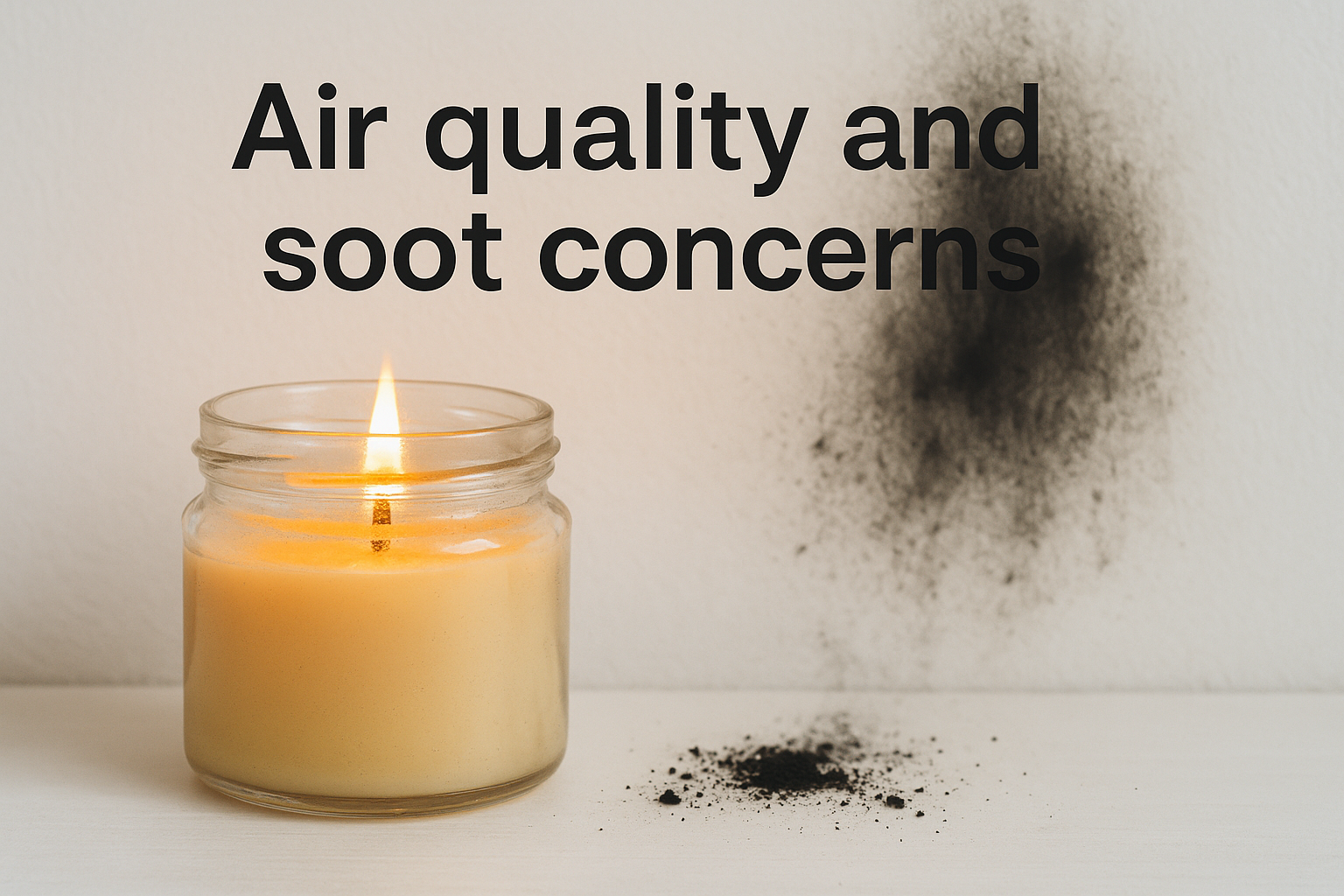
Soot from paraffin candles creates both aesthetic problems and potential respiratory irritants.
Your indoor air quality drops measurably when incomplete combustion occurs, which happens more often with paraffin than natural waxes. Trimming wicks helps, but you can't eliminate the issue entirely with petroleum-based candles.
Environmental impact
Paraffin wax comes from petroleum refinement, making it a non-renewable resource with a significant carbon footprint. Every paraffin candle you buy contributes to fossil fuel demand, which conflicts with efforts to reduce environmental impact. Biodegradability also becomes a problem since paraffin breaks down slowly compared to plant-based alternatives.
Paraffin vs soy and beeswax
Choosing between wax types means weighing the paraffin wax candles pros and cons against what soy and beeswax offer. Each wax performs differently in your home, with trade-offs spanning scent strength, burn time, cost, and environmental responsibility. Understanding these differences helps you select the right match for your specific priorities.
Scent and burn performance
Paraffin outperforms both alternatives in fragrance delivery. You'll notice stronger hot throw from paraffin compared to soy's moderate scent projection or beeswax's subtle natural honey aroma. Burn time falls in the middle: soy candles last 20-30% longer than paraffin, while beeswax burns slowest of all three types.
Soy wax produces less soot than paraffin but can't match its scent throw intensity.
Your candle's appearance also changes by wax type. Paraffin creates smooth, glossy finishes, soy develops natural frosting patterns, and beeswax shows a matte golden color that appeals to minimalist aesthetics.
Cost versus environmental impact
Budget-conscious shoppers favor paraffin's $8-12 price range for standard jars, while soy candles typically run $15-20 and beeswax reaches $25-35. Environmental responsibility shifts this calculation: soy comes from renewable soybeans, beeswax supports bee populations, and paraffin relies on petroleum extraction that contributes to carbon emissions.
How to use paraffin candles more safely
Understanding the paraffin wax candles pros and cons matters less than knowing how to reduce risks when you choose to burn them. You control several factors that directly impact the air quality and soot production in your home, making paraffin candles safer without sacrificing the performance benefits that drew you to them in the first place.
Ventilation and placement
Your room's air circulation determines how quickly combustion byproducts disperse or concentrate. Burn paraffin candles in well-ventilated spaces where fresh air enters regularly, avoiding small enclosed bathrooms or bedrooms with closed doors. Position candles away from drafts and vents that create uneven burning and increased soot production.
Proper ventilation prevents VOC buildup and maintains healthier indoor air when burning paraffin.
Windows cracked just an inch provide enough air exchange to remove accumulated compounds without extinguishing your flame. Central areas like living rooms with multiple doorways offer better circulation than corner spaces with limited airflow.
Wick maintenance and burn practices
Trimming your wick to one-quarter inch before each burn reduces mushrooming and soot formation significantly. Long wicks create larger flames that produce more incomplete combustion, which increases both black residue and air quality concerns. Limit burn sessions to three to four hours maximum, then extinguish and let the wax cool completely before relighting.
Next steps for choosing a candle
Your candle choice depends on weighing the paraffin wax candles pros and cons against your specific priorities. If strong scent throw and low prices matter most, paraffin delivers unmatched performance at budget-friendly costs. If indoor air quality and sustainability rank higher, soy or beeswax alternatives serve you better despite their higher price points and gentler fragrance projection.
Start by evaluating your burning habits and household needs. Occasional candle users face minimal risk from paraffin emissions, while daily burners should prioritize cleaner-burning natural waxes. Consider your ventilation capabilities too: well-circulated spaces handle paraffin byproducts more effectively than small enclosed rooms where compounds concentrate quickly.
Testing matters more than research alone. At Small Flame Candle Company, we hand-pour candles designed to give you both quality craftsmanship and transparency about what you're burning. Browse our collection to find fragrances that match your home and values, with clear information about every ingredient we use.