

6 Best Wax For Container Candles (Soy, Paraffin, Blends)
Choosing the best wax for container candles can make or break your DIY project. The wrong wax leads to tunneling, weak scent throw, and uneven burns, the right one gives you a clean, fragrant candle that actually performs. With so many options on the shelf (soy, paraffin, coconut, and various blends), it's easy to get stuck comparing labels without knowing what actually matters.
At Small Flame Candle Company, we hand-pour every candle we sell. That means we've tested wax after wax to dial in burn quality, scent throw, and appearance across our entire collection, from nostalgic bakery scents to our more unconventional fragrance profiles like Dr Pepper. We're not guessing here. These recommendations come from real production experience, not spec sheets. We know how each wax type behaves when it hits a jar, takes fragrance oil, and meets a flame, because we work with these materials daily.
In this guide, we'll break down six top wax options for container candles, covering their strengths, drawbacks, and ideal use cases. Whether you're pouring your first candle or your hundredth, this list will help you pick the right wax for the results you're after, strong scent, clean burn, and a professional finish.
1. Golden Brands 464 soy wax
Golden Brands 464 is one of the most widely used soy waxes in container candle making, and for good reason. It's a 100% soy wax specifically engineered for containers, which means it bonds well to glass and holds fragrance oil without requiring a long list of additives. If you're new to candle making or want a dependable baseline wax, GB 464 belongs near the top of your list.
Best for
GB 464 works best for beginner to intermediate candle makers who want a clean-burning natural wax without a steep learning curve. It suits single-pour applications in glass jars, votives, and tins particularly well. If you're producing candles with a "natural soy" label for gifting or retail, this wax fits that positioning without compromise.
What you can expect in burn and scent throw
Expect a smooth, creamy surface finish and a solid hot throw when you pair this wax with quality fragrance oils at the right load. Cold throw is typically mild compared to paraffin blends. Most makers find the 6-9% fragrance load range hits the sweet spot, though GB 464 can technically hold up to 12%.
Most scent throw complaints with GB 464 come down to wick size or fragrance quality, not the wax itself.
Common issues and how to avoid them
Frosting and wet spots are the two most common problems you'll run into with GB 464. Frosting is a natural soy characteristic that shows up as a white film on the surface and won't affect burn quality. Wet spots form when wax pulls away from the glass during cooling. Pre-warming your jars and pouring at a slightly lower temperature both reduce these issues significantly.
Pour temps, additives, and cure time basics
Pour GB 464 between 130-140°F after adding your fragrance oil around 185°F. The wax performs well without additives. Give your finished candles a cure time of 48-72 hours minimum before your first burn to get the best possible scent throw.
Typical price range in the US
Expect to pay roughly $20-$35 for a 10-pound bag of GB 464 through major candle supply retailers. Buying in larger quantities, such as 50-pound cases, drops the per-pound cost noticeably if you're producing at any real volume.
2. IGI 6006 soy paraffin blend
IGI 6006 is a soy and paraffin blend that splits the difference between natural and traditional wax performance. It gives you better scent throw than straight soy while still letting you market your candles as soy-blended, which matters if you're selling to buyers who care about ingredients.
Best for
IGI 6006 suits intermediate makers who want stronger hot throw without going full paraffin. It also works well for anyone making jar candles in a retail or gifting context where a smooth, consistent finish matters as much as scent performance.
What you can expect in burn and scent throw
This blend delivers noticeably stronger hot throw than GB 464 straight out of the gate. The paraffin component carries fragrance oil more efficiently, so scent fills a room faster during a burn.
If you've been disappointed by weak throw from a pure soy wax, switching to IGI 6006 is often the fix.
Common issues and how to avoid them
You may see slight sinkholes or surface cracking during cooling since this blend behaves differently than pure soy. A second top-off pour at a slightly cooler temperature resolves most surface imperfections before the candle fully sets.
Pour temps, additives, and cure time basics
Add your fragrance oil around 185°F and pour between 150-160°F. No additives are required. Allow a 48-hour cure minimum before burning for best scent release.
Typical price range in the US
IGI 6006 typically runs $25-$40 for a 10-pound block, depending on your supplier and order size.
3. Coconut apricot wax blend
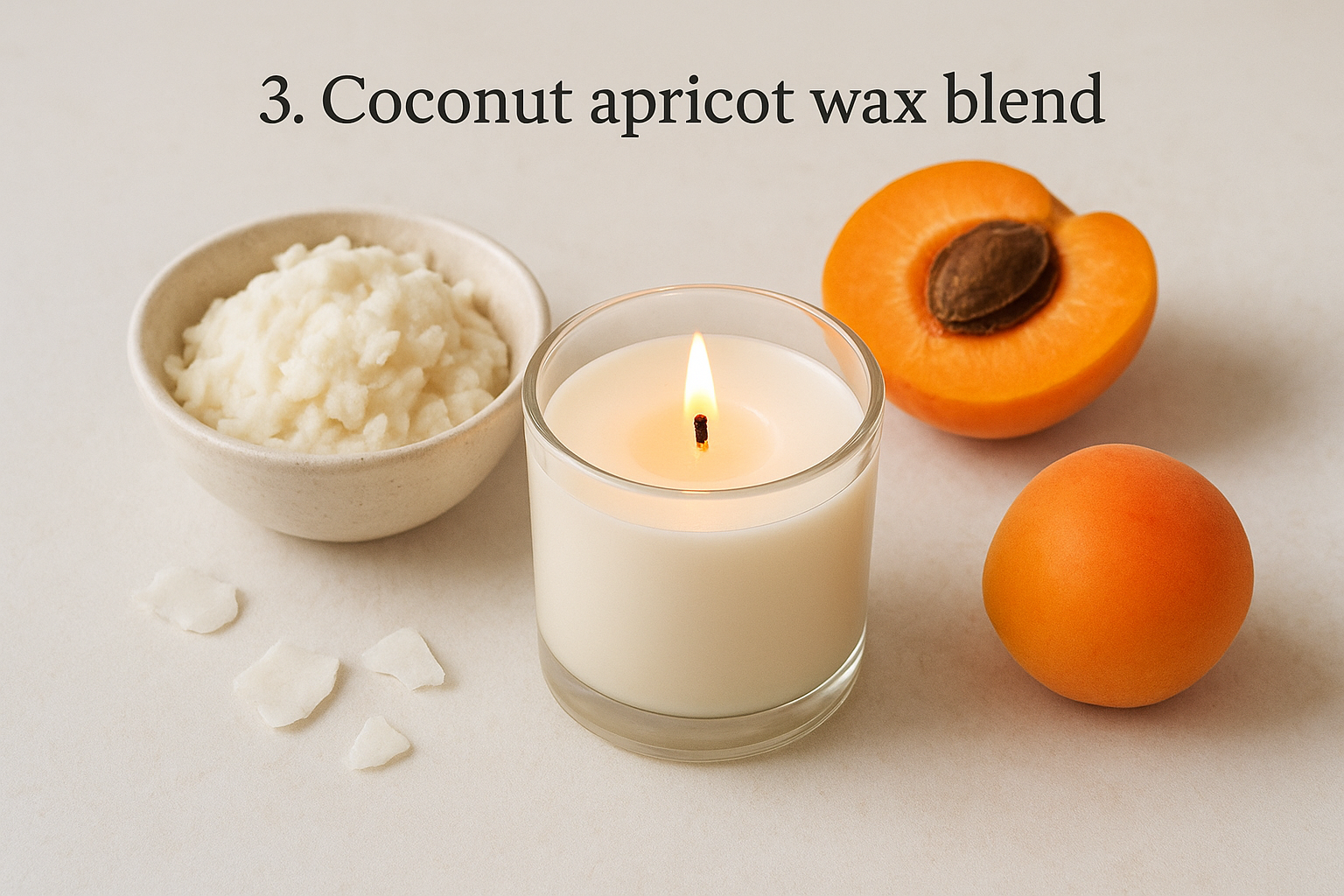
Coconut apricot wax is a premium natural blend that has gained serious traction among candle makers who want a luxurious finish without paraffin. It combines coconut wax and apricot wax into a soft, creamy mixture that pours cleanly and holds fragrance exceptionally well. This blend sits at the higher end of the natural wax category in both performance and price.
Best for
This wax suits experienced makers who want a high-end, skin-safe product and are willing to pay more for it. It's an excellent choice for gift-ready or retail candles where appearance and natural ingredients matter to your buyers.
What you can expect in burn and scent throw
Coconut apricot blend delivers a smooth, glossy surface finish and a strong hot throw that competes with paraffin-based options. The fragrance load capacity typically runs 10-12%, giving you room to build a rich scent profile without overloading the wax.
This blend is one of the few natural waxes that consistently rivals paraffin blends on scent throw, which makes it stand out among the best wax for container candles options.
Common issues and how to avoid them
The biggest challenge is soft wax consistency, which makes finished candles prone to denting and fingerprints. Keeping your pour environment cool and stable during setup reduces surface damage significantly.
Pour temps, additives, and cure time basics
Add your fragrance oil around 180°F and pour between 120-135°F. No additives are required. Plan for a cure time of 3-5 days to get the fullest scent throw possible.
Typical price range in the US
Coconut apricot blend typically costs $35-$55 for a 10-pound bag, making it the most expensive natural option on this list by a noticeable margin.
4. IGI 4627 paraffin comfort blend
IGI 4627 is a straight paraffin wax formulated specifically for container use. It sits in a category of its own compared to the natural and blended options on this list, delivering reliable, repeatable results that professional candle makers have depended on for decades.
Best for
IGI 4627 works best for makers who prioritize scent performance above all else. If your goal is a candle that throws fragrance hard and burns consistently without a lot of troubleshooting, this wax gets you there faster than most soy options will.
What you can expect in burn and scent throw
Paraffin carries fragrance oil more efficiently than any natural wax, and IGI 4627 is no exception. You'll get strong cold and hot throw with fragrance loads in the 6-9% range, often outperforming soy blends at the same load level.
If scent throw is the deciding factor in picking the best wax for container candles, paraffin-based options like IGI 4627 set the benchmark every other wax gets measured against.
Common issues and how to avoid them
Soot and mushrooming are the main concerns with paraffin. Both issues are largely wick-driven, so sizing your wick correctly for your container diameter makes a significant difference in finished candle quality.
Pour temps, additives, and cure time basics
Add your fragrance oil around 185°F and pour between 150-165°F. A 24-48 hour cure is usually sufficient before burning.
Typical price range in the US
IGI 4627 typically runs $20-$30 for a 10-pound block, making it one of the more affordable options on this list.
5. Golden Brands 444 soy wax
Golden Brands 444 is the firmer sibling to GB 464 and one of the more underrated picks in the best wax for container candles category. Its higher melt point makes it better suited for warmer climates or situations where finished candles need to hold their shape during shipping or retail display.
Best for
GB 444 works best for makers who need a container soy wax that resists warping in warm storage or shipping conditions. It's also a strong choice if you want to add structural firmness to your container candles while keeping a natural soy label.
What you can expect in burn and scent throw
Scent throw from GB 444 is comparable to GB 464 but requires careful wick sizing since the firmer wax changes how the melt pool develops. Expect a clean, even burn once you dial in the right wick for your jar diameter.
GB 444 is frequently overlooked in favor of 464, but if your candles ship in summer heat or sit in warm retail spaces, the firmer structure pays off.
Common issues and how to avoid them
The higher melt point can produce a rougher surface finish compared to GB 464. Pouring at the correct temperature range and allowing undisturbed cooling resolves most texture inconsistencies.
Pour temps, additives, and cure time basics
Add your fragrance oil around 185°F and pour between 135-145°F. Allow a 48-72 hour cure before your first burn.
Typical price range in the US
GB 444 runs roughly $20-$35 for a 10-pound bag, placing it at a similar cost to GB 464 across most major candle supply retailers.
6. SimplySoy style container soy wax
SimplySoy style container soy wax refers to a category of single-origin soy waxes designed specifically for container use, typically produced by smaller domestic suppliers. These waxes share similar characteristics with GB 464 but often come from regional distributors, which means pricing and availability can vary depending on your location.
Best for
This wax category suits small-batch candle makers who want a straightforward natural soy option without paying premium prices. It works particularly well for makers who source locally and want to support domestic suppliers while keeping production costs manageable.
What you can expect in burn and scent throw
You can expect moderate hot throw with a clean, even melt pool when wicked correctly. Cold throw performance is similar to other pure soy options and sits noticeably below what paraffin blends deliver. A fragrance load of 6-10% typically produces the best results across most jar sizes.
If you're evaluating the best wax for container candles on a tight budget, SimplySoy style waxes offer solid performance without a significant financial commitment.
Common issues and how to avoid them
Frosting and surface inconsistency are the most common complaints, largely identical to what you see with GB 464. Letting your candles cure undisturbed for at least 48 hours resolves most cosmetic surface issues before your first burn.
Pour temps, additives, and cure time basics
Add your fragrance oil around 185°F and pour between 130-140°F. No additives are required. Plan for the following before burning:
- Fragrance add temp: 185°F
- Pour temp: 130-140°F
- Cure time: 48-72 hours minimum
Typical price range in the US
Expect to pay roughly $18-$32 per 10-pound bag, depending on your regional supplier and order volume.
A simple way to choose
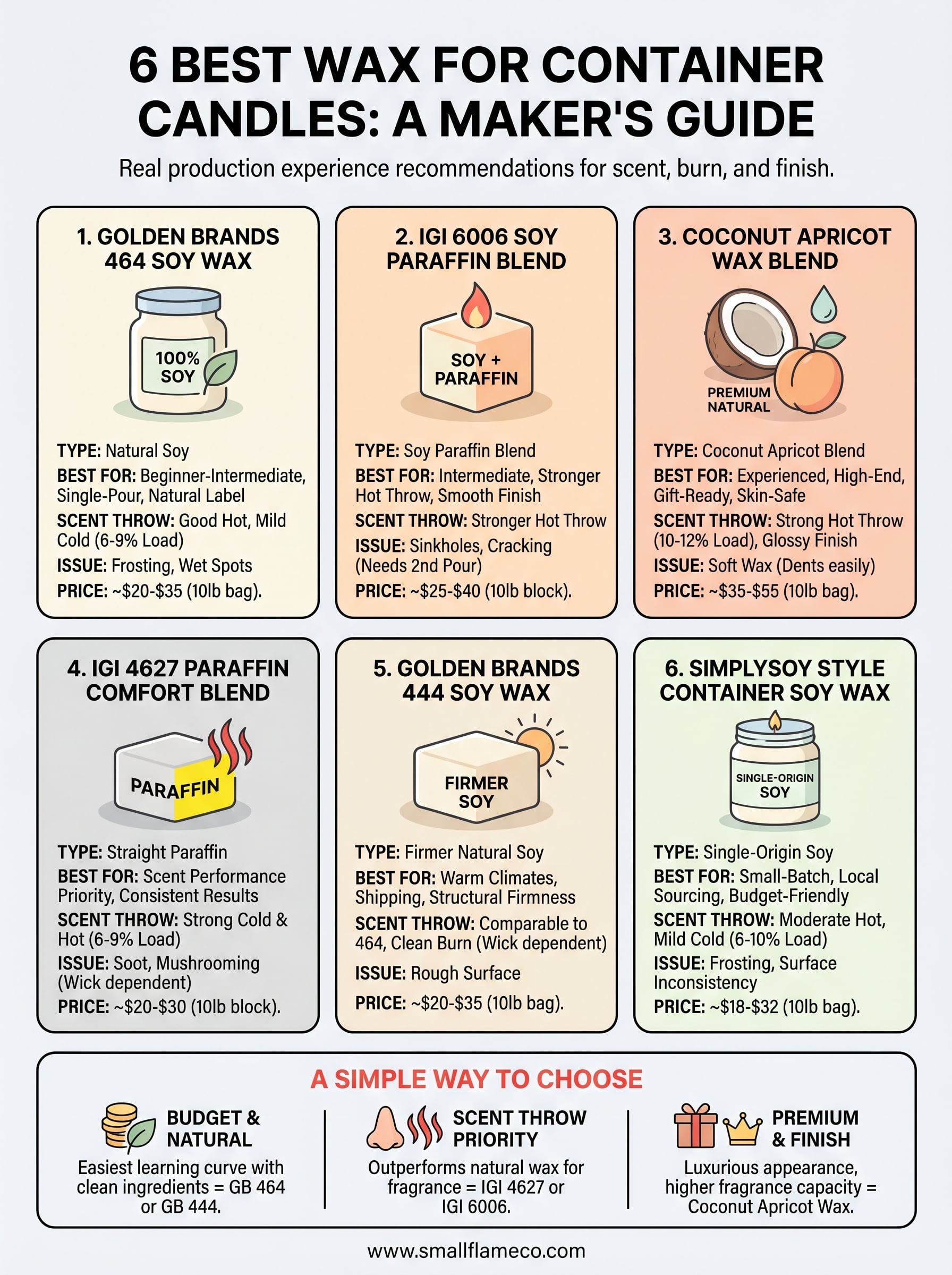
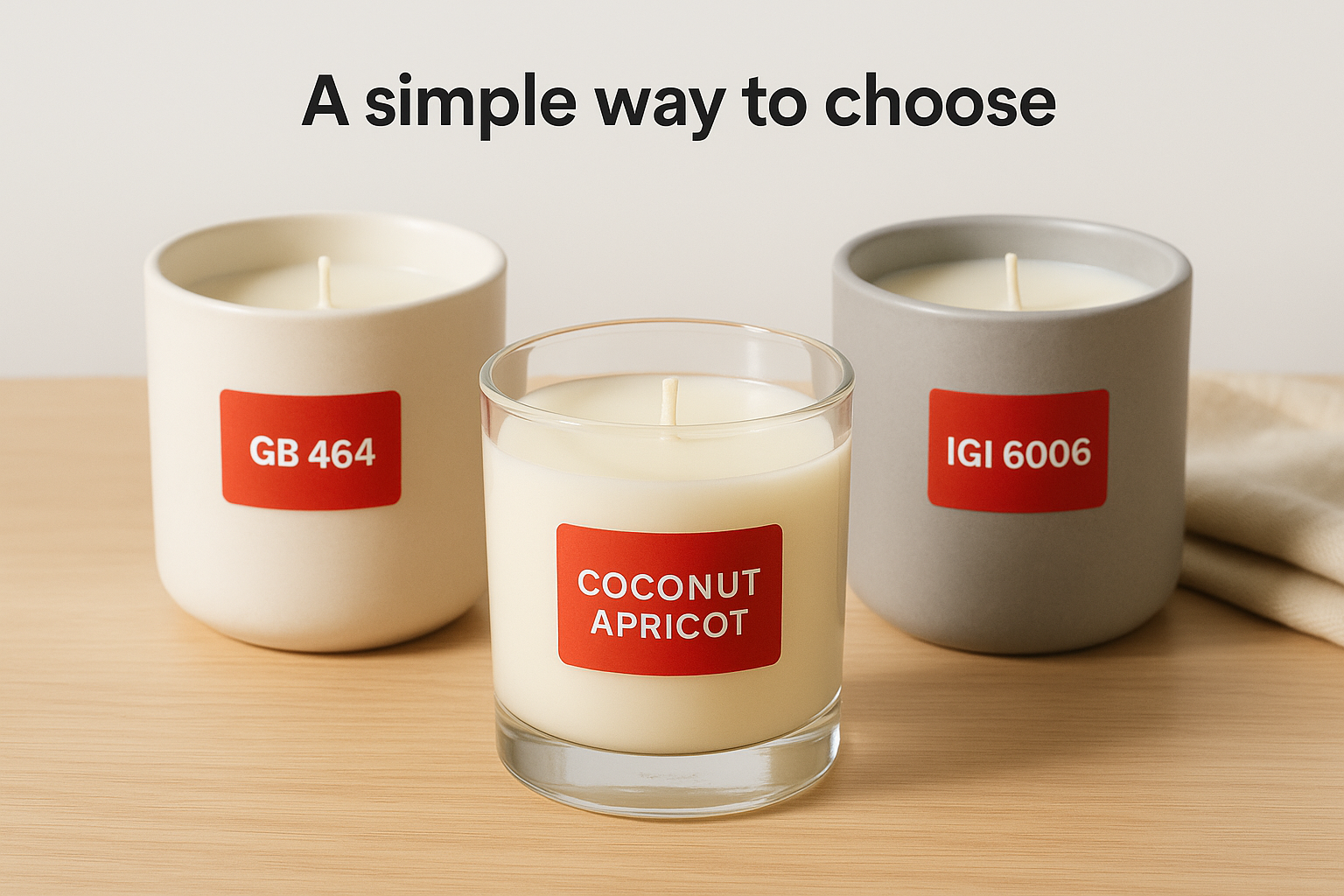
Picking the best wax for container candles comes down to three factors: your budget, your audience, and your priorities. If you want the easiest learning curve with clean natural ingredients, GB 464 or GB 444 gets you there without much friction. If scent throw is your top priority, IGI 4627 or IGI 6006 will outperform straight soy every time. For a premium finish with natural credentials, coconut apricot wax earns its higher price point in appearance and fragrance capacity.
Your specific situation matters more than any single "best" label. A candle that ships well in summer heat needs a firmer wax structure than one displayed in a climate-controlled retail space. Match the wax to the job, not just the trend. If you want to see how a well-developed wax blend translates into a finished product, explore our hand-poured coconut wax candle collection and experience the difference a quality wax choice makes firsthand.