

5 Best Wax For Long Burning Candles In 2026 (Ranked)
Choosing the best wax for long burning candles makes a bigger difference than most people realize. At Small Flame Candle Company, wax selection is something we take seriously, it directly affects how long our hand-poured candles burn, how well they throw scent, and whether customers reach for the same candle twice.
Not all wax performs equally. Some types burn clean but fast. Others last forever but struggle with fragrance. The right pick depends on what you're optimizing for, and burn time is one of the hardest things to get right without understanding the tradeoffs between wax types. We've tested enough formulations in our own production to know which ones actually deliver on longevity.
In this guide, we ranked five wax types based on burn time, scent throw, ease of use, and overall value. Whether you're a hobbyist or starting a candle business, this breakdown will help you pick the right wax for candles that genuinely last.
1. Beeswax
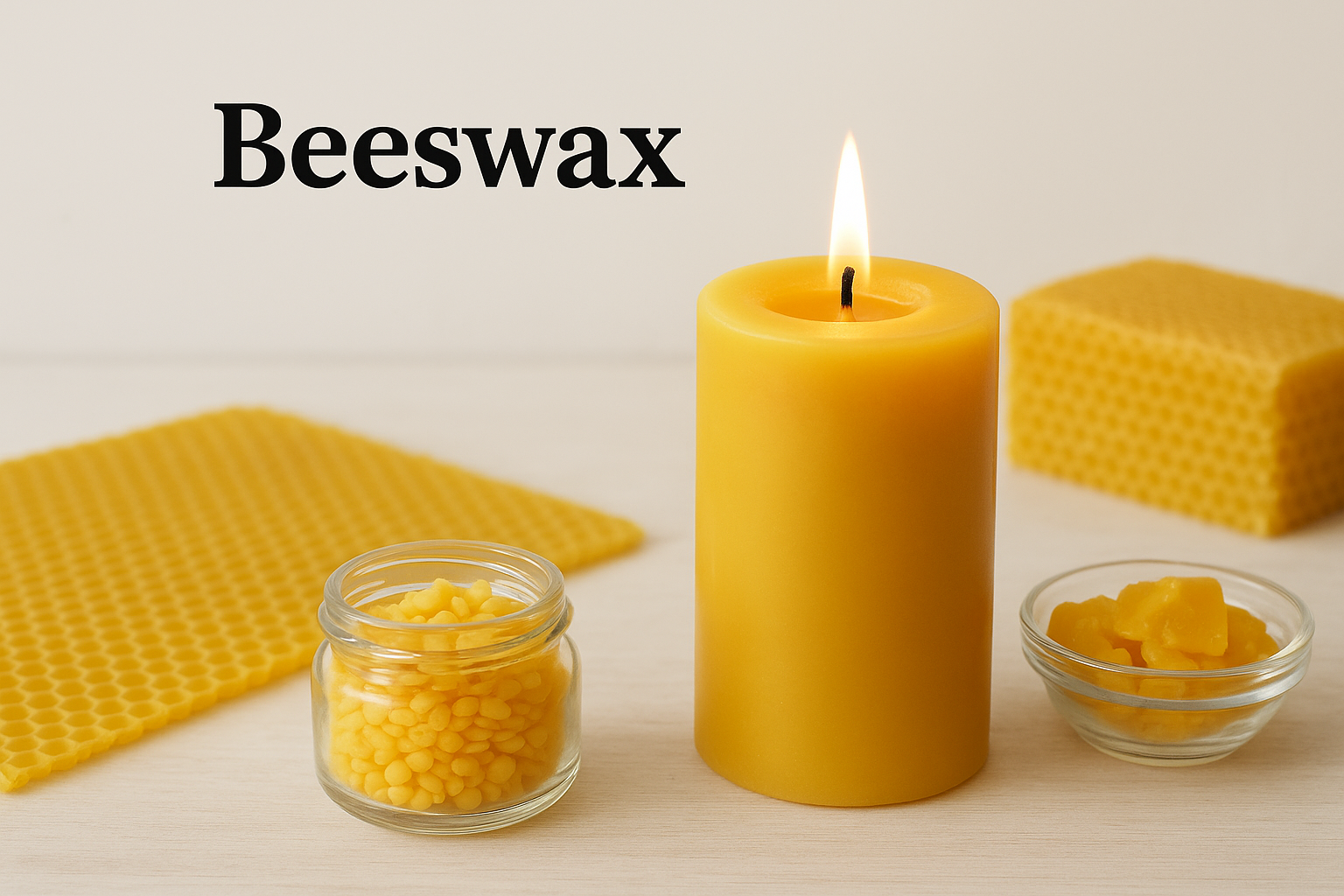
Beeswax is the oldest candle-making material in existence, and it still earns its place at the top of any list of the best wax for long burning candles. It burns slower and hotter than almost every alternative, which means a well-made beeswax candle will outlast most competitors by a noticeable margin. If longevity is your primary goal, this is the wax you start with.
Burn time in real-world use
Beeswax burns roughly 25 to 50 percent longer than paraffin at the same candle weight. A standard 8 oz beeswax container candle can hit 80 or more hours of burn time when properly wicked. The dense molecular structure of beeswax slows the melt pool, which is exactly why it delivers that extended performance.
A properly wicked beeswax candle consistently outperforms other natural waxes in total burn hours, making it the top choice when longevity is the priority.
Scent throw and performance
Beeswax has a natural honey scent on its own, which works beautifully for unscented candles but can compete with added fragrance oils. Cold throw tends to be moderate. Hot throw improves significantly once the wax reaches full melt pool temperature, but fragrance load capacity tops out around 3 to 6 percent, which is lower than soy or coconut blends.
Best uses and candle types
Beeswax performs best in pillar candles and taper formats because its high melting point holds shape well without a container. It also works in containers, though blending with a small amount of coconut oil helps adhesion. If you want a clean-burning, minimal-fragrance candle with premium appeal, beeswax is the right call.
Wicking and pour tips
Use cotton or wood wicks sized up slightly compared to what you would use for soy. Beeswax is dense and requires a stronger draw. Pour temperatures typically fall between 145 and 160 degrees Fahrenheit. Pouring too cool causes cracking, so keep your containers warm before pouring.
Typical price range
Beeswax runs $8 to $15 per pound for quality filtered product, making it the most expensive wax on this list. The tradeoff is real: higher upfront cost, but fewer candles needed over time due to extended burn life.
2. Coconut apricot wax blend
Coconut apricot wax blend has become a standout choice for candle makers who want strong scent throw alongside solid burn time. This blend combines coconut wax with apricot wax, producing a creamy, smooth finish that performs well in containers and sits close to beeswax in longevity while pulling ahead in fragrance capacity.
Burn time in real-world use
An 8 oz coconut apricot candle typically burns 60 to 75 hours, depending on wick choice and fragrance load. The dense coconut wax base slows the melt rate, while the apricot component softens the texture and improves adhesion to container walls, reducing tunneling and wasted wax.
Coconut apricot blends deliver burn times that rival beeswax at a significantly lower cost per pound, making them one of the best wax for long burning candles options available today.
Scent throw and performance
This blend accepts fragrance loads up to 10 to 12 percent, well above what beeswax can handle. Both cold throw and hot throw are strong, which is why this wax consistently earns high marks from candle makers who prioritize scent performance alongside burn duration.
Best uses and candle types
Coconut apricot wax works best in container candles and tumbler formats. Its lower pour temperature makes it forgiving if you are new to candle making, while still producing a polished finished product.
Wicking and pour tips
Pour between 125 and 135 degrees Fahrenheit and let your candle cure for at least 48 hours before the first burn. Use cotton core wicks sized specifically for your container diameter to avoid drowning or mushrooming.
Typical price range
Expect to pay $5 to $9 per pound for a quality coconut apricot blend, making it more accessible than beeswax while still delivering premium burn performance.
3. Soy container wax
Soy container wax is one of the most widely used natural waxes available, and for good reason. It offers a reliable combination of clean burning and decent longevity that makes it a practical option for both hobbyists and small candle businesses.
Burn time in real-world use
Soy container wax burns 10 to 15 percent longer than standard paraffin, though it falls short of beeswax and coconut apricot blends in total hours. A typical 8 oz soy candle delivers between 50 and 65 hours of burn time when properly wicked and given adequate curing time.
Soy wax is a reliable pick when searching for the best wax for long burning candles on a budget, but it needs a full cure to reach its best performance.
Scent throw and performance
Soy wax accepts fragrance loads between 6 and 10 percent. Cold throw is generally moderate, but hot throw improves considerably after the candle cures for at least 72 hours.
Best uses and candle types
Soy wax works best in container formats like jars and tins. Its softer texture makes it unsuitable for pillars or freestanding shapes without a container to support the structure.
Wicking and pour tips
Pour at 120 to 130 degrees Fahrenheit and allow a minimum 48-hour cure before the first burn. Slightly larger wicks help compensate for soy's tendency toward a slower, more uneven melt pool.
Typical price range
Soy container wax costs $3 to $6 per pound, making it the most budget-friendly natural wax option on this list.
4. Coconut soy blend wax
Coconut soy blend wax combines coconut wax's burn efficiency with soy's ease of use, giving you a reliable option that outperforms straight soy in nearly every category. This blend suits small-batch candle makers who want consistent results without paying beeswax-level prices.
Burn time in real-world use
A standard 8 oz coconut soy candle typically delivers 55 to 70 hours of burn time, placing it ahead of straight soy and close to coconut apricot blends. The coconut component slows the melt rate noticeably, which is exactly what drives that extra burn time.
Coconut soy blends are one of the most practical picks when looking for the best wax for long burning candles at a mid-range price point.
Scent throw and performance
Coconut soy blends accept fragrance loads between 8 and 10 percent, and both cold throw and hot throw perform well. The coconut wax improves scent diffusion beyond what straight soy delivers on its own.
Best uses and candle types
This blend works best in container candles like jars and tins. Your finished candles will show a smooth, creamy top with minimal surface issues, making it a solid choice for these formats:
- Straight-sided glass jars
- Metal tins with lids
- Short, wide vessels
Wicking and pour tips
Pour at 125 to 135 degrees Fahrenheit and cure for a minimum of 48 to 72 hours before the first burn. Cotton core wicks sized for your specific container diameter work well here.
Typical price range
Coconut soy blends run $4 to $7 per pound, placing them between straight soy and coconut apricot on cost while delivering noticeably better burn performance than soy alone.
5. Paraffin wax and paraffin blends
Paraffin wax is the most widely used candle wax in the world, and it remains a legitimate option even as natural waxes gain popularity. When blended with additives or other waxes, paraffin can deliver competitive burn performance at a price point that no other wax on this list matches.
Burn time in real-world use
Straight paraffin burns faster than soy or beeswax, typically yielding 40 to 55 hours from an 8 oz container. Paraffin blends that include additives like vybar or stearic acid improve density and extend burn time closer to 60 hours, making blends the smarter choice if longevity is your goal.
If you're comparing the best wax for long burning candles, paraffin on its own ranks last, but a well-formulated paraffin blend closes the gap significantly.
Scent throw and performance
Paraffin accepts fragrance loads up to 12 percent and produces some of the strongest hot throw of any wax type. Cold throw is moderate to strong, which is why commercial candle manufacturers still rely on it heavily.
Best uses and candle types
Paraffin suits pillar candles, votives, and container formats equally well. Its harder structure holds detail, making it a solid pick for shaped or molded candles where soy would collapse.
Wicking and pour tips
Pour at 150 to 165 degrees Fahrenheit. Use a cotton wick sized down slightly, since paraffin's lower viscosity allows easier wicking than denser natural waxes.
Typical price range
Paraffin costs $1 to $3 per pound, making it the most affordable wax available by a wide margin.
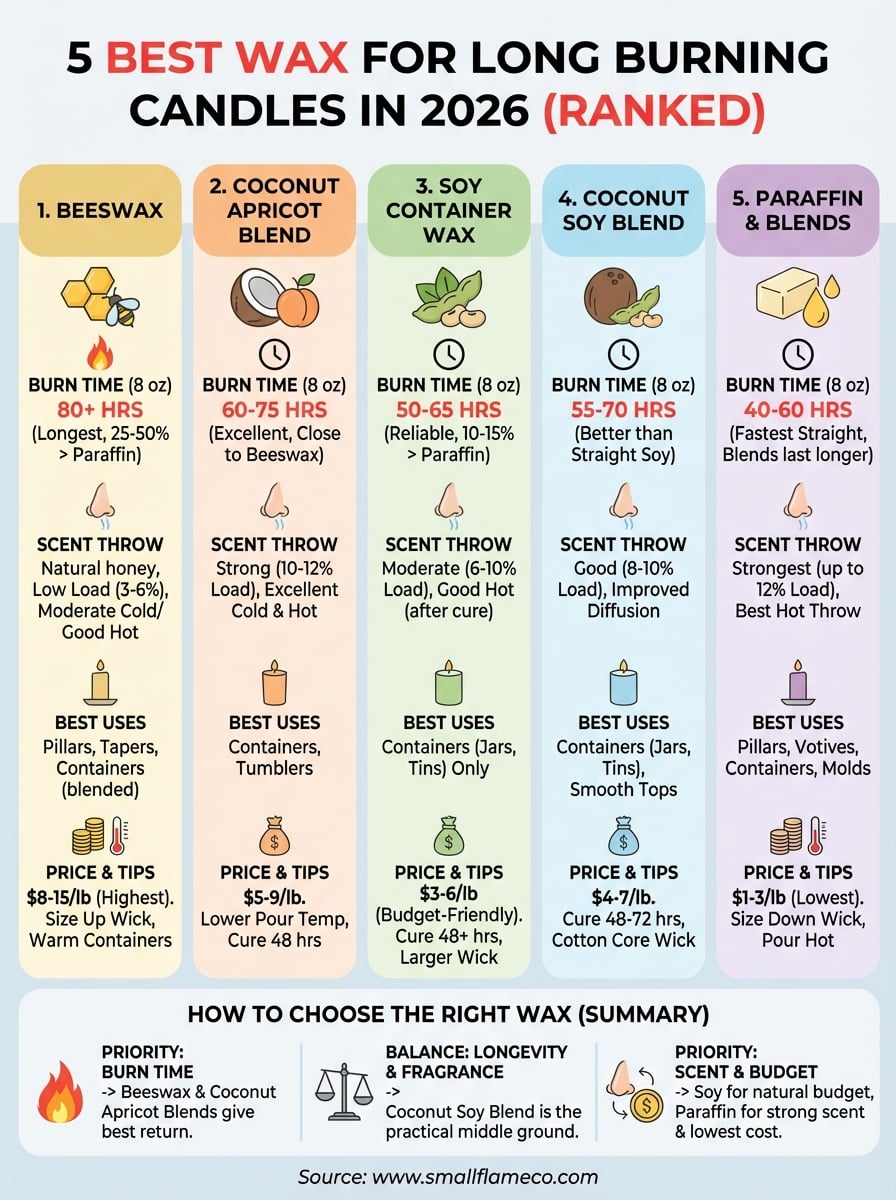
How to choose the right wax today
The right wax comes down to what you need most from your candle. If burn time is your top priority, beeswax and coconut apricot blends give you the best return on every ounce. If you want a balance of longevity and fragrance capacity without a premium price tag, coconut soy blend is the practical middle ground. Soy works well for budget-conscious makers who still want a natural option, while paraffin blends suit anyone prioritizing strong scent throw and low material cost.
Matching the best wax for long burning candles to your specific format matters just as much as the wax itself. Container candles, pillars, and votives each perform differently depending on the wax you choose, so factor in your mold or vessel before you buy.
If you want to skip the testing and try candles already made with a premium coconut-soy blend, check out the Small Flame coconut wax candle collection.