

5 Best Candle Making Thermometer Picks (IR Vs. Probe)
Every candle we hand-pour at Small Flame Candle Company starts with getting the wax temperature right. Too hot, and you lose fragrance throw. Too cool, and the wax won't bind with the scent oils properly. A reliable candle making thermometer is the single tool that stands between a mediocre candle and one that fills a room the way it should.
Whether you're pouring your first batch or your five-hundredth, you've probably wondered if an infrared gun or a digital probe gives you better readings. The answer depends on how you work and what level of precision you actually need. We've tested both types extensively across thousands of pours, and the differences matter more than you'd expect.
Below, we break down five thermometers worth your money, covering both IR and probe options, with honest notes on accuracy, response time, and practical use at the pouring station. Each pick reflects what we'd actually reach for on our own production table.
1. ThermoWorks Thermapen One
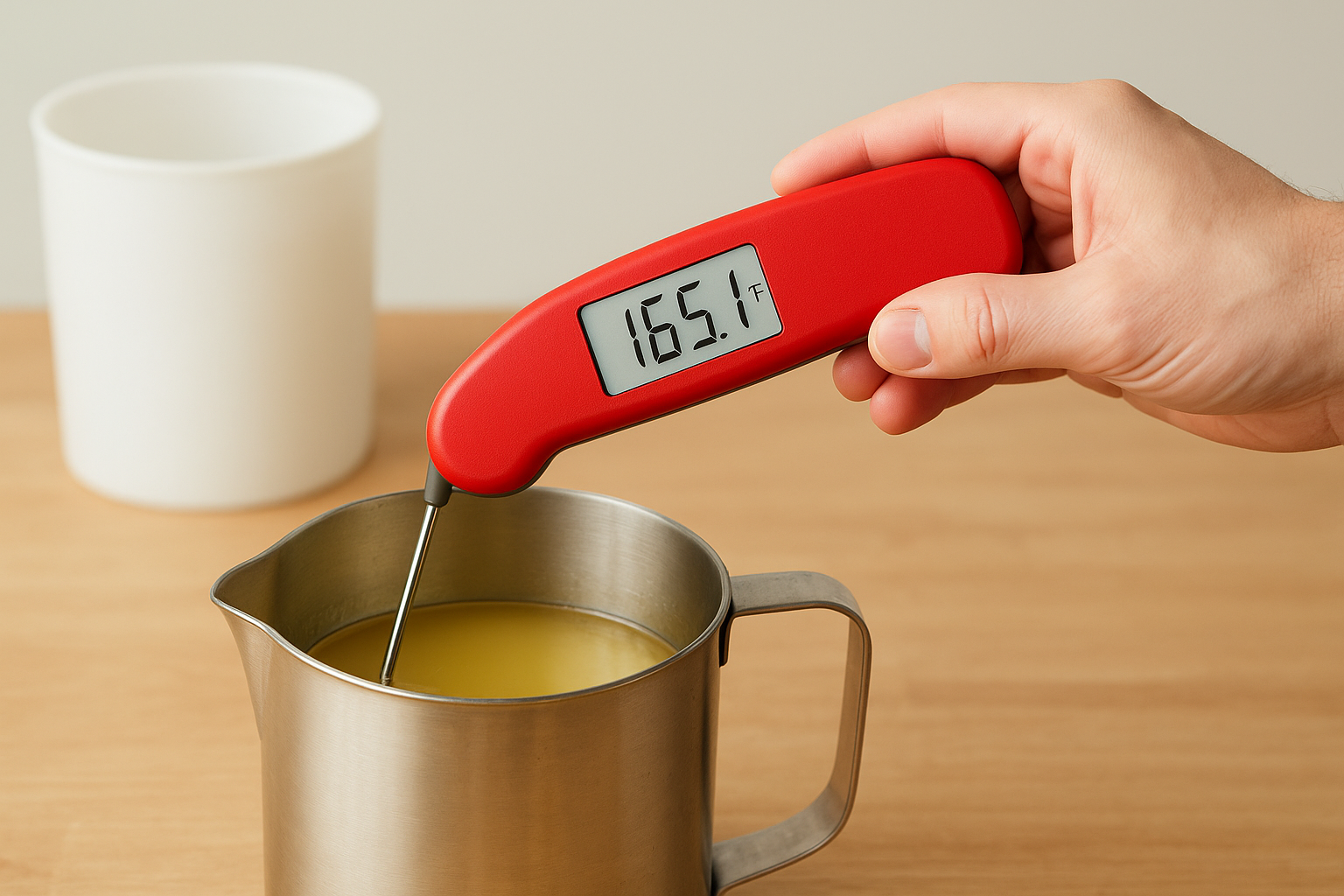
Built for precision at the wax-melting station, the Thermapen One is the benchmark probe thermometer for serious candlemakers. If you need a candle making thermometer that responds in under a second, this is where to start your search.
What it's best at in candle making
Speed defines this tool. The Thermapen One reads in 0.7 seconds at ±0.5°F accuracy, giving you a true snapshot of your wax temperature the moment the probe enters the melt.
Accuracy within half a degree matters most when you work with waxes that have narrow pour windows.
For soy or coconut wax, where the pour window can be as tight as 10 degrees, that combination of speed and precision prevents surface cracking and keeps fragrance from volatizing before it fully binds to the wax.
Where it can mislead you
The probe reads core wax temperature, not the surface layer. If a thin cooled skin forms on top of your melt, you'll pull a reading that runs hotter than actual surface conditions, which can throw off your fragrance addition timing.
Always stir before probing. One quick pass equalizes the melt pool and gives you the reliable number you need before committing to the next step.
Features that matter for wax work
A rotating display auto-adjusts to any angle, which is genuinely useful when you're reaching down into a deep pouring pitcher at an awkward tilt. The motion-sensing sleep mode powers the unit down between checks without any manual button pressing.
- Reads in 0.7 seconds
- Accuracy: ±0.5°F
- IP67 waterproof rated
- Rotating backlit display
Typical price range
The Thermapen One runs $105 to $115 depending on color and current promotions, making it the highest-priced pick on this list.
For high-volume pourers or anyone working with multiple wax types regularly, the consistency it delivers makes that investment reasonable over time.
2. ThermoPro TP19H digital instant-read probe
The ThermoPro TP19H gives you solid probe performance at a fraction of the Thermapen's price, making it a practical candle making thermometer for hobbyists and small-batch pourers who want reliable readings without a major investment.
What it's best at in candle making
This thermometer reads in 3 to 4 seconds at ±0.9°F accuracy, which covers most wax types without trouble. You'll get consistent results whether you're monitoring a paraffin blend or a single-source soy wax at its fragrance addition window.
Where it can mislead you
The longer probe can be awkward in shallow wax depths, and the accuracy tolerance of ±0.9°F is slightly wider than premium options. For waxes with tight pour windows, that margin can occasionally push you toward a premature or late fragrance add.
Give yourself an extra buffer and probe from multiple spots in the pitcher when working with beeswax or blended waxes.
Features that matter for wax work
The auto-rotating display and motion-sensing sleep mode match what you'd expect from more expensive probes, making this a strong value pick.
- Reads in 3-4 seconds
- Accuracy: ±0.9°F
- IP65 splash-proof rated
- Auto-rotating backlit display
Typical price range
The TP19H typically runs $20 to $30, making it the best budget probe option on this list for newer candlemakers building out their setup.
3. EnnoLogic eT650D infrared temperature gun
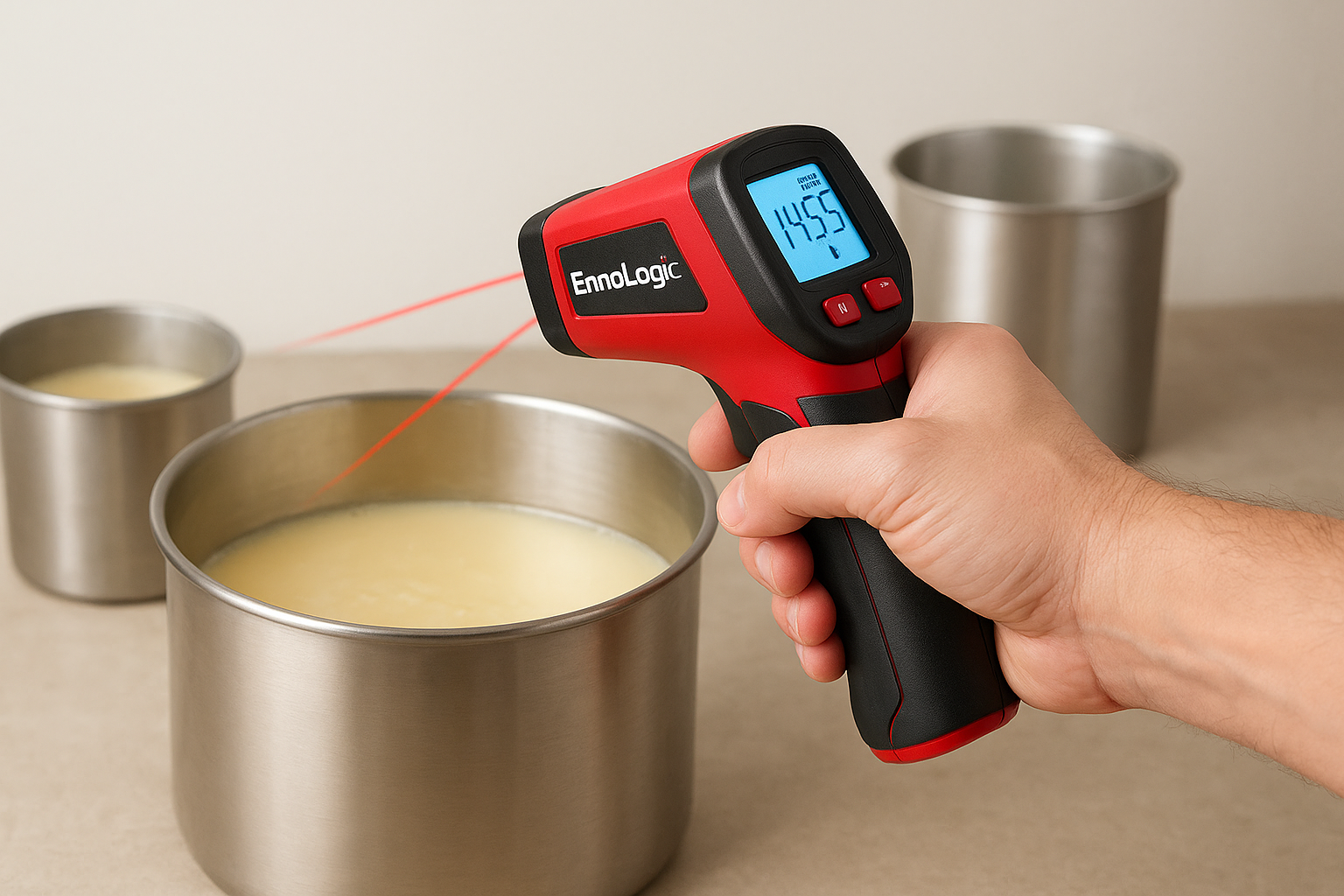
The EnnoLogic eT650D brings non-contact infrared scanning to your pour station, letting you check wax temperatures across multiple vessels without dipping a probe. As a candle making thermometer, it fits best in batch workflows where speed and convenience matter most.
What it's best at in candle making
This gun covers a -58°F to 1202°F range with a 12:1 distance-to-spot ratio, so you can scan your pour pot from roughly a foot away and still land on a targeted reading. That range handles every common wax type without any manual adjustment.
Non-contact scanning lets you check multiple pots in seconds without cross-contaminating different wax blends.
Where it can mislead you
IR guns read surface temperature only. Any cooled skin or residue sitting on your melt will drag the reading lower than actual wax temp. Stir and skim before scanning to clear surface interference and pull a reliable number.
Features that matter for wax work
The dual laser targeting shows the exact measurement spot, and adjustable emissivity lets you dial in accuracy across different wax surfaces.
- Reads in under 1 second
- Accuracy: ±1.5°F or ±1.5%
- 12:1 distance-to-spot ratio
- Adjustable emissivity
Typical price range
The eT650D typically runs $45 to $60, sitting in the mid-range IR category and offering a solid step up from budget temperature guns.
4. Etekcity Lasergrip infrared thermometer
The Etekcity Lasergrip is the most widely available IR thermometer on this list, sold at major retailers and well-reviewed for basic non-contact work. As a candle making thermometer, it handles everyday pour monitoring without the EnnoLogic's price tag.
What it's best at in candle making
Batch scanning is where this tool earns its place at your pour station. Its 12:1 distance-to-spot ratio gives you a usable reading from about a foot away, covering standard pouring pitchers and double boilers without moving between vessels.
Batch pourers who work with several pots at once will save real time using a non-contact IR gun over a probe.
Where it can mislead you
Surface interference is the main risk with this tool. Any wax film or residue resting on top of your melt will pull the reading below actual wax temperature. Stir before scanning to clear the surface and get a more consistent result.
Features that matter for wax work
The Lasergrip keeps setup simple with non-contact laser targeting and a quick sub-second response, both of which reduce friction during constant temperature checks at your station.
- Reads in under 1 second
- Accuracy: ±2°F or ±2%
- 12:1 distance-to-spot ratio
- Non-contact laser targeting
Typical price range
Running at $15 to $25, the Lasergrip is the most budget-friendly IR option on this list and a reasonable entry point if you're just getting started with infrared thermometers.
5. Deep-fry dial thermometer with clip
The deep-fry dial thermometer is the simplest tool on this list, and it works as a no-frills candle making thermometer for beginners or single-pour setups that don't need digital precision.
What it's best at in candle making
The clip holds the probe directly against the side of your pour pot, letting you monitor wax temperature continuously without holding anything. That hands-free setup keeps you free to stir or prep fragrance while the wax heats.
- Clips to most standard pour pots
- No buttons or settings to configure
Where it can mislead you
Dial thermometers take 15 to 30 seconds to stabilize, which is slow compared to any digital option. If your wax is cooling quickly, that response lag can push you past your pour window before the needle settles.
Always wait for the needle to stop moving completely before reading the temperature.
Features that matter for wax work
The stainless steel construction holds up to repeated heat cycles without corroding, and a 100°F to 400°F range covers every standard candle wax type.
- No batteries required
- Clip attaches to standard pour pots
- Range: 100°F to 400°F
Typical price range
Most models run $8 to $15, making this the most affordable pick on the list. For brand-new pourers testing the hobby before investing in digital tools, it covers the basics without any commitment.
Quick wrap-up and next step
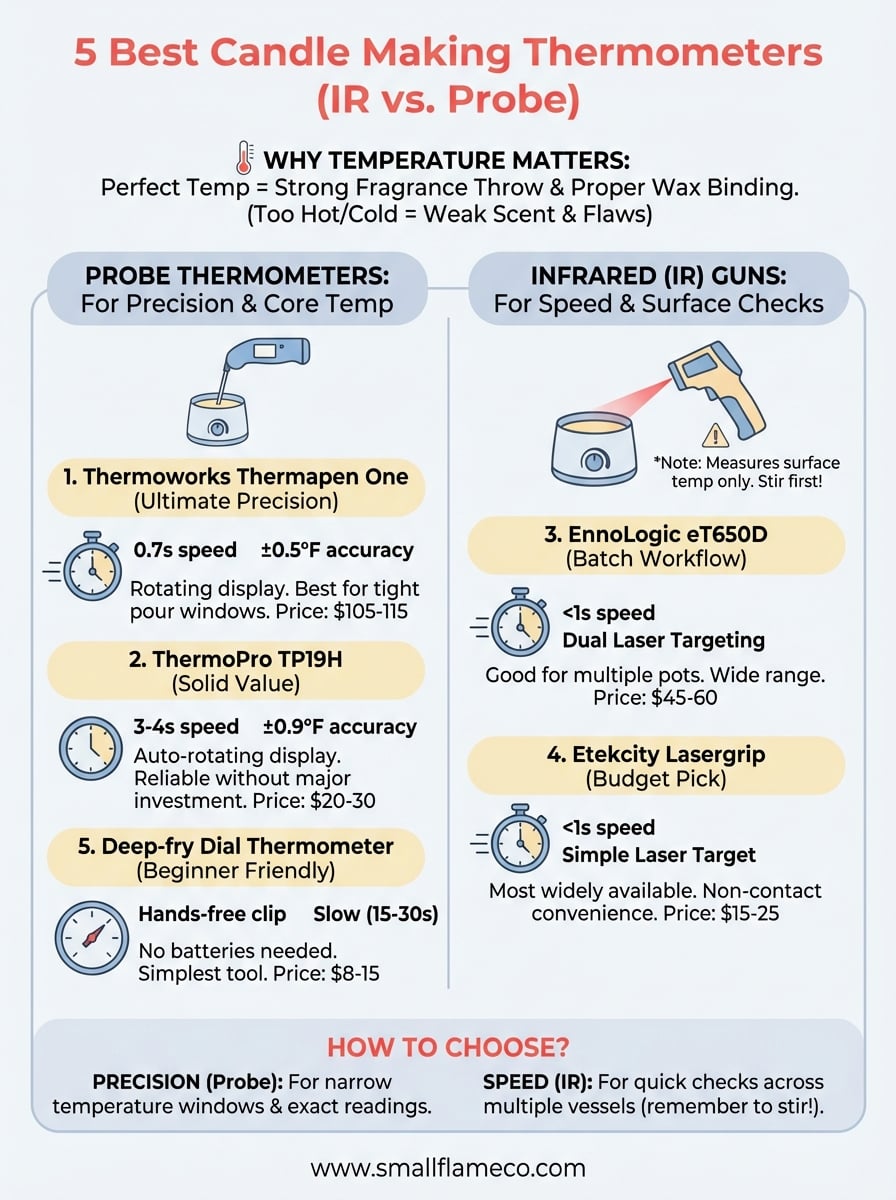
Picking the right candle making thermometer comes down to how you pour. If you work with waxes that have tight temperature windows, a fast digital probe like the Thermapen One or ThermoPro TP19H gives you the precision you need. If you manage multiple pots at once, an IR gun like the Etekcity Lasergrip or EnnoLogic eT650D saves you real time between checks. For beginners who just want to get started without spending much, the clip-on dial thermometer covers the basics cleanly.
Your thermometer controls the pour. Getting wax to the right temperature before adding fragrance is what separates candles that perform well from ones that fall flat. Once you have your process dialed in, the results show in every burn. If you want to see what careful temperature control produces in a finished candle, browse the hand-poured coconut wax candles at Small Flame Candle Co.