

9 Ways To Make A Small Room Smell Good (Fast & Fresh)
Small rooms hold onto smells, both the good and the bad. A bathroom, a bedroom, a home office tucked into a corner of your apartment: tight spaces trap odors that bigger, better-ventilated rooms can shake off naturally. If you've been searching for how to make a small room smell good, you're probably dealing with this exact frustration.
The good news? Compact spaces are actually easier to transform. You don't need as much product, effort, or airflow to shift the entire scent profile of a room. A single hand-poured candle, a quick cleaning routine, or even a bowl of baking soda can make a noticeable difference within minutes. At Small Flame Candle Company, we spend our days crafting candles designed to do exactly that, fill a space with clean, true-to-life fragrance without overwhelming it.
Below, you'll find nine practical methods to freshen up any small room, from free fixes you can do right now to simple upgrades that keep things smelling great long-term. Some are DIY, some involve products, and all of them actually work.
1. Use a candle or wax warmer that fills a small space
One of the fastest answers to how to make a small room smell good is lighting a candle or setting up a wax warmer. Small rooms actually work in your favor here: less cubic footage means fragrance reaches every corner more quickly, so you don't need a large or expensive product to notice a real difference.
Pick the right scent family for small rooms
Not every scent works well in a tight space. Heavy, musky fragrances can feel suffocating in a 100-square-foot room, while lighter options like citrus, linen, or bakery scents fill the air without making it feel thick. Stick to one scent at a time to avoid clashing notes.
- Light and fresh: citrus, sea salt, cotton
- Warm but balanced: vanilla, cinnamon, sandalwood
- Use sparingly in small rooms: heavy musk, layered florals, strong tobacco
Choose candles vs wax melts vs warmers
Each format has real trade-offs worth knowing before you buy. Open-flame candles create a soft glow but need supervision and a safe surface. Electric wax warmers run unattended and distribute scent more consistently, making them a better fit for bedrooms or small home offices where you might step away.
For rooms with limited airflow, an electric wax warmer gives you steady, controlled scent without the risk of an open flame.
Place it for the best throw and safety
Where you set your candle or warmer directly affects how well the scent travels. Position it near a doorway or low fan to help the fragrance move through the room rather than pooling near the source. Keep candles on a stable, heat-resistant surface at least one foot from curtains, bedding, or anything that hangs low.
A simple rule: the lower the ceiling and the smaller the room, the less you need. One small candle or a single wax melt cube is usually enough. Running two scent sources at once in a tight space will make the air feel heavy rather than fresh.
Cost and longevity in a small room
A small candle goes further in a compact room than most people expect. A 4-ounce candle typically burns 20 to 25 hours, which covers several weeks of daily one-hour use. Wax melts tend to be the most cost-effective choice since one cube can scent a small room for 8 to 10 hours and you control exactly how much you use per session.
2. Air it out fast with cross-ventilation
Fresh outdoor air is one of the most effective and completely free tools when you're figuring out how to make a small room smell good. Cross-ventilation replaces stale, trapped air with clean air from outside, which no product alone can fully replicate.
Set up a quick airflow plan in a small space
Cross-ventilation works by creating two openings on opposite sides of a room so air moves through rather than just circulating in place. Open a window on one side and a door on the other, or crack two windows that face different directions. Even a 10-minute ventilation window can clear most light odors from a compact room.

Use fans to push stale air out, not just around
A box fan or standard window fan pointed outward pulls stale air out of the room and draws fresh air in through another opening. Pointing a fan inward just moves the same odor-filled air around. Position the fan low to push air along the floor and let fresh air enter from a higher opening for the most efficient exchange.
The direction your fan faces matters more than its speed setting.
Timing tips for pollen, humidity, and city air
Open windows during mid-morning when outdoor air is typically cleaner, pollen counts are lower, and humidity hasn't peaked yet. In urban areas, avoid ventilating during rush hours when vehicle exhaust is heaviest. On humid days, limit ventilation to 10 minutes or less to avoid pulling in moisture that leads to musty smells.
Cost and effort level
Ventilation costs nothing and takes under a minute to set up. It works best as a daily habit rather than a once-a-week fix. Pairing it with your other odor-control methods will produce noticeably better results than relying on any single approach alone.
3. Find the source of the smell and remove it
No fragrance product can fix a smell that's still actively producing itself. If you're trying to figure out how to make a small room smell good, the first real step is locating what's causing the odor and eliminating it before you add anything else to the space.
Common small-room odor culprits to check first
Small rooms concentrate odors because air circulates less freely. The most common sources are easier to find than most people expect. Check these spots first before assuming the problem is larger:
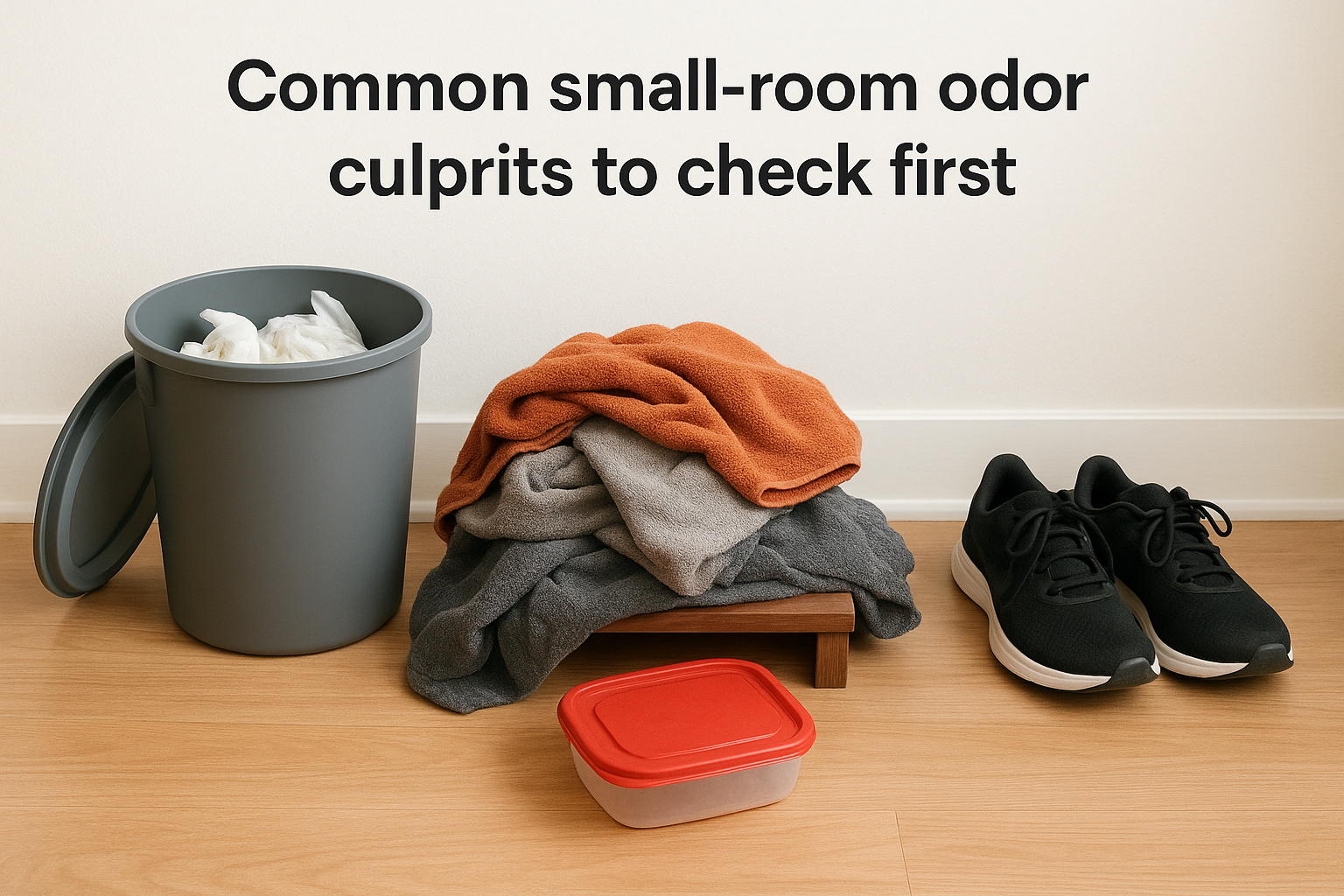
- Trash cans and recycling bins with residue at the bottom
- Damp towels or gym clothes left in a pile
- Shoes stored near the door or in a small closet
- Forgotten food containers under furniture or in a bag
Quick tests to pinpoint musty vs sour vs smoky odors
The smell itself tells you where to look. Musty odors point toward moisture, often behind furniture, under rugs, or near windows with condensation. Sour smells usually come from organic material like food waste or unwashed fabric, while smoky odors absorb into walls and upholstery and need more than a quick wipe-down.
Identifying the odor type before you start cleaning saves you from treating the wrong surface with the wrong product.
Cleaning steps that actually remove odor sources
Once you locate the source, clean it directly. Wipe hard surfaces with a diluted white vinegar solution, which neutralizes odor-causing bacteria without leaving residue. For soft items like small rugs or bath mats, wash or replace them if they've absorbed the smell and won't fully refresh by airing out alone.
When to stop and address mold or leaks
Some odors signal a problem beyond surface cleaning. Persistent musty smells that return within a day or two often point to mold growth or a hidden moisture leak rather than a surface issue. In that case, contact a professional rather than layering more cleaning products over something structural.
4. Wash the fabrics that hold odors the longest
Fabrics are the biggest hidden factor when you're working out how to make a small room smell good. Soft materials trap odor molecules deep in their fibers, and no air freshener covers what's embedded in your bedding, curtains, or rugs.
Sheets, towels, and the laundry hamper problem
Sheets and pillowcases absorb body oils and sweat every night, breaking down into sour-smelling compounds within days. Wash them weekly in the hottest water the fabric allows and add half a cup of white vinegar to the rinse cycle to strip residual odor rather than mask it.
Your laundry hamper itself is often the real culprit. A fabric hamper holds moisture from damp clothes and becomes a slow odor source sitting in the corner. Swap it for a ventilated plastic or wire option, or wash the liner weekly alongside your regular load.
Curtains, rugs, and upholstery in tight spaces
Curtains and rugs absorb cooking smells, pet odors, and humidity in compact rooms. Machine-wash curtains every one to two months, and sprinkle baking soda on rugs before vacuuming to pull out embedded odors between deep cleans.
If a small rug still smells after two washes, replacing it is faster than chasing the odor through repeated treatments.
Shoe, gym bag, and closet odor control
Shoes and gym bags are concentrated odor sources that most people store inside small rooms without a second thought. Stuff shoes with dry cedar inserts, which absorb moisture and leave a clean scent in the closet. Air out gym bags after every use rather than sealing the smell inside.
Cost and effort level
Most of this costs nothing beyond your regular detergent. A consistent weekly laundry habit tackles the majority of fabric odors before they build up, which makes it one of the highest-impact, lowest-cost fixes on this entire list.
5. Neutralize odors with absorbers, not fragrance
Adding a pleasant scent on top of a bad smell just creates two competing odors in a tight space. Absorbers work differently: they pull odor molecules out of the air rather than covering them, which makes them one of the most practical answers to how to make a small room smell good without adding any fragrance at all.
Baking soda: where it works and where it doesn't
Baking soda absorbs acidic and alkaline odor compounds effectively when placed directly in contact with the source. Leave an open box near a trash can, inside a shoe, or at the back of a closet shelf. It works poorly as a room-wide air absorber because it needs surface contact to do anything useful. Don't expect a small dish in the center of a room to clear the air.
Activated charcoal: best placements in a small room
Activated charcoal bags are more effective than baking soda for general room odor absorption because they pull compounds from the surrounding air rather than relying on contact. Place them near moisture sources like a bathroom corner or window sill, under furniture, or inside a gym bag stored in the room.
A 200-gram activated charcoal bag covers most small rooms effectively and lasts two to four weeks before needing replacement.
Coffee grounds and other options with tradeoffs
Dry coffee grounds in an open dish absorb odors but add their own strong scent in the process. Use them only if you're comfortable with that trade-off.
Replacement schedule and safety notes
Replace baking soda every 30 days and activated charcoal every four to eight weeks depending on the odor level in the room. Keep all absorbers away from reach if young children or pets share the space.
6. Control humidity to stop musty smells at the root
Humidity is the root cause of musty odors in most small rooms. When moisture levels stay elevated, mold and mildew grow on surfaces and produce the stale, damp smell that no candle or air freshener can fully mask. Controlling humidity directly is one of the most reliable answers to how to make a small room smell good on a long-term basis.
Signs your room needs dehumidifying
Condensation on windows, peeling paint near baseboards, or a musty smell that returns within a day of cleaning all point to high humidity. A basic digital hygrometer costs under ten dollars and gives you an exact reading so you're not guessing about what's driving the problem.
Dehumidifier settings and placement for small rooms
Set your dehumidifier to maintain 40 to 50 percent relative humidity, which discourages mold growth while keeping the air comfortable. Place the unit away from walls with at least six inches of clearance on all sides so air moves freely through the intake.
Running a dehumidifier at 45 percent relative humidity is one of the most reliable long-term fixes for chronic musty odors in a compact space.
Bathroom and window condensation fixes
Bathroom exhaust fans should run during every shower and for 15 minutes afterward to clear steam before it soaks into walls and grout. Wipe down window sills and frames weekly during humid months to prevent condensation from sitting long enough to feed mildew growth.
Cost and energy considerations
A small dehumidifier for a compact room typically costs between 30 and 80 dollars and uses roughly the same energy as a standard light bulb. Running it a few hours daily keeps humidity in range without a significant impact on your electricity bill.
7. Use DIY natural scents that don't feel overpowering
DIY natural scents give you full control over what goes into your air, which matters a lot in a compact space. When you're working on how to make a small room smell good, the risk with natural methods is overshooting and creating a smell that's just as overwhelming as the one you started with.
Simmer pots that work well in small spaces
A simmer pot is one of the simplest and cheapest ways to add real scent to a room. Add water, a few citrus slices, a cinnamon stick, and a rosemary sprig to a small saucepan and let it sit on low heat. Top off the water every 20 to 30 minutes to prevent burning.
For a small room, use half the ingredients you'd use in a kitchen so the scent stays pleasant rather than intense.
Simple room spray recipes and how to use them
Mix 10 to 15 drops of essential oil with one cup of distilled water and a teaspoon of rubbing alcohol in a small spray bottle. Shake before each use and spray toward the center of the room, not directly onto fabric. Two or three light spritzes is enough for a compact space.
Natural scent sources like herbs and citrus
Fresh herbs like eucalyptus, mint, or lavender placed in a small vase add scent without heat or electronics. Citrus peels in a shallow dish near a vent work the same way. Replace both every three to four days before they dry out and lose their effect.
Mistakes that make a small room smell "too much"
Running too many scent sources at once is the most common mistake people make. Pick one method per session and give it 15 minutes before adding anything else. Mixing clashing notes like citrus and heavy spice in a small room creates a layered, confusing smell that drives people out rather than making them stay.
8. Keep it fresh with a simple weekly routine
Consistency beats intensity when it comes to how to make a small room smell good. A short weekly routine prevents odors from building to the point where you need drastic action, and it keeps your space feeling clean and controlled all week with minimal effort.
A 10-minute reset checklist for small rooms
Set aside 10 minutes once a week to run through the basics: empty the trash, wipe down hard surfaces with a diluted vinegar solution, check for any damp fabric left in the room, and swap out your odor absorber if it's due for replacement. Doing these tasks together on the same day prevents any single source from accumulating unnoticed.
A consistent 10-minute weekly reset prevents odors from stacking on top of each other before you notice them.
Scent layering without mixing clashing notes
If you use a candle, a room spray, or a wax melt, stick to one scent profile per week rather than mixing multiple products. Rotating your fragrance weekly keeps the scent from fading into background noise, which happens when your nose adjusts to a constant, unchanging smell in a small space.
Trash, dishes, and food rules that prevent stink
Empty the trash before it's full, not after it starts smelling. In a compact room, even a small amount of food waste or takeout packaging amplifies quickly. Keep a rule that no dishes or food containers stay in the room overnight, since a single forgotten item can reset all your progress.
Quick fixes for last-minute guests
Crack a window for five minutes, light one candle, and remove any visible clutter that traps odors like shoes or gym bags. Two or three targeted actions handle most small-room odors faster than any single product on its own.
Keep it fresh long-term
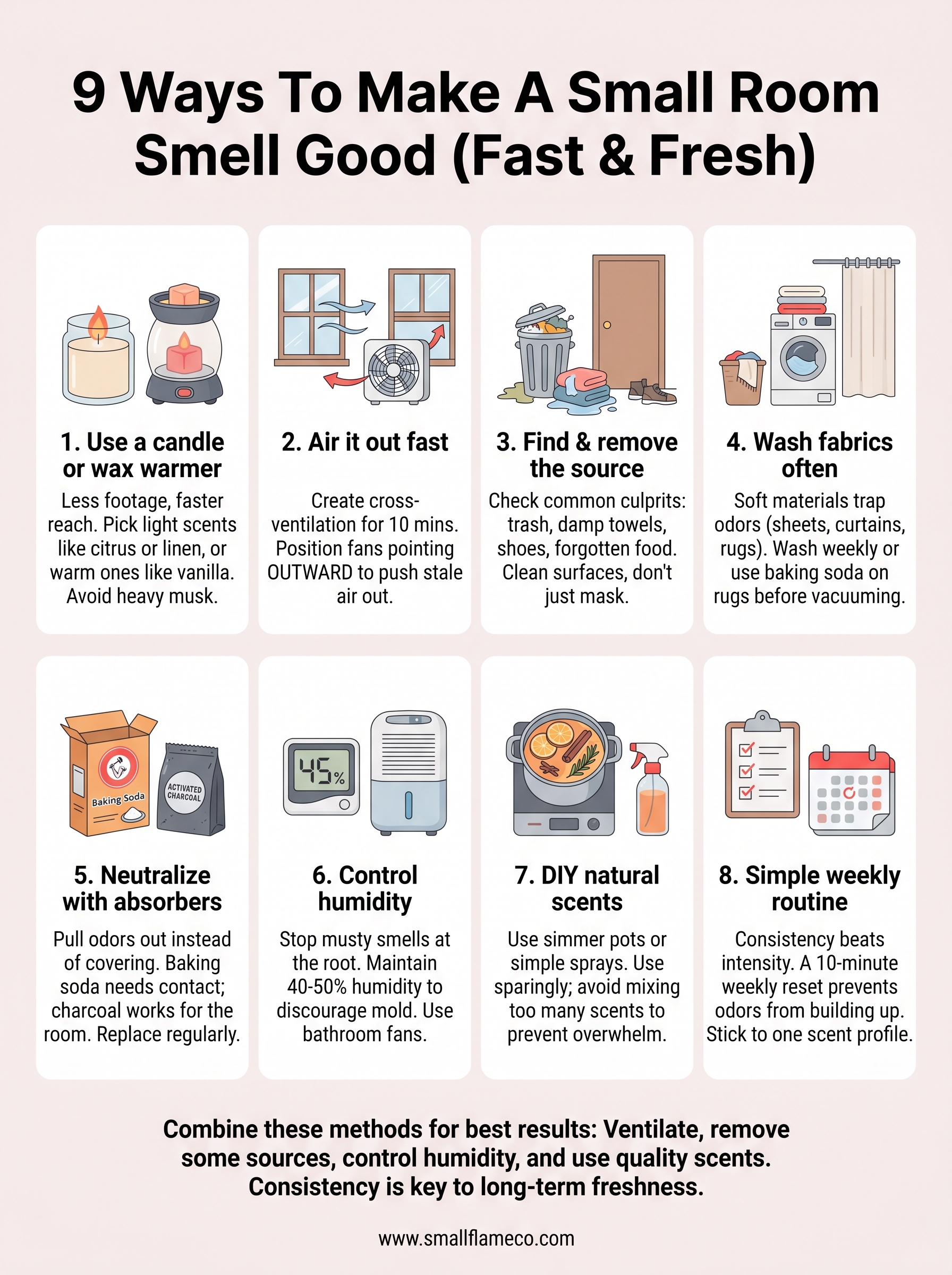
Knowing how to make a small room smell good comes down to combining a few reliable habits rather than relying on any single product or fix. Odor control is an ongoing process, not a one-time project. The methods in this list work best when you stack them: ventilate regularly, remove sources before they build up, control humidity, and use a quality fragrance product that genuinely fills your space with a scent you actually want to walk into.
A good candle makes a real difference in a compact room. Hand-poured candles with a clean coconut-soy wax blend give you a longer, more consistent scent throw without the soot or harsh chemical smell that cheaper options leave behind. If you want to upgrade your space with a fragrance that actually holds in a small room, take a look at the hand-poured candles and wax melts at Small Flame Candle Co. and pick a scent that fits.