

8 Ways: How To Make Your Home Smell Good Naturally
Your nose knows when something's off. Maybe it's last night's dinner lingering in the kitchen, a musty closet, or just that stale "nothing" smell that builds up over time. Whatever the cause, figuring out how to make your home smell good naturally is one of those small upgrades that changes how your entire space feels, without reaching for aerosol cans loaded with synthetic chemicals and artificial fragrance.
At Small Flame Candle Company, we spend our days surrounded by scent. We hand-pour candles designed to fill rooms with rich, true-to-life fragrance. But we also know that candles are just one piece of the puzzle. A home that smells genuinely good starts with a few simple, natural habits that work alongside (or even without) any product you might buy. That's the kind of honest, practical advice we want to share here.
Below, you'll find eight methods that use everyday ingredients, think citrus peels, herbs, baking soda, and essential oils, to keep your home smelling fresh from room to room. Each one is easy to start today, costs very little, and skips the stuff you can't pronounce on a label.
1. Light a clean-burning candle or wax warmer
A well-made candle or wax warmer is one of the simplest ways to make your home smell good naturally. It creates a steady, layered scent that builds gradually and lingers, rather than fading in thirty seconds the way a spray does. For a lot of people, it becomes a daily habit that does more for home ambiance than any air freshener ever could.
Why this works for natural home fragrance
Fragrance molecules released by heat travel through the air and bind to receptors in your nose continuously over time. A candle or heated wax melt keeps releasing scent for the full duration of the burn, giving you consistent room coverage without any ongoing effort. That slow, steady release is what makes candles feel natural rather than overwhelming.
How to choose a cleaner candle or wax melt
Look for candles made with soy, coconut, or beeswax and a cotton or wood wick. Skip paraffin, which is petroleum-derived and produces more soot and airborne residue. For wax melts, choose a phthalate-free fragrance and a plant-based wax so you're not heating synthetic additives into your air.
The wax and wick combination matters more than the scent label when it comes to how cleanly a candle actually burns.
Key things to look for on the label or product description:
- Soy, coconut, or beeswax base
- Cotton or wood wick (no metal core)
- Phthalate-free fragrance oils
Where to place it for the best scent throw
Set your candle on a central surface in the room, like a coffee table or kitchen counter at mid-height. Keep it away from direct drafts, which cause uneven burning and push scent in one direction. A gentle background airflow, like from a ceiling fan on low, actually helps distribute fragrance more evenly across the space.
How to make the scent last longer without overdoing it
Burn for two to three hours at a time, then let the room hold the scent naturally before relighting. This habit keeps the wax pool level and even, which prevents tunneling and makes the candle last significantly longer overall.
Safety notes for pets, kids, and ventilation
Always set candles on stable, heat-resistant surfaces and never leave them unattended around children or animals. Some fragrance ingredients, including eucalyptus and tea tree oil, are toxic to cats and dogs, so read the scent description carefully if you have pets. Crack a window for a few minutes after a long burn to bring fresh air back into the room.
2. Simmer a citrus and spice pot on the stove
A simmer pot is one of the most effective ways to make your home smell good naturally using nothing but water and ingredients already in your kitchen. You fill a small pot, add a few aromatic items, and let it warm on low heat. The steam carries real fragrance through your home without any synthetic additives.
Why simmer pots beat masking sprays
Sprays cover smells temporarily. A simmer pot releases fragrance through steam continuously, so the scent builds and spreads through rooms naturally. You're not layering chemicals over bad odors; you're filling the air with something genuinely aromatic.
What to use from your kitchen right now
Common starting ingredients include citrus peels, cinnamon sticks, whole cloves, and vanilla extract. You don't need specialty items. A lemon peel and one cinnamon stick in two cups of water already produce something worth noticing.
Best simmer pot recipes by season
Seasonal combinations keep the scent feeling appropriate and fresh throughout the year. Match what you simmer to what fits the current time of year.

- Winter: orange slices, cloves, cinnamon sticks, star anise
- Spring: lemon peel, fresh rosemary, vanilla extract
- Summer: lime peel, mint leaves, ginger slices
- Fall: apple slices, cinnamon, nutmeg, cloves
How to run a simmer pot safely and avoid burn-off smells
Keep the heat on low and check the water level every thirty minutes. If the water drops too far, the ingredients scorch and produce an unpleasant burnt smell that defeats the purpose. Set a timer so you stay on top of it.
Never leave a simmer pot unattended for more than an hour, especially if you move to another room.
How to store and reuse batches for a few days
Let the pot cool completely, then pour the contents into a sealed container and refrigerate for up to three days. Reheat the same batch whenever you want fragrance again. After three days, compost the solids and start fresh to avoid fermented or musty smells.
3. Make a simple essential oil room spray
A DIY room spray gives you on-demand fragrance without aerosol propellants or synthetic fixatives. It takes about five minutes to mix and costs almost nothing if you already own a few essential oils. When you want how to make your home smell good naturally in a targeted, quick way, a spray bottle is hard to beat.
When a room spray makes more sense than candles
Candles take time to build scent throw, but a room spray works immediately. That makes it the better choice before guests arrive, after cooking strong food, or in any room where an open flame is not practical, such as a bathroom or small closet. You also get precise control over where the fragrance lands.
Ingredients that actually mix and smell balanced
Combine two ounces of distilled water with one ounce of high-proof vodka or witch hazel, then add fifteen to twenty drops of essential oil. The alcohol disperses the oil evenly and helps the scent linger instead of separating and sitting on surfaces.
Distilled water prevents mineral buildup inside the spray nozzle, which keeps the mist consistent over time.
Everyday blends that smell clean, not medicinal
- Fresh linen: lavender, cedarwood, bergamot
- Citrus clean: lemon, orange, peppermint
- Warm neutral: sandalwood, vanilla, frankincense
How to use it on rooms and fabrics without residue
Spray into the air rather than directly onto upholstery to avoid oil staining. Hold the bottle twelve inches away from fabric if you do use it on curtains or cushions.
Safety notes for sensitivities and pets
Keep sprays out of reach of children and never apply near bird cages. Many essential oils, including peppermint and eucalyptus, irritate respiratory systems in small animals, so check each oil against a reliable pet safety resource before using it in shared spaces.
4. Set up a low-maintenance reed diffuser
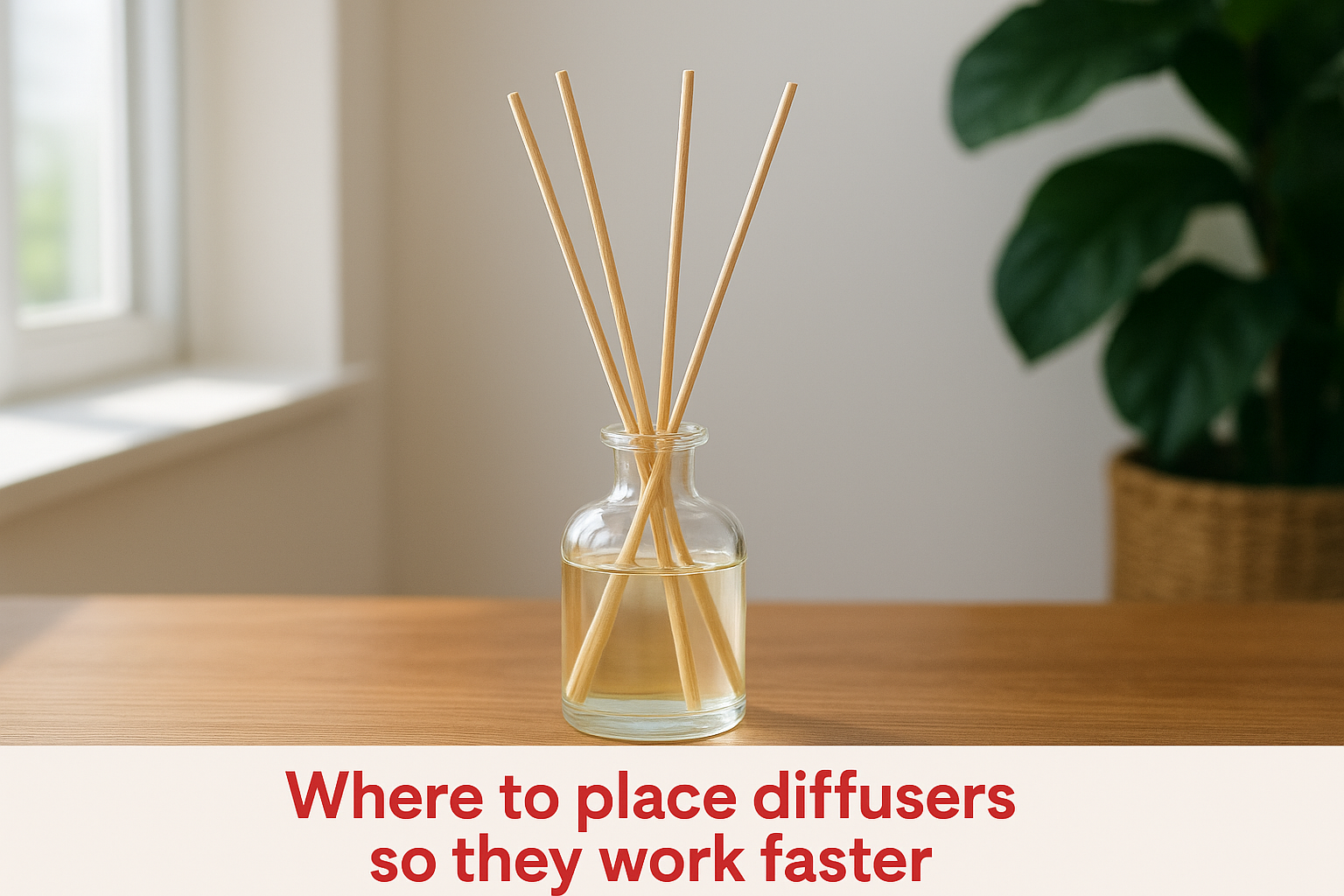
Reed diffusers give you a set-and-forget way to tackle how to make your home smell good naturally without lighting anything or running an appliance. You fill a small vessel with scented oil, insert a bundle of reeds, and the natural wicking action pulls fragrance slowly into the air around the clock.
Why reed diffusers keep a home smelling good all day
A reed diffuser works continuously without heat or electricity. The porous reeds absorb oil and release scent passively, so your room stays consistently fragrant whether you are home or not, making it more reliable than any spray-based option.
How to pick a base oil and avoid rancid smells
Use a light carrier oil like fractionated coconut oil or safflower oil. Avoid heavier oils like olive or almond, which go rancid quickly and produce an off smell that overtakes the fragrance. A thin, odorless base lets the essential oil come through cleanly.
The ratio that works best is roughly 70 percent carrier oil to 30 percent essential oil by volume.
Best essential oils for continuous scent
Choose high-volatility oils that diffuse well at room temperature. These options are widely available and perform consistently:
- Lavender
- Lemon
- Peppermint
- Eucalyptus
Heavier oils like sandalwood work better blended with a lighter option so they actually move up through the reed.
Where to place diffusers so they work faster
Set your diffuser near a natural airflow point like a hallway or entryway. Air movement carries scent through the room more effectively than still air does. Avoid enclosed corners, where stagnant air traps fragrance too close to the source.
How often to flip reeds and refresh the blend
Flip the reeds every three to four days for a scent boost. When fragrance fades even after flipping, replace the reeds entirely, since clogged reeds stop wicking efficiently regardless of how much oil remains in the vessel.
5. Deodorize with baking soda in high-odor spots
Baking soda is one of the most reliable and inexpensive tools you have for dealing with persistent household odors. Unlike sprays that layer scent over a problem, baking soda neutralizes odor-causing compounds chemically, which means it eliminates the smell rather than hiding it.
Why deodorizing beats "covering up"
When you mask a smell, the underlying odor source keeps producing new molecules and the cycle repeats. Baking soda (sodium bicarbonate) reacts with acidic and basic odor compounds to neutralize them directly. That process is the real foundation of how to make your home smell good naturally: remove the bad first, then add the good.
The best places to use baking soda around the house
Place an open box or shallow dish of baking soda in these high-odor zones for consistent results:
- Refrigerator shelves
- Under the kitchen sink
- Inside trash cans (sprinkle directly on the lining)
- Shoe racks and closets
- Litter boxes (sprinkle a thin layer under litter)
How to add a light natural scent without making a mess
Mix five to ten drops of essential oil into half a cup of baking soda, stir well, and pour it into a small jar with a perforated lid. The oil stays locked in the powder, so there is no oily residue on surfaces.
Lavender and lemon are the most effective oil additions because they pair cleanly with baking soda's neutral base.
How long it takes to work and when to replace it
Your baking soda starts absorbing odors within a few hours but reaches peak effectiveness after 24 hours. Swap it out every 30 days in active zones like the fridge or trash area to keep it working at full capacity.
Mistakes that make odors worse
Applying too much baking soda in one spot creates a thick, chalky layer that blocks airflow and reduces absorption. Also avoid mixing it with vinegar as a room deodorizer, since the reaction cancels out both ingredients before either one can neutralize ambient odor molecules.
6. Absorb lingering odors with activated charcoal
Activated charcoal is one of the most effective passive tools you have for dealing with stubborn smells, and it fits naturally into any plan for how to make your home smell good naturally. Unlike fragrance products that add scent to a room, activated charcoal pulls odor molecules out of the air entirely through a process called adsorption.
What activated charcoal does that baking soda does not
Baking soda neutralizes acidic and basic odor compounds, but activated charcoal works differently. Its porous surface structure traps a much wider range of airborne molecules, including volatile organic compounds and humidity-driven odors that baking soda leaves behind. You get broader coverage from a single product with no mixing required.
Activated charcoal bags work silently and require no spraying, measuring, or monitoring.
Where charcoal works best in a home
Place charcoal bags in enclosed or low-airflow spaces where odors concentrate: closets, gym bags, car interiors, under bathroom sinks, and near litter boxes. These tight spaces amplify results because limited air volume keeps the charcoal in contact with odor molecules longer.
How to "recharge" charcoal and keep it effective
Set your charcoal bags outside in direct sunlight for one to two hours once a month. UV exposure releases trapped molecules and restores the bag's full adsorption capacity without any replacement cost.
What to look for when you buy charcoal bags
Choose bags made with bamboo-based activated charcoal, which has a finer pore structure than coal-based alternatives. Look for breathable linen or cotton fabric on the exterior so air moves through the bag freely.
When to switch to an air purifier instead
If odors return within a day or two of placing charcoal, the source is still active and charcoal alone will not fix it. Your best move at that point is a HEPA air purifier with an activated carbon filter, which handles continuous, high-volume odor removal more reliably.
7. Use dried herbs, citrus peel, and spice sachets
Sachets are one of the oldest and simplest tools for passive home fragrance, and a reliable part of how to make your home smell good naturally. Fill a small fabric pouch with dried botanicals or spices, tuck it somewhere enclosed, and it slowly releases scent without heat, electricity, or any ongoing maintenance.
Why sachets work for closets, drawers, and bathrooms
Enclosed spaces concentrate scent naturally. A sachet placed in a drawer or closet has limited air volume to fill, so even a small amount of dried material produces noticeable, lasting fragrance over weeks without any effort from you.
The best herbs and spices for long-lasting scent
Lavender, rosemary, and dried citrus peel hold their scent the longest because of their high volatile oil content. Cloves, cinnamon sticks, and cedar chips are strong secondary options that stay potent for months in enclosed conditions.
How to keep sachets from turning musty
Replace your sachets every four to six weeks, or sooner if the scent fades. Moisture is the main enemy here; never place sachets near a bathroom sink or other humid spot, since damp botanicals mold quickly and produce an unpleasant smell.
Squeeze the sachet gently every few days to release fresh fragrance from the dried material inside.
Easy scent combinations that smell "naturally clean"
Pair lavender with dried lemon peel for a clean, light blend. Mix rosemary with cloves for something warmer and woodsy. Both combinations smell genuinely fresh rather than perfumed.
Where sachets do not work well
Sachets do not perform well in large, open-plan rooms where air moves freely. The scent dilutes too fast to make a meaningful difference, making diffusers or candles a far better fit for those spaces.
8. Remove odor sources and improve airflow
The most important part of how to make your home smell good naturally is removing what smells bad before adding anything pleasant. Every method in this article works better when the underlying odor source is gone, so this step comes first.
A quick checklist to find the real source of smells
Walk through each room and check the obvious culprits first: trash cans, drains, laundry hampers, and refrigerator drawers. If a smell persists after cleaning those, check inside appliances like the dishwasher filter and washing machine drum, where residue builds up fast and goes unnoticed for months.
Kitchen odor fixes that work fast
Pour boiling water and a few drops of dish soap down your sink drain weekly to clear grease buildup. Wipe the inside of your trash can with white vinegar after each bag change to stop odor-causing bacteria from taking hold between uses.
Bathroom and laundry odor fixes that stick
Clean your washing machine drum monthly by running an empty hot cycle with two cups of white vinegar. In the bathroom, scrub the toilet base and behind the tank, since those spots collect buildup that standard cleaning typically misses.
A clean drain and a wiped-down trash can solve more odor problems than any fragrance product ever will.
Pet odor basics that help without harsh chemicals
Sprinkle baking soda on carpets and pet bedding, let it sit for fifteen minutes, then vacuum. Wash pet bedding every one to two weeks to prevent odor from saturating the fabric permanently.
Ventilation and filter habits that keep homes fresh
Open windows for ten minutes each morning to flush stale indoor air. Replace your HVAC filter every 60 to 90 days to keep air moving clean through every room in the house.
Keep your home fresh naturally
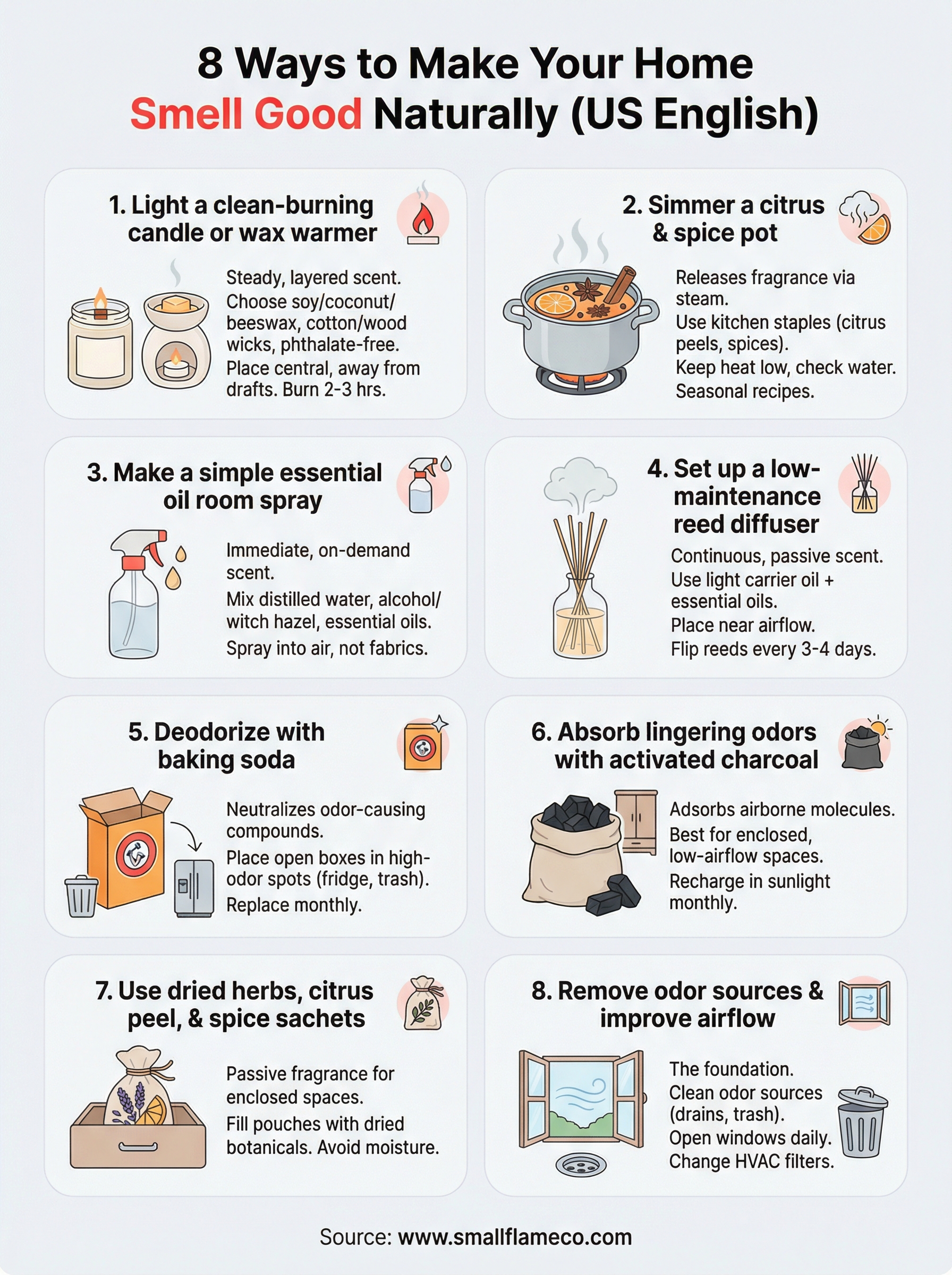
Every method here gives you a practical, chemical-free way to tackle how to make your home smell good naturally. The real key is combining a few of these habits rather than relying on any single fix. Remove the odor source first, then layer in something pleasant like a simmer pot, a reed diffuser, or a clean-burning candle, and your home stays ahead of odors instead of reacting to them.
Starting small is perfectly fine. A few consistent habits, like cracking a window each morning, refreshing your baking soda monthly, and running a candle for a couple of hours in the evening, add up to a noticeable difference over time. Pick whichever method in this list fits your space best, then build from there. If you want a candle that burns clean and fills a room with real fragrance, explore the hand-poured coconut wax candles from Small Flame Candle Company and find a scent that fits your home.