

How To Recycle Glass Candle Jars: Clean Wax, Wick, Labels
Every hand-poured candle from Small Flame Candle Company eventually burns its last flame, and you're left with a perfectly good glass jar. Tossing it in the trash feels wasteful, but tossing it straight into your recycling bin isn't quite right either. Leftover wax, metal wick tabs, and adhesive labels can all contaminate your recycling stream or cause your jar to be rejected at the sorting facility. So how do you actually go about learning how to recycle glass candle jars the right way?
It's simpler than you might think. With a few household tools and about fifteen minutes of hands-on effort, you can clean out any glass candle jar, ours included, so it's ready for curbside recycling or a second life around your home. We pour our candles into reusable glass vessels for exactly this reason: good materials deserve more than one purpose.
This guide walks you through removing old wax, pulling out the wick hardware, peeling off labels, and prepping the jar for recycling or repurposing. Each step is straightforward, and no special equipment is required.
Before you start: safety and local recycling rules
Not every city or county accepts glass in curbside bins, and the rules for candle jars specifically can vary from one program to the next. Before you learn how to recycle glass candle jars properly, spending two minutes to verify what your local program accepts will save you from doing all the cleanup work only to have your jar rejected at the facility.
Check your local recycling program first
Your municipal recycling program's website is the fastest place to confirm whether glass is accepted, and if so, whether it needs to be sorted separately from plastic and metal. Some programs run a mixed-bin system where glass goes in with everything else. Others require you to drop glass off at a designated facility rather than placing it at the curb.
When in doubt, call your local waste management office directly. A two-minute phone call is far faster than guessing wrong and contaminating a whole load of recyclables.
Here is what to look for when you check:
- Whether glass is accepted curbside or only at a drop-off location
- Whether candle glass qualifies, since some programs exclude heat-treated glass
- Whether the jar must be free of all residue before it is accepted
Safety basics before you heat anything
Several of the wax removal methods in this guide involve applying heat to the jar, either through hot water or a low oven setting. Before you try any of them, make sure your jar has no visible cracks or chips. Thermal stress on a damaged jar can cause it to break without warning.
Keep a pair of heat-resistant oven mitts or silicone tongs nearby whenever you handle a warm jar. Set the jar on a folded dish towel rather than directly on a cold countertop, which can cause sudden temperature changes and cracking.
Step 1. Remove leftover wax without damaging the jar
Leftover wax is the biggest obstacle between your empty candle jar and the recycling bin. Most recycling facilities will reject contaminated glass, so removing every trace of wax is non-negotiable before you move forward.
The freezer method (easiest)
Place the jar in your freezer for two hours. As the wax cools, it contracts and pulls away from the glass walls. Once it's fully frozen, flip the jar upside down and tap the bottom firmly. The wax plug should pop out cleanly in one or two solid pieces. Use a butter knife to loosen any edges that still cling to the sides.
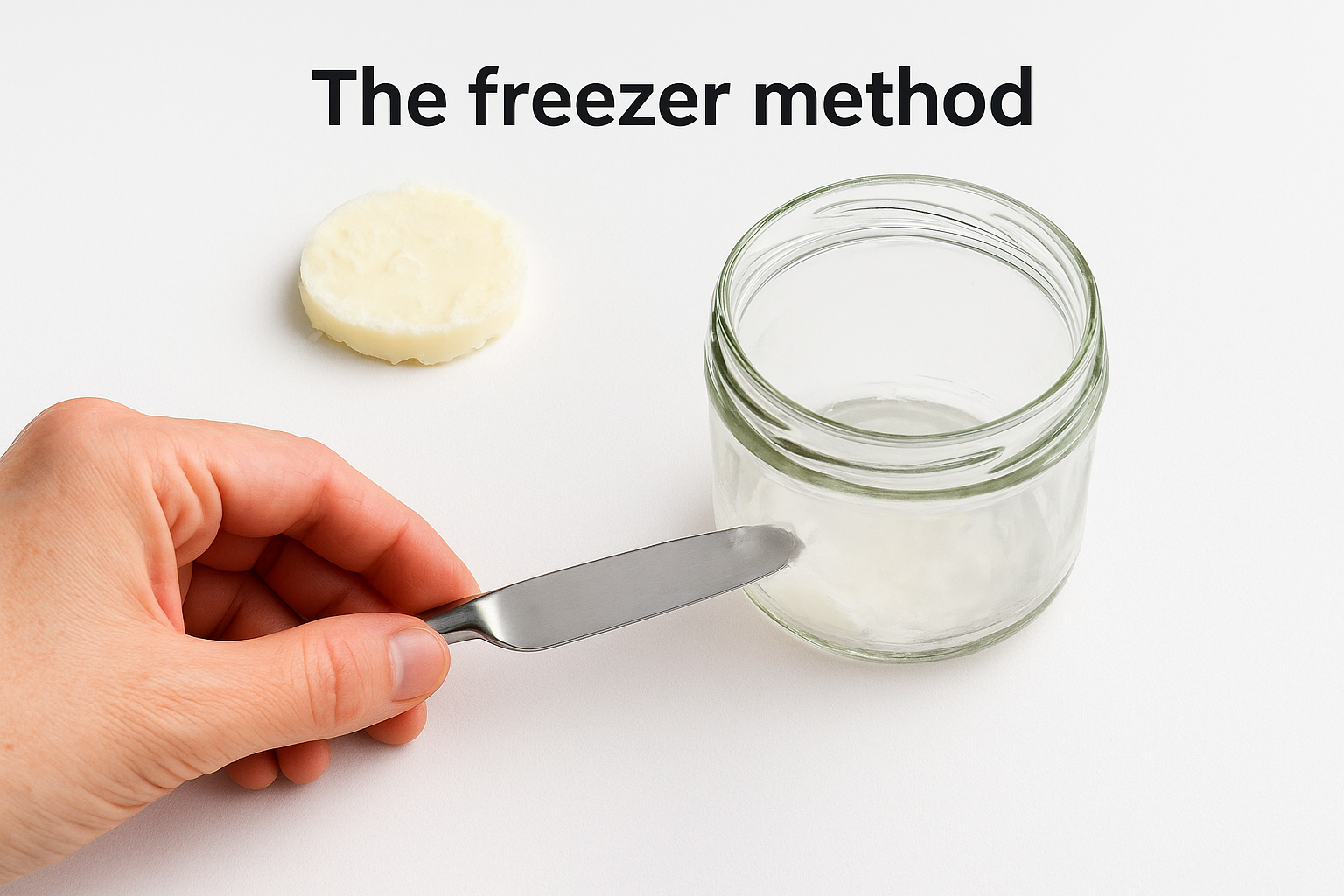
The freezer method works best when at least a quarter inch of wax remains in the jar.
The hot water method (for thinner residue)
Boil water and carefully pour it directly into the jar, leaving about an inch of space at the top. The heat melts the remaining wax, which then floats to the surface as the water cools. Once the water is completely cool, lift the hardened wax disc off the top and discard it in the trash rather than your drain. Pour out the water, then wipe the inside of the jar with a paper towel to pick up any thin film left behind.
Step 2. Pull out the wick, tabs, and any lids
Once the wax is out, you'll find metal wick tabs and possibly a lid still inside the jar. These small pieces are exactly why understanding how to recycle glass candle jars correctly matters: metal tabs and glass belong in separate recycling streams, so removing all hardware now keeps everything sorted properly for your local facility.
Removing the wick tab
The metal wick tab is glued to the bottom of the jar with a small adhesive dot. Grip it firmly with needle-nose pliers and twist gently while pulling upward. If it resists, run hot water over the outside bottom of the jar for thirty seconds to soften the adhesive, then try again. Drop the tab into your metal recycling bin or household scrap metal collection.
If the tab won't budge after heating, use the tip of a butter knife to pry up one edge before grabbing it with pliers.
Dealing with lids
Lids are almost always recyclable, but not necessarily with the glass jar itself. Check whether your local program requires lids separated by material type, since metal lids and plastic lids typically go into different bins. When in doubt, remove the lid entirely and sort it on its own rather than leaving it on the jar and risking a rejected load.
Step 3. Remove labels and sticky residue for a clean jar
A clean jar means no paper, no glue film, and no leftover adhesive anywhere on the glass. Most recycling facilities run glass through automated sorting, and labels or sticky patches can jam equipment or bond to other materials in the load. Taking two minutes to strip the jar completely is the last cleaning step that stands between you and a fully recyclable or reusable vessel.
Peeling the label
Soak the jar in warm, soapy water for ten minutes. Most paper labels will loosen enough to peel off in one clean pull from a corner. If the label tears and leaves behind a paper layer, use your fingernail or a plastic scraper to work under the edge and peel it away in sections.
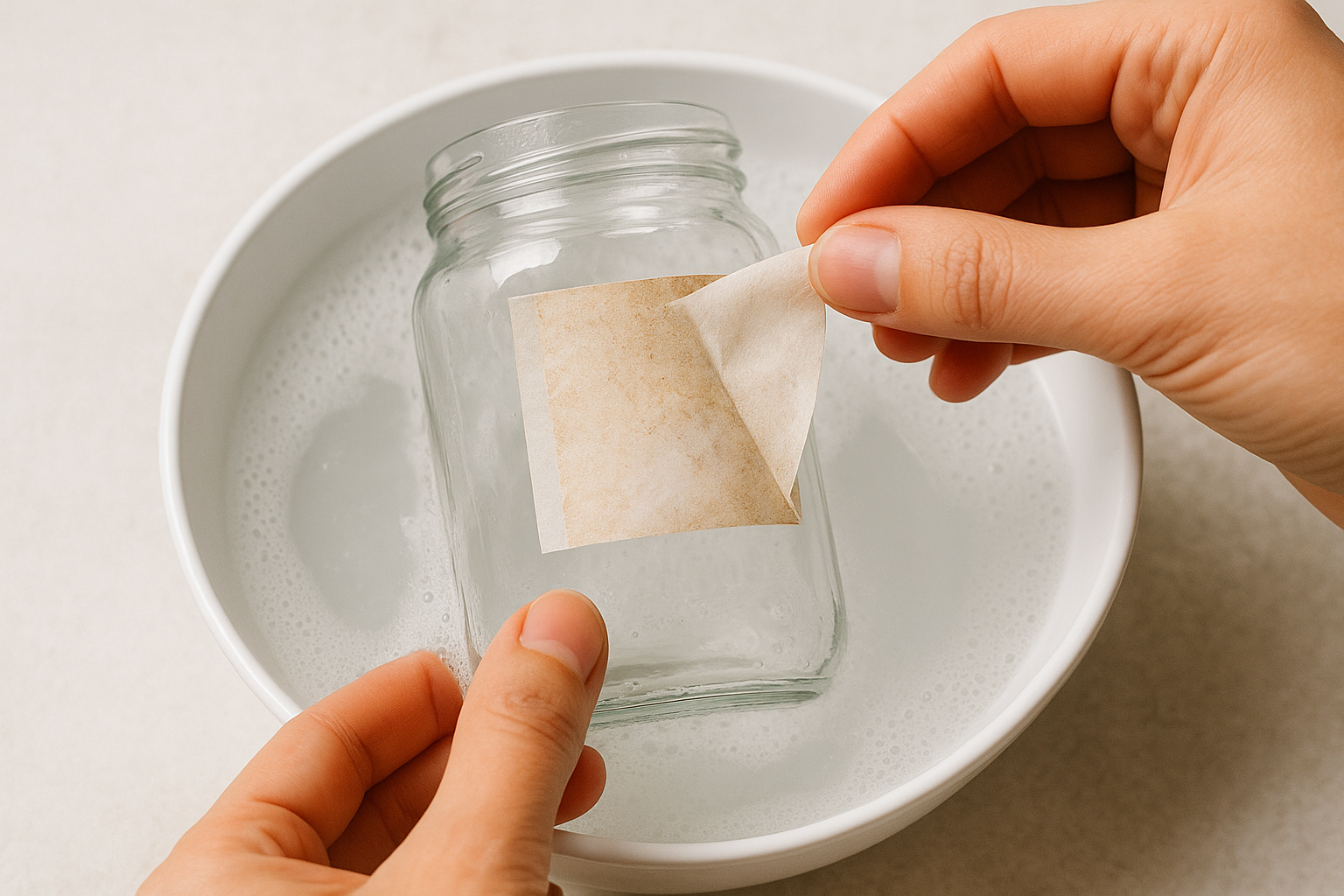
Hot water speeds up the process significantly, but keep the jar fully submerged rather than running it under a stream to get even saturation across the entire label.
Removing sticky residue
After the label is off, you may notice a thin, tacky adhesive film still on the glass. Apply a small amount of cooking oil or rubbing alcohol to a paper towel and rub the residue in circular motions until it lifts completely. Rinse the jar with dish soap and warm water to finish.
Step 4. Recycle it or reuse it the right way
Your jar is now wax-free, hardware-free, and label-free, which means it's ready for its next chapter. At this point, you have two straightforward options: drop it into the recycling stream or put it back to work in your home. Either choice beats sending a perfectly good glass vessel to the landfill.
Send it to recycling
Place the clean jar in whatever glass recycling container your local program specifies, whether that's a curbside bin or a designated drop-off location you confirmed before starting. Make sure the jar is completely dry before it goes in, since moisture can introduce mold during storage at the facility.
A clean, dry glass jar is one of the easiest materials for recycling facilities to process when it arrives free of contamination.
Give it a second life at home
Reusing the jar is often the better environmental choice because it skips the energy-intensive recycling process entirely. Your cleaned jar works well as a desk organizer, small planter, bathroom storage vessel, or kitchen container for loose items like cotton swabs or spices. Understanding how to recycle glass candle jars also means recognizing when reuse makes more sense than recycling in the first place.
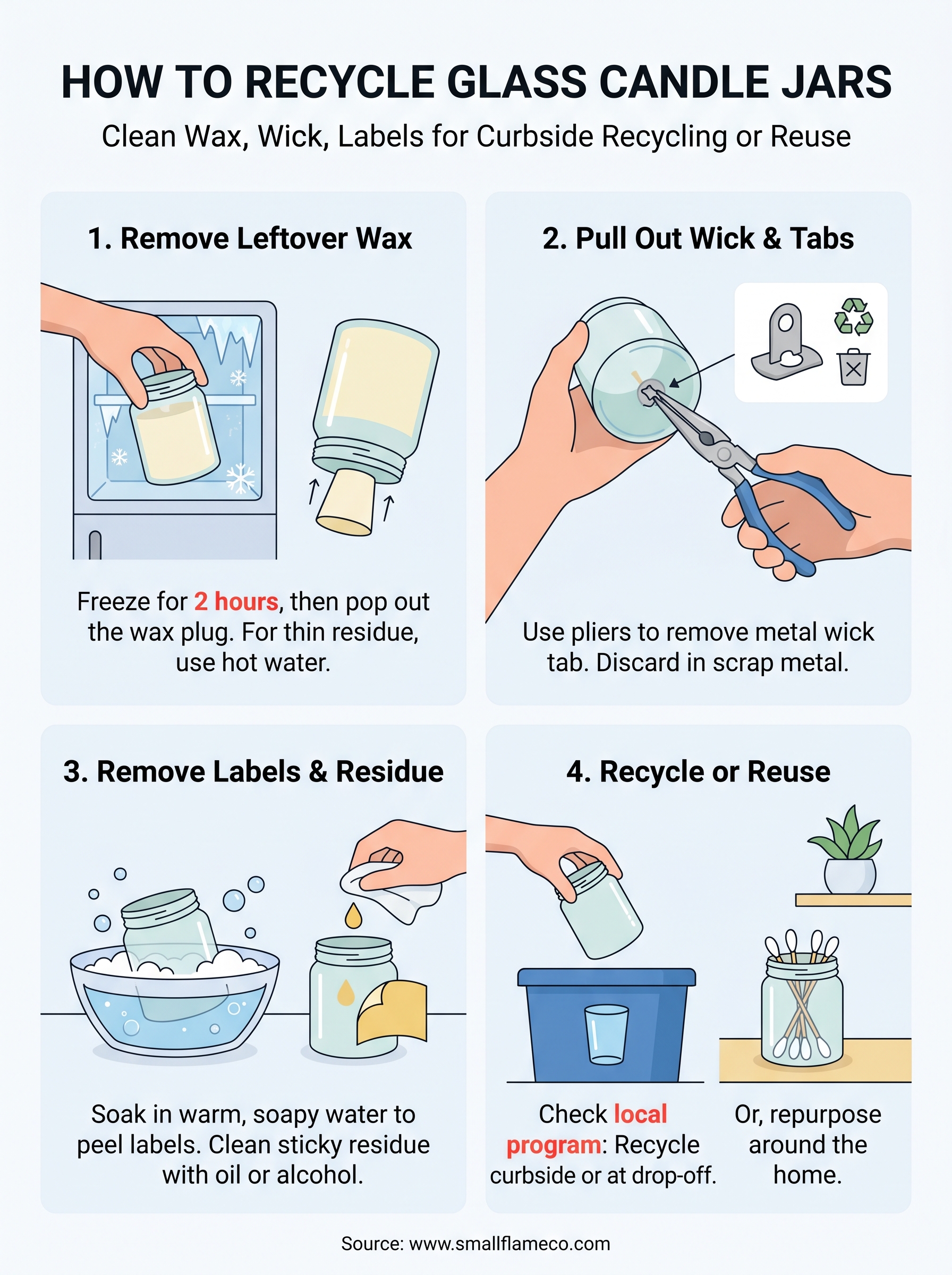
Quick recap
Learning how to recycle glass candle jars comes down to four steps: remove the wax, pull out the metal hardware, strip the label, and confirm what your local program accepts. Each step builds on the last, and skipping any one of them can get your jar rejected at the facility or leave it too dirty to reuse effectively.
Your cleaned jar has real value, whether it ends up in a recycling bin or on a shelf holding cotton rounds. The fifteen minutes of effort you put in keeps good glass out of the landfill and gives the vessel a purpose beyond a single burn.
Small Flame Candle Co. hand-pours every candle into reusable glass using a clean-burning coconut-soy wax blend, so your next jar is already worth saving. Shop the full coconut wax candle collection and find a scent worth burning all the way to the bottom.