

How To Store Candles: Best Conditions For Lasting Scent
You spent good money on a candle you love, maybe one with a scent that reminds you of fresh-baked cinnamon rolls or a rainy morning in the woods. But after a few weeks sitting on a sunny windowsill, that beautiful fragrance has faded, and the wax has started to sweat or discolor. Knowing how to store candles correctly is the difference between a candle that performs like new and one that's lost its magic before you ever light it.
At Small Flame Candle Company, we hand-pour every candle we sell. We put real effort into getting scent profiles right, so it genuinely bothers us when improper storage cuts a candle's life short. That's why we put this guide together, to help you protect your investment and get every last hour of burn time and fragrance throw out of your candles.
This guide covers the ideal temperature, humidity, and light conditions for candle storage, along with practical organization tips and common mistakes that quietly ruin good candles. Whether you're stashing a seasonal rotation or just trying to keep your favorites fresh between burns, you'll walk away with a clear plan to make your candles last.
What proper candle storage protects
Before diving into how to store candles correctly, it helps to understand exactly what you're protecting. Candles are more fragile than they look. Heat, light, and moisture all work against the materials that make a candle worth burning in the first place. Once you know what's at stake, the storage steps that follow will make a lot more sense.
Your candle's fragrance
Fragrance is the first thing to go when you store a candle badly. Scent molecules are volatile, meaning they evaporate into the air over time, and heat or direct sunlight speeds that process up fast. A candle left in a warm drawer or near a window can lose a significant portion of its fragrance throw long before you ever light it.
The cooler and darker the storage spot, the longer your candle holds onto its full scent profile.
The main culprits that accelerate fragrance loss include:
- Direct sunlight or UV exposure
- Ambient heat above 77°F (25°C)
- Leaving candles uncovered or unwrapped for extended periods
The wax surface and wick
Wax reacts to temperature swings in two frustrating ways. Too much heat causes fragrance oil to migrate to the surface, leaving a greasy or spotted look called "sweating." Rapid cooling after warmth can crack the wax or cause it to pull away from the container wall. Neither ruins candle safety, but both affect burn quality and first impressions when you finally use it.
Your wick is just as vulnerable. A wick that collects dust, bends out of position, or absorbs moisture before the first burn will produce an uneven melt pool and excess smoke. Protecting both the wax and wick during storage ensures that when you light that candle, it performs exactly as it was designed to.
Step 1. Choose the right storage conditions
The single biggest factor in how to store candles successfully is environment. Temperature, light exposure, and humidity each play a direct role in whether your candle holds its scent and structure over time. Getting these three conditions right costs you nothing, but ignoring them will quietly degrade every candle you own.
Temperature
Keep candles in a space that stays between 50°F and 77°F (10°C to 25°C). Anything warmer than 77°F softens wax, accelerates fragrance evaporation, and causes oils to pool on the surface. Watch out for these common heat sources that sneak into storage areas:
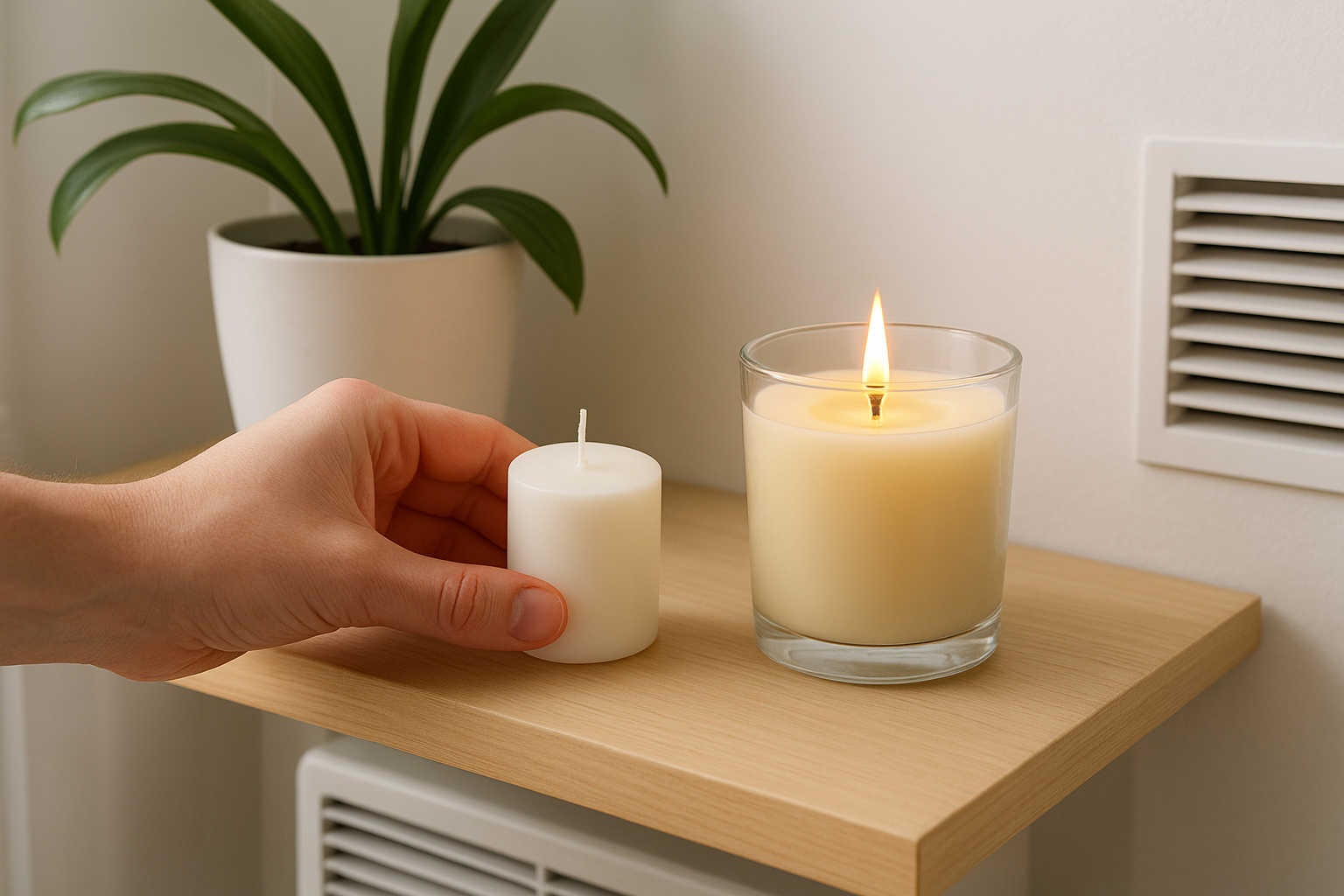
- Heat vents and radiators
- Windowsills with direct afternoon sun
- Appliances like ovens, dryers, or refrigerator tops
A stable, cool temperature is the single most important factor in preserving your candle's scent and shape long-term.
Light and humidity
Direct sunlight and UV light fade wax color and fragrance faster than almost anything else. Store candles in a closed drawer, cabinet, or box to block light entirely. Humidity above 50% softens wax, warps labels, and makes wicks harder to light cleanly, so avoid these spots:
- Bathrooms with regular shower steam
- Garages or basements without climate control
- Near open windows during humid summer months
Step 2. Prep candles before you put them away
A little preparation before storage goes a long way. Before you know how to store candles in the ideal conditions covered above, you need to make sure each candle is ready to be stored in the first place. Skipping this step can lock in damage that even the best storage environment can't fix later.
Trim the wick and clean the wax surface
Trim your wick to about 1/4 inch before putting any candle away. A long wick collects dust and debris much faster, which creates excess smoke and mushrooming when you eventually burn it. Wipe the wax surface gently with a dry lint-free cloth to remove any dust, fingerprints, or old fragrance oil residue that has pooled on top.
A clean, trimmed wick is one of the easiest ways to guarantee a clean, even burn the next time you light your candle.
Cover or wrap each candle
Replace the lid if your candle came with one, or wrap it in plastic wrap to seal the fragrance in and keep dust out. For pillar candles or taper candles, a sheet of plastic wrap secured with a rubber band works well and keeps the wax surface protected during storage.
Step 3. Pick containers that prevent damage and scent loss
The container you choose for storage directly affects both scent retention and physical protection. Not every option works equally well, and the wrong choice can trap moisture, allow fragrance to escape, or press against the wax surface in ways that cause denting or cracking. Thinking through this step is a core part of knowing how to store candles for the long haul.
Best container options by candle type
Lidded containers and sealable boxes are your best bet for most candles. Here is what works well for different candle formats:
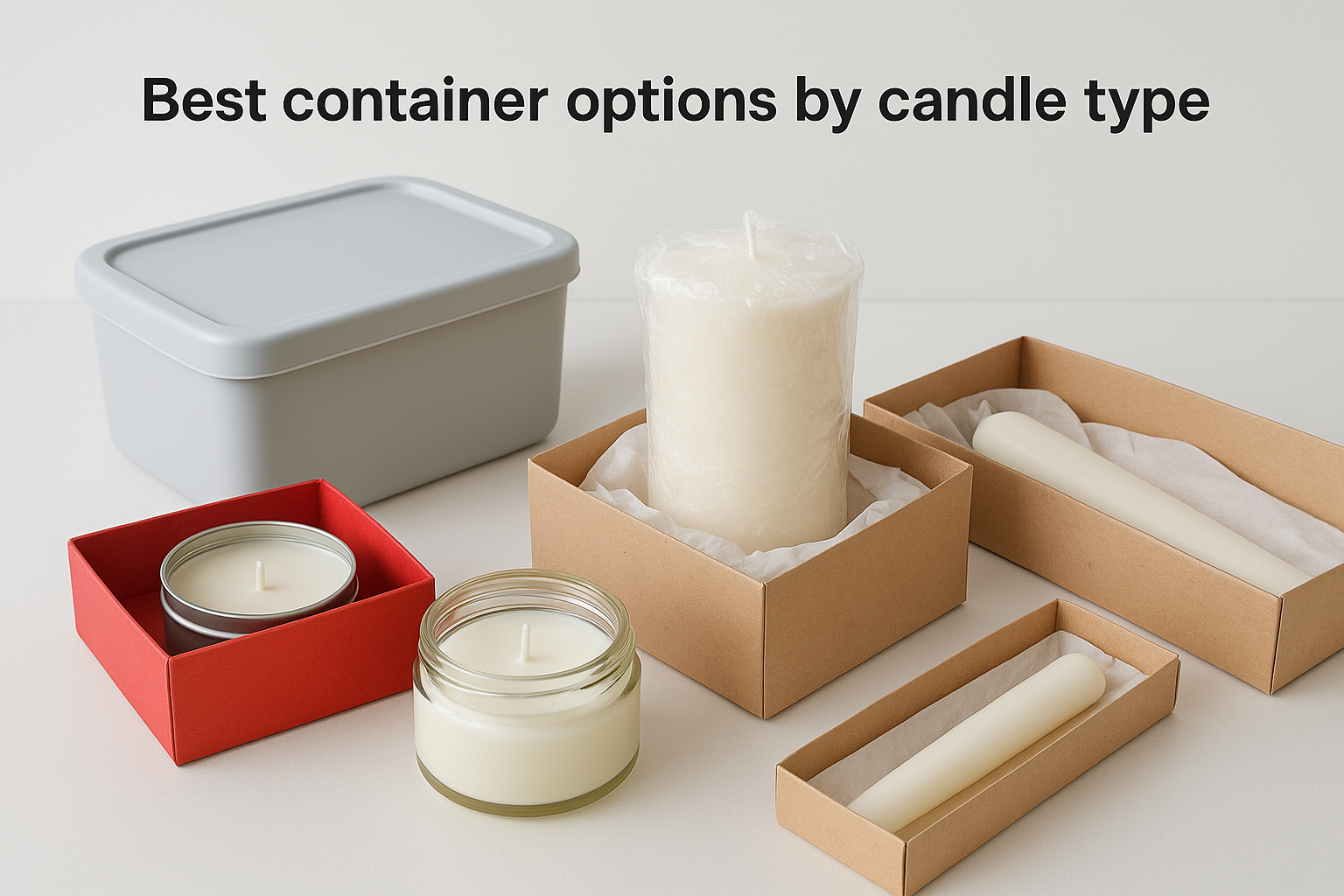
- Jarred or tin candles: Store inside the original packaging or place in a small lidded box
- Pillar candles: Wrap in plastic wrap, then nestle into a cardboard box with tissue paper padding on all sides
- Taper candles: Lay flat in a long, shallow box lined with paper to prevent bending
The original packaging a candle ships in is almost always the best container for long-term storage.
What to avoid
Airtight hard plastic bins without a barrier layer are a common mistake. Placing unwrapped candles directly against hard plastic traps humidity and promotes surface sweating. Storing multiple scented candles loose together in the same container without individual wrapping is equally harmful, because the fragrance profiles will bleed into each other and weaken over time.
Step 4. Organize by type and rotate your stash
Once your candles are properly prepped and stored, organization determines whether you can actually find and use them before they degrade. A disorganized stash leads to forgotten candles that sit too long, lose fragrance, and eventually get wasted. This final step in how to store candles correctly ties everything together.
Group candles by wax type and scent family
Grouping similar candles together keeps strong fragrances from competing with lighter ones and makes your storage space easy to navigate. Sort your collection using these categories:
- Soy and coconut wax candles: most sensitive to heat, store together in the coolest spot
- Paraffin candles: more heat-stable, can occupy slightly warmer shelving
- Pillar and taper candles: store flat and grouped by size to prevent bending
Rotate your stash to use older candles first
Treat your candle collection like a pantry, using the oldest ones first and moving newer purchases to the back. Fragrance oils don't last forever, even in ideal storage, so rotating your stash ensures nothing gets forgotten long enough to go flat. Check your storage every three to four months and bring any candles older than a year to the front of the line.
Even well-stored candles are best used within 12 to 18 months of purchase for peak scent performance.
Quick recap and next steps
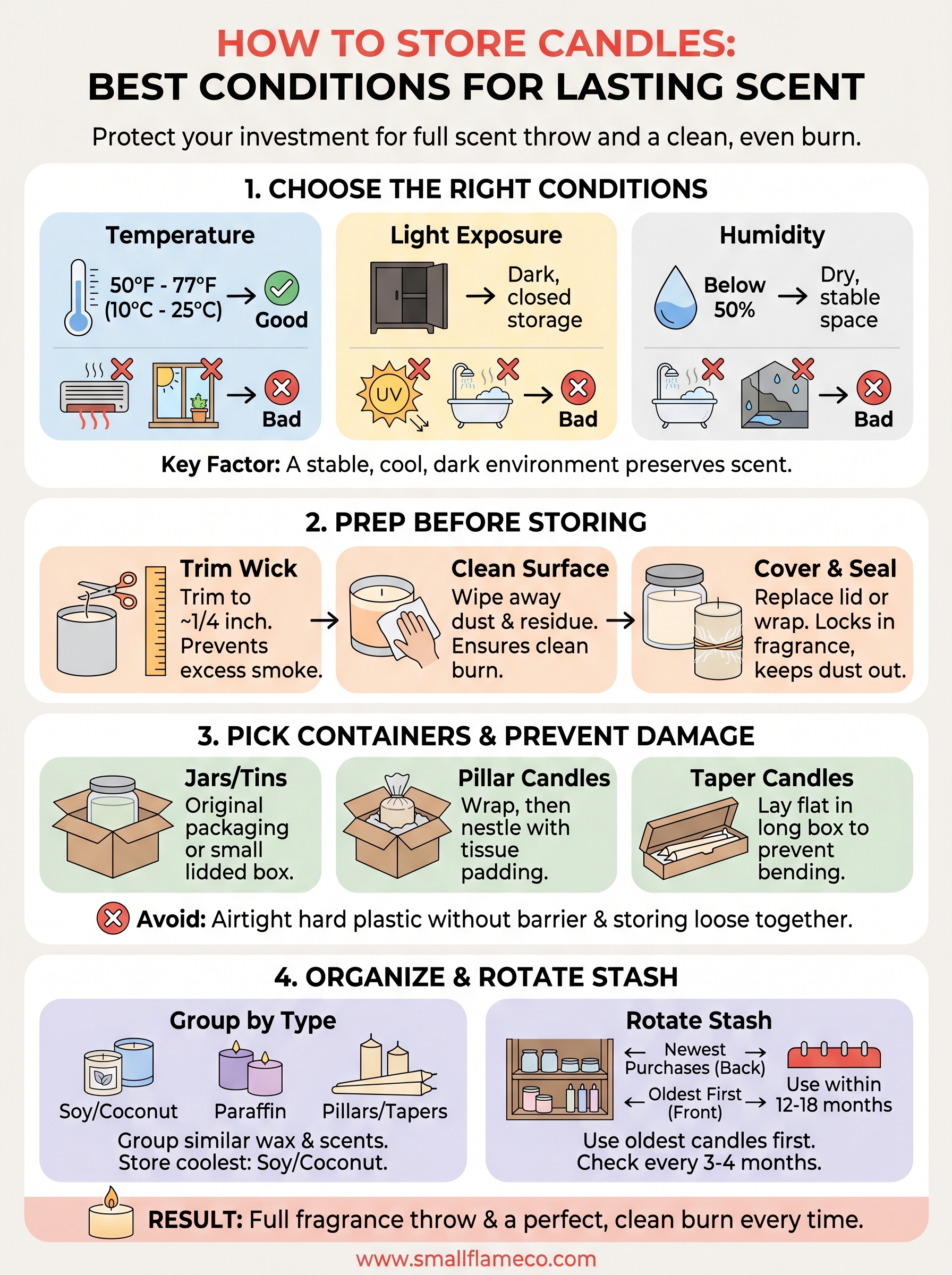
Knowing how to store candles properly comes down to four straightforward steps. Keep candles in a cool, dark, and dry space away from heat sources and direct sunlight. Prep each candle before storage by trimming the wick and covering the wax surface. Choose containers that protect against moisture and fragrance bleed, and rotate your stash so older candles get used first.
Following these steps protects your fragrance investment and ensures every candle performs exactly as intended when you light it. A well-stored candle delivers its full scent throw and a clean, even burn from the first strike to the last.
Ready to build a collection worth storing? Small Flame Candle Co. hand-pours every candle with a coconut-soy wax blend and toxin-free fragrance oils that hold their scent beautifully when cared for correctly. Browse the coconut wax candle collection and find your next favorite.