

Soy Wax Vs Beeswax For Candles: Cost, Scent, Burn Time Guide
Choosing between soy wax vs beeswax for candles comes down to what matters most to you, whether that's cost, how long the candle burns, how well it fills a room with fragrance, or its environmental footprint. Both waxes have loyal followings, and both have real trade-offs that are worth understanding before you spend your money.
At Small Flame Candle Company, we hand-pour every candle we sell, so wax selection isn't abstract to us, it's a decision that directly shapes burn performance, scent throw, and the overall experience you get when you light the wick. We've worked with these materials hands-on, and that experience informs everything below.
This guide breaks down the practical differences between soy wax and beeswax across the categories that actually matter: cost per hour of burn time, scent delivery, clean-burning properties, and sustainability. By the end, you'll have a clear picture of which wax fits your priorities, whether you're shopping for your living room or pouring your own candles at home.
Why wax choice matters for your candle goals
The wax in a candle isn't just a vessel for the wick. It determines how long your candle burns, how strongly the fragrance fills a room, whether the flame deposits soot on your walls, and how much you pay per hour of scent and light. When you're comparing soy wax vs beeswax for candles, each of these outcomes shifts depending on which wax you choose, and those shifts add up quickly across regular use.
How wax type shapes burn performance
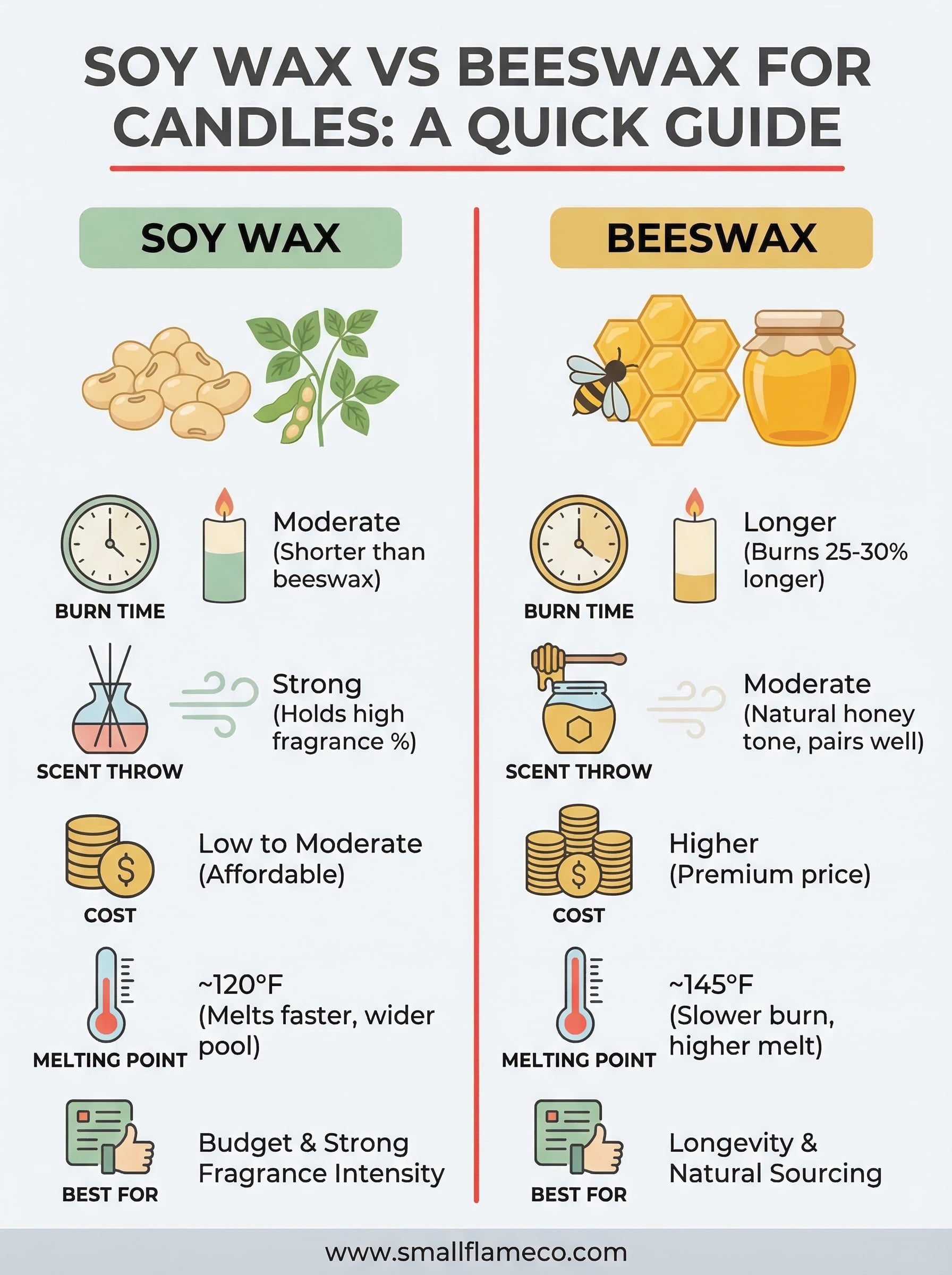
Not all waxes melt or combust at the same rate. Beeswax has a higher melting point (around 145°F) than soy wax (around 120°F), which means it burns slower and typically delivers a longer burn time from the same candle size. Soy wax melts at a lower temperature, which creates a wider melt pool faster and releases fragrance oil into the air more quickly after you light the wick.
A slower-burning wax doesn't automatically mean a better candle. The right burn rate depends on your room size and how quickly you want the scent to build.
How wax affects fragrance and air quality
The wax you choose directly shapes scent throw, which is how far fragrance travels from the candle into the surrounding space. Soy wax holds a high percentage of fragrance oil by weight, which supports a strong cold throw (the scent you notice before lighting). Beeswax carries its own faint natural honey scent, which can complement some fragrances and clash with others, so it requires more thoughtful pairing.
Air quality is worth considering as well. Both soy and beeswax produce significantly less soot than paraffin. Beeswax is also frequently noted for releasing negative ions during combustion, which some people find beneficial for indoor air. Your priorities around fragrance intensity and air cleanliness should factor into the wax you select.
Soy wax vs beeswax at a glance
Before diving into detailed comparisons, a quick side-by-side view helps you get your bearings. When you compare soy wax vs beeswax for candles, the most meaningful differences land across four areas: price per ounce, burn time, how well the wax holds fragrance oil, and where each wax actually comes from.
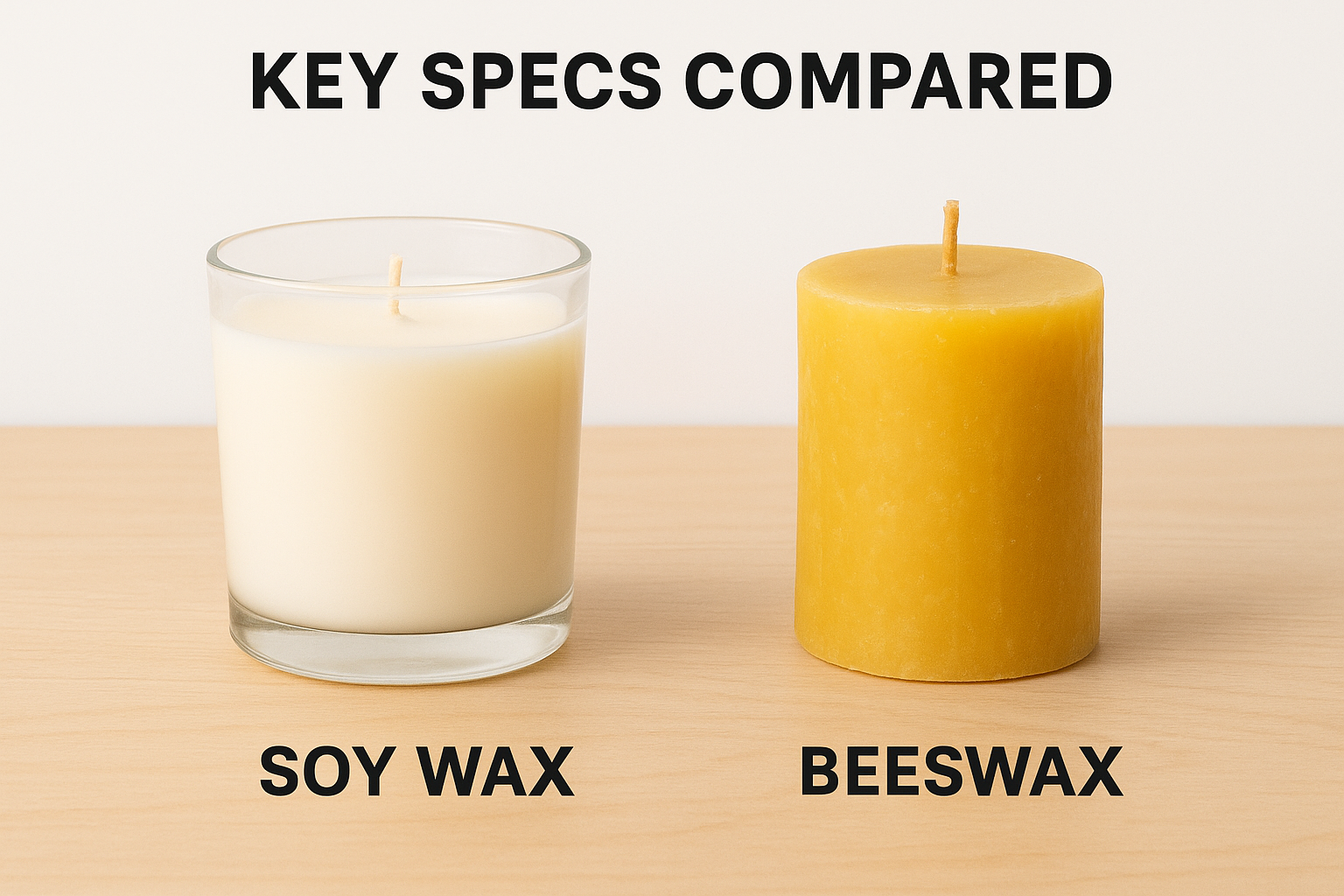
Key specs compared
The table below puts the core facts together so you can scan them before reading deeper into each category.
| Factor | Soy Wax | Beeswax |
|---|---|---|
| Average cost | Low to moderate | Higher |
| Burn time | Moderate | Longer |
| Scent throw | Strong | Moderate |
| Melting point | ~120°F | ~145°F |
| Source | Soybeans (agricultural crop) | Honeybees (animal byproduct) |
| Appearance | Soft white to ivory | Warm yellow to ivory |
Your specific priorities decide which wax fits best. There is no single right answer that applies to every candle buyer or maker.
Both waxes bring genuine strengths, and both carry trade-offs worth knowing before you buy or start pouring. Soy wax holds a higher percentage of fragrance oil by weight, which makes it a strong performer for scent delivery. Beeswax offers a longer burn time and a natural honey-like aroma that pairs well with certain fragrance profiles but clashes with others.
Burn, scent, and performance differences
When you're comparing soy wax vs beeswax for candles, burn time and scent delivery are the two performance factors that most directly affect your daily experience. Understanding how each wax behaves helps you set realistic expectations before buying.
Burn time
Beeswax burns slower than soy wax because of its higher melting point, which means you typically get more hours per ounce from a beeswax candle. A standard 8 oz beeswax candle can burn 25 to 30 percent longer than a comparable soy candle.
If burn time is your top priority, beeswax delivers more value per candle over the long run.
Your soy wax candle melts faster, creating a wider melt pool sooner after lighting. That quicker melt releases fragrance oil into the air faster, so you notice the scent earlier in the burn.
Scent throw
Soy wax holds up to 10 to 12 percent fragrance oil by weight, which produces a strong, consistent hot throw across a typical room. This makes soy a reliable choice when fragrance intensity is your primary concern.
Beeswax carries a natural honey undertone that complements warm, sweet, or earthy fragrance blends but tends to compete with lighter scents like citrus or fresh linen.
Cost, sourcing, and environmental tradeoffs
When comparing soy wax vs beeswax for candles, price and sourcing are often the deciding factors. These two waxes sit at very different price points, and their origins shape how you think about the ethics and sustainability of your purchase.
Price and availability
Soy wax costs significantly less than beeswax, which directly shapes the final price of any candle that uses it. Soy wax is also widely available through large agricultural supply chains, which keeps costs stable and supply consistent year-round.
- Soy wax: typically $2 to $4 per pound
- Beeswax: typically $8 to $15 per pound
If budget is a primary concern, soy wax delivers a solid candle experience at a fraction of the cost of beeswax.
Environmental considerations
Beeswax is a natural animal byproduct with minimal processing, which appeals to buyers who prioritize low-intervention sourcing. However, demand for beeswax puts pressure on beekeeping operations, and quality varies widely by supplier depending on their harvesting practices.

Soy wax is renewable and biodegradable, though large-scale soybean farming raises real concerns about land use and agricultural impact. Neither option is a perfect environmental choice, so your values and priorities should guide which trade-off you're willing to accept.
How to choose the right wax for your use case
The best way to approach soy wax vs beeswax for candles is to start with your specific situation rather than searching for a universal winner. Your priorities around budget, scent intensity, and burn time will point you toward one wax more clearly than any generalized ranking can.
Choose soy wax if budget and scent matter most
Soy wax is the stronger choice when you want strong fragrance throw at a low cost. If you're buying candles for everyday use, filling a larger room with scent, or experimenting with candle making for the first time, soy wax delivers consistent performance without a high price tag.
Soy wax works especially well with bold, complex fragrance blends like bakery or fruit scents.
Choose beeswax if burn time and natural sourcing are your priority
Beeswax fits you well when long burn time and minimal processing are your top concerns. If you want a candle that lasts longer per use, pairs well with warm or honey-forward scents, and comes from a low-intervention natural source, beeswax earns the premium price.
For most everyday buyers, soy wax offers the better overall value unless burn time or natural sourcing sits at the top of your list.
Key takeaways
The comparison of soy wax vs beeswax for candles comes down to three practical factors: cost, scent throw, and burn time. Soy wax costs less, holds fragrance oil well, and delivers strong scent across most room sizes. Beeswax burns longer and carries a natural honey tone that pairs well with warm or earthy fragrances, but you'll pay a premium for it.
Your candle buying decision gets simpler when you focus on what matters most to you. If everyday use and fragrance intensity are your main goals, soy wax delivers real value. If you want a longer-burning candle from a low-intervention natural source, beeswax is worth the higher price.
For a candle that combines the strengths of both wax types, explore our hand-poured coconut-soy candle collection at Small Flame Candle Co. Each candle is crafted for clean, long-lasting scent using toxin-free fragrance oils and a soot-free burn, so you get strong performance from every pour.