

What Is The Best Wax For Wax Melts? Soy Vs Paraffin
Choosing the right wax can make or break your wax melts. Use the wrong type and you'll end up with weak scent throw, uneven melting, or a waxy mess in your warmer. So what is the best wax for wax melts, and does it actually matter which one you pick? The short answer: yes, it matters a lot. The wax you use directly affects how strong your fragrance fills a room, how long each melt lasts, and how clean it burns.
At Small Flame Candle Company, we hand-pour every product we sell and have tested our share of wax types to get our fragrances right. From soy and paraffin to coconut blends, each wax behaves differently when melted, and those differences show up in real-world performance, not just spec sheets. We built our scent library around what actually works in a warmer, so this isn't theory. It's what we've learned through hands-on production.
This article breaks down the most common wax types used for wax melts, compares their strengths and trade-offs, and helps you figure out which wax fits your priorities, whether that's scent throw, clean ingredients, or getting the most out of every cube. We'll cover soy, paraffin, and a few options in between so you can make a confident choice before your next batch or purchase.
What makes a wax great for melts
Not every wax behaves the same way when you drop it into a warmer, and that difference separates a satisfying scent experience from a disappointing one. When you're thinking about what is the best wax for wax melts, you need to evaluate a few specific properties before anything else. A wax that works well in a candle might perform poorly as a melt, because melts work without a flame and at lower operating temperatures, which changes how fragrance gets released into the air.
Scent throw
Scent throw is the most important factor for most people, and it splits into two types: cold throw (how the wax smells before melting) and hot throw (how well it fills a room once it's in the warmer). Hot throw is what matters in daily use. A wax with strong hot throw pushes fragrance molecules into the air efficiently, meaning you'll smell your melt from across the room, not just when you're standing directly over the warmer.
The quality of your hot throw depends more on the wax you pick than the amount of fragrance oil you add.
Different waxes carry fragrance at different efficiency levels, and some release scent quickly while others do so gradually over time. You want a wax that releases fragrance consistently throughout the melt session, not just in the first few minutes after your warmer heats up.
Melt point and texture
Melt point refers to the temperature at which a wax shifts from solid to liquid. For wax melts, a lower melt point generally works better because most warmers, especially electric ones, operate at gentle temperatures. A wax with too high a melt point may never fully liquefy in a low-heat warmer, which cuts your scent throw significantly and wastes your melt.
Texture also affects practical handling and presentation. A wax that's too brittle will crack when you try to break it apart. One that's too soft will stick to packaging or lose its shape before you even use it. The right balance gives you a firm, clean-breaking melt that still liquefies smoothly once heat reaches it.
Fragrance load capacity
Fragrance load is the maximum percentage of fragrance oil a wax can hold without the excess pooling or separating out. A higher fragrance load capacity means you can pack more scent into each cube, which directly improves how strong your melt smells in use. Most waxes handle between 6% and 12%, with some specialty blends pushing higher.
Overloading a wax beyond its capacity causes oil separation, which leaves a greasy residue in your warmer and can clog certain warmer styles over time. Always stay within the recommended load percentage for whichever wax you choose.
Soy vs paraffin for wax melts
When people ask what is the best wax for wax melts, the conversation almost always comes down to these two options. Both are widely available and work well in most warmers, but they behave very differently once heat hits them, which makes picking the right one worth your time.
Soy wax
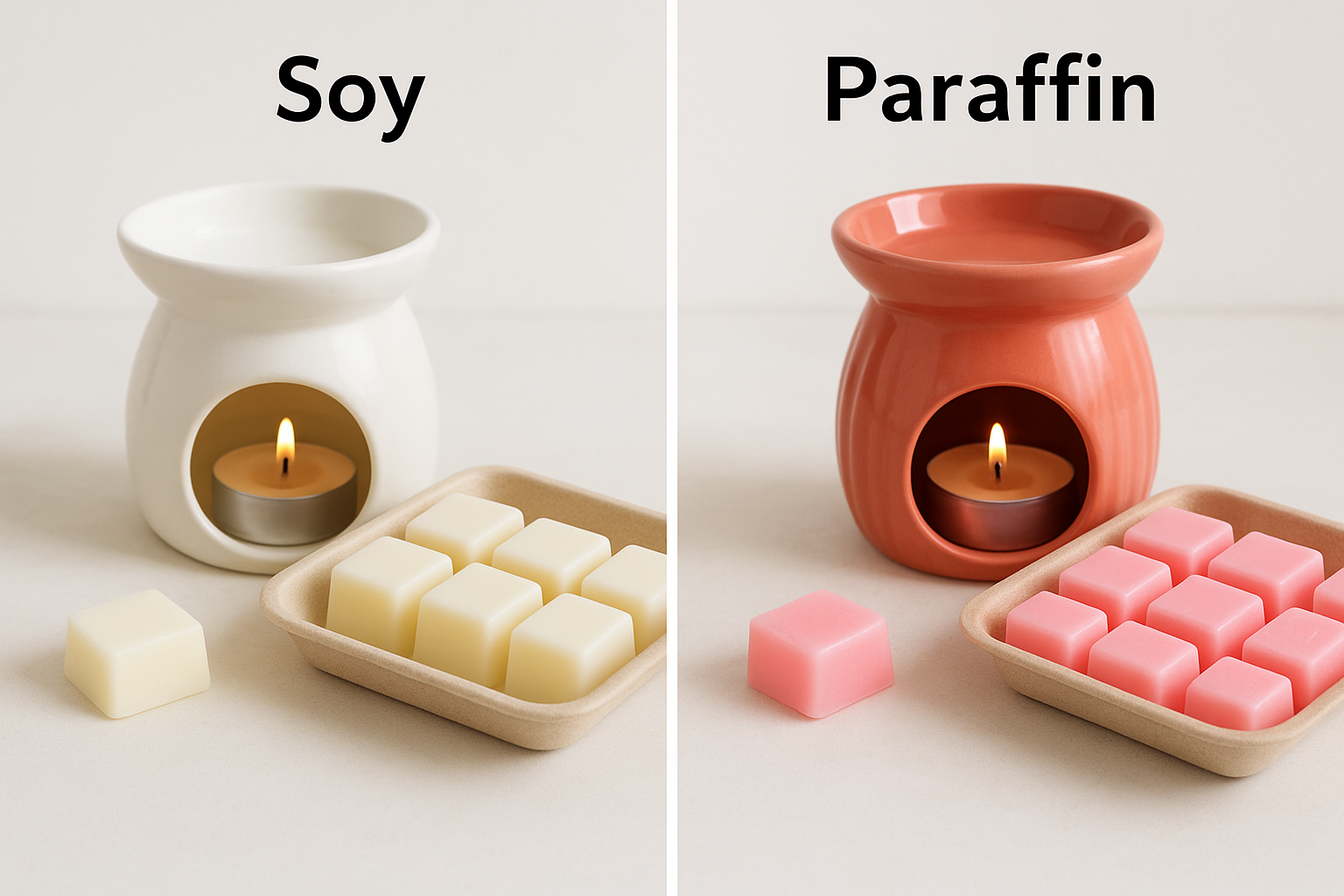
Soy wax is a natural, plant-based option made from hydrogenated soybean oil. It has a lower melt point, typically around 115 to 135 degrees Fahrenheit, which makes it a reliable choice for electric warmers running at gentler temperatures. Soy also burns clean, producing minimal soot compared to paraffin, which matters if you run your warmer in a small or enclosed space.
The trade-off is that soy's hot throw tends to be weaker than paraffin, especially in larger rooms. You can compensate by increasing your fragrance load slightly, but soy has a lower fragrance capacity ceiling than paraffin overall. If room-filling scent power is your top priority, soy alone may not get you there.
Soy works best in smaller spaces or for people who prefer a lighter, more subtle fragrance presence throughout the day.
Paraffin wax
Paraffin is petroleum-derived and the most commonly used wax in commercial wax melts. Its biggest advantage is raw scent throw. Paraffin holds more fragrance oil per ounce than soy and releases it aggressively once melted, which is why most store-bought melts use paraffin as their base.
One drawback is that paraffin produces more soot and contains synthetic compounds, which some buyers prefer to avoid. If you want maximum scent performance and you're less concerned about ingredients, paraffin delivers consistent, hard-to-beat results every time.
Blends and other wax options
Pure soy and pure paraffin each have clear trade-offs, which is why many makers and brands turn to blended waxes to get the best of both. If you're still figuring out what is the best wax for wax melts for your specific needs, blends and alternative base waxes are worth understanding before you commit to a single option.
Soy-paraffin blends
A soy-paraffin blend, sometimes called parasoy, combines the clean burn of soy with the stronger scent throw of paraffin. The ratio matters here. A blend leaning 70% soy and 30% paraffin gives you improved fragrance performance over straight soy while keeping the ingredient profile closer to natural. Parasoy blends are popular in small-batch production because they're forgiving to work with and perform consistently across different warmer types.
Parasoy blends often hit the sweet spot for melt makers who want strong scent without going fully synthetic.
You'll find parasoy sold pre-blended from most wax suppliers, which means you don't have to measure and mix the components yourself. These ready-made blends also tend to be more consistent batch to batch, which helps if you need predictable results across multiple pours.
Coconut wax
Coconut wax is an all-natural option derived from coconut oil and has gained traction as a premium base for wax melts. It has a naturally low melt point, holds fragrance oil exceptionally well, and produces a very clean melt with minimal residue. The scent throw from coconut wax sits between soy and paraffin, making it a solid middle-ground choice.
The main downside is cost. Coconut wax runs more expensive per pound than either soy or paraffin, which adds up quickly when buying in volume. It also tends to be softer at room temperature, so packaging requires more attention to keep your melts intact before use.
How to choose wax for your setup
Answering what is the best wax for wax melts comes down to your specific warmer type and scent priorities, not a universal right answer. The wax that works perfectly for someone using a high-heat tea light warmer in a large living room may perform poorly in a small electric warmer on a nightstand. Before you buy, think through two things: what kind of warmer you're running and how strong you want your scent to be.
Consider your warmer type
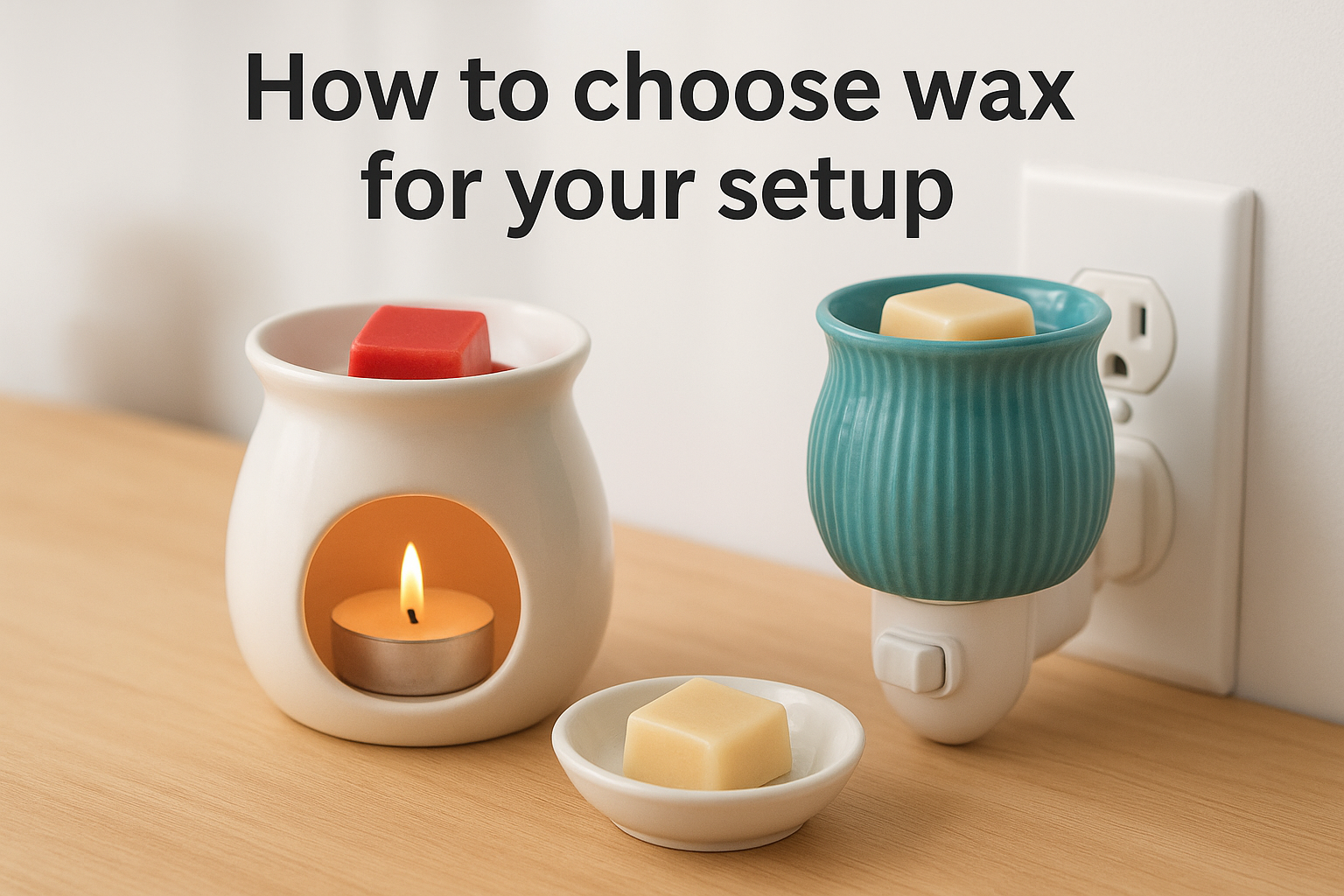
Your warmer determines how much heat reaches the wax, which directly controls how quickly and fully your melt liquefies. Low-heat electric warmers work best with lower melt-point waxes like soy or coconut, since plug-in and USB-powered units don't generate enough heat to fully liquefy denser paraffin. When paraffin doesn't melt completely, your scent throw suffers even if the melt is loaded with fragrance oil.
Tea light warmers run hotter and give you more flexibility across wax types, including straight paraffin or denser parasoy blends. If you're unsure how hot your warmer runs, check the manufacturer's spec sheet for its operating temperature before committing to a wax base.
Matching your wax melt point to your warmer's operating temperature is one of the easiest ways to improve scent throw without changing anything else.
Match wax to your scent goals
If you want a subtle, ambient fragrance that builds gradually through the day, soy or coconut wax fits your needs well. Both release scent at a lower, steadier rate that suits bedrooms, home offices, or smaller rooms where you don't need an immediate, strong hit of fragrance.
Paraffin or a parasoy blend will serve you better when you want scent that fills a larger space quickly. Pair a high-fragrance-load melt with a warmer that runs consistently hot, and you'll get strong performance without running multiple melts at once.
Common melt problems and fixes
Even when you pick a high-quality wax, small setup mistakes can undercut your results. Most issues that come up with wax melts trace back to three causes: the wrong wax for your warmer, too much fragrance oil, or heat that's either too low or uneven. Knowing what to look for makes troubleshooting fast instead of frustrating.
Weak scent throw
If your melt is producing little to no fragrance in the room, your warmer likely isn't generating enough heat to fully liquefy the wax. This is one of the most common complaints when people are still figuring out what is the best wax for wax melts for their setup. Switch to a lower melt-point wax like soy or coconut if you're running a plug-in electric warmer, since these units top out at lower temperatures than tea light styles.
A wax that never fully melts will always deliver weak scent throw, no matter how much fragrance oil it contains.
Replacing a melt that's been used more than 8 to 10 hours also helps, since the fragrance dissipates over time while the wax carrier remains.
Oily residue in your warmer
An oily film or pooling liquid in your warmer dish means your wax is holding more fragrance oil than its capacity allows. The excess oil separates out during melting and collects at the bottom of the dish. Fix this by reducing your fragrance load to match your wax type's recommended maximum, typically between 6% and 10%.
Wiping your warmer dish clean between melt changes also prevents residue buildup that affects future melt performance and can leave a stale, mixed-scent smell in your space.
Wax cracking or crumbling
Brittle wax that cracks before you even place it in the warmer usually means the wax has too low a moisture content or was poured at too high a temperature. Parasoy and coconut blends resist this better than straight soy, which can become brittle in cold environments. Store your melts at room temperature and away from direct sunlight to keep the texture consistent and easy to handle.
Quick recap
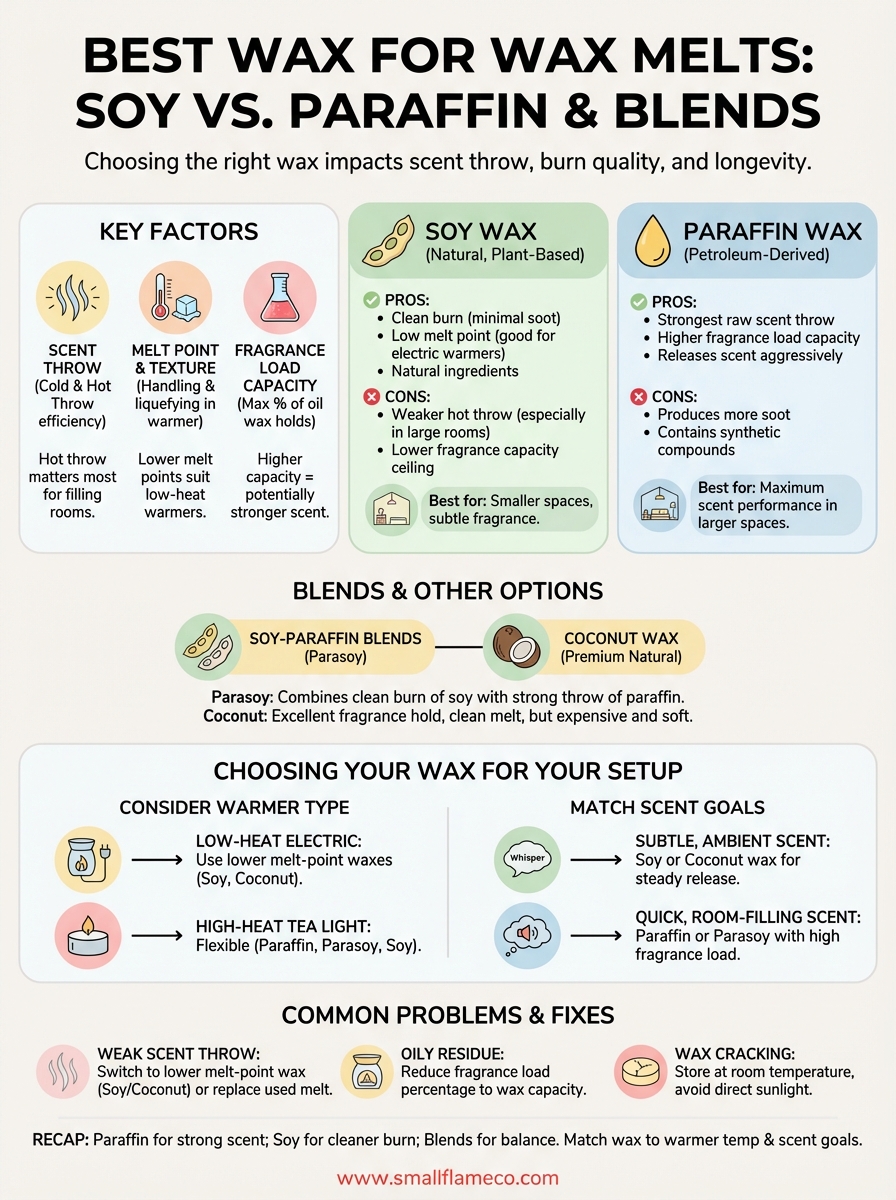
Picking the right wax changes everything about how your melts perform. Paraffin delivers the strongest scent throw and handles high fragrance loads well, making it the go-to for large spaces. Soy burns cleaner and suits low-heat warmers and smaller rooms where a softer fragrance presence works better. Coconut wax sits between the two on performance, costs more per pound, but holds fragrance reliably and melts without much residue.
If you're still working out what is the best wax for wax melts for your setup, start by matching your wax melt point to your warmer's operating temperature. From there, adjust your fragrance load to fit the wax type's capacity. Most performance problems trace back to those two factors, not the fragrance oil itself. Once you dial those in, you'll get consistent, room-filling scent every time you use your warmer. Explore our hand-poured wax melts and warmers to find options that already have the hard work done for you.