

Which Candle Wax Burns The Longest? 5 Wax Types Compared
Not all candle wax is created equal. If you've ever burned through a candle in just a few hours and wondered where your money went, you've probably asked yourself which candle wax burns the longest. It's a fair question, and the answer depends on more than just the wax type. Wick size, fragrance load, and candle diameter all play a role. But wax is the foundation, and some types genuinely outlast others by a significant margin.
At Small Flame Candle Company, we hand-pour every candle we sell, so wax selection isn't just trivia for us, it's a decision that directly affects how long our products burn and how well they hold fragrance. We've worked with different wax types and seen firsthand how each one behaves when lit, which puts us in a solid position to break down the real differences for you.
Below, we're comparing five common candle wax types, beeswax, soy, paraffin, coconut, and palm, ranked by burn time. We'll cover what makes each wax burn faster or slower, along with the trade-offs you should know about before your next candle purchase. Whether you're shopping for a candle that lasts through long evenings or just want to understand what you're actually paying for, this guide has you covered.
1. Soy wax
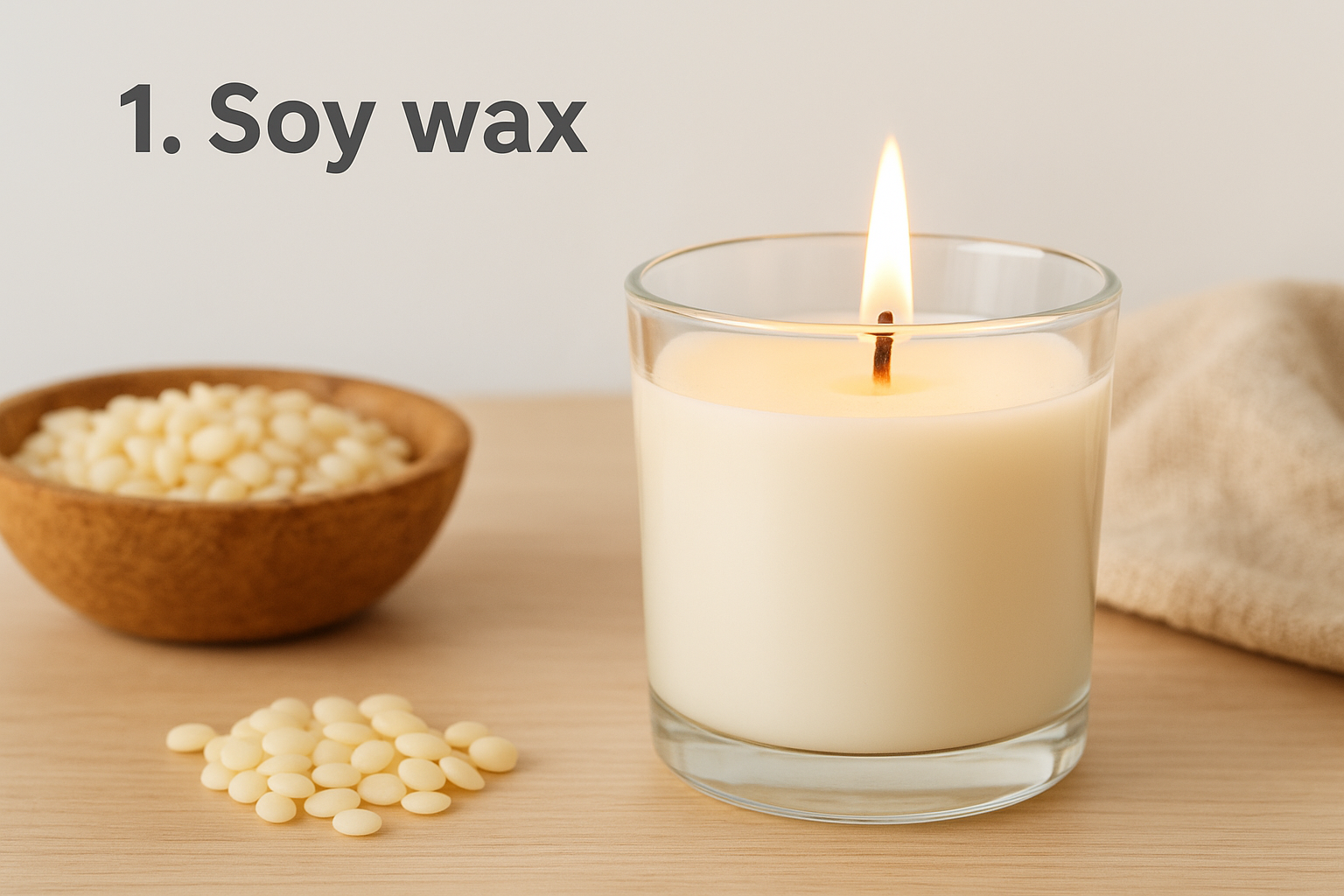
Soy wax is one of the most popular choices in the candle market, and burn time is a big reason why. Made from hydrogenated soybean oil, it's a natural, renewable material that burns cooler and slower than paraffin. If you're asking which candle wax burns the longest among the most common options, soy consistently ranks near the top.
Typical burn time and burn rate
A standard 8-ounce soy jar candle typically delivers 40 to 60 hours of burn time, with a general burn rate of roughly 7 to 9 hours per ounce of wax. Container size, wick gauge, and fragrance load all shift that number, but those figures hold up well across most properly made soy candles.
Soy wax has a lower melt point than paraffin, usually between 120°F and 160°F, which slows fuel consumption and directly extends how long the candle lasts.
What makes soy burn slower or faster
The wick is the biggest variable. An oversized wick draws liquid wax into the flame faster, cutting burn time regardless of the wax type. Fragrance load matters too, because heavy fragrance oil concentrations lower the melt point, causing the wax to pool more quickly than a lightly scented version of the same candle.
Key factors that affect soy burn time:
- Wick size (larger = faster burn)
- Fragrance oil percentage (higher = faster burn)
- Container diameter (wider surface area = faster melt)
Strengths and trade-offs
Soy wax produces minimal soot and throws fragrance well, which makes it a reliable choice for everyday use. The main downside is that soy is sensitive to temperature changes, sometimes causing frosting or an uneven surface after burning.
These cosmetic issues don't affect actual burn performance, but they're worth knowing if visual consistency matters to you or the person you're buying for.
Best uses and ideal candle formats
Container candles are the best format for soy wax since the jar holds the soft wax as it melts. Pillar formats are a poor fit because soy lacks the firmness to hold its shape without a mold. Straight-sided tumblers and glass jars give soy the structure it needs for a clean, even burn pool.
Price and availability
Soy wax is widely available through US suppliers at roughly $2 to $4 per pound in bulk. At the retail level, finished soy candles typically run $10 to $25, depending on size and brand.
That range puts soy above paraffin but below beeswax and coconut wax. For most shoppers, it's a fair price for the burn time and fragrance performance you get in return.
2. Coconut wax
Coconut wax is a premium natural option that competes directly with soy on burn time while offering some distinct advantages in scent throw and texture. If you're exploring which candle wax burns the longest among natural alternatives, coconut wax belongs in that conversation.
Typical burn time and burn rate
A coconut wax candle in an 8-ounce container typically burns for 45 to 60 hours, putting it on par with or slightly ahead of soy. The burn rate runs around 8 to 10 hours per ounce, largely because coconut wax has a low melt point that keeps the flame working efficiently without consuming fuel too quickly.
Coconut wax's naturally soft, creamy texture allows it to hold a higher fragrance load than many other waxes, which means makers can deliver stronger scent without sacrificing burn time.
What makes coconut burn slower or faster
Wick selection has the same outsized effect here as it does with soy. A thicker wick accelerates the melt pool, and a wide container compounds that problem. Fragrance oil percentage is also a factor, but coconut wax handles higher loads better than soy before burn time takes a hit.
Strengths and trade-offs
Coconut wax produces very little soot and offers a clean, creamy finish that looks polished in a jar. The trade-off is cost: coconut wax is one of the more expensive natural waxes on the market, which pushes finished candle prices up noticeably.
Best uses and ideal candle formats
Like soy, coconut wax performs best in container formats where the jar provides structural support. It blends well with soy or beeswax for makers who want to balance cost and performance without giving up burn quality.
Price and availability
Coconut wax runs $4 to $7 per pound in bulk, making it roughly twice the cost of soy. Finished coconut wax candles typically retail for $18 to $35, reflecting both the raw material cost and the premium market positioning most brands take with it.
3. Beeswax
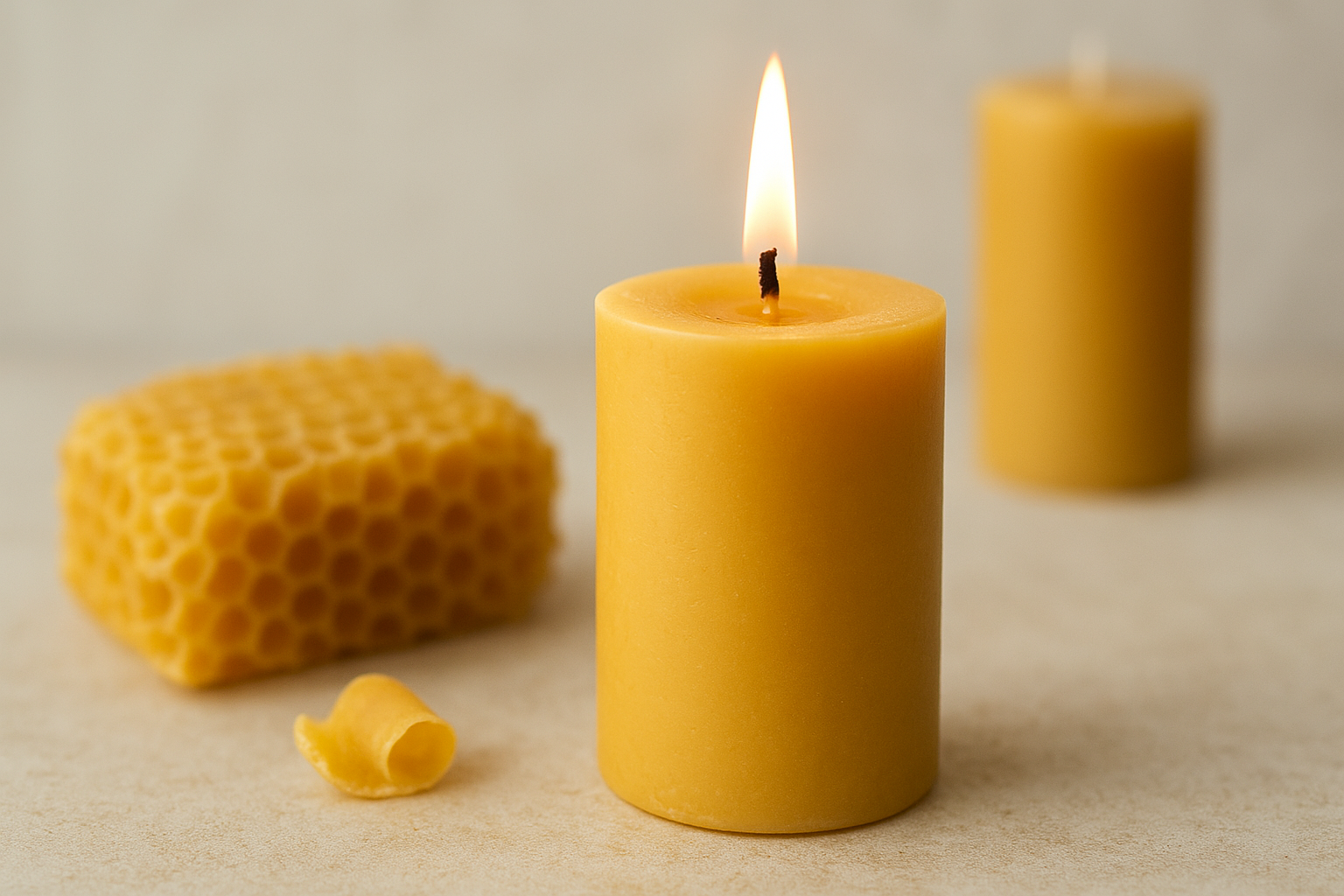
Beeswax is the oldest candle wax in recorded use, and it holds a strong claim when you're researching which candle wax burns the longest. It's a dense, hard material with a high melt point that burns slower and cleaner than most alternatives on this list.
Typical burn time and burn rate
An 8-ounce beeswax candle typically delivers 50 to 80 hours of burn time, the highest ceiling of any wax covered here. The burn rate runs around 9 to 11 hours per ounce, reflecting how much energy the flame needs just to work through such a hard material.
Beeswax has a melt point between 144°F and 147°F, higher than both soy and coconut wax, and that hardness is exactly what slows the burn rate down.
What makes beeswax burn slower or faster
Candle diameter plays an especially large role with beeswax. A thick pillar format forces the flame to work harder to maintain a melt pool, which extends total burn time noticeably. Blending in softer waxes or adding heavy fragrance loads reduces that hardness and pulls burn time back toward soy territory.
Strengths and trade-offs
Beeswax burns with virtually no soot and carries a faint, natural honey scent on its own. The main trade-off is that beeswax holds fragrance oil poorly compared to soy or coconut, so scented beeswax candles tend to throw lighter than you might expect.
Best uses and ideal candle formats
Pillar and taper formats are where beeswax performs best since its firm structure holds shape without a container. It works in jars as well, but you get the most from its density in freestanding candle formats.
Price and availability
Beeswax runs $8 to $15 per pound for pure, filtered product, making it the most expensive wax on this list. Finished candles typically retail between $20 and $50, reflecting both the raw material cost and the extra effort required to work with such a firm wax.
4. Paraffin wax
Paraffin wax is the most widely used candle wax in the world, and it's the least expensive option on this list. If you're comparing which candle wax burns the longest, paraffin sits at the lower end, but the gap isn't as large as many people assume.
Typical burn time and burn rate
An 8-ounce paraffin candle typically delivers 35 to 50 hours of burn time, with a burn rate of roughly 6 to 8 hours per ounce. Melt point varies between 120°F and 160°F depending on the grade, and lower-grade paraffin burns through faster than harder, higher-melt-point versions.
Paraffin grade matters more than most people realize: pillar-grade paraffin burns noticeably longer than the softer container-grade version used in most mass-market jar candles.
What makes paraffin burn slower or faster
Wax hardness is the key variable with paraffin. Softer grades liquefy quickly and cut burn time down, while harder pillar-grade paraffin holds up longer under heat. Adding fragrance oil or dye beyond recommended limits also accelerates the burn rate.
Strengths and trade-offs
Paraffin absorbs fragrance and dye better than any natural wax on this list, which is why it remains the industry standard for heavily scented candles. The trade-off is soot output: paraffin produces more black soot than soy, beeswax, or coconut wax, especially with an oversized wick or in drafty conditions.
Best uses and ideal candle formats
Paraffin works across all candle formats, from pillars and tapers to containers and votives. Its structural flexibility makes it the practical default for manufacturers who need consistent results across a wide product line.
Price and availability
Paraffin is the most budget-friendly wax available, running $1 to $3 per pound in bulk. Finished candles typically retail for $5 to $20, making them accessible for shoppers who prioritize scent variety and value over natural materials.
5. Palm wax
Palm wax is a plant-derived natural wax pressed from palm oil, and it holds a solid position when comparing which candle wax burns the longest among natural options. It's less common in specialty shops than soy or coconut, but its burn performance is worth knowing about.
Typical burn time and burn rate
An 8-ounce palm wax candle typically delivers 45 to 55 hours of burn time, with a burn rate of roughly 7 to 9 hours per ounce. Palm wax has a melt point between 130°F and 145°F, which keeps it burning at a measured pace without pooling too fast.
Palm wax's naturally crystalline structure gives it physical density that slows how quickly the flame works through the wax.
What makes palm burn slower or faster
Wick size is the primary variable, as with every wax on this list. Palm wax forms a hard structure when cooled, so a correctly sized wick is critical to maintaining a full melt pool without tunneling down the center and leaving unburned wax along the walls.
Strengths and trade-offs
Palm wax produces a distinctive crystalline surface pattern as it cools, which makes finished candles look unique without any added effort. The main trade-off is sustainability: palm oil production raises serious environmental concerns, so look for candles using certified sustainable palm wax if that matters to you.
Best uses and ideal candle formats
Palm wax works well in both pillar and container formats, making it more versatile than soy. Its firm texture holds shape reliably in freestanding pillars, which is a clear advantage over softer waxes.
Price and availability
Palm wax runs $3 to $6 per pound in bulk. Finished candles typically retail for $12 to $28, though retail availability is more limited than soy or paraffin.
Final Takeaways
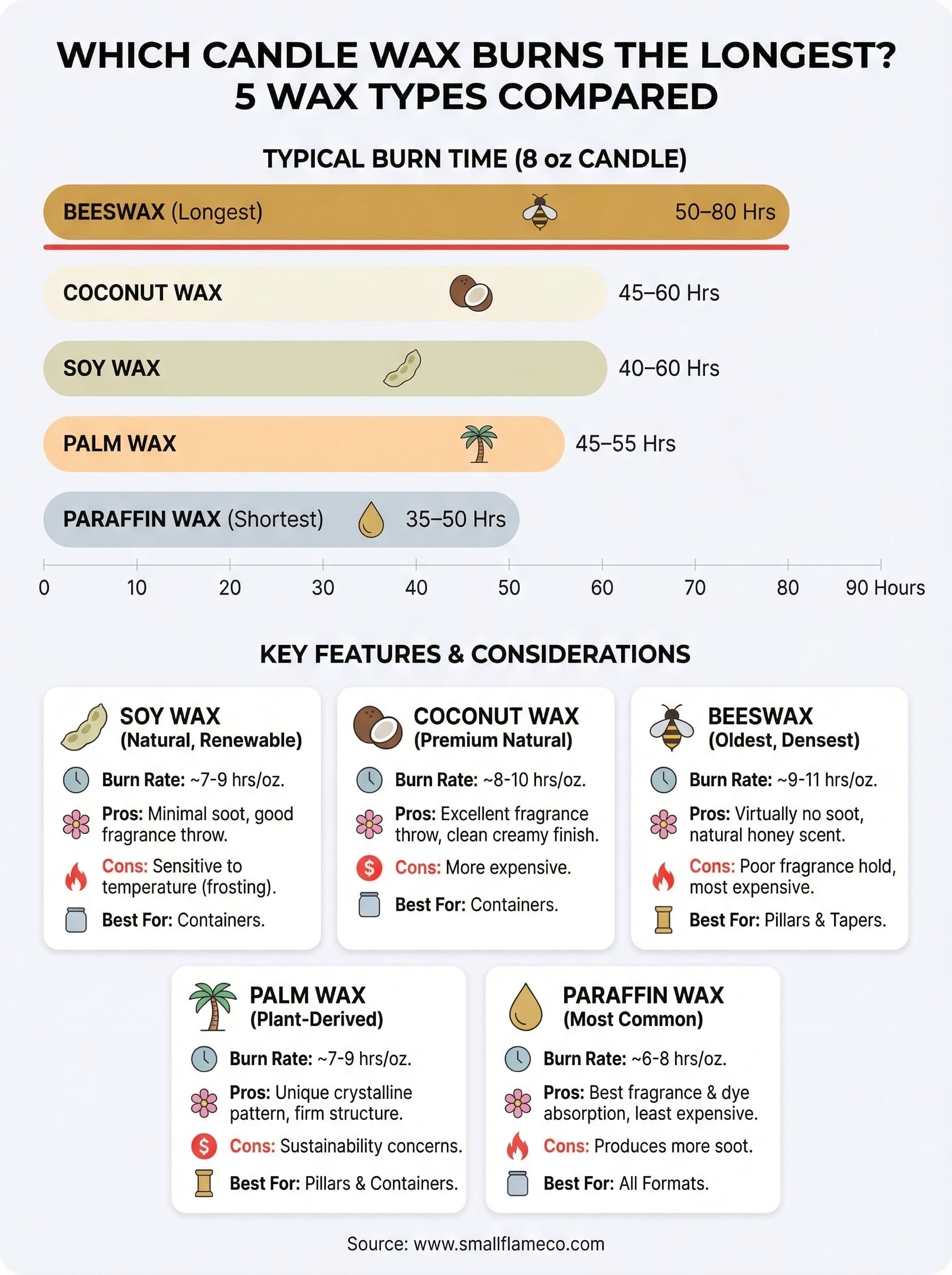
If you want to know which candle wax burns the longest, beeswax holds the top spot with up to 80 hours from a single candle, followed closely by coconut and soy wax in the 45 to 60-hour range. Palm wax and paraffin trail slightly behind, though paraffin compensates with stronger fragrance absorption and a lower price point.
Your best pick depends on what you actually need from a candle. Fragrance performance and a clean burn point toward coconut or soy. Budget and wide availability push you toward paraffin. If maximum burn time with no added scent is the goal, beeswax wins outright.
For a candle that balances a long burn with strong scent throw and clean ingredients, explore our hand-poured coconut wax candles at Small Flame Candle Co. Every candle uses a premium coconut-soy blend with lead-free cotton wicks, built to burn clean and last.