

Beeswax Vs Paraffin Candles: Health, Soot, Burn Time, Cost
If you've ever stood in a candle aisle (or scrolled through an online shop) wondering about beeswax vs paraffin candles, you're asking the right question. The wax type affects everything from what you're breathing in to how long the candle actually lasts, and how much you'll spend to keep your home smelling great.
At Small Flame Candle Company, we hand-pour every candle we sell, so wax selection is something we think about constantly. It shapes burn quality, scent throw, and the overall experience you get when you light that wick. We want you to make an informed choice, not just grab whatever's closest.
This article breaks down the real differences between beeswax and paraffin across four categories: health impact, soot production, burn time, and cost. No vague claims, just a straightforward comparison so you can pick what's right for your home.
Beeswax and paraffin basics
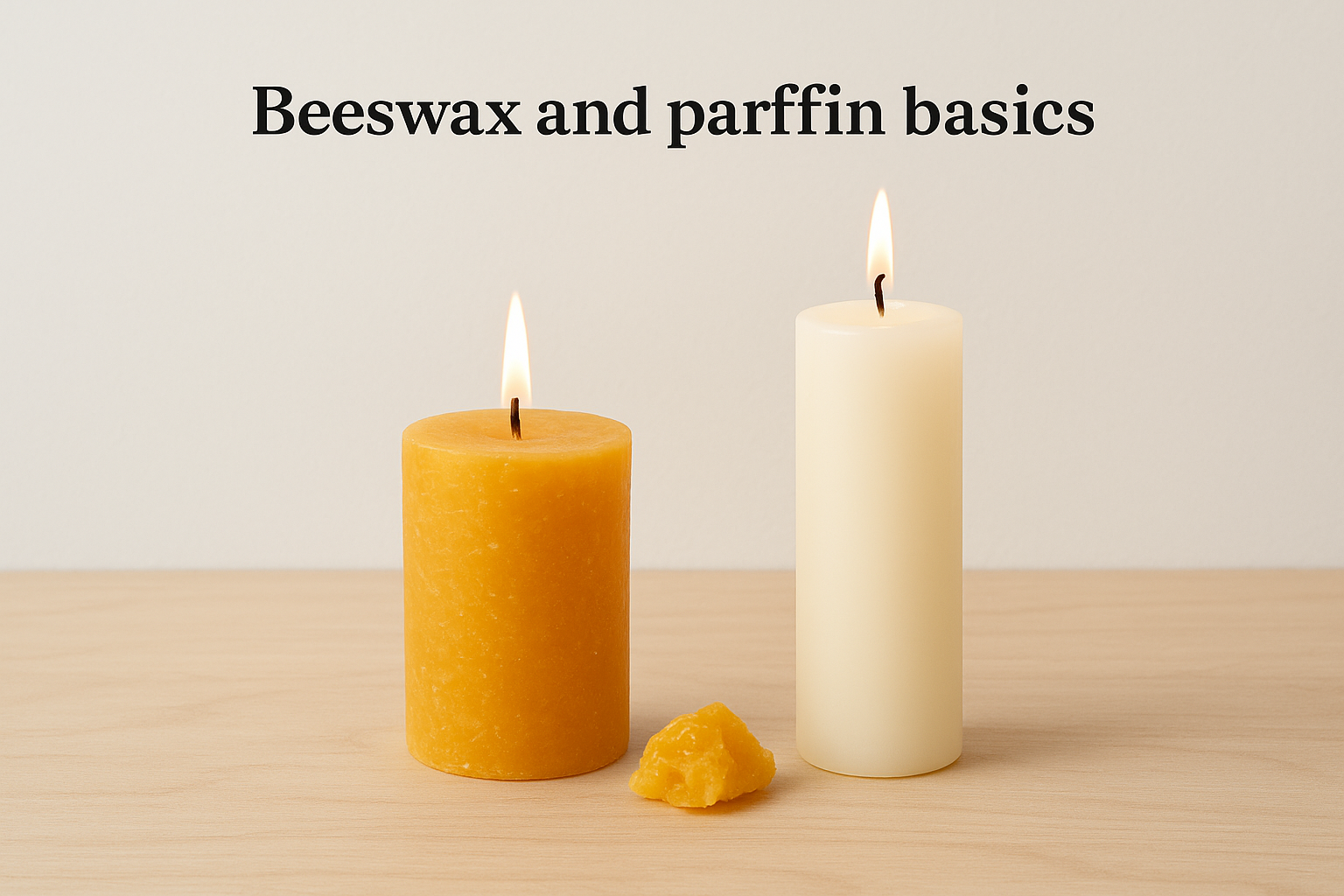
When you compare beeswax vs paraffin candles, the first thing worth understanding is where each wax actually comes from. Beeswax is a natural product secreted by honeybees, while paraffin is a byproduct of petroleum refining. That origin shapes everything about how a candle burns, what it puts into your air, and what it costs you.
What is beeswax?
Beeswax starts with honeybees, which produce the wax from glands on their abdomen to construct the honeycomb inside their hive. Producers harvest it as a byproduct of honey collection, then clean and filter it before it reaches candle makers. The finished wax is dense and naturally golden, with a faint honey scent and a high melting point of around 145°F to 147°F.
That high melting point matters in practice. It means beeswax holds its shape in warm rooms, burns more slowly than softer waxes, and requires a thicker wick to sustain a clean flame. Most 100% beeswax candles are sold as pillar candles or tapers because the firm wax holds a freestanding shape without a container.
Beeswax contains small amounts of propolis and pollen that give it a warm amber color and a faint natural scent, both of which disappear through heavy bleaching or processing.
What is paraffin?
Paraffin wax is a refined byproduct of crude oil processing, extracted as a waxy solid during petroleum refining. It's the most widely used candle wax in the world because it's inexpensive, easy to color, and holds added fragrance oils exceptionally well. Paraffin's melting point ranges from roughly 115°F to 154°F depending on the grade, which lets manufacturers tailor the hardness for pillars, containers, or votives.
| Beeswax | Paraffin | |
|---|---|---|
| Source | Honeybee secretion | Petroleum refining |
| Melting point | 145°F to 147°F | 115°F to 154°F |
| Natural color | Warm golden | White or off-white |
| Fragrance | Faint natural honey | Neutral; holds added scents well |
Health and indoor air quality
When you think about beeswax vs paraffin candles and health, the core question is: what does each wax release into the air you breathe? Both burn through the same basic chemical process, but their chemical composition produces meaningfully different byproducts.
What beeswax releases when it burns
Beeswax is composed primarily of natural hydrocarbons that combust with relatively low toxin output. Some proponents claim beeswax releases negative ions that neutralize airborne pollutants, though scientific evidence for that specific claim remains limited. What is more consistently documented: beeswax produces very little soot, which means fewer particles circulating in your home's air.
- Burns with a tall, steady flame
- Produces minimal black smoke under normal conditions
- Contains no added synthetic chemicals
What paraffin releases when it burns
Paraffin can release trace amounts of compounds like benzene and toluene when it burns, both classified as harmful at high concentrations. In a well-ventilated room with normal use, those levels stay far below any threshold that health regulators flag as dangerous.
The concern grows when you burn multiple candles daily in a sealed space with no airflow. Keeping a window cracked or running ventilation reduces any risk significantly for either wax type.
If indoor air quality is a priority for you, ventilating the room is the single most effective step you can take regardless of which wax you choose.
Soot, smoke, and how to reduce it
Soot output is one of the most visible practical differences in the beeswax vs paraffin candles debate. Beeswax burns cleaner by default because its natural composition produces fewer unburned carbon particles, while paraffin can leave dark marks on walls, jar rims, and ceilings with regular use.
Why beeswax produces less soot
Beeswax has a higher carbon-to-hydrogen ratio that allows it to combust more completely, leaving less residue behind. Paraffin releases more unburned carbon particles during combustion, which creates that dark soot ring inside container candles and marks on nearby walls or surfaces over time.
Trimming your wick before each burn reduces soot output significantly in both wax types, so wick maintenance matters just as much as wax choice.
How to reduce soot from any candle
Trim your wick to about one-quarter inch before every burn. A wick that's too long flickers excessively and creates an incomplete burn, producing more smoke and soot regardless of which wax type you're using. This single habit extends candle life and keeps your walls cleaner.
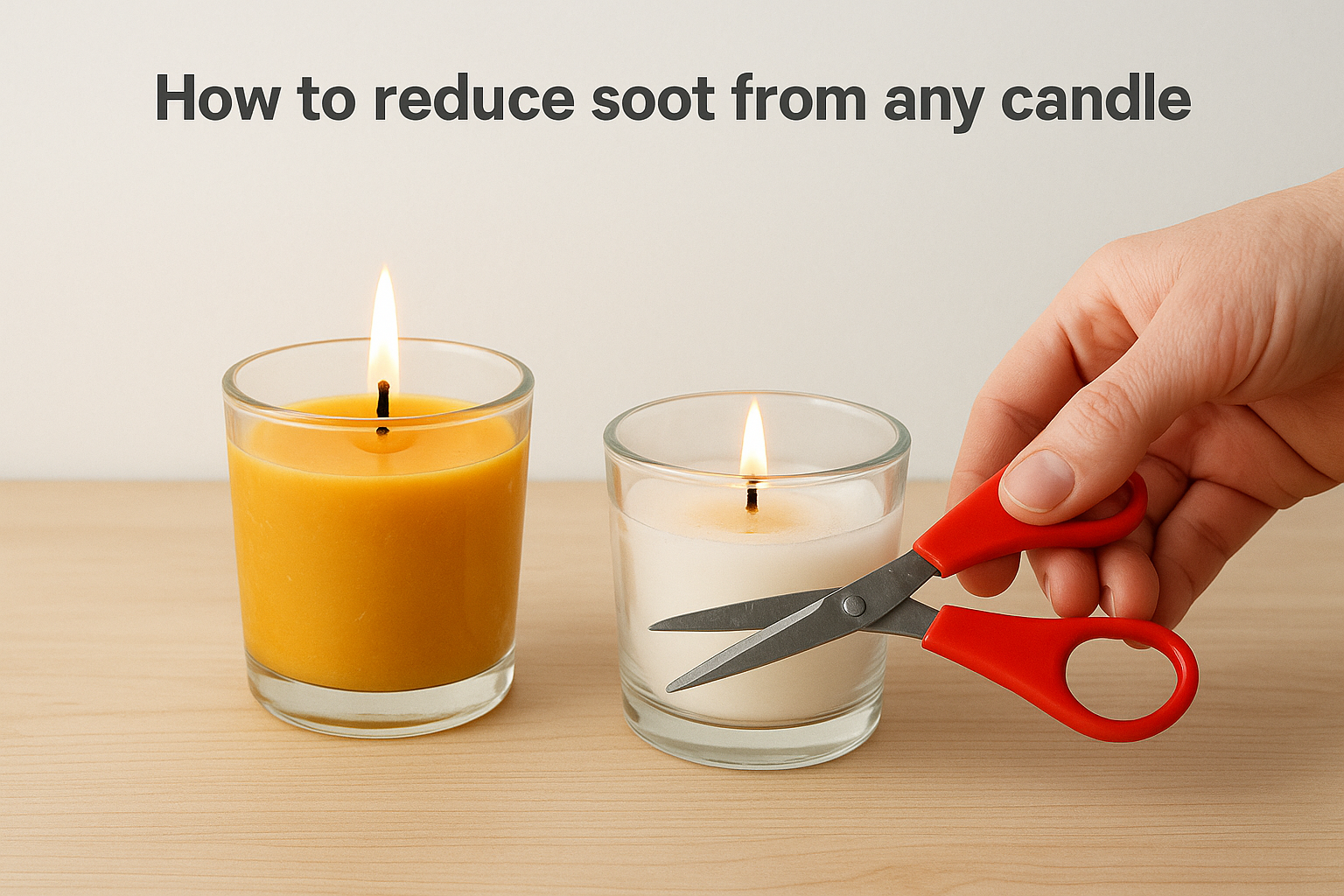
You should also keep candles away from drafts such as open windows, fans, or air vents. Moving air disrupts the flame, causes incomplete combustion, and pushes soot onto nearby surfaces much faster than still air would.
Burn time and performance
Burn time is one area where beeswax vs paraffin candles show a clear, measurable difference. Wax density and melting point directly control how fast a candle consumes itself, and those two factors favor beeswax when longevity matters most.
Why beeswax burns longer
Beeswax has a higher melting point and denser structure than paraffin, which means it releases its fuel more slowly. A standard beeswax pillar candle can burn at least 25% longer than a comparable paraffin candle by weight.
Burn time figures assume ideal conditions: a trimmed wick, still air, and at least a two-hour first burn to create an even wax pool across the surface.
Your actual results vary by wick size, candle diameter, and room conditions, so treat manufacturer burn time estimates as a reasonable starting point rather than a hard guarantee.
What to expect from paraffin
Paraffin burns faster and at a lower temperature, which actually helps it release added fragrance oils more readily into the air around you. If you want a strong, immediate scent throw, paraffin handles that goal well.
You will replace paraffin candles more often than beeswax candles of the same physical size. For a container candle meant to fill a small room with scent for a few hours, though, that faster burn rate is a reasonable trade-off rather than a hard negative.
Cost, sustainability, and who should buy what
When it comes to beeswax vs paraffin candles, price is one of the most immediate deciding factors. Beeswax costs significantly more than paraffin at retail because harvesting and processing natural wax requires more time and labor than refining petroleum byproducts.
What you'll pay at the register
A 100% beeswax candle typically costs two to four times more than a comparable paraffin candle. Since beeswax burns longer, the cost-per-hour gap narrows once you factor in burn time, but your upfront investment stays higher regardless.
You'll also find that paraffin offers wide availability and lower entry costs, which makes it practical for everyday use, seasonal decorating, or testing a new scent before committing to a larger purchase.
Who should buy each
Beeswax works best for you if indoor air quality is a priority, you prefer minimal synthetic processing, or you want a long-burning pillar candle as a decorative focal point in your home.
If you prioritize fragrance strength and value over wax sourcing, paraffin delivers both consistently.
Paraffin suits you well if you want strong scent throw, plan to burn candles frequently, or are shopping within a tight budget and want variety across multiple scents without high upfront costs.
Final takeaway
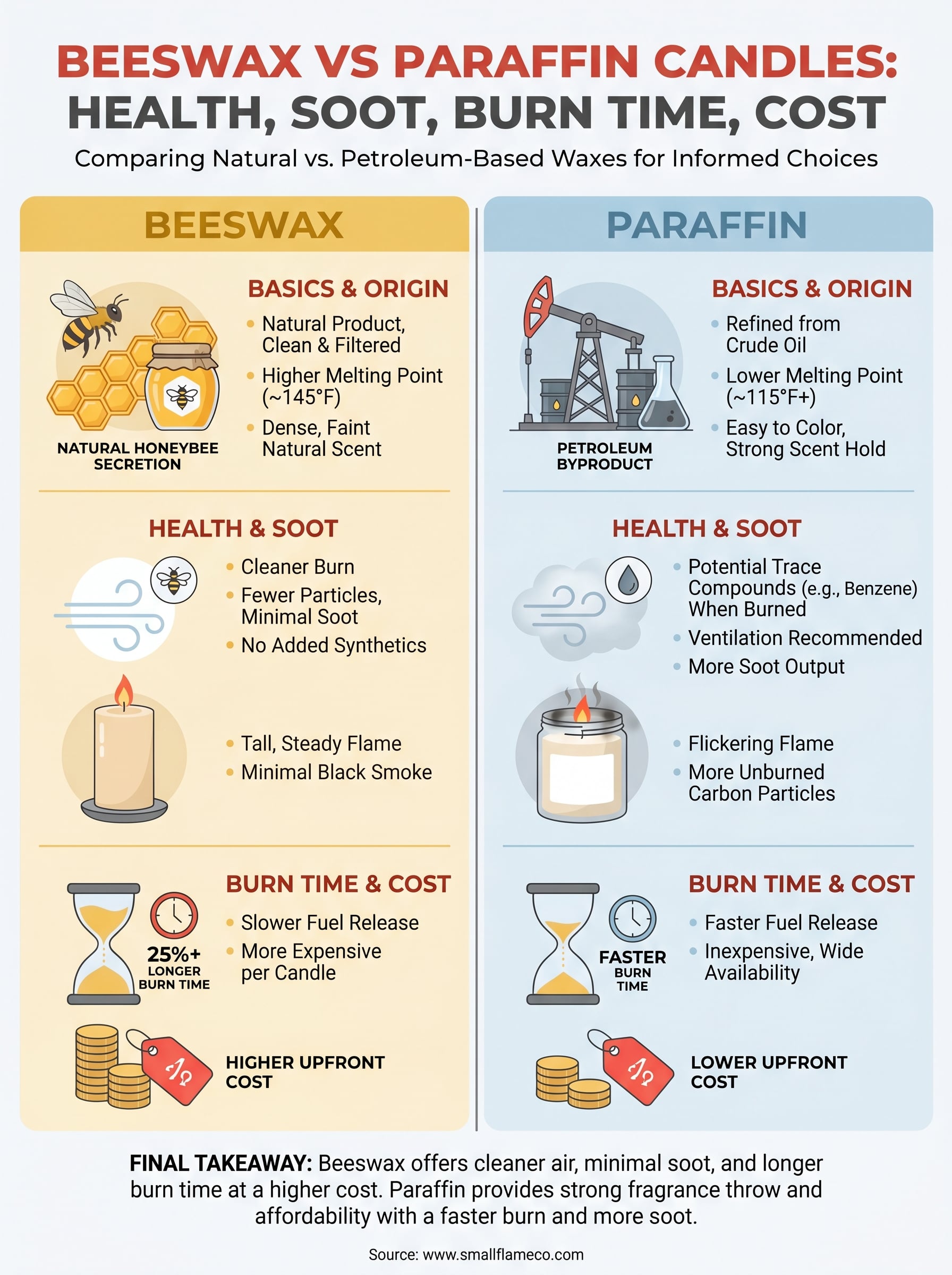
The beeswax vs paraffin candles debate doesn't have a single winner. Beeswax gives you cleaner air, longer burn times, and a natural composition, but it costs more upfront and carries a fainter scent throw. Paraffin delivers strong fragrance, wide availability, and a lower price, making it the practical choice for everyday use or frequent burning.
Your best option depends on what you actually value in a candle. If you prioritize scent strength and variety at an accessible price, paraffin fits that need. If you want minimal soot and a longer-lasting burn, beeswax is worth the investment.
Both wax types serve real purposes, and neither is universally better. What matters most is choosing a candle that suits your home, your habits, and your budget. Explore the hand-poured coconut wax candles at Small Flame Candle Company and find a scent that works for your space.