

Paraffin Wax vs Soy Wax Candles: Which Should You Buy?
If you've ever stood in a candle aisle (or scrolled through an online shop) wondering about paraffin wax vs soy wax candles, you're asking the right question. The wax a candle is made from affects everything, how long it burns, how strong the scent fills a room, and what you're actually breathing in while it's lit.
At Small Flame Candle Company, we hand-pour every candle we sell, so wax selection isn't just a talking point for us, it's a decision we make at the workbench. We've tested, burned, and compared both wax types extensively, and we know the tradeoffs firsthand. That experience shapes every product in our collection and gives us a grounded perspective on what actually matters when choosing between the two.
This article breaks down the real differences between paraffin and soy wax across five areas: burn time, scent throw, health considerations, environmental impact, and cost. By the end, you'll have a clear picture of what each wax brings to the table, and enough information to pick the right candle for your home with confidence.
Why wax type matters for your candle experience
Most people pick a candle based on the scent name or how it looks on a shelf. But the wax is the foundation of everything a candle does. It holds the fragrance oil, feeds the flame, and determines how your candle behaves from the first light to the last burn. Getting this choice right is the difference between a candle that genuinely fills your space and one that barely registers.
What the wax actually does
When a candle burns, the flame melts the wax near the wick and creates a liquid pool. That pool carries fragrance oil up the wick where it vaporizes and disperses scent into the room. The wax's density, melting point, and chemical makeup all affect how efficiently that process works. Denser waxes like paraffin tend to hold more fragrance oil by weight, which directly influences how much scent a candle can carry. Less dense waxes like soy burn at a lower temperature and at a slower rate, which changes how fragrance is released and how long the candle lasts overall.
The wax isn't just a delivery mechanism for scent. It determines the pace, intensity, and cleanliness of your entire burn experience.
The trade-offs you'll actually notice
When you compare paraffin wax vs soy wax candles side by side, a few differences show up quickly. Paraffin candles often deliver a strong scent hit almost immediately after you light them, while soy candles typically need several minutes of burn time before the fragrance fully opens up in the room. Beyond scent, burn time and soot output also differ in ways that become obvious after a few uses. A soy candle often outlasts a paraffin candle of the same size, but a paraffin candle may outperform it in raw scent strength.
Neither type wins across every category. Your living space, your scent preferences, and how long you typically burn a candle at one time all factor into which wax actually works better for you. The sections below break each of these differences down in detail so you can make a fully informed call.
How soy and paraffin wax differ
Paraffin and soy wax start from completely different sources, and that gap in origin explains most of the differences you'll notice when you burn them. Understanding what each wax is made from gives you a solid foundation for evaluating the paraffin wax vs soy wax candles debate on your own terms.
Where each wax comes from
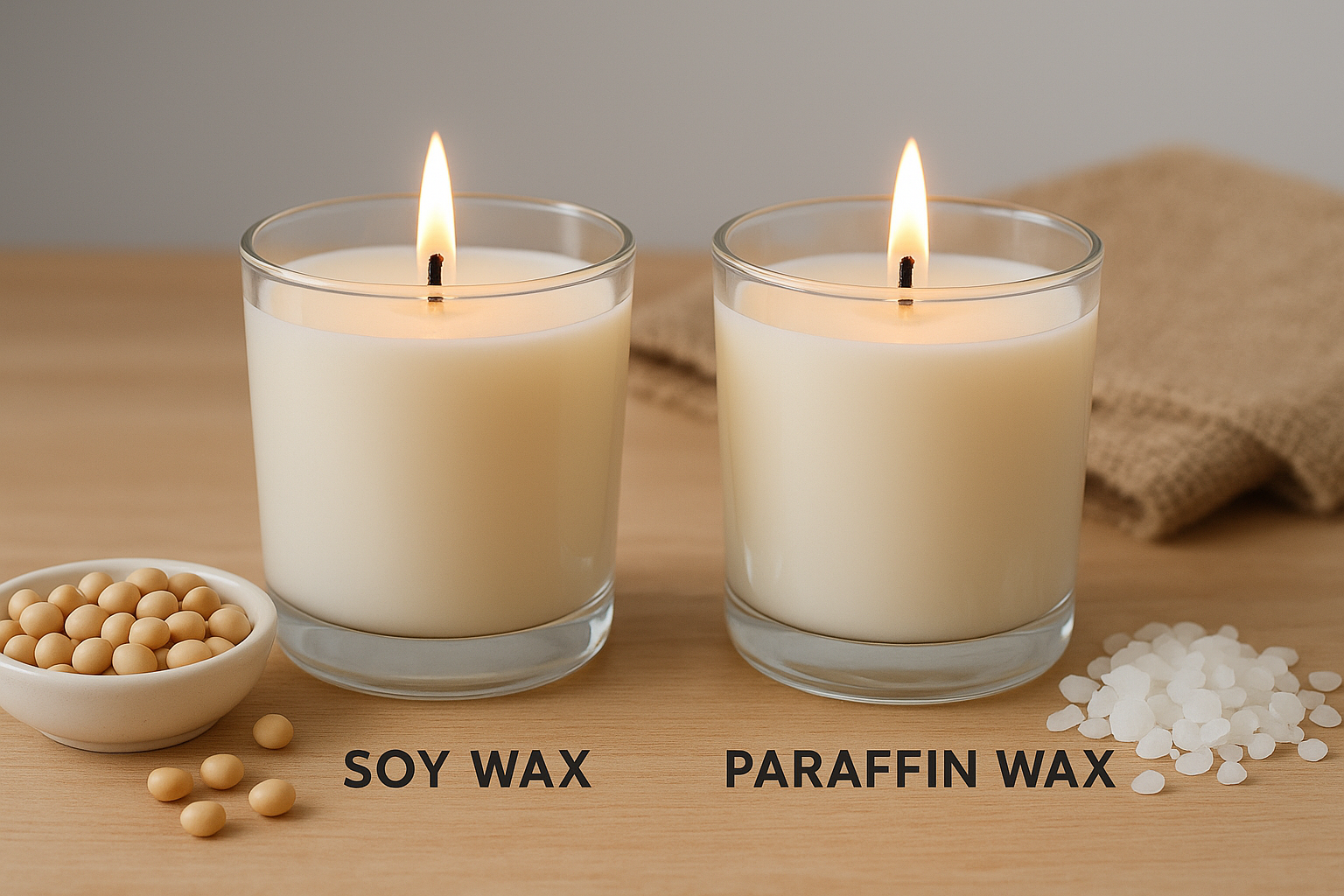
Paraffin wax is a petroleum byproduct, refined from crude oil during the process of making lubricants and fuels. It has been the dominant candle wax for over 150 years because it's cheap, widely available, and holds a high fragrance load without breaking down. Soy wax, by contrast, is made from hydrogenated soybean oil, a renewable crop-based resource that became a popular candle material in the 1990s.
Soy wax is biodegradable and derived from a renewable agricultural crop, while paraffin comes directly from fossil fuel processing.
Physical properties that shape performance
The two waxes behave differently because their physical properties are distinct. Paraffin has a higher melting point and greater density, which allows it to carry more fragrance oil per ounce. Soy wax is softer, has a lower melting point, and burns at a cooler temperature overall. That cooler burn contributes to a slower melt pool and, in most cases, a longer burn time for soy candles compared to similarly sized paraffin ones.
How they perform in real use
When you light a candle and leave the room for five minutes, that first hit of fragrance is scent throw, and it's one of the clearest ways to compare paraffin wax vs soy wax candles side by side. Paraffin tends to deliver a stronger, more immediate scent because it holds a higher fragrance load. Soy builds more gradually but sustains a more consistent release throughout the burn.
Scent throw: immediate vs. gradual
Paraffin candles often fill a room faster because the wax releases fragrance more aggressively in the early burn stages. If you're lighting a candle before guests arrive, paraffin is likely to impress quickly. Soy candles take longer to open up but deliver a cleaner, steadier scent over time, which many people prefer for longer sessions.
If you burn candles for extended periods, soy's slow and steady fragrance release tends to feel more natural than paraffin's initial intensity.
Burn time and value
Soy wax burns cooler and slower than paraffin, which typically gives you a longer-lasting candle. A soy candle can outlast a similarly sized paraffin one by 30 to 50 percent in some cases. That difference translates directly to more value per dollar spent.
Your usage pattern matters here too. If you burn candles in short sessions of an hour or two, the burn time gap may not feel significant. But if you light candles daily for several hours at a stretch, soy's longer burn life adds up to real savings over time.
What to know about safety and air quality
When you burn candles regularly indoors, air quality deserves real attention. Both paraffin and soy candles are generally safe with correct use, but they don't behave identically when it comes to what they release into your space.
Soot and smoke output
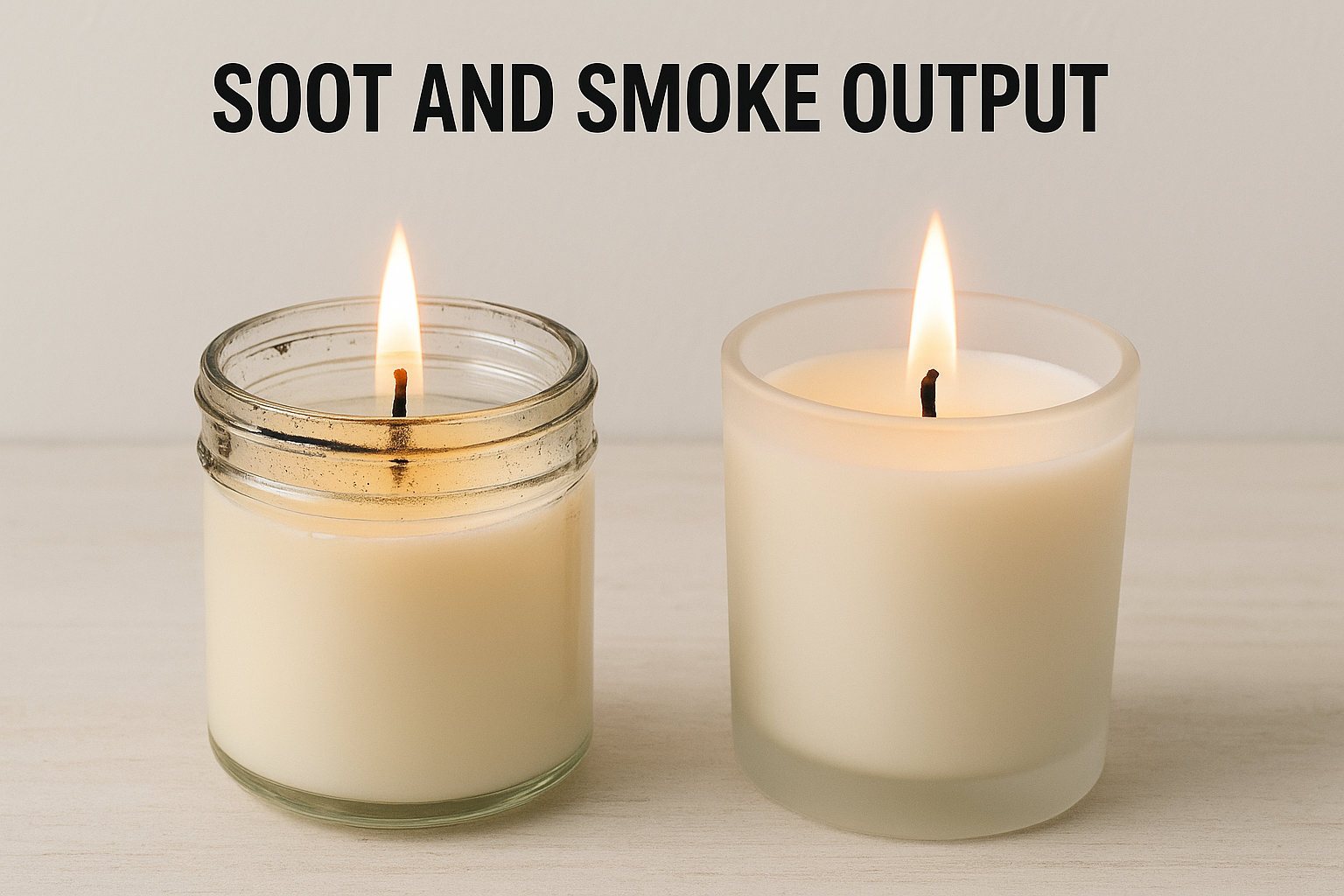
Paraffin wax produces more visible soot than soy wax because it's a petroleum-derived material with a higher carbon content. That black residue you sometimes see on jar rims or walls near candle placements comes from incomplete combustion, and paraffin generates it more readily than soy under the same conditions. Soy wax burns cleaner by comparison, releasing significantly less soot over the life of the candle.
Trimming your wick to about a quarter inch before each burn reduces soot output for both wax types considerably.
Fragrance load and indoor air
In the paraffin wax vs soy wax candles comparison, fragrance load also affects what enters your air. Higher fragrance concentrations in any candle, regardless of wax type, can irritate airways when a room is small and poorly ventilated. Paraffin candles often carry a higher fragrance load, which pushes more scent compounds into a closed space at once.
Soy candles typically use a lower fragrance concentration, which makes them a more practical option for bedrooms or any area with limited airflow. Whichever wax type you choose, keeping a window cracked during longer burn sessions makes a real difference in air quality.
How to choose the right candle or wax
The choice between paraffin and soy comes down to what you actually want from a candle in your specific situation. No single wax type is objectively better for everyone, but once you match your priorities to what each wax delivers, the right option becomes clear.
Choose paraffin if scent strength is your main priority
If you want immediate, powerful scent throw that fills a large room quickly, paraffin wax performs better than soy. Paraffin candles also tend to cost less upfront, making them a practical pick when you burn through candles quickly or you're purchasing for events and gatherings.
Paraffin works best for:
- Large, open living areas where scent needs to travel far
- Short burn sessions of one to two hours
- Situations where upfront cost is the deciding factor
Choose soy if burn time and air quality matter more
Soy candles are the stronger choice when long burn sessions or indoor air quality is your priority. Lighting candles in a bedroom, home office, or any smaller space where you spend extended time means soy's lower soot output and steadier fragrance release will give you a noticeably cleaner, more comfortable experience.
In the paraffin wax vs soy wax candles debate, your room size and burn habits are the two most practical factors to weigh first.
Consider a blended wax as a middle-ground option
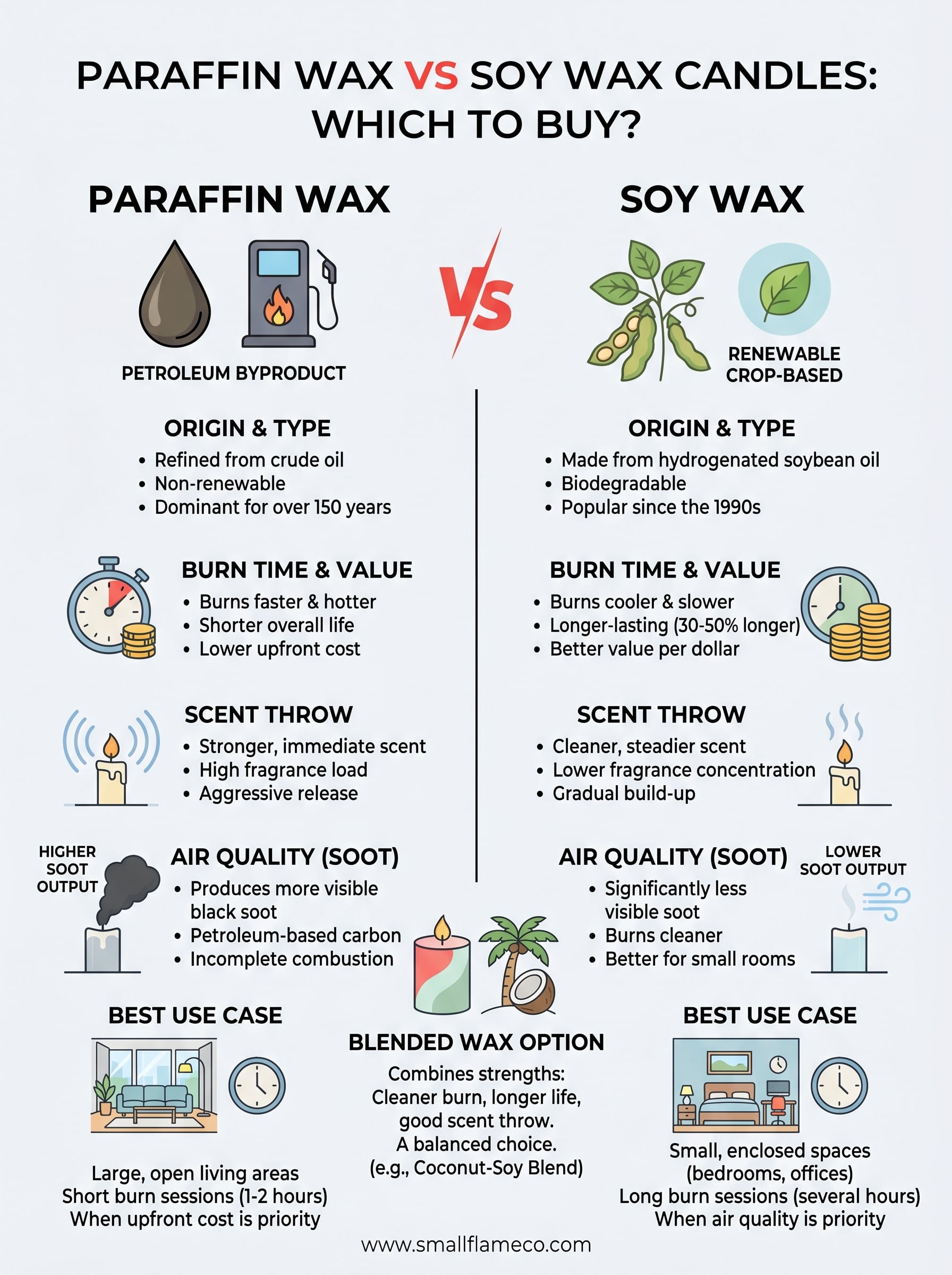
Many candle makers use a blend of soy and paraffin to capture the strengths of both types. Blended waxes deliver stronger scent throw than pure soy while burning cleaner and lasting longer than pure paraffin, making them a solid option when you want a balanced candle experience without sacrificing either quality.
Final take
The paraffin wax vs soy wax candles debate doesn't have a universal winner. Paraffin delivers strong, immediate scent throw and costs less upfront, making it a solid pick for large spaces and short burn sessions. Soy burns longer, produces less soot, and suits anyone who lights candles in smaller rooms or for extended stretches of time. Your burn habits and the rooms you use candles in should drive the decision more than any blanket claim about which wax is better.
If you want to skip the guesswork entirely, a coconut-soy wax blend gives you the best of both worlds: a cleaner burn, excellent scent throw, and longer-lasting performance. Small Flame Candle Co. hand-pours every candle with exactly that blend in mind. Browse the coconut wax candle collection to find a scent that fits your space, and see the difference quality wax makes for yourself.