

Why Is My Candle Wick Mushrooming? Fixes & Prevention Tips
You light your favorite candle, settle in for the evening, and then notice a dark, bulbous blob forming at the tip of the wick. If you've ever wondered why is my candle wick mushrooming, you're looking at a buildup of carbon that didn't fully combust during burning. It's one of the most common candle issues out there, and it can affect everything from flame size to soot production.
At Small Flame Candle Company, we hand-pour every candle we sell, so we spend a lot of time thinking about how wicks perform. We've tested different wick types, wax blends, and fragrance loads to minimize problems like mushrooming before a candle ever reaches your door. That hands-on experience is exactly what this guide draws from. Mushrooming isn't always a sign of a bad candle, but it does need your attention before it gets worse.
This article breaks down the specific reasons carbon buildup happens, walks you through quick fixes you can apply right now, and covers prevention tips that'll keep your wicks clean burn after burn. Whether you're dealing with a mushrooming wick for the first time or it keeps happening with every candle you own, you'll find clear answers below.
What wick mushrooming is and why it happens
A mushroom forms at the tip of a candle wick when unburned carbon accumulates faster than the flame can consume it. If you're asking why is my candle wick mushrooming, the short answer is that your wick's flame is pulling in more fuel than it can fully combust, leaving behind a carbon residue that clumps into that distinctive ball shape at the wick tip.
The carbon buildup process
When a candle burns, the flame vaporizes liquid wax and draws it up through the wick. That vaporized wax is the fuel source. If the wick is too large for the candle's diameter, or if the wax contains high levels of fragrance oil, the flame receives more fuel than it can burn cleanly. The leftover carbon molecules cluster together at the wick tip, growing larger with every hour the candle stays lit.
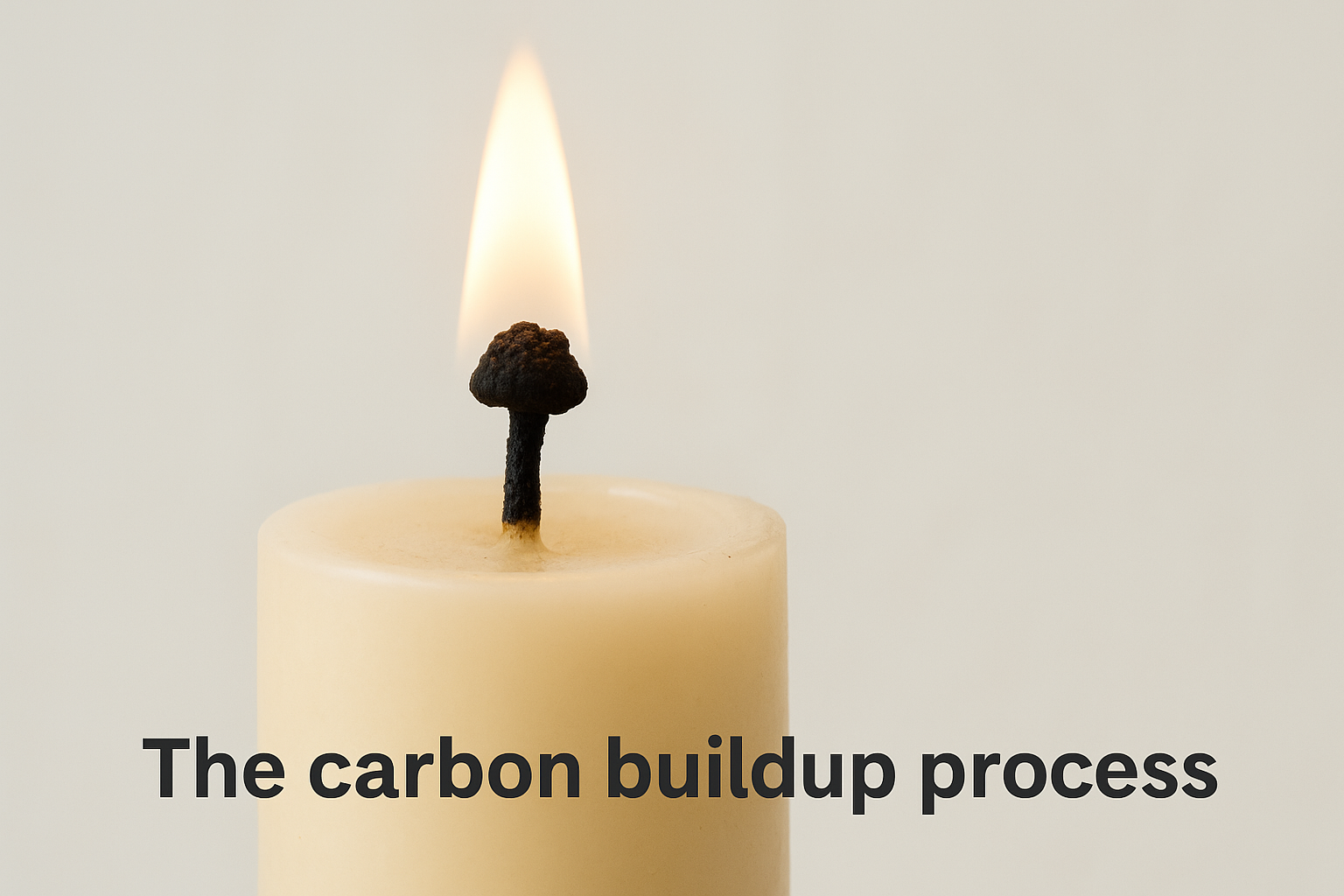
A wick mushroom that grows unchecked will increase flame height, raise the surface temperature of the wax, and produce noticeably more soot.
Common causes that speed up mushrooming
Several specific factors push a wick toward heavy carbon buildup. Burn time is the biggest one: most candles start developing a mushroom cap after three to four continuous hours of use. Other causes compound the problem quickly.
- Oversized wicks that draw up wax faster than the flame can process it
- High fragrance loads (above 10% of wax weight) that increase fuel density
- Soft waxes like soy, which release fragrance oil more readily than paraffin
- Drafty environments that cause uneven combustion and irregular flame behavior
- Colorants and additives that don't fully combust within the flame
Understanding what drives mushrooming puts you in a much stronger position to fix it before it causes real problems.
Step 1. Trim the wick and remove the carbon cap
Trimming is the most immediate fix when you're dealing with why is my candle wick mushrooming. Before you relight your candle, you need to remove the carbon cap entirely and cut the wick down to the correct length. Skipping this step means the next burn starts with a compromised flame that produces even more soot and grows an even larger mushroom.
How to trim the wick correctly
Let the candle cool completely before you touch the wick. Once the wax has solidified, pinch off the mushroom cap with your fingers or use a wick trimmer to cut the wick to about 1/4 inch above the wax surface. A wick trimmer is the cleanest option because it captures the debris rather than dropping it into your wax pool.
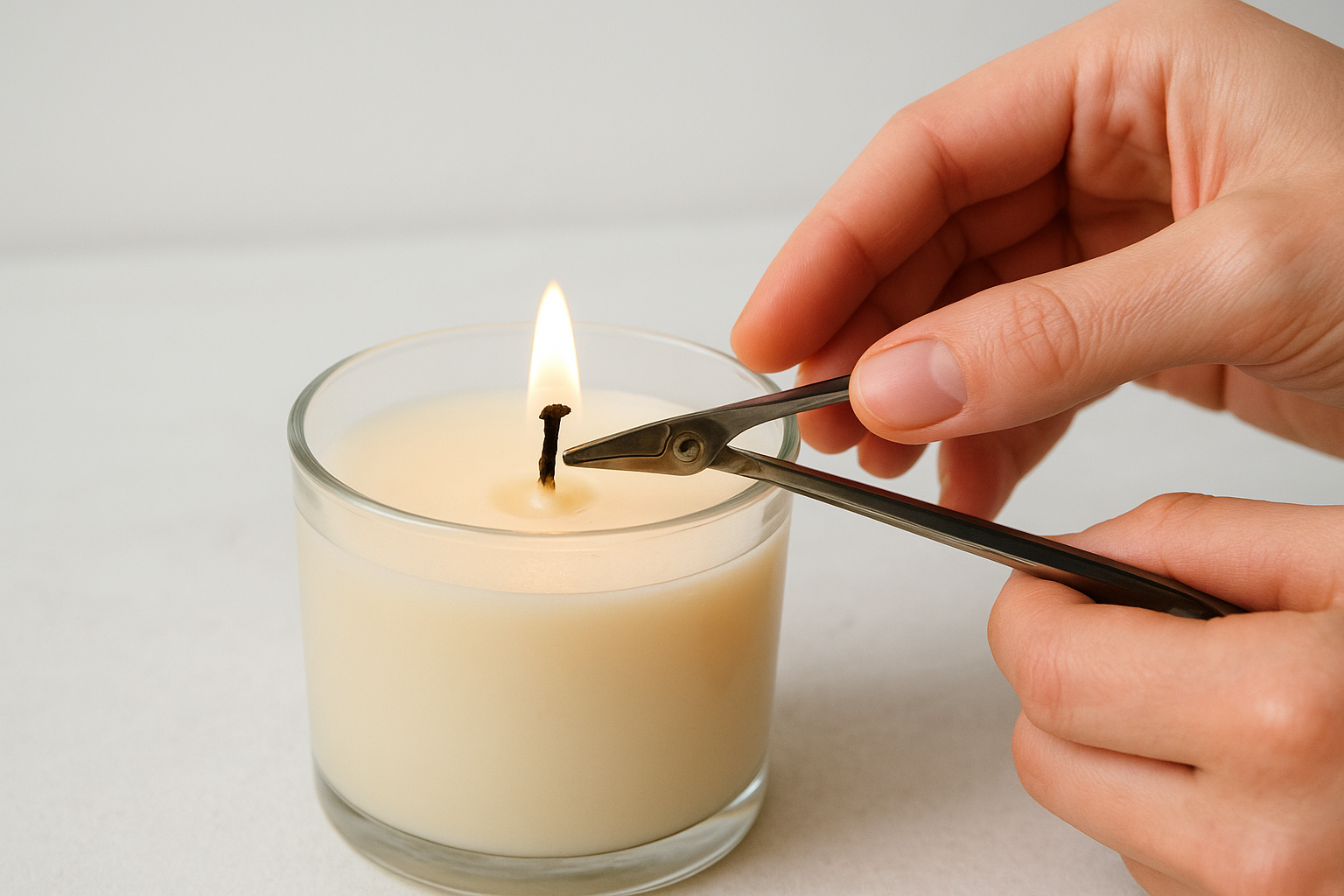
Always remove any carbon bits that fall into the wax before relighting, since they can become secondary ignition points and produce extra smoke.
Follow these steps before every burn session:
- Let the candle cool fully
- Pinch or trim the mushroom cap off
- Cut the wick to 1/4 inch
- Remove all debris from the wax surface
- Relight the candle
Step 2. Adjust burn time, airflow, and candle care
Once you've trimmed the wick, how you burn the candle going forward determines whether mushrooming comes back. Two behavioral habits, burn duration and the environment around the flame, drive most repeat mushrooming problems that trimming alone won't fix.
Keep burns to three to four hours
Burning a candle too long is one of the fastest ways to trigger carbon buildup. Most wicks hit their limit around the three-to-four-hour mark, after which the flame grows large enough to pull in more fuel than it can combust cleanly. That over-fueling is exactly why is my candle wick mushrooming after extended burn sessions.
Extinguish at four hours, let the wax cool fully, trim the wick to 1/4 inch, then relight for your next session.
Reduce drafts around the flame
Drafty conditions force the flame to flicker and pull unevenly, disrupting combustion and speeding up carbon accumulation. Keep your candle away from open windows, fans, and air vents while it burns.
If the flame leans consistently to one side, reposition the candle until it burns straight. A steady, upright flame burns far more efficiently and leaves less carbon residue building up on the wick tip between sessions.
Step 3. Troubleshoot wick size, wax, and fragrance
If trimming and adjusting your burn habits haven't solved why is my candle wick mushrooming, the problem likely sits deeper in the candle's materials and construction. Wick size, wax type, and fragrance load all interact directly, and getting any one of them wrong creates persistent mushrooming.
Check your wick size
Wick diameter needs to match the candle's container width. A wick that's too thick pulls in far more wax than the flame can burn, which is the main driver of heavy carbon buildup. Use this quick reference:
| Container Diameter | Recommended Wick Size |
|---|---|
| Up to 2 inches | Small wick |
| 2 to 3 inches | Medium wick |
| 3 to 4 inches | Large wick |
If your flame consistently burns tall and wide, your wick is likely one size too large for your container.
Consider your wax and fragrance load
Soy wax releases fragrance oil more readily than paraffin, which means high-fragrance soy candles mushroom faster under the same conditions. If you make your own candles, keep your fragrance load at or below 10% of the total wax weight.
Switching to a harder wax blend or reducing fragrance concentration by even 2% can significantly reduce how often mushrooming reappears between sessions.
When mushrooming becomes a safety problem
Most mushrooming is a nuisance, but a large, unchecked carbon cap can escalate into a genuine hazard. When the mushroom grows big enough, it raises flame height well above normal, heats the glass container unevenly, and deposits soot on nearby surfaces. Knowing exactly when to stop a burn protects both your home and your candle.
Warning signs to watch for
If you're still wondering why is my candle wick mushrooming and haven't trimmed the cap, watch for these specific danger signals during each burn:
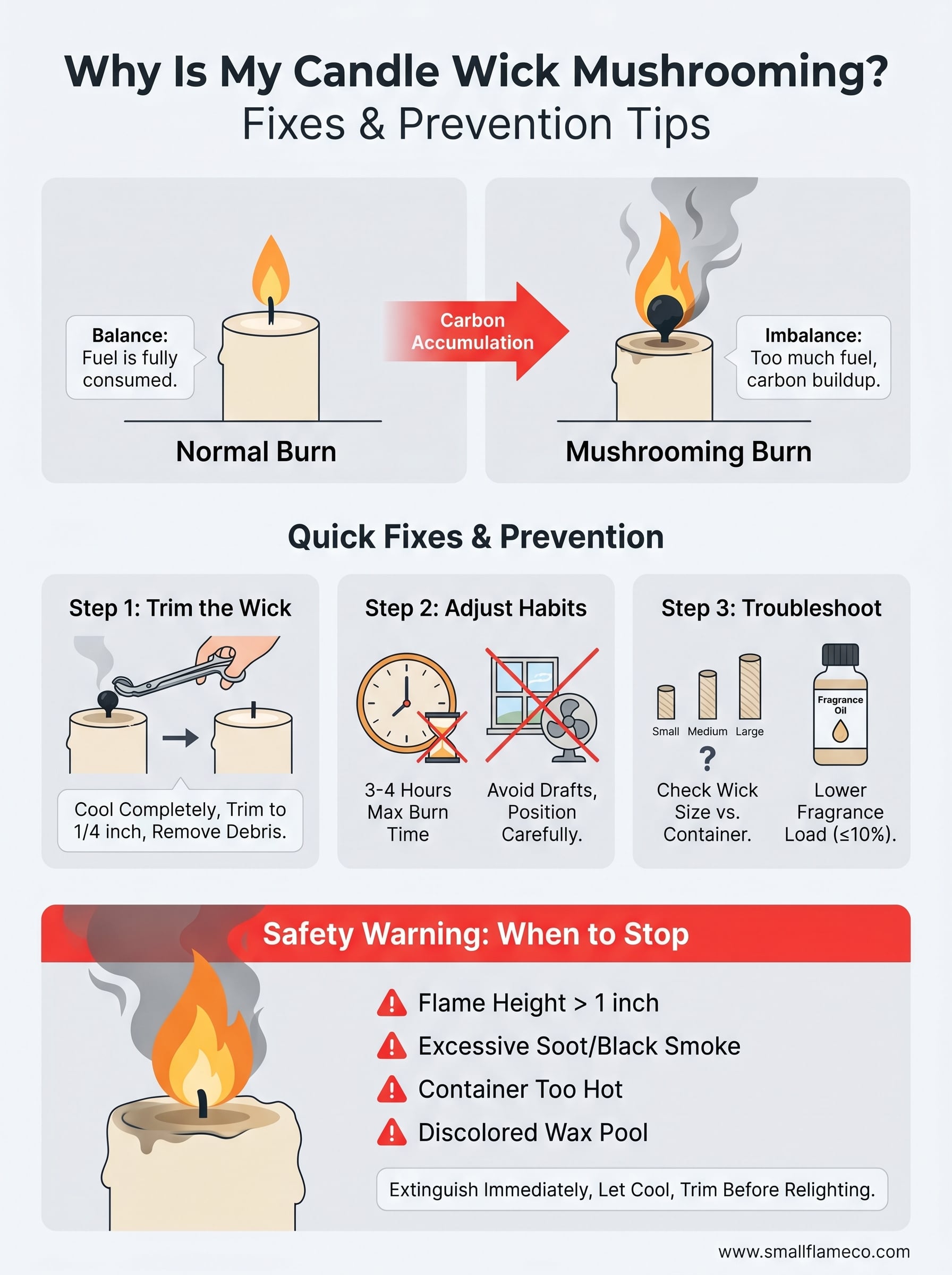
- Flame height exceeds 1 inch above the wick
- The jar or container feels too hot to touch
- Black smoke rises visibly from the flame
- Soot rings appear on the inside wall of the container
- The wax pool looks discolored or darkened
Extinguish the candle immediately if you see any of these signs, let it cool completely, then trim the wick before relighting.
Any container that cracks from heat stress should be retired right away. Never burn a candle on an unprotected surface, and keep a heat-safe tray under every jar candle you own. A few seconds of attention before each burn prevents the situations that lead to these hazards.
Next steps for a cleaner burn
Now that you know why is my candle wick mushrooming and what to do about it, put these habits into practice starting with your very next burn. Trim the wick to 1/4 inch before every session, keep burns under four hours, and pull the candle away from drafts. Those three steps alone will eliminate most mushrooming problems before they start.
If trimming and adjusted burn habits still leave you dealing with persistent carbon buildup, the issue is almost certainly the wick size or a high fragrance load in the wax itself. Switching to a candle made with a cleaner-burning wax blend removes that variable entirely.
Small Flame Candle Co. hand-pours every candle with lead-free cotton wicks and a premium coconut-soy wax blend specifically chosen to reduce soot and carbon buildup. Browse the coconut wax candle collection to find a cleaner burn from the very first light.