

How To Stop a Candle From Smoking: 5 Fixes For Black Soot
You lit your favorite candle to unwind, and now there's a ribbon of black smoke curling toward the ceiling, along with dark soot staining your jar, your wall, or both. Knowing how to stop a candle from smoking isn't just about aesthetics. It's about getting the clean, full burn you paid for.
At Small Flame Candle Company, we hand-pour every candle we sell, so we've spent a lot of time learning what makes a flame behave, and what makes it misbehave. Most smoking problems come down to a handful of fixable causes: a long wick, a draft, or burning habits that are easy to correct once you know what to look for. None of it requires special tools, and the fixes take seconds.
Below are five straightforward solutions to stop the soot, protect your surfaces, and get a cleaner burn from any candle in your collection.
1. Start with a clean-burning candle
Sometimes, knowing how to stop a candle from smoking starts before you even light the match. Not every candle is formulated to burn cleanly, and if you're working with a poorly made product, no amount of wick trimming or draft control will fully solve the problem.
What "clean-burning" looks like in real life
A well-made candle burns with a steady, upright flame and leaves no visible smoke trail under normal indoor conditions. The wax melts evenly toward the edges of the container, and the jar stays clear rather than building up a dark residue ring near the top. If your candle consistently produces black smoke within the first 10-15 minutes of a burn, the candle's construction is likely the root cause.
A clean melt pool that reaches the jar's edge within two to three hours is one of the clearest signs of a well-formulated candle.
How wick size, wax, and fragrance affect soot
Three core variables determine how much soot a candle produces. A wick that's too large for the container's diameter generates excess heat, which burns through fuel faster than the wax can feed it cleanly. Paraffin wax tends to produce more soot than soy or coconut wax blends, especially when paired with heavy synthetic fragrance oils at high concentrations. Fragrance load matters too: candles with more than 10-12% fragrance by weight often struggle to combust completely.
When the candle itself is the problem
If you've trimmed the wick, removed drafts, and still see persistent black smoke, the candle's formulation is working against you. Look for candles that list wax type and fragrance sourcing openly, since hand-poured candles made in small batches tend to have tighter quality control over fragrance load and wick sizing, which translates directly to a cleaner burn.
2. Trim the wick to the right height
A long wick is the most common reason candles smoke, and it's also the easiest fix. Before every burn, take 30 seconds to check the wick length before you strike a match.
The target wick length for most jar candles
Keep your wick trimmed to 1/4 inch before each lighting. At that height, the flame stays controlled enough to draw fuel at a steady rate, which means less unburned carbon released as smoke. A wick longer than 1/2 inch will almost always produce a tall, flickering flame with visible soot trails.
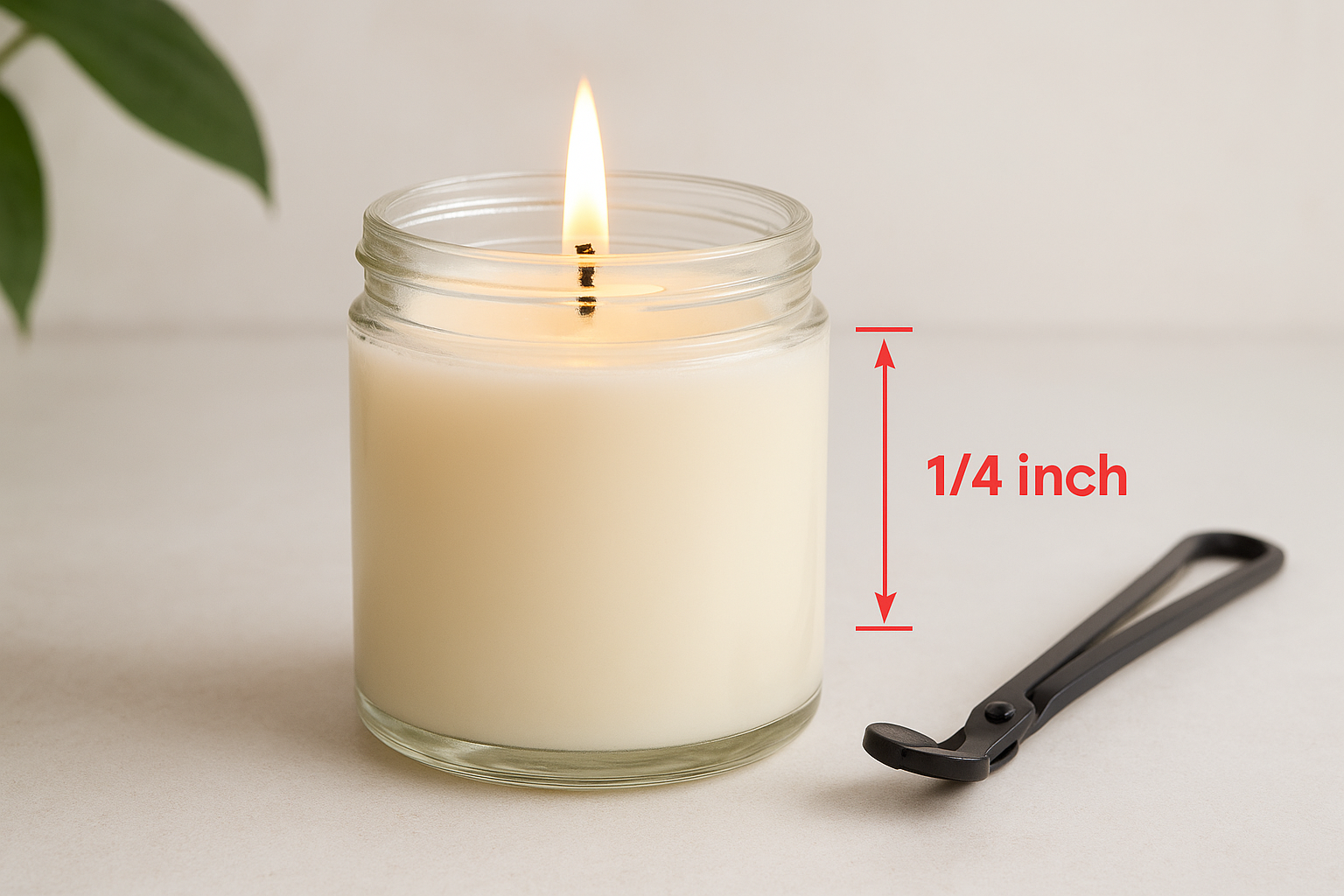
Trimming the wick before every single burn, not just the first, is one of the simplest ways to stop a candle from smoking for good.
How to handle mushrooming and wick "junk"
After a burn, check whether the wick tip has formed a small carbon ball at its end. That buildup, often called mushrooming, causes the flame to run hotter and dirtier on the next burn. Clip or pinch it off before relighting. Any of these tools will get the job done:
- Small scissors
- A dedicated wick trimmer
- Your fingers (once the wax is fully cooled)
What to do if the wick keeps smoking after trimming
If trimming to 1/4 inch still leaves you with persistent black smoke, let the candle cool completely and inspect the wax pool for debris. Spent wick trimmings, dust, or match heads left in the wax feed the flame unevenly and keep the smoke coming no matter how short the wick is.
3. Stop drafts that make the flame flicker
Even a perfectly trimmed wick will produce black smoke if the flame is constantly disrupted by moving air. If you're trying to figure out how to stop a candle from smoking, checking for drafts is one of the first things to do, and fixing it costs nothing.
How airflow creates black smoke and soot trails
When a flame flickers, it burns unevenly, pulling in more oxygen on one side than the other. That imbalance causes incomplete combustion, which releases unburned carbon particles as visible black smoke. Over time, those particles settle on your jar walls, shelves, and ceiling.
A steady, upright flame with no visible flicker is the clearest sign your candle is burning in a draft-free spot.
Where not to burn candles in a room
Avoid placing candles near open windows, ceiling fans, air vents, or doorways. Even a subtle cross-breeze from two open windows across a room can cause persistent flickering that looks minor but produces significant soot over a two-hour burn.
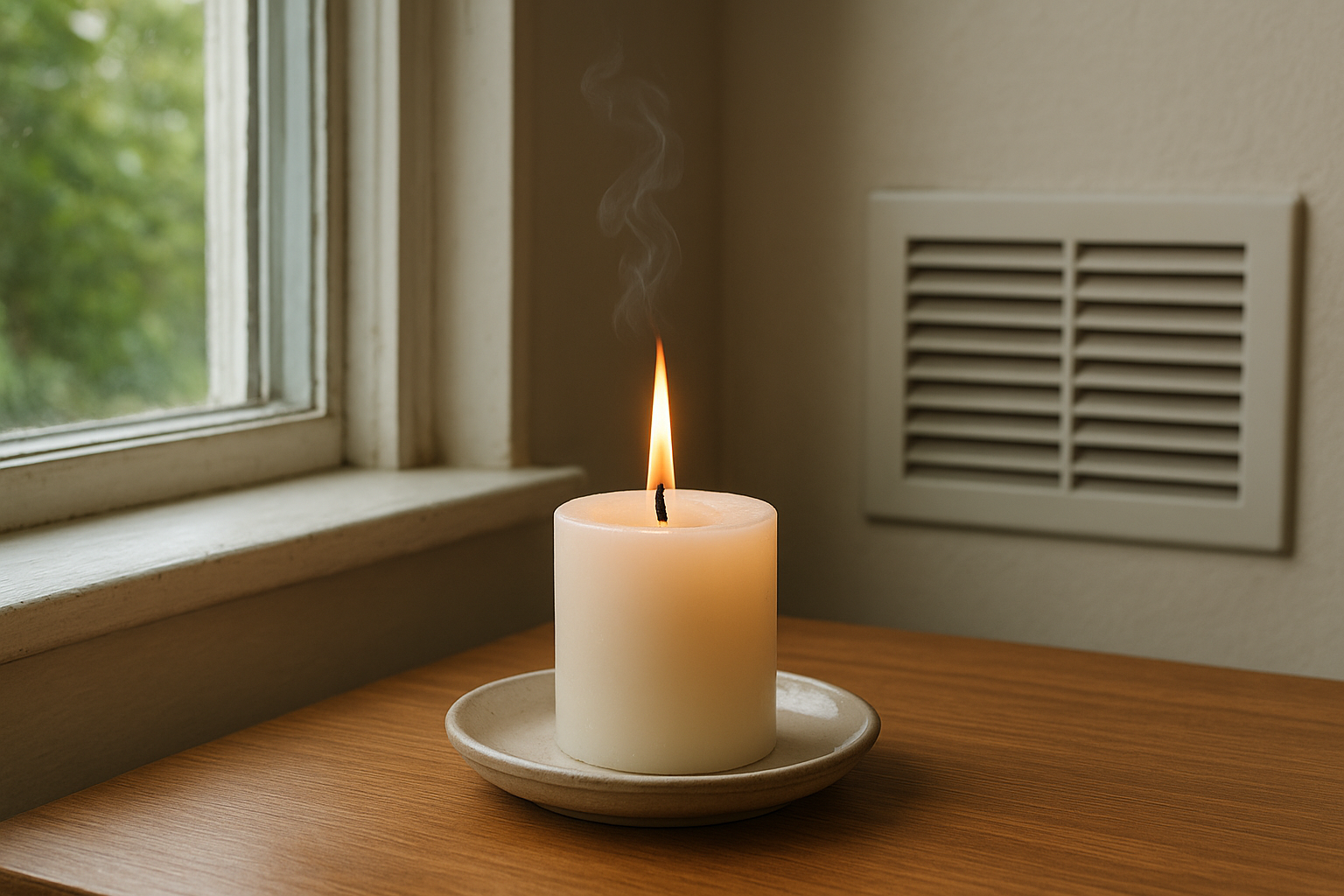
Simple ways to shield the flame safely
Move the candle to a more sheltered surface, such as a coffee table or a bookshelf alcove, away from foot traffic. You can also close nearby vents temporarily or turn off a ceiling fan while the candle is burning. Neither fix requires anything beyond adjusting your setup.
4. Burn it correctly and keep wax debris-free
How long you burn your candle and how clean you keep the wax are two variables that directly affect how to stop a candle from smoking on repeat burns.
Short burns and dirty wax pools are two of the most overlooked causes of ongoing soot problems.
How short burns create tunneling and more smoke later
Burns under one hour prevent the melt pool from reaching the jar's edge, which forms a wax tunnel. That wax wall collapses on later burns, dropping debris into the pool and feeding a dirtier, smokier flame.
Aim for a minimum of two hours per session. The first burn matters most since tunneling that forms early is difficult to reverse on later burns.
How to keep the melt pool clean and even
Check the liquid wax surface for floating debris before you extinguish the candle. Wick trimmings or match tips left in the pool cause the flame to draw fuel unevenly and produce more soot.
Use a toothpick to remove any debris while the wax is still liquid. Never drop spent wick pieces back into the candle after trimming.
What to do when you see soot on the jar or wall
Wipe the jar with a damp cloth once the wax cools completely. Leaving dark residue on the glass traps heat near the flame and makes smoking worse on the next burn.
Soot on your wall signals that the candle sat in a draft or the wick ran too long. Correct the wick length and candle placement before you relight.
5. Put it out without creating a smoke cloud
How you extinguish a candle is the final step in learning how to stop a candle from smoking, and it's one most people get wrong. The method you use determines how much smoke lingers in the room and whether the wick is set up for a clean relight next time.
Why blowing it out makes the worst smoke
Blowing out a candle forces the hot wick to smolder rather than stop burning cleanly. That smoldering releases a thick curl of black smoke that deposits soot on the jar rim and drifts through the room for minutes after the flame is gone.
Switching from blowing to smothering is one of the fastest improvements you can make to your candle routine.
How to extinguish with a wick dipper or wick dunk
A wick dipper bends the lit wick into the melted wax pool, smothering the flame with zero smoke. Straighten the wick before the wax cools so it stays primed. Both tools below stop the flame cleanly:
- Wick dipper: dunks the wick into the wax, then lifts it upright
- Candle snuffer: caps the flame to cut off oxygen without bending the wick
How to relight cleanly next time
Before relighting, trim the wick to 1/4 inch and scan the wax surface for any debris or wick trimmings left over from the last burn. A clear melt pool and a short wick give you a smoke-free start every single time.
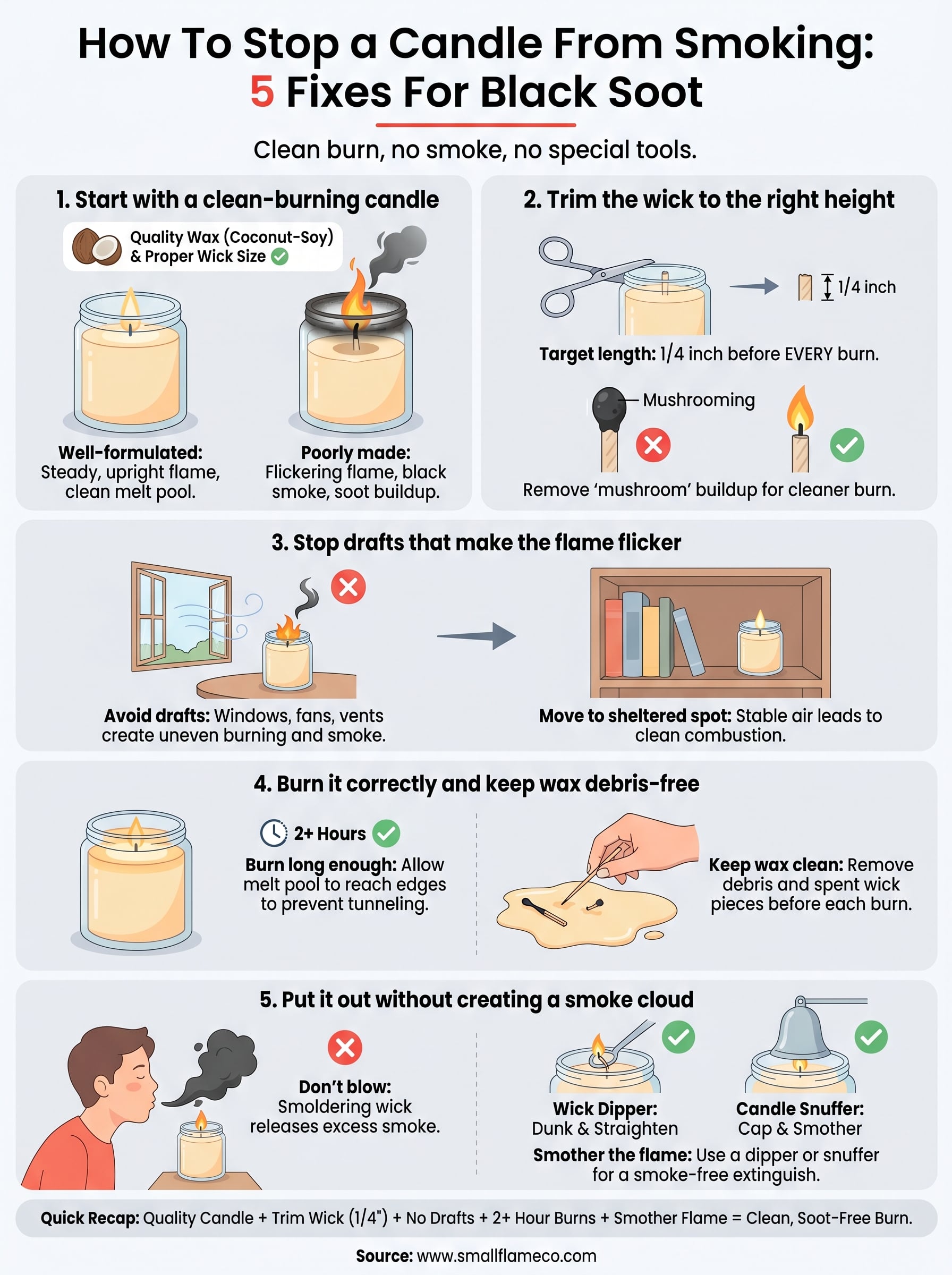
Quick recap
Knowing how to stop a candle from smoking comes down to five habits you can start today. Start with a well-formulated candle built from quality wax and a properly sized wick. Trim the wick to 1/4 inch before every single burn, remove debris from the wax pool, and keep the flame away from drafts. Burn for at least two hours so the melt pool reaches the jar's edge, and extinguish with a wick dipper or snuffer instead of blowing it out.
Follow those five steps consistently and you'll see the difference within your first clean burn. If you want to start fresh with a candle formulated specifically for a clean, soot-free experience, check out the hand-poured coconut wax candles at Small Flame Candle Company. Every candle uses a coconut-soy wax blend and lead-free cotton wicks so the soot problem is solved before you even light the match.