

Soy Wax vs Beeswax Candles: Differences, Pros, And Cons
If you've ever stood in front of a candle display wondering whether to grab the soy option or the beeswax one, you're not alone. The soy wax vs beeswax candles debate comes up constantly, and for good reason. Both are popular alternatives to paraffin, but they differ in ways that actually matter: burn time, scent throw, cost, and environmental footprint.
At Small Flame Candle Company, we hand-pour every candle we sell, so wax selection isn't just a talking point for us, it's a daily decision that shapes the product you bring home. We've worked with different wax types extensively and know firsthand how each one behaves once a wick is lit. That hands-on experience is exactly what informed this comparison, and we want to share it so you can shop with confidence rather than guesswork.
This guide breaks down the real differences between soy wax and beeswax candles across the categories that matter most: health considerations, burn performance, fragrance capability, price, and sustainability. By the end, you'll have a clear picture of which wax fits your priorities, whether that's a longer burn, a stronger scent, or a smaller environmental impact.
Why wax choice matters for candles
Candle wax does more than hold a wick in place. The wax you burn determines how long your candle lasts, how much scent it releases into a room, and what byproducts enter the air you breathe. When you're weighing soy wax vs beeswax candles, you're not just picking between two materials. You're making a decision that shapes every aspect of your experience, from the first light to the last burn.
What wax actually does when a candle burns
When a candle burns, the flame's heat melts the wax surrounding the wick. That liquid wax gets drawn upward through the wick and vaporized, releasing fragrance and producing light in the process. The chemical composition of the wax directly controls how cleanly this happens and how efficiently the candle converts its fuel into light and scent.
Wax hardness also plays a major role. Harder waxes burn more slowly and hold their shape longer. Softer waxes melt faster and create a wider melt pool across the surface. If a wax tunnels straight down the center without melting to the jar's edges, you lose a large portion of the candle to unused wax clinging to the sides. Understanding this helps you recognize quality before you've burned through half a jar.
How wax composition affects scent throw
Scent throw describes how effectively a candle distributes fragrance, both when the candle is lit (hot throw) and when it's sitting unlit on a shelf (cold throw). Different waxes bind and release fragrance molecules at different rates, which is why two candles with the same fragrance oil can smell completely different depending solely on the wax used.
The wax base is one of the most overlooked factors in candle scent performance, and it often explains why a candle smells great in the store but disappoints at home.
Soy wax binds well with fragrance oils and tends to release scent gradually over the candle's life. Beeswax carries a natural honey-like aroma that can complement or compete with added fragrances depending on the combination. Knowing this before you buy helps you match your wax expectations to your actual scent goals.
Why wax matters for your health and the environment
Not all waxes burn the same from a health perspective. Paraffin, the most common candle wax, is petroleum-derived and can release soot and trace compounds when burned in poorly ventilated spaces. Natural alternatives like soy and beeswax are generally considered cleaner options, but the specifics still matter.
Both soy and beeswax produce minimal soot when paired with a correctly sized wick, but their environmental profiles are quite different from each other. Soy wax comes from a farmed, renewable crop. Beeswax is an animal byproduct that requires significant bee labor to produce at scale. For shoppers who factor sustainability into their purchasing decisions, this distinction is worth understanding before you commit to a candle type.
Soy wax candles: pros, cons, and best uses
Soy wax has become one of the most widely used natural wax options in candle making. It comes from hydrogenated soybean oil, which makes it a renewable, plant-based material that appeals to shoppers who want to move away from petroleum-derived paraffin. Knowing what soy actually delivers helps you decide if it belongs in your home.
What soy wax gets right
Soy wax burns cooler and more slowly than many alternatives, which typically means a longer burn time for your money. It also binds well with fragrance oils, so you get consistent scent release from the first burn to the last. Candles made with soy wax are also easier to clean up since spills dissolve in warm water.
Soy wax candles often burn 30 to 50 percent longer than paraffin candles of the same size, giving you more hours of fragrance per dollar spent.
The lower melting point of soy wax helps it spread evenly across the surface of a container, reducing the tunneling that leaves wasted wax clinging to the sides of lower-quality candles.
Where soy wax falls short
Soft by nature, soy wax struggles in freestanding pillar candles without added hardeners or blending agents. It also tends to develop frosting, a white film that forms on the wax surface over time, which is a normal characteristic of pure soy, not a defect. That said, it can make a candle look less polished if appearance matters, such as when you're giving it as a gift.
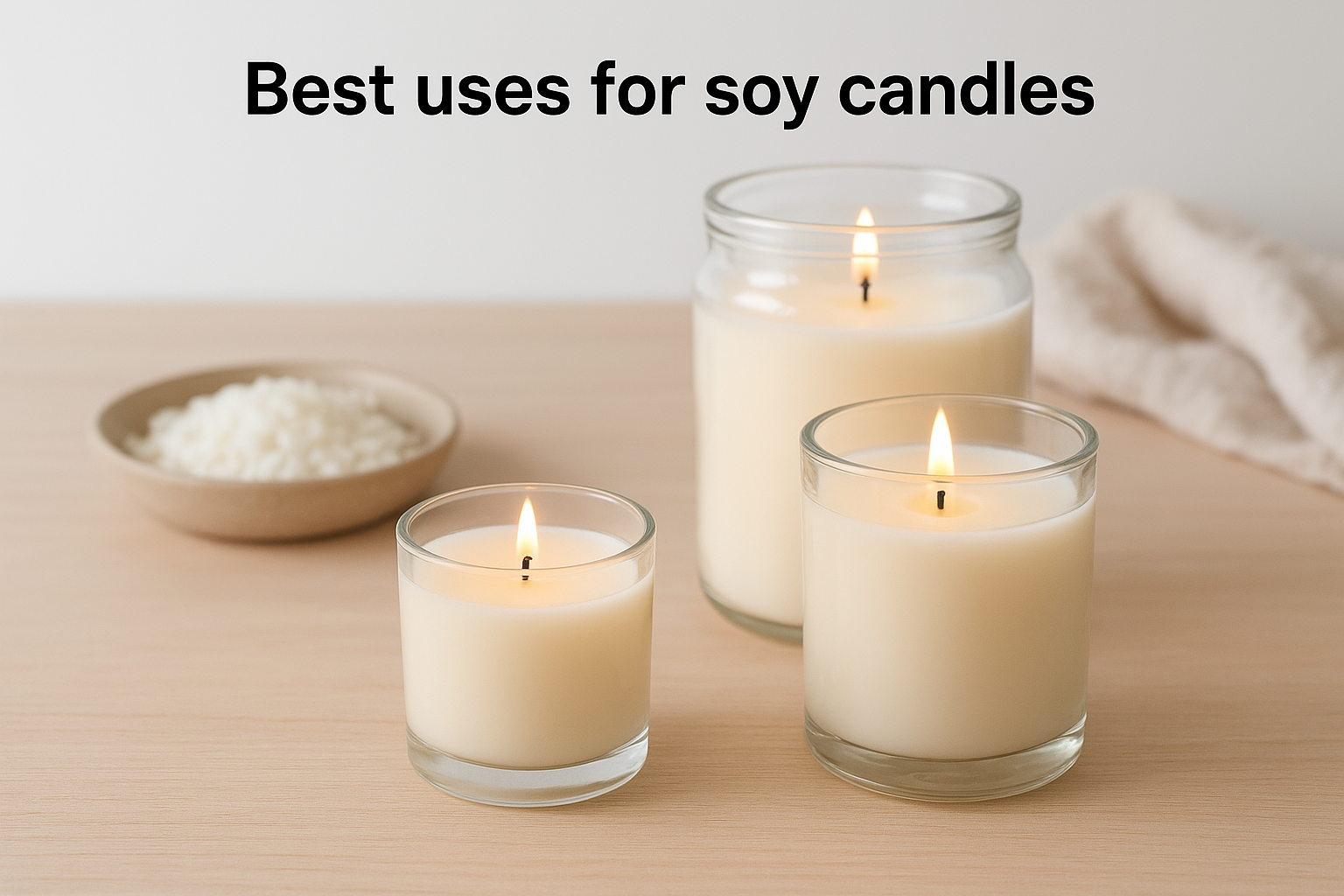
Best uses for soy candles
Soy wax performs best in container candles like jars or tins where structural rigidity isn't required. It suits situations where strong, varied fragrance throw is the main priority, which is something the soy wax vs beeswax candles comparison consistently points to as soy's standout strength. If burn time and scent performance rank highest on your list, soy is typically the right call.
Beeswax candles: pros, cons, and best uses
Beeswax is one of the oldest candle-making materials in human history, used long before soy or paraffin entered the picture. Produced by honeybees to construct their hive combs, beeswax is a natural, animal-derived wax with properties that set it apart from every plant-based alternative on the market.
What beeswax gets right
Beeswax burns hotter and longer than most other waxes, and it holds its shape exceptionally well at room temperature. That natural hardness makes it the top choice for freestanding pillar candles and tapers, where structural integrity is non-negotiable. Beeswax also carries a subtle, warm honey scent that many people find pleasant on its own, without any added fragrance.
Beeswax candles are often said to release negative ions when burned, which may help neutralize airborne particles, though scientific evidence on this specific claim remains limited.
Another real advantage is minimal soot output. When you burn a properly wicked beeswax candle, the flame stays clean and steady, which keeps your walls and jar interiors noticeably cleaner over time.
Where beeswax falls short
Cost is the most significant obstacle. Beeswax costs considerably more than soy wax, often three to five times as much at the raw material level, and that difference shows up directly in what you pay at checkout. For anyone comparing the full soy wax vs beeswax candles picture, budget is frequently the deciding factor.
Beeswax also presents real challenges for fragrance blending. Its natural honey scent can compete with added fragrance oils, making it harder to achieve the clean, distinct scent profiles that soy wax delivers more predictably.
Best uses for beeswax candles
Beeswax performs best when you want unscented or lightly scented pillar candles with a long burn time and a clean flame. It suits formal settings, decorative displays, and anyone who prioritizes natural materials over fragrance variety.
Consider beeswax if your candle goals include:
- Long, slow burns without added fragrance
- Freestanding pillar or taper candle formats
- A naturally clean burn with low soot output
- Minimal additives and a single-ingredient wax
Soy vs beeswax by burn, scent, cost, and eco impact
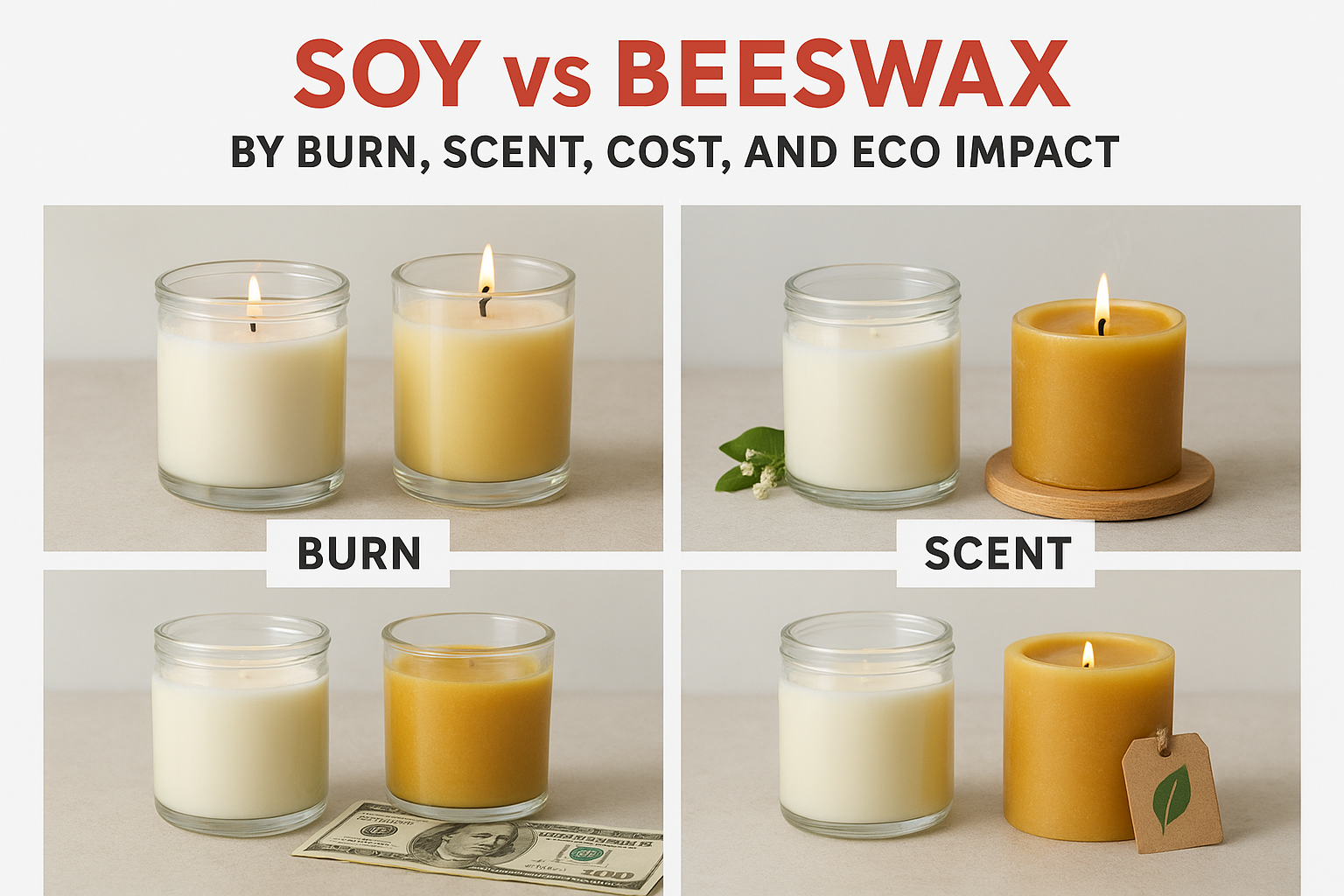
When you put the soy wax vs beeswax candles debate side by side across specific categories, the differences become practical rather than abstract. Each wax has clear strengths in certain areas and real weaknesses in others, and knowing which categories matter most to you makes the decision straightforward.
Burn time and scent throw
Beeswax edges out soy wax on raw burn time. Its higher melting point means it consumes more slowly, giving you more hours per ounce. Soy wax burns longer than paraffin but typically falls short of beeswax in a direct comparison. For most jar candle buyers, though, the difference is smaller than you might expect once wick size and container shape are factored in.
Scent throw is where soy wax takes the lead. Fragrance oils bind more effectively to soy, producing a stronger and more consistent scent throughout the candle's life. Beeswax carries its own natural honey aroma, which can soften or compete with added fragrances. If a specific fragrance experience is your priority, soy delivers more predictably across a wider range of scent profiles.
Cost and environmental impact
Cost is one area where soy wax wins without much contest. Beeswax raw material costs three to five times more than soy, and candle prices reflect that gap directly. Soy wax candles typically land at a lower price point, making them more accessible for everyday use or buying in larger quantities.
Environmental impact is where the comparison gets nuanced: soy is a renewable crop but faces criticism over large-scale agricultural practices, while beeswax is natural and biodegradable but depends on bee populations that are already under significant pressure.
Neither wax is a perfect environmental choice, but both are considerably cleaner than petroleum-based paraffin. For the most sustainable option, look for responsibly sourced versions of either wax rather than assuming one is automatically greener than the other based on material type alone.
How to choose the right wax for your home
Choosing between soy and beeswax comes down to matching the wax's strengths to what you actually need. The full soy wax vs beeswax candles comparison only helps when you apply it to your situation: the candle format you prefer, the scent experience you want, and the budget you're working with.
Match your wax to your candle format
The physical format you prefer narrows the choice quickly. Container candles like jars and tins work best with soy wax because soy's softer texture fits naturally in a vessel that holds its shape. Beeswax is the stronger pick when you want candles that stand on their own without support.
Here's a quick format guide to help you decide:
- Jar or tin candles: Choose soy wax for even melting and strong scent throw
- Pillar candles: Choose beeswax for structural firmness and a clean, slow burn
- Tapers: Choose beeswax for its hardness and natural honey scent
- Unscented decorative candles: Either wax works, but beeswax delivers a more refined appearance
Factor in your scent and budget priorities
Scent and price often settle the decision for most buyers. If you want bold, specific fragrance profiles across a wide range of options, soy wax delivers those results more consistently and at a lower cost per candle. Beeswax is worth the added expense when you prefer a naturally scented or unscented candle with a long, slow burn.
Burning candles daily makes soy wax the more practical choice: you get reliable scent performance at a price point that doesn't make everyday use feel indulgent.
Your lifestyle shapes this call too. For special occasions or formal settings where burn cleanliness and appearance matter most, beeswax earns its price premium without question.
Consider your values around sustainability
Both waxes are considerably cleaner than petroleum-based paraffin, so either choice moves you in the right direction. If you care about renewable agricultural sourcing, soy fits that preference well. If you prioritize minimal processing and a single-ingredient natural product, beeswax aligns more closely with that standard. Look for candles that clearly disclose their wax sourcing so you know exactly what you're bringing into your home.
The bottom line
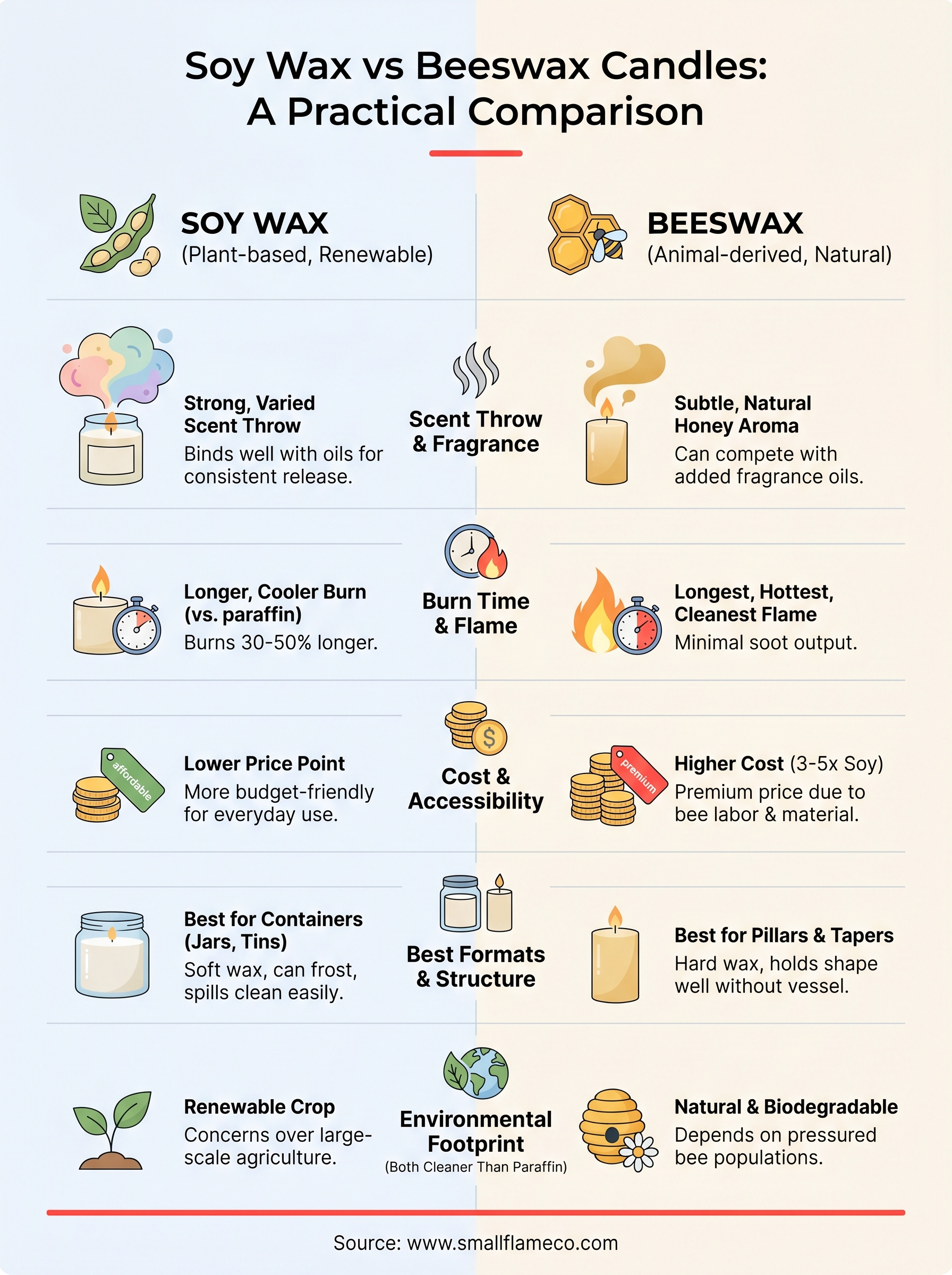
The soy wax vs beeswax candles decision isn't complicated once you know what each wax actually delivers. Soy wax wins on scent throw, fragrance variety, and price, making it the practical choice for everyday jar candles. Beeswax wins on structural firmness, burn cleanliness, and raw burn duration, making it the right pick for pillars, tapers, and unscented decorative candles. Neither is universally better, and both outperform paraffin on health and sustainability.
Your candle should match your actual priorities, not just the most popular label on a shelf. If you want hand-poured candles built from a clean, sustainable wax blend that performs across a wide range of fragrances, explore our coconut-soy wax candle collection at Small Flame Candle Company. Every candle uses a premium coconut-soy blend formulated for stronger scent performance and a cleaner burn in every pour.