

What Is a Wax Warmer? How It Works, Types, and Best Uses
So you've heard about wax warmers, maybe spotted one on a friend's shelf, and now you're wondering, what is a wax warmer, exactly? In short, it's a device that melts scented wax using gentle heat instead of an open flame, releasing fragrance into your space without the soot, smoke, or safety concerns that come with lighting a wick.
Here at Small Flame Candle Company, we hand-pour candles and craft home fragrance products, including wax warmers and melts, so this is a topic we know well. Whether you're exploring flame-free options for a household with kids and pets or you simply want more control over scent intensity, warmers are worth a closer look.
This guide breaks down how wax warmers work, the different types available, and the best ways to use them so you can figure out which setup fits your home. We'll also cover practical tips for getting the most out of every melt.
Why wax warmers matter for home fragrance
Home fragrance does more than make a room smell pleasant. The right scent can shift your mood, trigger a memory, and signal to guests that your space is cared for. Wax warmers have become a go-to tool for achieving that effect because they give you consistent, customizable fragrance without the drawbacks of an open flame.
The safety advantage over candles
One of the biggest reasons people reach for a wax warmer is safety. Traditional candles carry real risks, especially in homes with children, pets, or flammable materials nearby. A warmer removes the open flame entirely, which means no accidental tip-overs that could ignite a surface and no worry about forgetting to extinguish something before you go to bed.
A warmer that uses a low-wattage bulb or a fan system produces enough heat to melt wax slowly but never reaches the temperatures that pose a fire hazard.
Scent control you actually get to adjust
If you've ever lit a strong candle and felt like you couldn't escape the smell, you already understand why scent control matters. With a wax warmer, you manage the intensity by adjusting how much wax you load into the dish. Use a single cube for a subtle background scent, or add two for something more noticeable. You can also swap fragrances far more easily than you can with candles, since the cooled wax lifts cleanly out of the dish once it hardens.
Understanding what is a wax warmer in this context makes it clear: it's not just a candle substitute, it's a more flexible tool for managing how fragrance moves through your home on your own terms.
How a wax warmer works
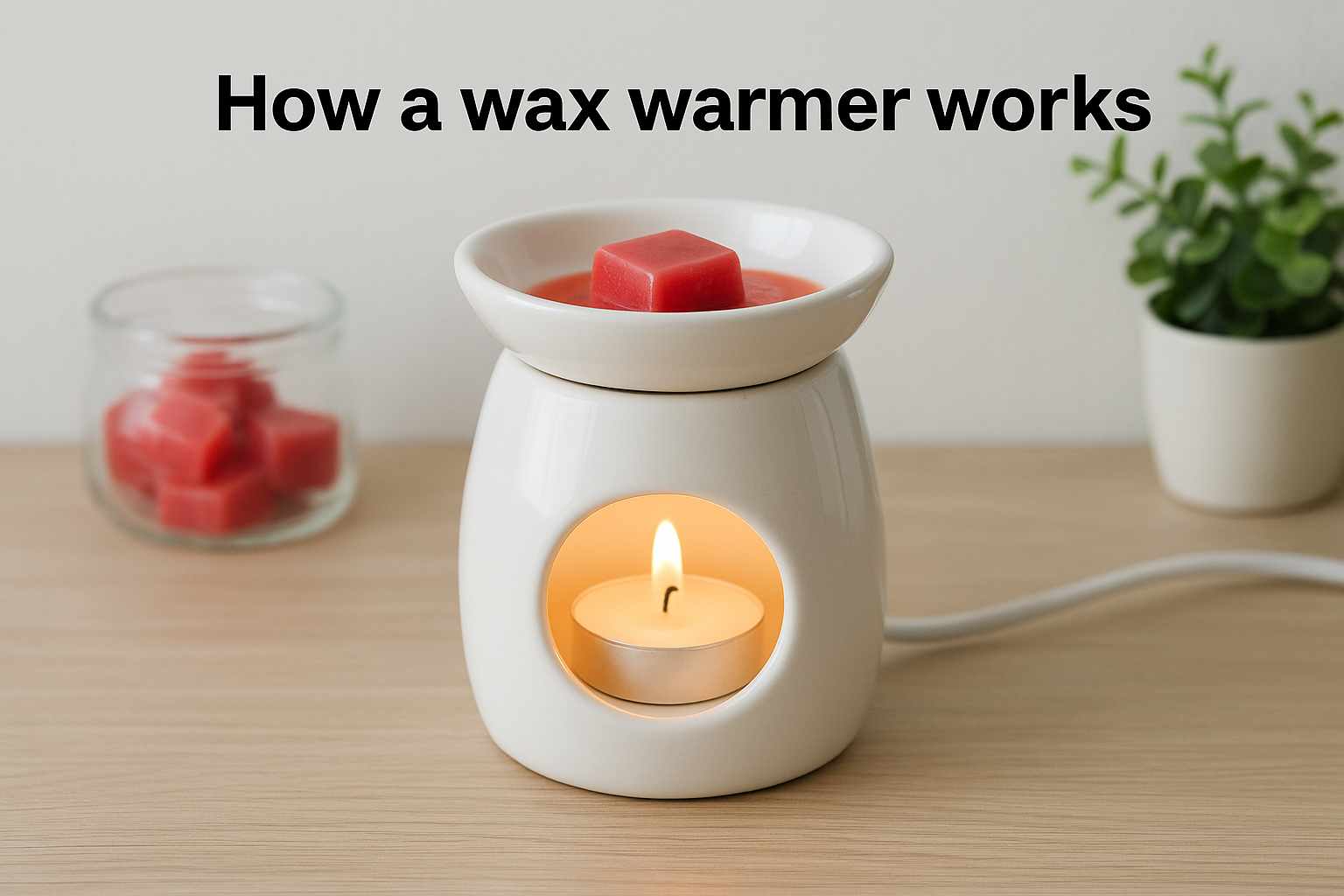
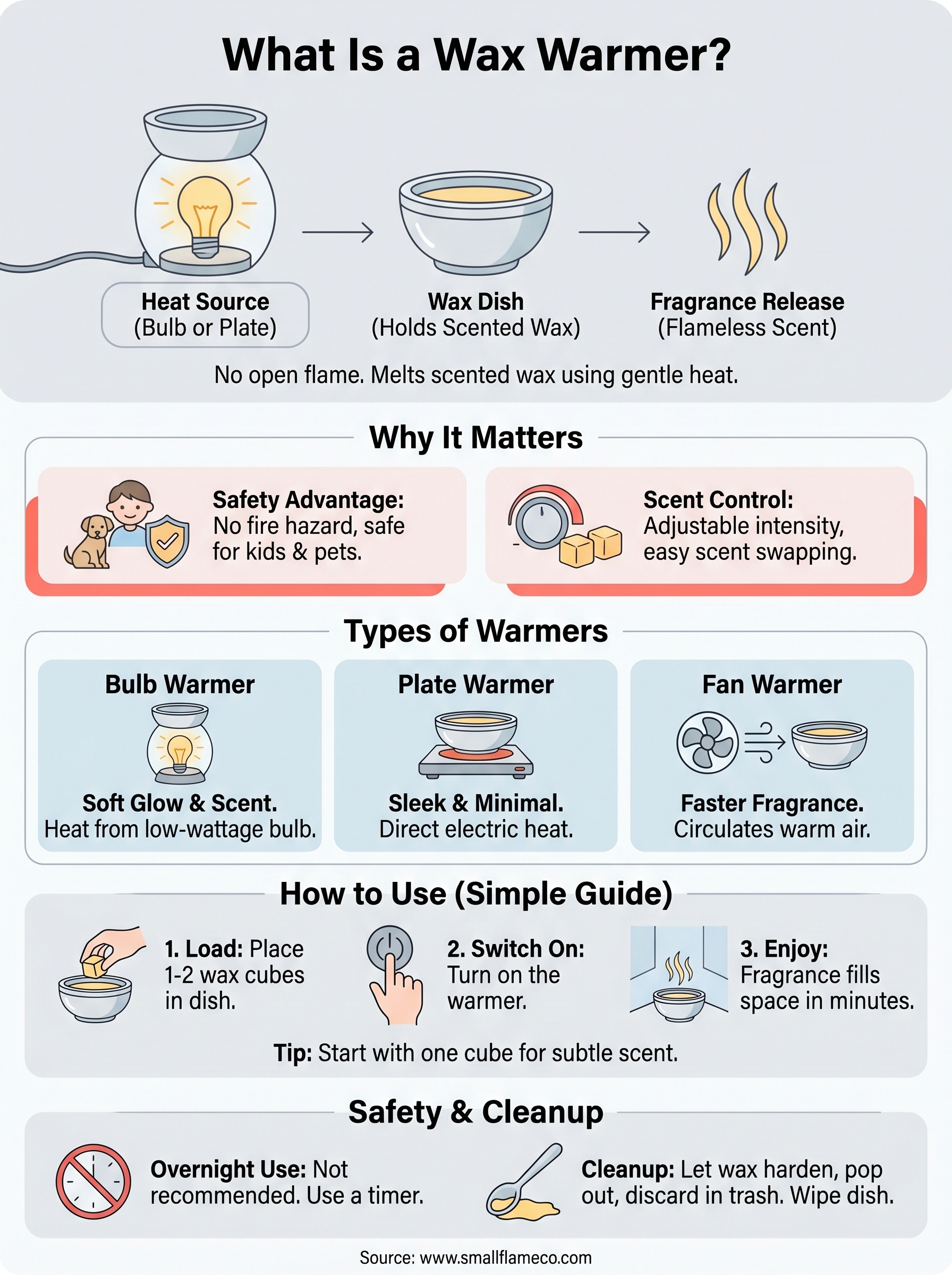
At its core, understanding what is a wax warmer comes down to one simple mechanism: a heat source warms a dish from below or within, and that heat slowly melts scented wax, releasing fragrance oils into the surrounding air. There's no combustion involved, which is exactly what separates it from a traditional candle.
The heat source
Most warmers use one of two systems: a low-wattage bulb (typically 15 to 25 watts) or an electric heating plate. Bulb-based warmers generate gentle radiant heat beneath the wax dish, while plate warmers make direct contact with the container. Some models use a tea light candle as the heat source, though electric versions are more practical for everyday home use since they're easier to control and don't introduce a secondary flame.
Electric warmers give you reliable, consistent heat without adding any open flame into the equation.
The wax dish
The dish is where your scented wax melts sit and liquefy. Most dishes are ceramic or glass and rest directly above the heat source. You simply place a wax cube into the dish, switch on the warmer, and allow a few minutes for the fragrance to fill the room.
Types of wax warmers and what to buy
Once you understand what is a wax warmer, picking the right style is straightforward. Warmers fall into clear categories, each with different heat mechanisms and design profiles, so your choice depends on where you plan to use it and what aesthetic fits your space.
Bulb and plate warmers
Bulb warmers heat the wax dish with a low-wattage bulb from below, and the lit base adds a soft decorative glow that works well on shelves and side tables. These suit anyone who wants fragrance and ambient light from a single unit.
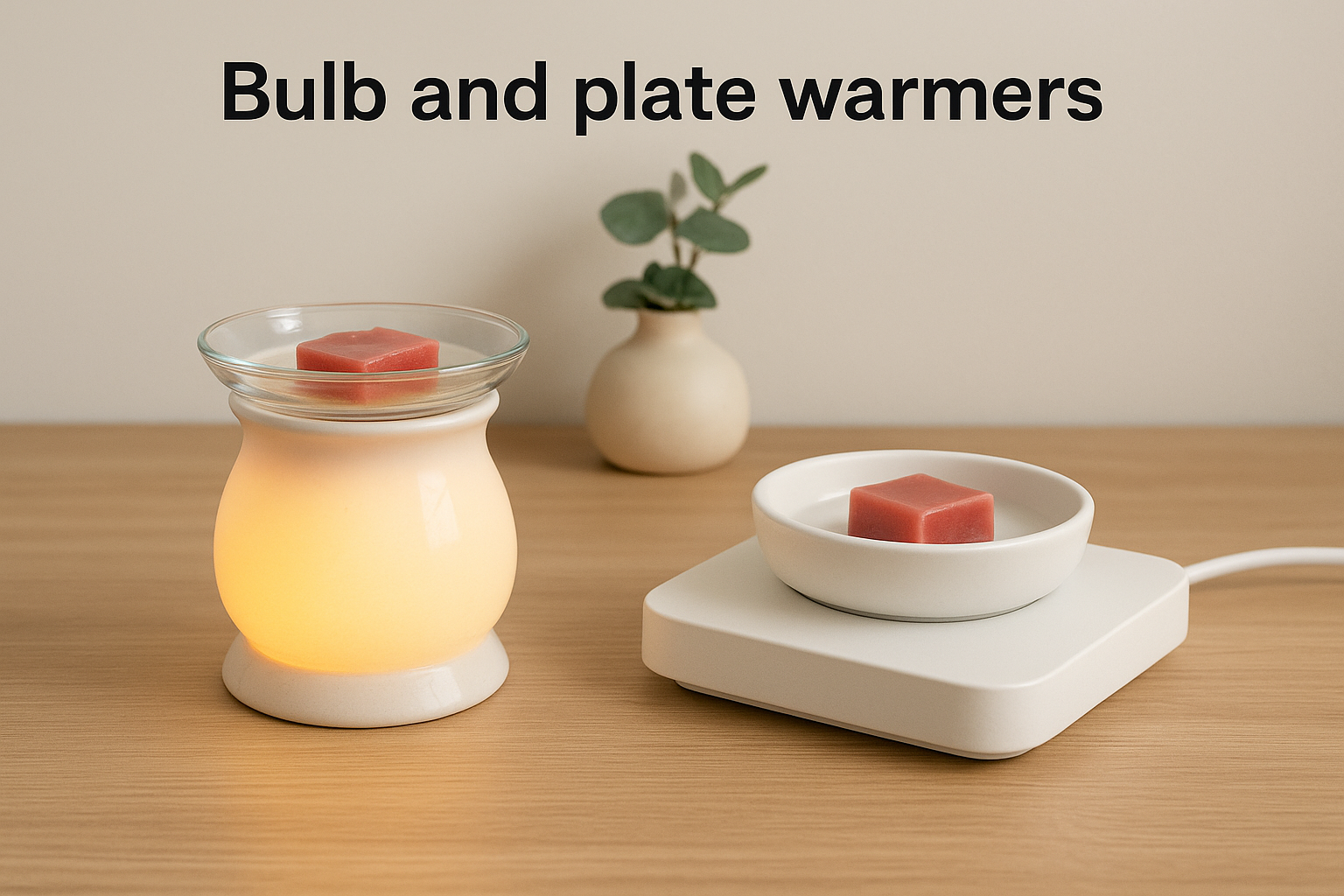
Electric plate warmers skip the bulb and use a direct-contact heating element, giving you a cleaner, more minimal look without any visible light source. Both styles are reliable for daily use.
If you want fragrance and a decorative accent in one, a bulb-style warmer is the easier pick.
Fan warmers
Fan warmers push warm air through the scented wax, which spreads fragrance faster and farther than bulb or plate models. They perform well in open floor plans or larger rooms where scent needs to travel.
These warmers run quietly and carry a sleek, modern profile that fits contemporary decor. If you need wide fragrance coverage without waiting, a fan warmer is your best option.
How to use a wax warmer for wax melts
Place one or two wax cubes into the dish, switch on the warmer, and give it three to five minutes to melt. That's the full process. Because what is a wax warmer at its core is a flameless heat device, you can run it freely without watching over it the way you would a lit candle.
Loading the right amount of wax
Start with a single cube when you're testing a new fragrance for the first time. This lets you assess the scent strength in your room before adding more. For larger or open floor plan spaces, two cubes typically deliver better coverage and a stronger fragrance throw.
One cube suits most bedrooms; move to two cubes for open living areas.
Swapping out used wax
Cooled wax hardens and contracts slightly, making it simple to pop out of the dish with a spoon. Wipe any residue with a dry paper towel before loading your next scent.
Avoid pouring liquid wax down the drain since it solidifies and clogs pipes. Let it cool fully first, then discard the hardened wax in the trash. This keeps your warmer performing well and extends the life of the dish.
Safety, cleanup, and common questions
Knowing what is a wax warmer also means understanding how to use one responsibly. Electric warmers are significantly safer than open-flame candles, but a few consistent habits keep them working well and extend their lifespan. Place your warmer on a flat, heat-resistant surface away from curtains or paper materials, and keep the dish clean between uses.
Can you leave a wax warmer on overnight?
Most electric wax warmers are built for extended use, but leaving one running all night isn't recommended. Heat accumulates over time, and wax that runs completely dry can scorch the dish. Use a timer or choose a warmer with an auto-shutoff feature if you tend to forget to power it down before bed.
Treat your warmer like any small appliance: switch it off when you leave the room for an extended stretch.
How long does wax last in a warmer?
Scented wax typically holds its fragrance for eight to twelve hours of melting time, though this varies based on fragrance load and wax quality. Once the scent fades, the wax is spent. You'll notice the aroma weakens noticeably even though the wax stays liquid, and that's your signal to swap it out. Let it cool and harden, then discard it in the trash.
Final thoughts
Now that you know what is a wax warmer and how to use one effectively, you have everything you need to make a confident choice for your space. Wax warmers offer a practical, flame-free way to fill your home with fragrance, give you full control over scent intensity, and work across every room in the house. The right warmer paired with high-quality scented wax makes a genuine difference in how your home feels day to day.
If you're ready to get started, the wax and candles you load into your warmer matter just as much as the device itself. Small Flame Candle Co. hand-pours every product using a premium coconut-soy wax blend and toxin-free fragrance oils, so you get a clean, long-lasting scent without soot or harsh chemicals. Browse the Small Flame hand-poured candle collection to find your next favorite fragrance.