

Are Wax Warmers Safe To Leave On? Unattended, Overnight
You plugged in your wax warmer, dropped in a cube, and now the whole room smells incredible. Then you realize you need to leave the house, or you're headed to bed. So you're left wondering: are wax warmers safe to leave on while unattended or overnight? It's a fair question, and one we hear often from customers shopping our Edison bulb warmers and fan warmers here at Small Flame Candle Company.
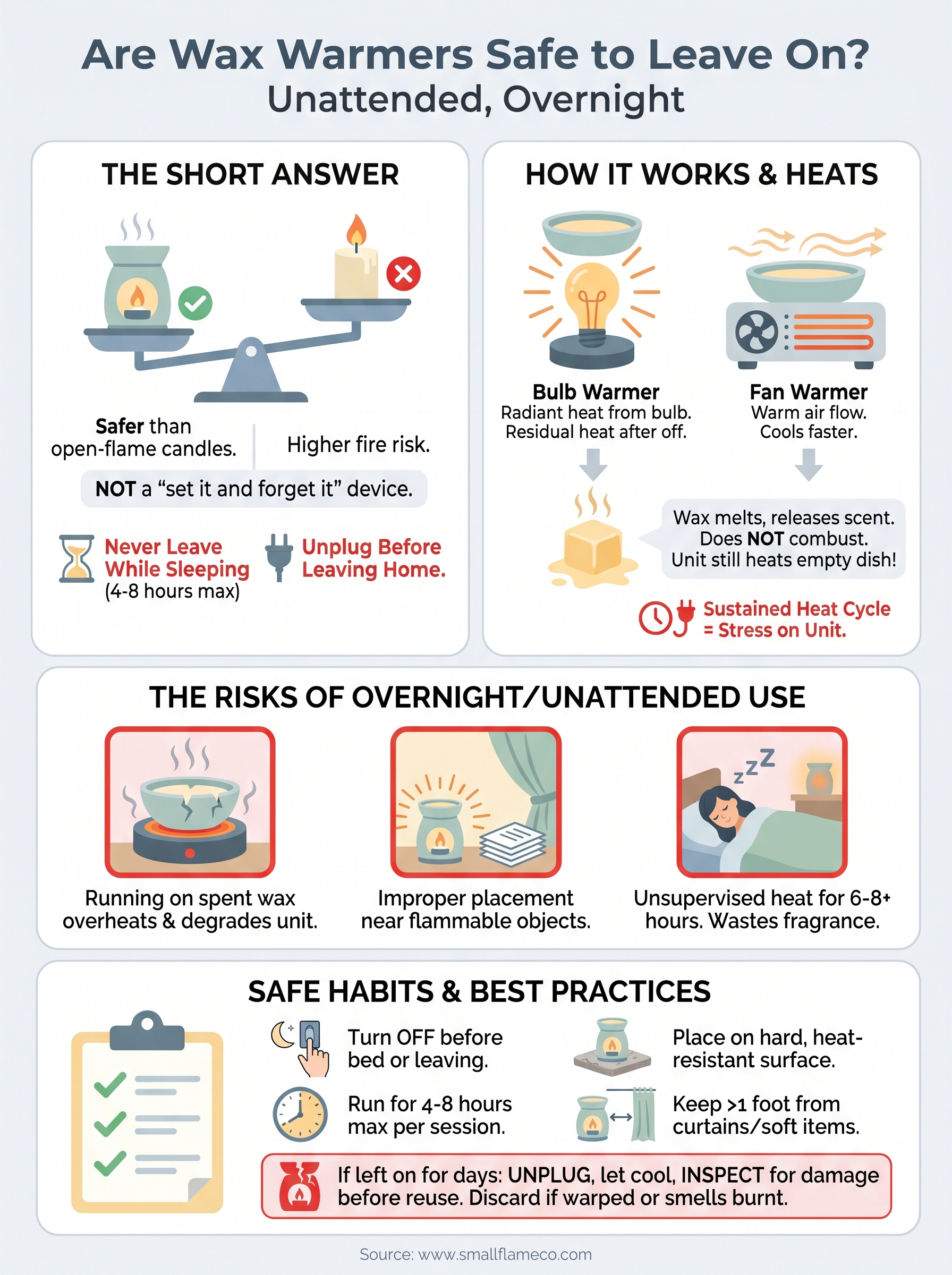
The short answer is that most electric wax warmers are significantly safer than open-flame candles, but that doesn't mean you should treat them as "set it and forget it" devices. How long you can leave one running depends on the type of warmer, its heat source, and where you've placed it. There are real risks worth understanding, and simple habits that eliminate most of them.
This article breaks down the safety considerations for every common scenario: leaving a wax warmer on while you're out of the room, running one overnight, and even leaving it on for multiple days. We'll cover what the actual hazards are, which warmer types carry the least risk, and the best practices we recommend to keep your home safe while you enjoy your favorite scents.
What a wax warmer does and how it heats wax
A wax warmer is a device that melts scented wax using gentle, controlled heat rather than a flame. You place a wax melt or wax cube into a dish at the top of the unit, and the heat slowly releases fragrance into the air around you. Because there is no open flame involved, the wax never combusts. It just melts and evaporates scent over time.
The two types of electric wax warmers
Electric wax warmers use one of two heat sources: a light bulb or a heating element with a fan. Bulb warmers, like the Edison-style units we carry at Small Flame, use radiant heat from a low-wattage bulb placed beneath the wax dish. Fan warmers push warm air across the wax rather than heating the dish directly, which means they typically operate at lower surface temperatures than bulb warmers.
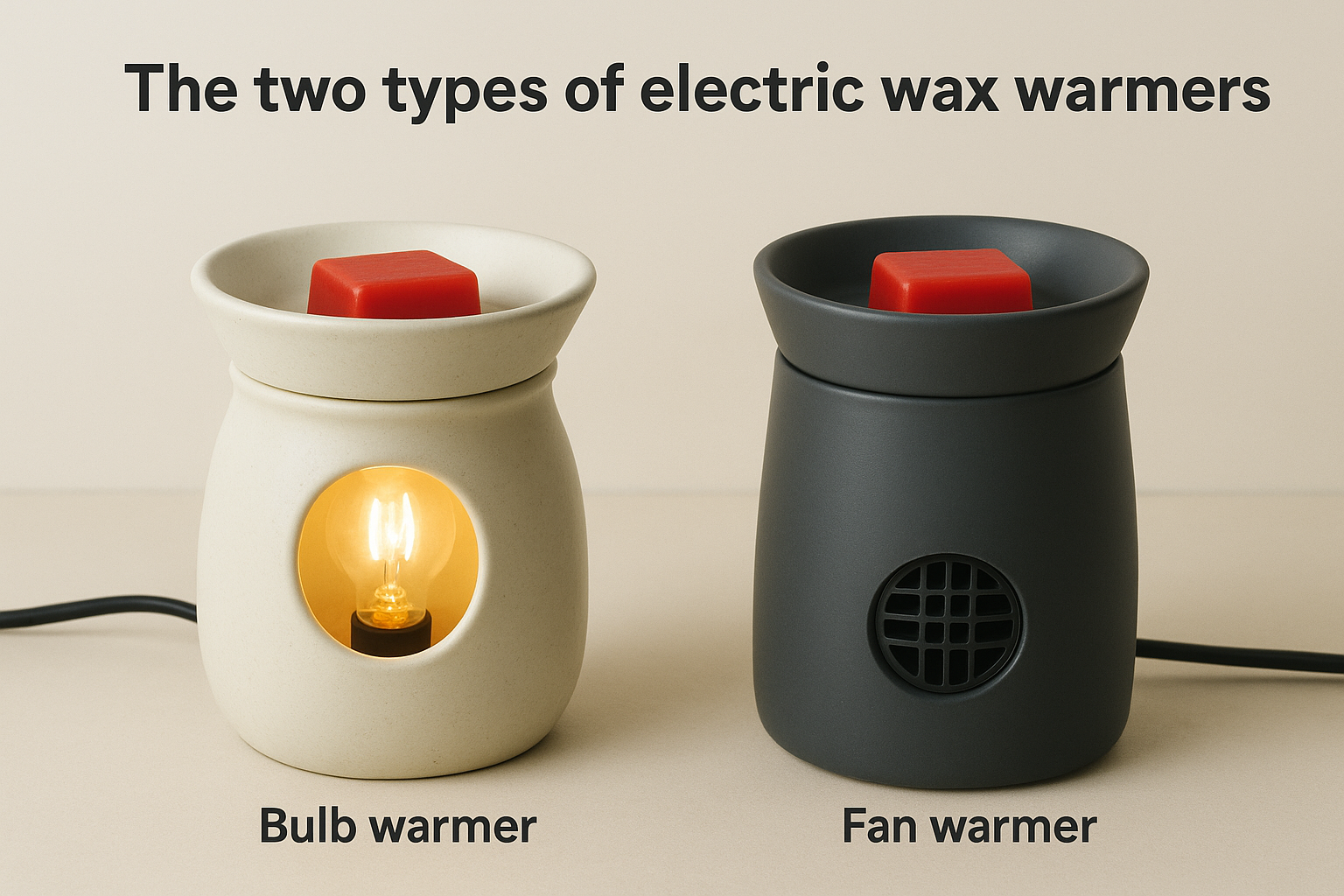
Bulb warmers and fan warmers both reach far lower temperatures than an open flame, which is a core reason electric wax warmers are generally considered safer than traditional candles.
The type of heat source matters when you're asking whether wax warmers are safe to leave on, because it directly affects how hot the dish gets and how quickly the unit responds if something goes wrong. Fan warmers cool down almost immediately once unplugged, while bulb warmers hold a small amount of residual heat for a brief period after you cut power.
What happens to the wax during a long session
As the warmer runs, the wax melts and fragrance molecules evaporate into your space. The wax itself does not disappear. It simply loses its scent over time. Once the fragrance is gone, the wax stays melted in the dish with no scent output, but the warmer keeps drawing power and generating heat. That detail becomes important when you start thinking about leaving it on for hours or overnight.
Why leaving wax warmers on can get risky
Electric wax warmers don't use a flame, but they do run on continuous electrical power and generate sustained heat over time. When you leave one on for long stretches, a few specific risks start to build up that are worth knowing before you make a habit of running one overnight or while you're away.
When the wax runs dry
Once all the fragrance has evaporated, you're left with a dish of unscented, fully melted wax sitting on an active heat source. The warmer keeps heating that empty wax with no useful output, which puts extra thermal stress on the dish and the unit's internal components over time. That sustained heat cycle can eventually degrade plastic housing or cause cheaper units to overheat.
Running a wax warmer on a fully spent wax dish is one of the most common causes of unit damage and elevated fire risk.
A second concern is placement and surface contact. Warmers set on flammable surfaces, near curtains, or in tight enclosed spaces trap heat in ways the manufacturer never tested. Asking whether wax warmers are safe to leave on really comes down to those two factors: heat management and your specific setup at home.
How long you can safely run a wax warmer
Most manufacturers recommend running a wax warmer for four to eight hours at a stretch, then giving it time to cool before restarting. That range exists because fragrance output drops sharply after the first few hours anyway, so running it longer rarely improves your experience. Whether wax warmers are safe to leave on for extended periods really comes down to whether you're getting anything useful out of that extra runtime.
After eight hours, most wax cubes have released the bulk of their fragrance, so extended runtime adds heat exposure without adding scent.
What happens when you push past the recommended time
Running your warmer beyond eight to ten hours in a single session puts continuous stress on the heating element and the plastic housing. Budget units with thin plastic components are especially vulnerable, since they were not built to manage heat over long, unbroken cycles.
Cutting power after a reasonable session protects both the unit and your surfaces. You also preserve the life of your wax longer, since repeatedly reheating spent wax degrades the dish coating in lower-quality warmers. A simple habit of switching off after dinner or before bed keeps everything running safely.
Rules for unattended and overnight use
If you want to know whether wax warmers are safe to leave on while you sleep or step out, the answer depends entirely on the habits you build around them. A few clear rules keep the risk low regardless of which warmer type you own.
Never leave one on while you sleep
Running a warmer through the night means six to eight hours of unsupervised heat in your home. Even a quality unit can develop a fault, and you won't be awake to catch it. Turn your warmer off before bed and restart it in the morning when you're present to monitor it.
Overnight use also wastes your wax's fragrance since you're asleep and not benefiting from the scent anyway. You get far more value from your wax by running the warmer during hours when you're actually home and awake.
What to do before leaving the house
Before you walk out the door, unplug your warmer every time without exception. Run through this quick safety checklist before you leave:
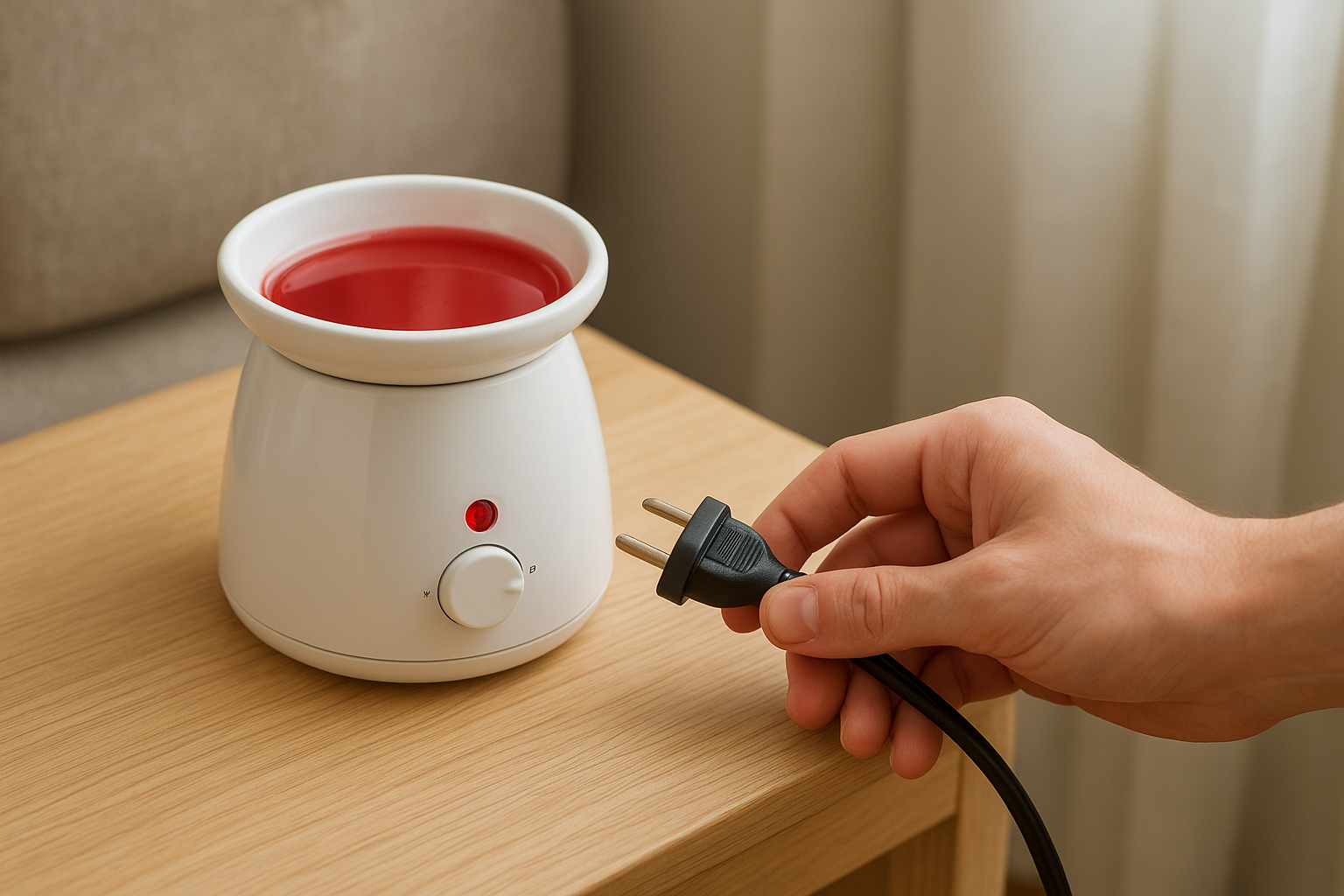
- Place the warmer on a hard, heat-resistant surface
- Keep it at least one foot away from curtains or soft furnishings
- Confirm nothing sits directly against the unit's sides or top
- Check that the wax dish is seated properly and not tilted
Unplugging before you leave is the single most effective habit you can build around safe wax warmer use.
If you left it on for hours or days, do this
If you realized your warmer ran for several hours while you were out, or even multiple days without interruption, start by unplugging the unit immediately and letting it cool completely before you touch the dish or inspect anything.
A warmer that has run continuously for days needs a full cool-down before you handle it or assess whether it is still safe to use.
Check the unit before you plug it in again
Once cool, inspect the housing for any discoloration, warping, or softened plastic. These are signs the unit overheated, and you should discard it rather than risk further use. Also check the surface beneath the warmer for any heat marks or residue transfer.
If the unit looks physically intact, replace the old wax before your next session. Wax that has run for days loses all fragrance and leaves behind residue in the dish that can affect how evenly the unit heats going forward.
Know when to replace the warmer entirely
Whether wax warmers are safe to leave on after an extended incident depends entirely on their condition. Watch for these signs that the unit is done:
- A burning plastic smell that doesn't come from the wax
- Visible warping or cracking on the housing
- Flickering or buzzing from a bulb warmer after cooling
Any one of those signals means replace the unit rather than continuing to run it.
A safer way to enjoy home fragrance
Understanding whether wax warmers are safe to leave on mostly comes down to two habits: running your warmer only while you're present, and replacing the wax before the scent runs out. Those two steps eliminate the majority of risks covered in this article. Choosing a quality warmer built with durable materials and a stable heating element also makes a meaningful difference in how reliably the unit performs over time.
If you want the most low-maintenance fragrance experience possible, a clean-burning candle gives you visible control over how long it runs and cuts itself off naturally when the wax is gone. At Small Flame Candle Company, every candle uses a coconut-soy wax blend with toxin-free fragrance oils for a cleaner, longer-lasting burn. Browse the hand-poured coconut wax candle collection to find a scent that works for your space without the monitoring that warmers require.