

What Is Hot Throw in Candles? Meaning Vs Cold Throw and Tips
You light a candle, wait a few minutes, and… nothing. The room smells exactly the same. If you've ever experienced that frustration, you've already encountered the concept at the heart of this article: what is hot throw in candles. It's the term candle makers use to describe how well a candle releases its fragrance while burning, and it's arguably the single most important factor in whether a candle actually does its job.
At Small Flame Candle Company, hot throw is something we think about with every batch we hand-pour. Getting it right means choosing the correct wax, the right fragrance load, and proper cure times, details that separate a candle worth burning from one that just sits there looking pretty. It's also why we offer a free five-fragrance sampler, so you can judge our scent performance firsthand before committing to a full-size candle.
This article breaks down exactly what hot throw means, how it compares to cold throw (the scent you get from an unlit candle), and what practical steps affect fragrance strength once the flame is going. Whether you're a candle maker refining your craft or a buyer who wants to know what separates a great candle from a mediocre one, you'll walk away with a clear understanding of how hot throw works and why it matters.
Hot throw vs cold throw in candles
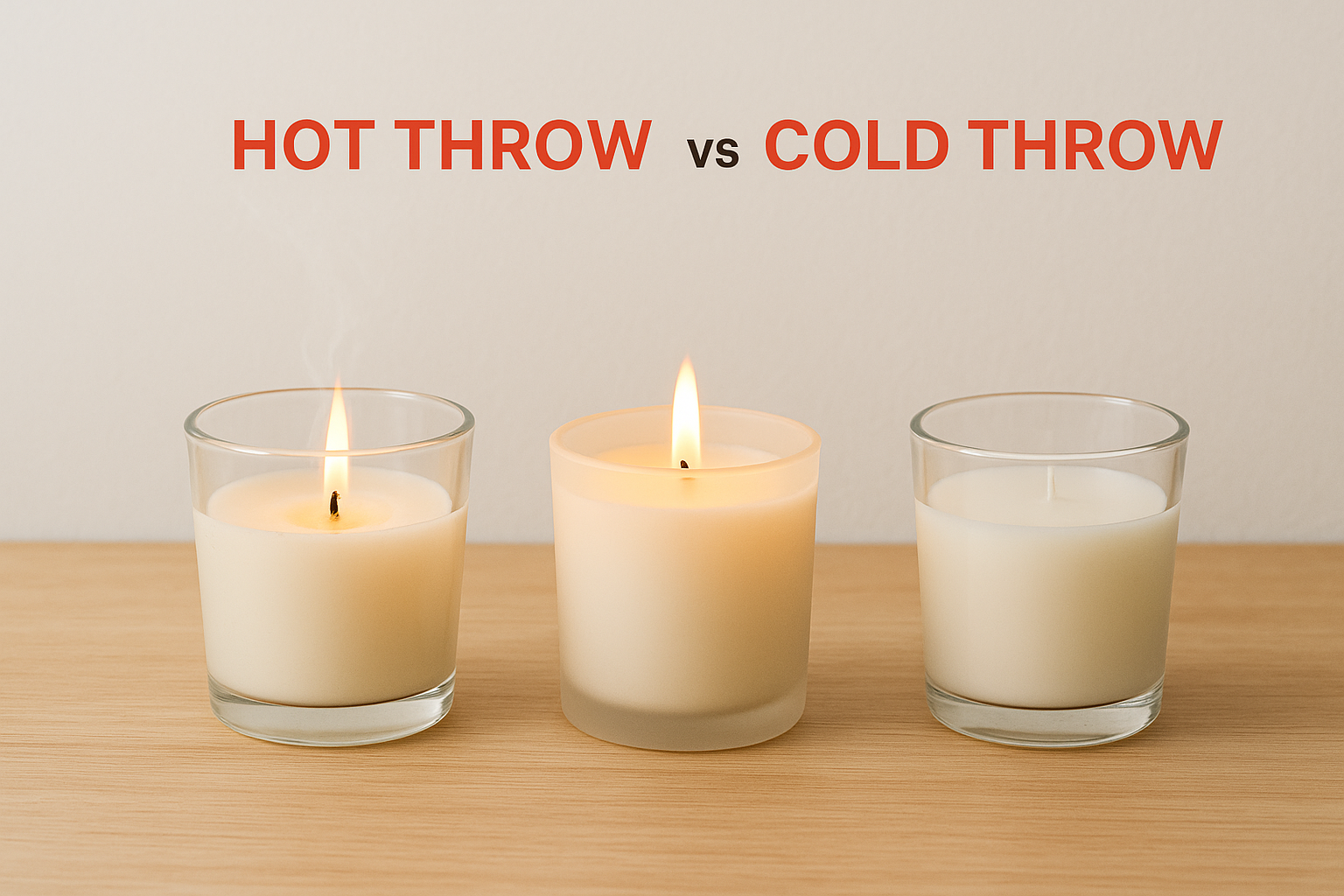
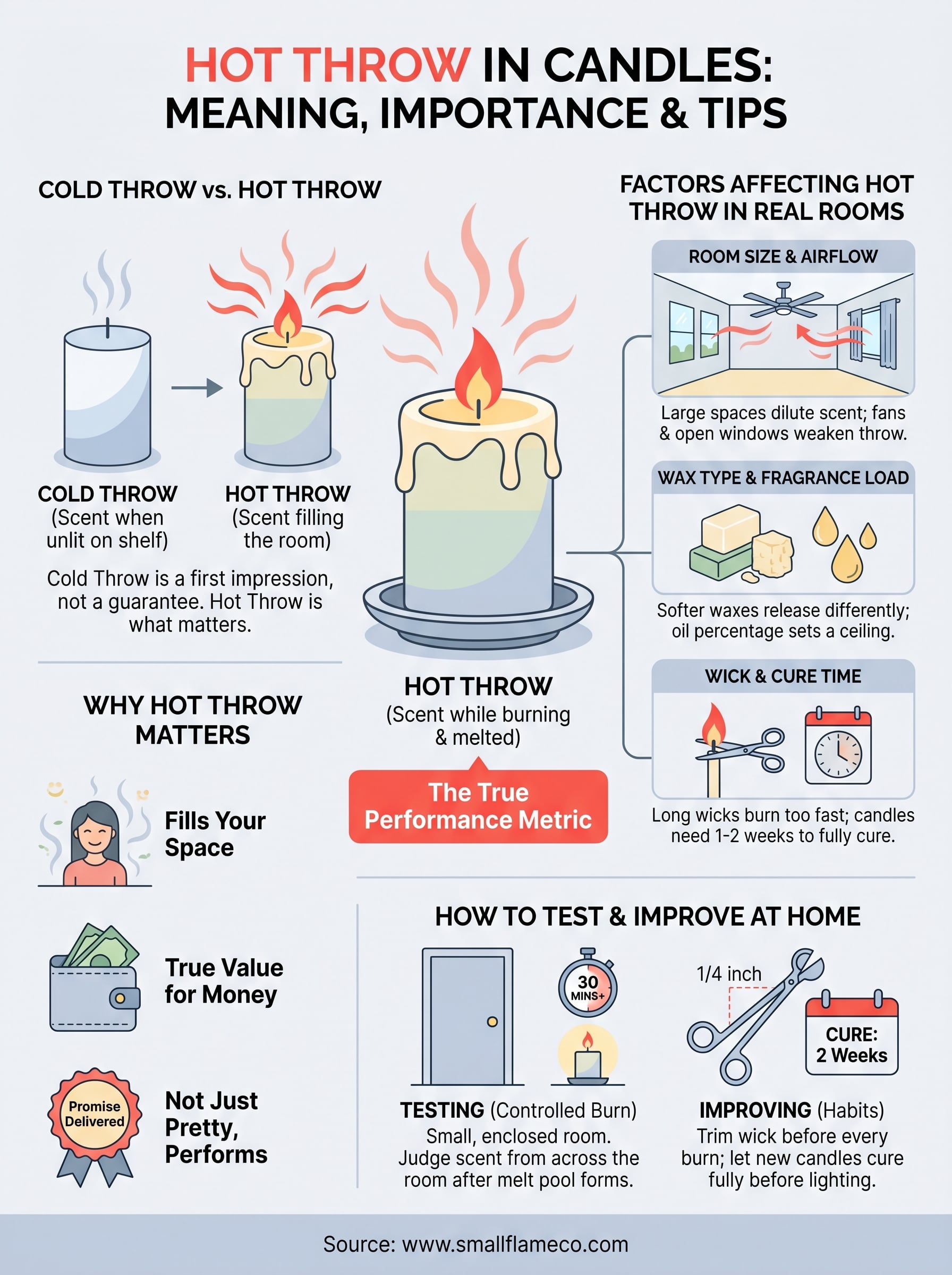
These two terms show up constantly in candle discussions, and understanding both helps you make smarter buying and making decisions. Cold throw is the fragrance a candle gives off when it is unlit, while hot throw is the scent released once the candle is burning and the wax has melted. Both matter, but they measure completely different things about a candle's performance.
Cold throw: what you smell before you light the wick
When you pick up a candle and sniff it on a shelf, you are experiencing cold throw. The fragrance molecules in the solid wax evaporate slowly at room temperature, giving off scent without any heat involved. A strong cold throw can make a candle smell impressive before you buy it, but it does not predict how that candle will perform once lit.
Cold throw is essentially a first impression, not a performance guarantee.
Some candles have an excellent cold throw but a weak hot throw, which means you get a great sniff in the store and a disappointing burn at home. The two are related but not the same, and mixing them up is one of the most common mistakes candle buyers make.
Hot throw: what actually fills the room
When you understand what is hot throw in candles, you understand why experienced buyers always test before committing. Hot throw is the fragrance strength you experience during an active burn, when the melted wax pool carries heat to the fragrance oil and pushes scent into the surrounding air. This is the measurement that matters most for everyday use.
A candle can look and smell beautiful when unlit but still fail to fill a space with scent once it is burning. That gap between cold and hot throw is exactly why testing a candle before purchasing makes so much practical sense.
Why hot throw matters for candle shoppers
When you shop for candles, hot throw is the performance metric that determines whether your purchase actually delivers on its promise. A candle with a weak hot throw will leave your room smelling neutral no matter how long it burns, and no amount of attractive packaging or a strong cold throw will change that outcome. Knowing this upfront saves you from being let down.
The best-looking candle in the shop is worthless if it can't fill a room with scent.
What you are actually paying for
Every candle purchase is, at its core, a purchase of fragrance experience. The wax, the wick, and the jar are simply the delivery system. When you understand what is hot throw in candles, you start evaluating candles on the right criteria: not how they smell on the shelf, but how well they perform during an actual burn.
Paying close attention to hot throw also protects you from wasting money on disappointing candles. A candle that costs twelve dollars and genuinely fills your living room with scent delivers far more value than a twenty-dollar candle that barely pushes scent past the rim of the jar.
What affects hot throw in real rooms
Understanding what is hot throw in candles on paper is one thing, but real rooms introduce variables that change how scent actually behaves. The same candle can perform very differently depending on the environment you burn it in, which means your setup matters just as much as the candle itself.
Room size and airflow
Large, open rooms dilute scent quickly because the fragrance molecules have more air to spread through. A candle that smells strong in a small bathroom may barely register in a wide-open living room. Air conditioning, ceiling fans, and open windows constantly pull scent away from the burn zone, weakening what you perceive as hot throw even when the candle itself is performing well.
Burn candles in smaller, enclosed spaces to get the strongest scent experience from the same candle.
Wax type and fragrance load
The type of wax a candle uses directly affects how readily it releases fragrance when heated. Softer waxes like soy tend to hold and release fragrance differently than paraffin blends. Beyond wax choice, fragrance load, meaning the percentage of fragrance oil blended into the wax, sets a hard ceiling on how strong any hot throw can get, regardless of room conditions.
How to test hot throw at home
Testing hot throw at home is simple, but doing it correctly gives you reliable results you can actually compare across candles. A rushed test in the wrong conditions will mislead you every time.
Set up a controlled burn test
Pick a small, enclosed room like a bedroom or bathroom and close the doors and windows before you start. Let the candle burn for at least 30 minutes before you judge the scent, because most candles need time to build a full wax melt pool before fragrance reaches its peak output.
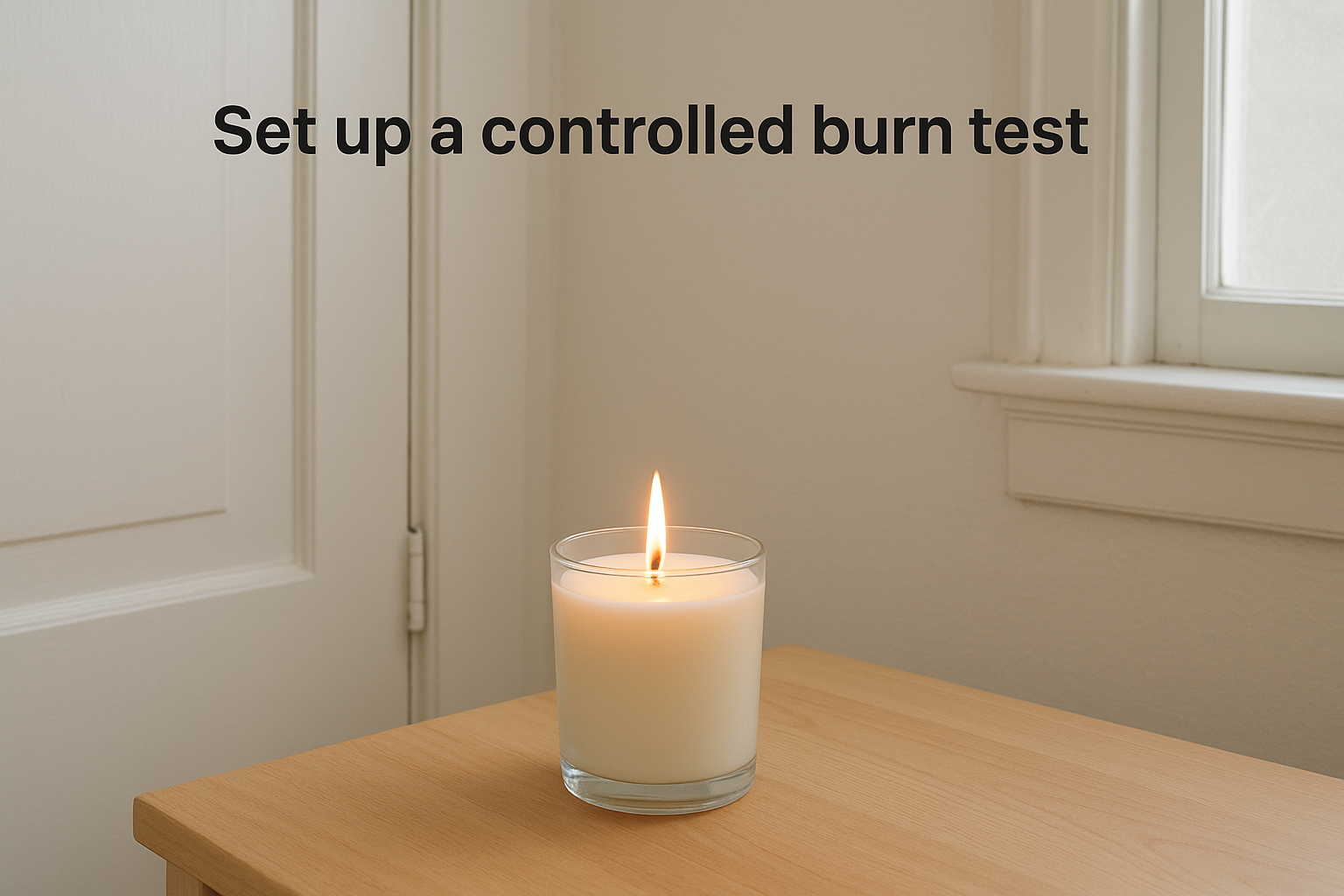
Evaluating a candle in the first five minutes tells you almost nothing about its true hot throw.
What to look for during the burn
Once you understand what is hot throw in candles, you know to judge scent strength from across the room, not while hovering over the flame. Walk to the far end of the space, stand still for a moment, and breathe normally. A candle with strong hot throw fills that distance with noticeable fragrance, while a weak performer fades before it reaches you.
Note whether the scent stays consistent throughout the burn or drops off after the initial melt. Consistency matters as much as initial strength when you are comparing candles side by side.
How to improve hot throw in candles
Once you understand what is hot throw in candles, you can take steps to get better scent performance from the candles you already own. Small adjustments to how and where you burn a candle make a real difference in the strength of fragrance you experience.
Let the candle cure fully
Most hand-poured candles need at least one to two weeks of cure time after pouring before the fragrance fully bonds with the wax. Burning a candle too soon after it is made gives you a noticeably weaker hot throw because the fragrance oil has not had time to settle. If you buy directly from a small-batch maker, ask about cure time before your first burn.
A candle burned before it has fully cured almost never performs at its true scent potential.
Trim the wick before every burn
A wick that is too long produces a high, flickering flame that burns through the wax too fast and reduces how much fragrance the melt pool can release. Trim your wick to about a quarter inch before each burn using scissors or a wick trimmer. This small habit keeps the flame controlled, builds an even melt pool, and consistently improves the scent you get throughout the life of the candle.
Wrap-up and next steps
Now that you know what is hot throw in candles, you can make smarter decisions both when buying and when burning. Hot throw is the real measure of a candle's performance, the scent it delivers once the flame is going and the wax pool forms. Cold throw, wick length, cure time, and room size all play a role in what you ultimately experience during a burn.
Putting this knowledge to work is straightforward. Burn candles in smaller spaces, trim your wick before each use, and give hand-poured candles proper time to cure before that first light. These habits consistently produce stronger, more satisfying scent from any candle you own, without spending more money or switching products.
If you want to start with candles built specifically for strong hot throw, browse the Small Flame hand-poured coconut wax candle collection and find a fragrance that works for your space.