

How To Improve Hot Throw In Soy Candles: 10 Proven Tips
You poured the candle, let it cure, lit the wick, and got almost nothing. No scent filling the room, no fragrance drifting down the hallway. Just a flame and a faint whisper of wax. If you're searching for how to improve hot throw in soy candles, you're probably stuck in exactly that frustrating spot. The good news: weak hot throw is almost always fixable, and the solution usually comes down to a handful of specific, adjustable variables.
At Small Flame Candle Company, we hand-pour every candle we sell and have spent years dialing in the details that make a soy candle actually perform. Fragrance load, pour temperature, wick selection, cure time, each one directly affects how much scent reaches your nose when the candle is burning. We've tested, failed, adjusted, and retested more combinations than we can count. That hands-on experience is what this guide is built on.
Below, you'll find 10 proven tips that address the most common reasons soy candles underperform on hot throw. Each tip is something you can put into practice on your next batch, whether you're a hobbyist or a small-batch maker looking to turn out candles your customers will actually smell across the room.
What hot throw is and how to test it
Hot throw refers to the scent a candle releases while it is actively burning. This is different from cold throw, which is the fragrance you detect when you smell an unlit candle. A candle can smell strong sitting in the jar but deliver almost nothing when lit, and that gap is exactly what makes understanding hot throw performance so important for anyone making soy candles.
What hot throw actually means
Hot throw depends on how efficiently your candle vaporizes fragrance oil from the melted wax pool. When the wax liquefies, heat releases fragrance molecules into the air. The strength of that release depends on multiple factors working together: wax type, fragrance load, wick size, and container diameter. Soy wax is significantly harder to work with for hot throw compared to paraffin, because it binds fragrance differently and releases it more slowly at lower burn temperatures.
Soy wax has a lower fragrance release rate than paraffin, which means every other variable in your process needs to be dialed in precisely to compensate.
How to test hot throw properly
Testing hot throw correctly requires a controlled environment to get accurate, repeatable results. Drafts, room size, and air conditioning systems all affect how you perceive scent strength, so the conditions you test in matter as much as the candle itself. Follow these steps to test consistently every time:
- Light your candle in a room that is roughly 10 by 10 to 12 by 12 feet with the door closed.
- Let the candle burn for at least 30 minutes before evaluating anything, so it can develop a full melt pool.
- Step out of the room for 5 minutes, then walk back in. Fresh exposure gives you a far more accurate read on actual scent intensity than sitting next to a burning candle for an hour.
- Rate the throw on a 1-to-5 scale: 1 is barely detectable, 3 is clearly noticeable at arm's length, and 5 fills the room.
- Repeat the test on day 3, day 7, and day 14 after pouring to account for how curing time affects scent release.
Consistent testing across batches lets you compare results without relying on memory. When you're working through how to improve hot throw in soy candles, objective data beats guesswork every time. Keep a simple batch log that records your fragrance name, load percentage, wick size, pour temperature, and throw rating for each burn test. That log quickly becomes the most useful diagnostic tool you have when one batch outperforms another and you need to figure out why.
Step 1. Pick wax, fragrance oil, and a starting load
Your material choices set the ceiling on how much scent your candle can ever produce. No amount of tweaking wick size or cure time will fix a batch that started with the wrong wax or an under-loaded fragrance. Before you pour anything, locking in the right wax type and fragrance load percentage is the single most important step in learning how to improve hot throw in soy candles.
Choose the right soy wax blend
Not all soy waxes perform the same. 100% soy wax holds fragrance reasonably well, but a coconut-soy blend or a soy-paraffin blend typically delivers noticeably stronger hot throw because those wax types lower the melt point slightly and release fragrance molecules more efficiently when burning. If you're committed to pure soy, look for container-specific formulas like Golden Brands 464 or 444, which are engineered to hold higher fragrance loads than general-purpose soy blends.
Switching from a pure soy to a coconut-soy blend is one of the fastest single-change improvements you can make to hot throw without touching any other variable.
Set your fragrance load
Fragrance load is the percentage of fragrance oil by weight relative to your total wax weight. Most soy waxes accept between 6% and 10%, but pushing toward the upper limit of what your specific wax can safely bind will produce a noticeably stronger throw. Use this table to set your first test batch targets:
| Wax Type | Starting Load | Maximum Safe Load |
|---|---|---|
| 100% soy (container) | 8% | 10% |
| Coconut-soy blend | 9% | 12% |
| Soy-paraffin blend | 9% | 12% |
Always weigh your fragrance oil on a digital scale rather than estimating by volume. Accuracy at this stage directly controls both scent strength and how cleanly the finished candle burns.
Step 2. Control temperature, mixing, and pour method
Temperature and mixing technique directly determine how well fragrance oil binds to your wax. Even with the right materials and a strong fragrance load, pouring at the wrong temperature or rushing the stir will leave fragrance molecules poorly integrated, and your hot throw will suffer for it. This step is where many candle makers unknowingly lose scent strength they already paid for.
Add fragrance at the right temperature
Most soy waxes need to reach a full melt temperature between 170°F and 185°F before you add fragrance oil. You want the wax hot enough to fully incorporate the oil, but adding fragrance above 185°F causes it to flash off before it ever binds to the wax. Use a dedicated thermometer and watch your temperature closely rather than guessing by appearance.
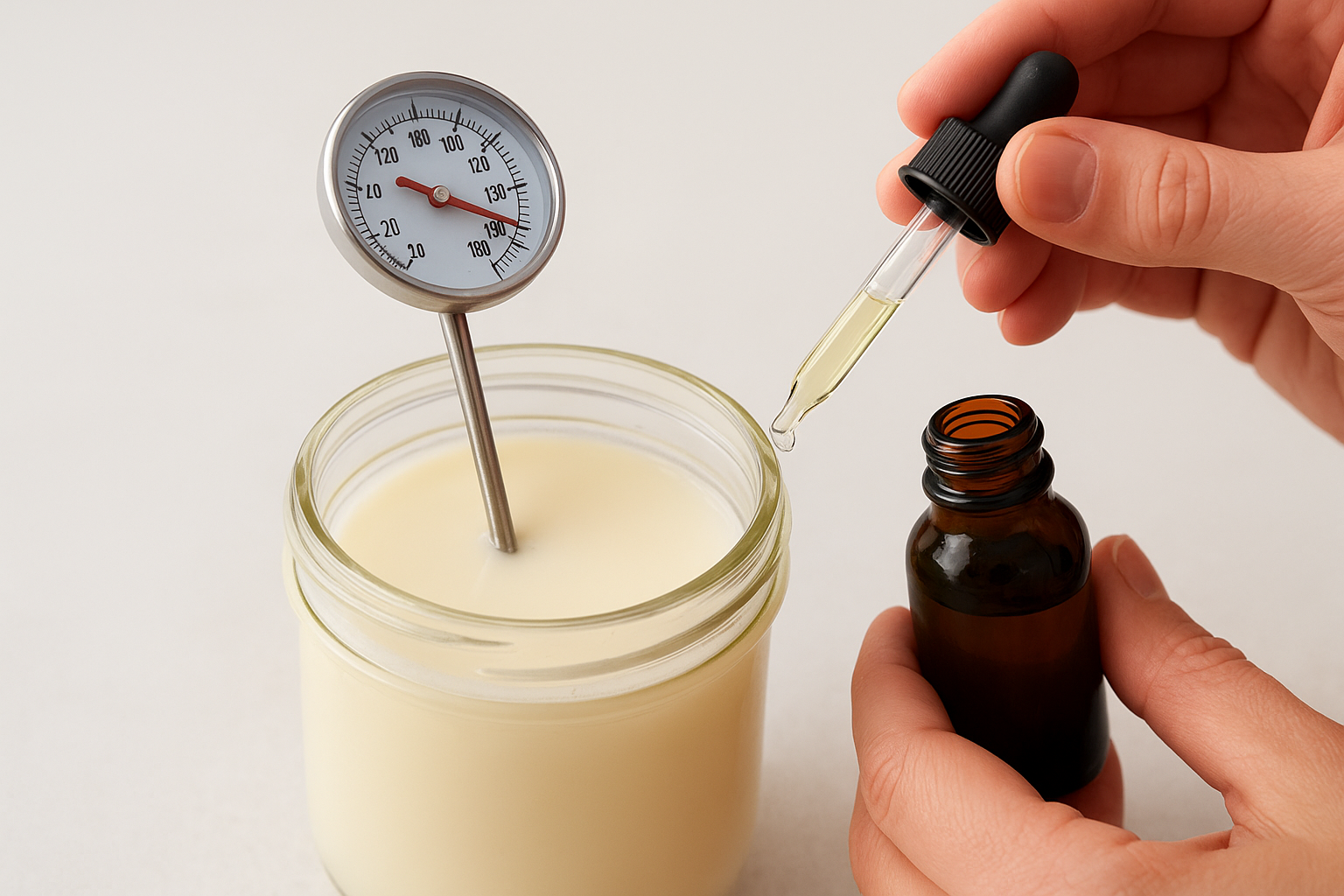
Adding fragrance oil below 160°F is one of the most common reasons soy candles produce weak hot throw, even when the fragrance load looks correct on paper.
Once the wax hits your target temperature, add all your fragrance oil at once and stir slowly for at least two full minutes. Slow, consistent stirring prevents air bubbles and ensures the oil fully integrates rather than sitting on top or pooling unevenly in the jar.
Pour at the right point
Pour temperature has a direct effect on scent throw and surface finish. For most container soy waxes, pouring between 130°F and 140°F produces the best result: the wax is still fluid enough to settle evenly, but cool enough to lock fragrance in rather than releasing it into the air during the pour itself.
Keep a simple temperature log for every batch as you work through how to improve hot throw in soy candles. Write down your fragrance addition temperature and your pour temperature alongside your throw test rating. Patterns emerge within two or three batches, and you'll quickly identify your optimal window.
Step 3. Wick for a full melt pool and container size
Wick selection controls how much wax your candle actually melts during each burn, and that melt pool is what drives fragrance release. If your wick is too small for your container, the melt pool stays narrow, the fragrance oil trapped in the unmelted wax never vaporizes into the air, and your hot throw suffers no matter how well you nailed steps one and two.
Match wick size to container diameter
Your container's diameter sets your starting point for wick selection. A wick that performs well in a 2-inch jar will drastically underperform in a 4-inch vessel because it cannot generate enough heat to melt wax across the full surface. Use the table below as your baseline, then adjust from there since wax blend and fragrance load both shift the ideal size:
| Container Diameter | Suggested Wick Series (Soy) |
|---|---|
| 2 to 2.5 inches | CD-10 or ECO-4 |
| 2.5 to 3.5 inches | CD-14 or ECO-6 |
| 3.5 to 4 inches | CD-18 or ECO-10 |
| 4 to 5 inches | CD-22 or ECO-14 |
Always start at the middle of a wick series and move up or down based on burn test results, not assumptions. Record every wick code you test alongside its melt pool result and flame height so you can identify patterns across batches.
Test for a full melt pool
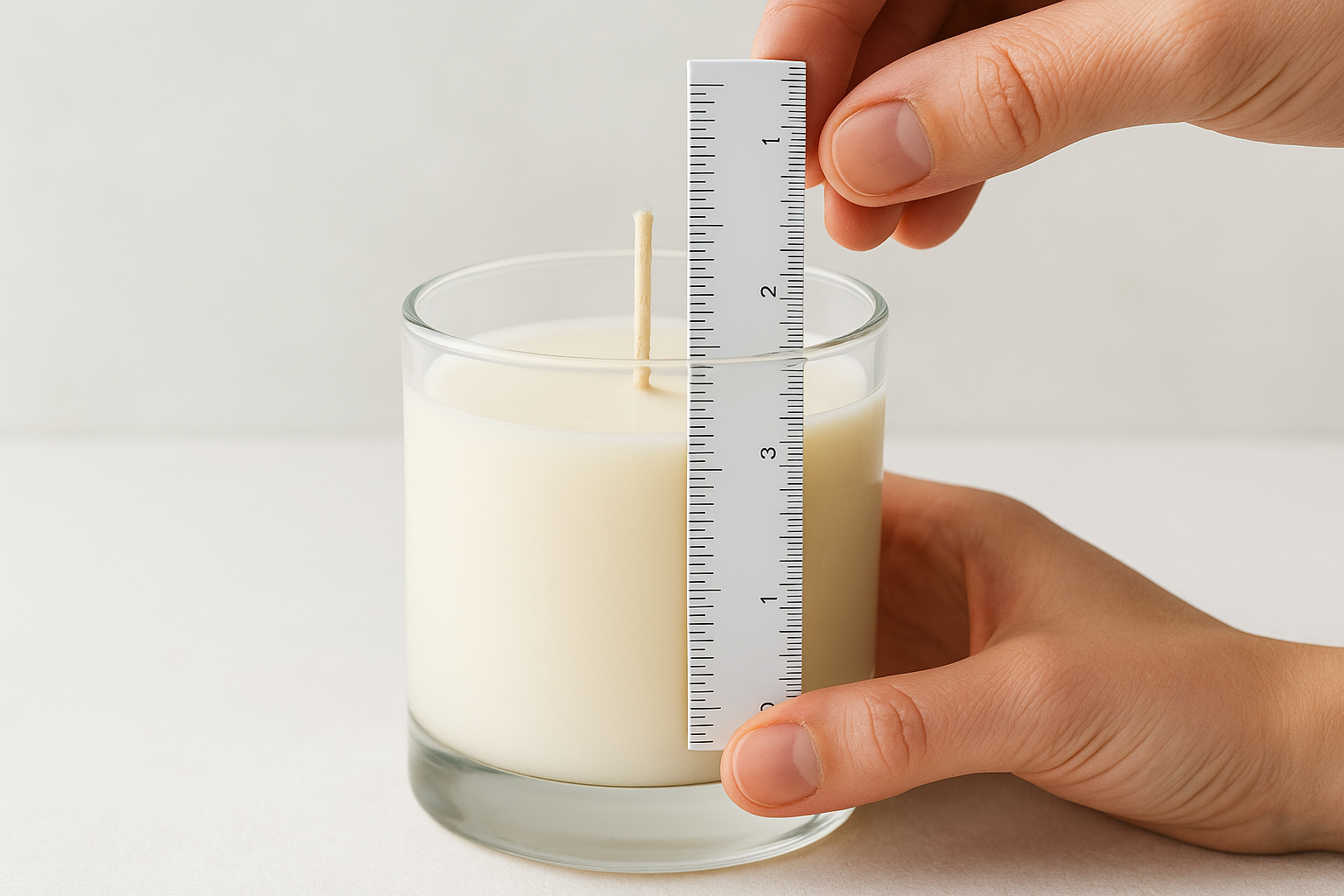
Light your candle and burn it for one hour per inch of container diameter. A 3-inch jar needs at least three hours before you evaluate anything. By that point, liquid wax should reach edge to edge with no unmelted shoulders visible. If unmelted wax remains at the sides, size up one wick. If the flame is too tall or sooting the jar, size down.
A complete edge-to-edge melt pool is the single clearest sign your wick is correctly sized for your container.
Working through how to improve hot throw in soy candles means treating each burn test as a data point, not a verdict. Log your wick code, burn duration, and melt pool result every single time.
Step 4. Cure, burn, and troubleshoot weak throw
Even a perfectly formulated candle will disappoint you on hot throw if you skip curing or misread what a burn test is telling you. Curing time lets fragrance oil fully bond with the wax crystal structure, and skipping it is one of the fastest ways to test a candle that seems broken when it actually just needed more time on the shelf.
Cure your candles before testing
Soy wax needs time to crystallize and bind fragrance oil after the pour. Testing too early gives you a misleading result that sends you chasing fixes you don't actually need. Follow this curing schedule based on your wax type:
| Wax Type | Minimum Cure Time | Optimal Cure Time |
|---|---|---|
| 100% soy container wax | 5 days | 14 days |
| Coconut-soy blend | 3 days | 7 days |
| Soy-paraffin blend | 3 days | 7 days |
Store curing candles at room temperature with lids on to prevent fragrance from escaping before the first burn.
Curing for the full recommended time can increase hot throw noticeably without changing a single ingredient in your formula.
Troubleshoot weak throw after curing
If your candle has fully cured and still delivers weak throw, run through this checklist before you reformulate from scratch:
- Fragrance load: Confirm it actually hit 8% to 10% by weight using your batch log, not memory.
- Melt pool: If it didn't reach edge to edge, your wick is undersized for your container diameter.
- Fragrance oil quality: Not all fragrance oils perform equally in soy. Low-flashpoint oils fade faster at burn temperature.
- Pour temperature: If you poured above 140°F, fragrance likely gassed off before the wax set.
Working through how to improve hot throw in soy candles is a process of eliminating variables one at a time. Your batch log is what keeps that process efficient instead of endless.
Make your next batch smell stronger
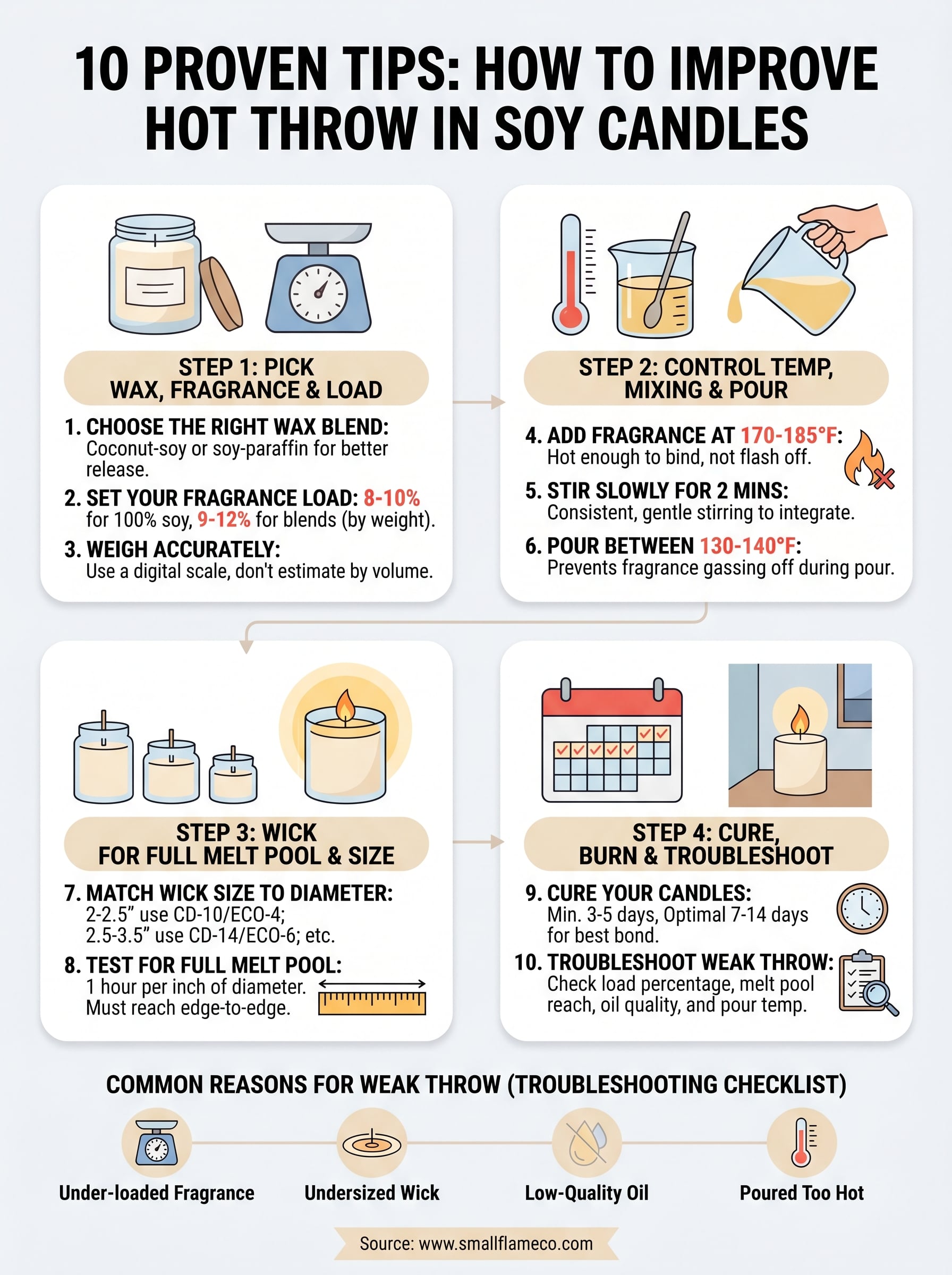
Strong hot throw in soy candles comes from stacking small advantages together: the right wax blend, accurate fragrance loads, precise pour temperatures, correctly sized wicks, and enough cure time before your first burn test. None of these variables works in isolation, and fixing only one while ignoring the others rarely solves the problem. Every tip in this guide is something you can apply to your next batch immediately, with the batch log method giving you a consistent record of what changed and what improved across each pour.
Comparing your results against a proven benchmark speeds up that process significantly. Our hand-poured coconut-soy candles use a coconut-soy blend, lead-free cotton wicks, and toxin-free fragrance oils, which gives you a real-world standard to measure your own work against. Knowing how to improve hot throw in soy candles becomes far more practical when you can smell the difference a dialed-in formula actually makes.