

Why Does My Candle Have No Hot Throw? 5 Fixes That Work
You poured a candle, let it cure, lit the wick, and got nothing. No scent filling the room. Just a flame and disappointment. If you're asking why does my candle have no hot throw, you're dealing with one of the most common and most frustrating problems in candle making. The good news is that it's almost always fixable once you identify the root cause.
At Small Flame Candle Company, we hand-pour every candle we sell, and getting hot throw right is something we've spent years dialing in through trial, error, and a lot of wasted wax. The fixes in this article come straight from that hands-on experience, real solutions tested at our own pour table, not recycled guesswork from forums.
Below, we break down five specific reasons your candle might have weak or zero hot throw, along with practical adjustments you can make to fix each one. Whether it's a fragrance load issue, a wick problem, or a curing mistake, you'll walk away knowing exactly what to change on your next batch.
1. Use a wax warmer for stronger scent
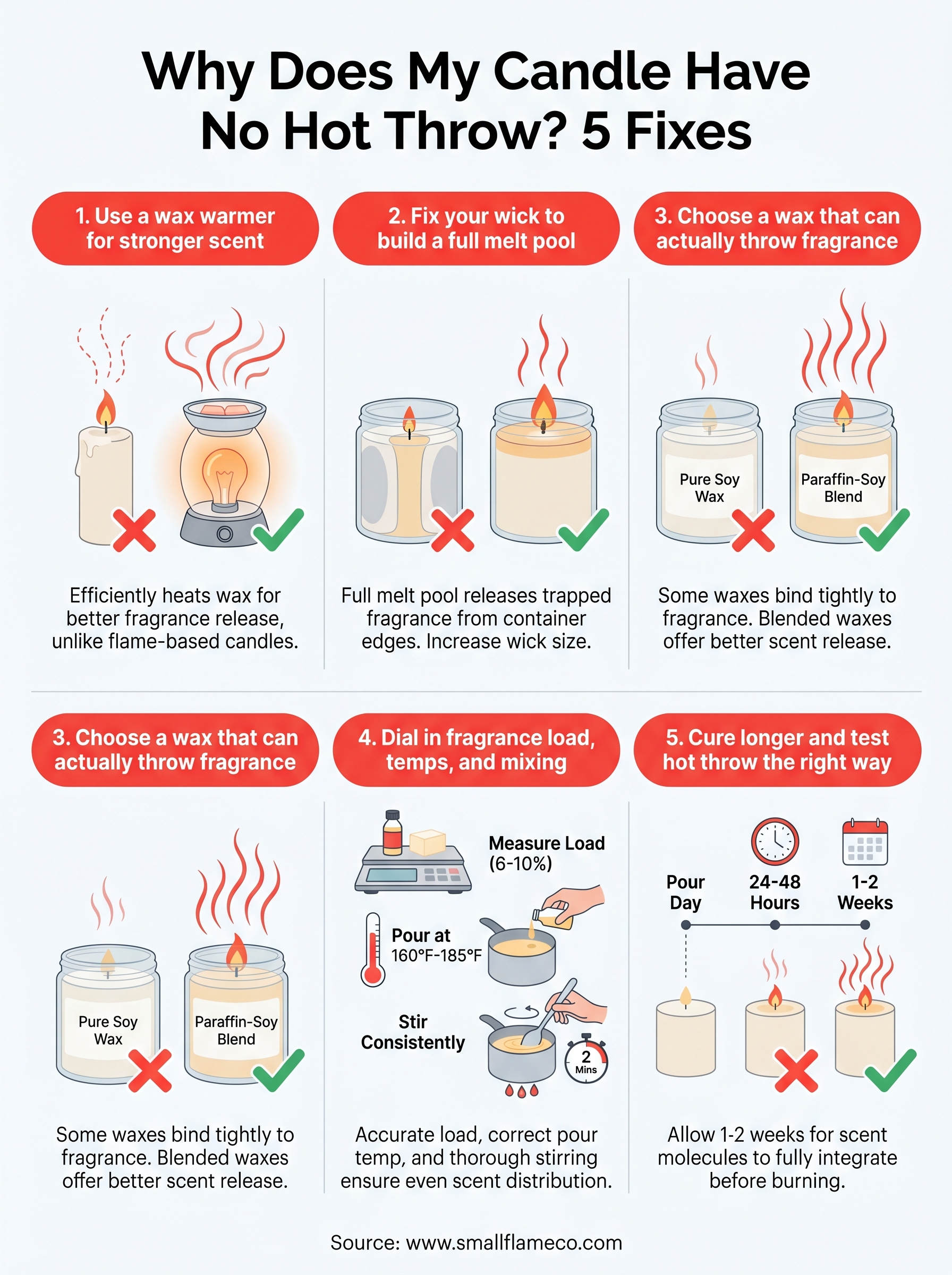
If you're burning a candle and getting zero scent, the delivery method itself might be the problem. Traditional candles rely on a flame to melt wax and release fragrance, but that process is far less efficient than using a wax warmer. Warmers heat wax evenly from below, which releases more fragrance oil into the air without burning it off at the wick.
The quick diagnosis
Check whether the problem happens with all your candles or just certain ones. If you notice weak scent across multiple candles burned the same way in the same room, the issue likely isn't the candle formula. It's how you're burning them. Flame-based candles can lose fragrance quickly because direct heat from the wick burns off scent before it fully disperses.
Watch for these specific signs that your delivery method is the bottleneck:
- The candle smells strong during the cold throw but fades fast once lit
- Scent disappears after 10 to 15 minutes of burning
- Multiple candles with different fragrance loads all underperform in the same space
What to change
Switch from a traditional candle to a wax melt warmer and use the same fragrance in wax melt form. Warmers keep wax at a lower, controlled temperature, which lets fragrance oil evaporate slowly and consistently. This is one of the most overlooked answers when people ask why does my candle have no hot throw: the delivery format itself limits scent performance.
Wax warmers consistently outperform flame-burned candles for room-filling scent because they maintain a steady low heat that releases fragrance gradually rather than burning it off.
Your setup doesn't need to be expensive. A basic electric fan warmer or Edison bulb warmer works well for most home spaces and gives you repeatable results every single time.
How to test the fix
Take a wax melt version of the same fragrance you've been struggling with and run it in a warmer for 30 minutes in the same room where your candle underperformed. If the scent throw is noticeably stronger, your formula is fine but your burn method is the bottleneck.
From that result, you can either switch to wax melts entirely or use what you learn to isolate and fix the specific candle variable causing the weak throw.
2. Fix your wick to build a full melt pool
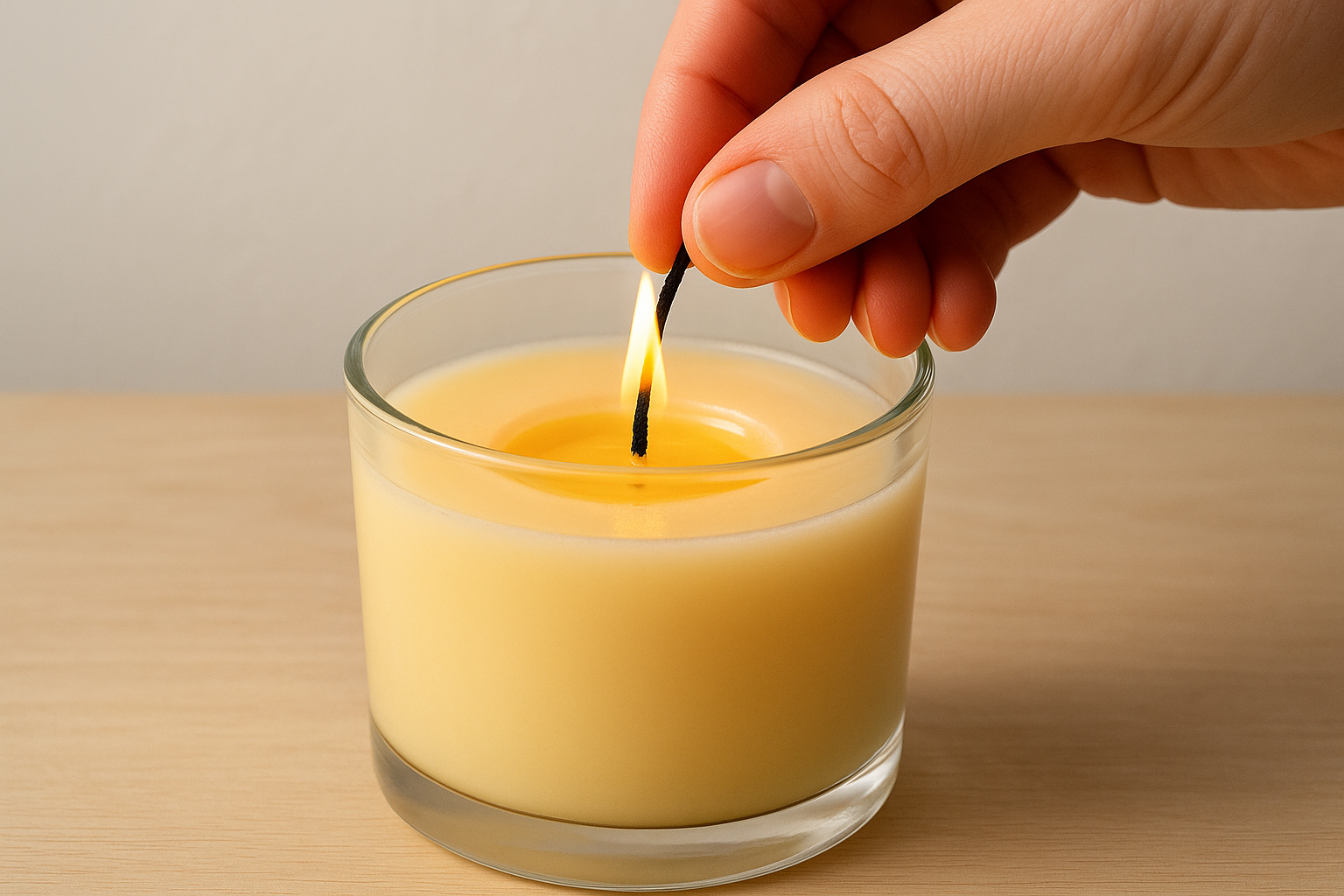
A wick that's too small for your container diameter is one of the top answers to why does my candle have no hot throw. When the wick can't generate enough heat, it tunnels down the center and never melts wax near the container walls, leaving fragrance oil locked in unmelted wax where it has nowhere to go.
The quick diagnosis
After one hour of burning, check your melt pool. A proper melt pool reaches edge to edge across the full container diameter. Watch for these signs of an undersized wick:
- Unmelted wax rings hugging the jar sides after two hours
- A narrow, deep tunnel forming through the candle center
- Weak scent throw despite a strong cold throw before lighting
A melt pool that fails to reach the container edges within two hours means the fragrance oil trapped in that surrounding wax never gets released into the air.
What to change
Move up one wick size in your current series and retest with a fresh pour. Wick sizing depends on your container diameter, wax type, and fragrance load, so adjust one variable at a time and log your container size, wax, and wick for each batch.
How to test the fix
Burn the rewick candle and check your melt pool at the one-hour and two-hour marks. Track the pool diameter against your container width each session.
If the pool reaches the edges without the flame mushrooming or producing heavy soot, your wick size is correct and your hot throw will improve.
3. Choose a wax that can actually throw fragrance
Not all waxes perform the same when it comes to releasing scent. Paraffin wax has historically been the strongest performer for hot throw, while some natural waxes like pure soy hold fragrance oil well during cold throw but release it much more slowly when burned.
The quick diagnosis
Your wax type is likely the culprit if your fragrance load and wick size are both correct but you still get weak scent when burning. This is a common answer to why does my candle have no hot throw that many makers overlook because they assume natural wax performs the same as paraffin. Pure soy wax in particular tends to bind tightly to fragrance molecules rather than releasing them efficiently into the air during a burn.
What to change
Switch to a paraffin-soy blend or a wax specifically formulated for strong hot throw. Blended waxes give you the scent-releasing properties of paraffin alongside some of the cleaner-burning qualities of soy, making them a practical middle ground for most candle makers.
A wax that binds too tightly to fragrance oil will never release it well during a burn, no matter how much oil you add.
How to test the fix
Pour identical candles using your current wax and a blended alternative, keeping fragrance load and wick size exactly the same. Burn both and compare scent intensity at the one-hour mark to identify which wax performs better in your space.
4. Dial in fragrance load, temps, and mixing
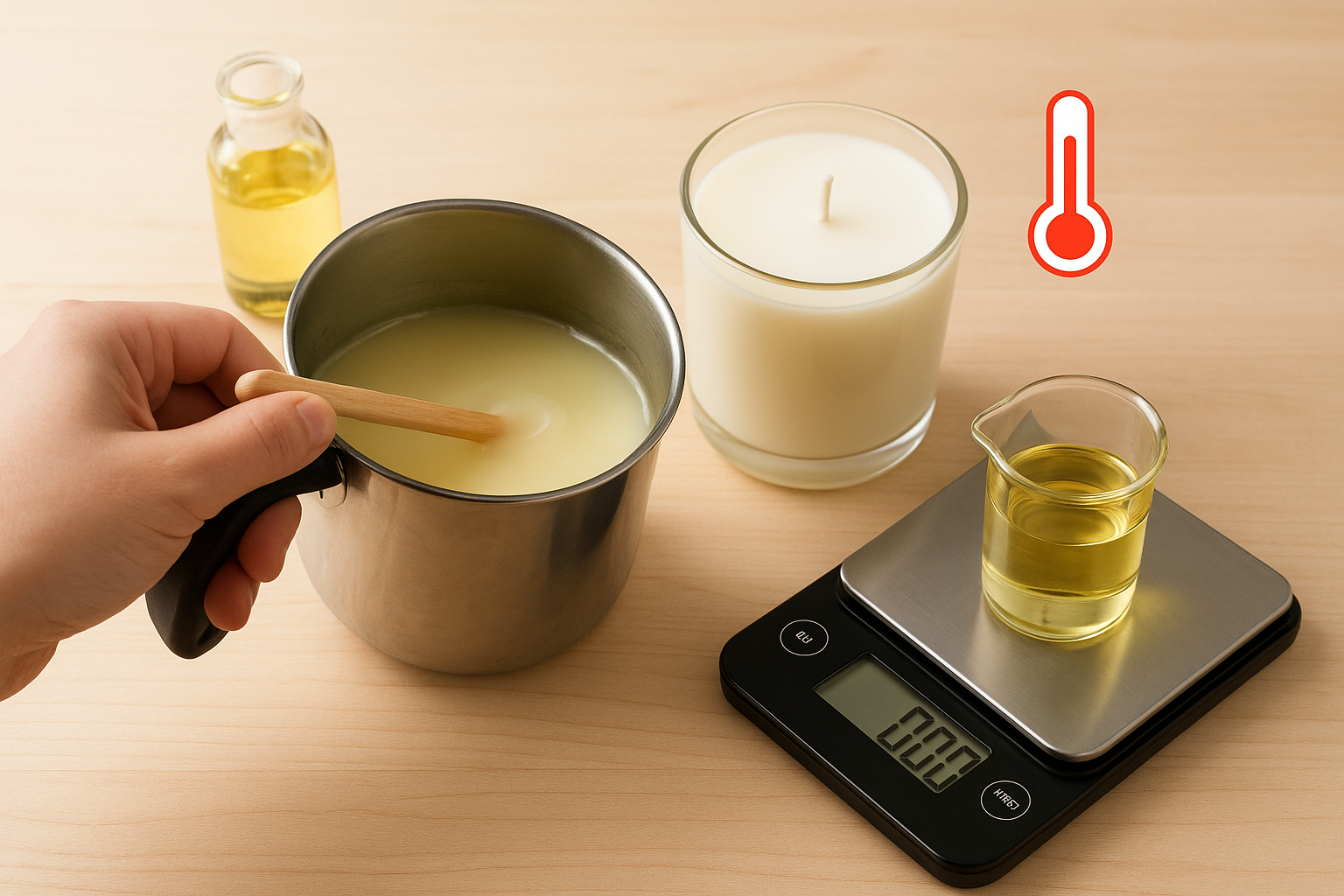
Even with the right wax and wick, fragrance load and mixing technique can still undermine your hot throw. Adding oil at the wrong temperature or skipping proper stirring causes the same weak scent result as using too little fragrance in the first place.
The quick diagnosis
Check your fragrance load percentage first. Most waxes hold between 6% and 10% fragrance oil by weight, and going below that range almost guarantees a weak throw. Look for these signs that load or mixing is your actual problem:
- The candle smells strong cold but loses scent within minutes of burning
- Scent strength varies noticeably from the top to the bottom of the candle
- You added fragrance oil but poured immediately without thorough stirring
What to change
Add your fragrance oil when your wax reaches the recommended pour temperature, typically 160°F to 185°F for most blends. Pouring at too high a temperature burns off volatile scent molecules before the wax sets. Stir slowly and consistently for at least two full minutes to distribute fragrance evenly throughout the wax rather than letting it pool at the bottom of your pour pot.
Fragrance oil that isn't fully incorporated will sink or separate, leaving uneven and weak scent throughout your finished candle.
How to test the fix
Weigh your fragrance oil on a digital kitchen scale to confirm you're hitting your target load percentage accurately. Document your pour temperature and stir time for each batch so you can pinpoint exactly which variable explains why does my candle have no hot throw and adjust from there.
5. Cure longer and test hot throw the right way
Curing is one of the most skipped steps in candle making, and it directly affects hot throw. When wax and fragrance oil bind together over time, the scent molecules integrate more fully into the wax structure, which means more fragrance gets released during a burn. Lighting a candle before it's fully cured almost always produces weaker throw than the same candle burned a week later.
The quick diagnosis
If you're testing candles within 24 to 48 hours of pouring, you're not getting an accurate read on performance. Many makers who ask why does my candle have no hot throw have simply not waited long enough. Signs your candle hasn't finished curing include cold throw that improves day over day or scent strength that varies noticeably between candles from the same batch tested at different times.
What to change
Let your candles cure for a minimum of one week before testing, and extend to two weeks for soy-heavy or high-fragrance-load blends. Store them at room temperature with lids on to prevent fragrance loss during the curing period.
Patience during the cure stage is what separates a weak-throwing candle from a strong one made with the exact same formula.
How to test the fix
Burn your cured candle in a small, closed room for the first test and note scent intensity at the 30-minute mark. Compare that result against a candle from the same batch burned at 48 hours to confirm whether curing time is the missing variable in your process.
Next steps
If you've worked through this list and still haven't solved why does my candle have no hot throw, the answer usually comes down to testing one variable at a time rather than changing everything at once. Document your wax type, wick size, fragrance load, pour temp, and cure time for every batch so you can trace exactly which change made the difference.
Sometimes the fastest path forward is burning a professionally made candle alongside your own to get a clear benchmark for what strong hot throw actually feels like in your space. That comparison alone can tell you how far off your current formula is and give you a concrete target to work toward.
For a firsthand look at what a well-performing candle can do, browse the hand-poured coconut wax candles at Small Flame Candle Co. and see how a clean coconut-soy blend with toxin-free fragrance oil performs across dozens of scent profiles.