

How Long Does a Candle Burn? Burn Times by Type & Size
You just bought a new candle, or you're eyeing one, and the first practical question hits: how long does a candle burn? The answer depends on more than you might expect. Wax type, wick construction, jar size, and even how you trim the wick all play a role in total burn time and performance.
A small votive might give you 10–15 hours. A large three-wick jar candle can push past 40. At Small Flame Candle Company, we hand-pour every candle we sell, so we pay close attention to how each size and wax blend performs over its full lifespan. Burn time matters to us because it matters to you, nobody wants a candle that's gone before the weekend is over, and nobody wants one that tunnels halfway through its first session.
This guide breaks down burn times by candle type, size, and wax material. You'll also learn how long to keep a candle lit in a single sitting for the best results, and the safest experience.
Why candle burn time varies
Several factors determine how long a candle burns, and they work together in ways that are easy to overlook. The wax type, the wick, the container shape, and where you place the candle in a room all influence the total hours you get out of a single pour. If two candles look identical in size but burn for very different lengths of time, one of these variables is the reason. Understanding what drives burn time gives you a realistic sense of what to expect and helps you choose a candle that actually fits how you use it.
Wax type
The material a candle is made from is one of the biggest factors affecting burn time. Different waxes have different melt points and densities, which directly changes how quickly the fuel gets consumed.
- Soy wax burns cooler and slower, typically giving you more hours per ounce than paraffin.
- Paraffin wax burns hotter and faster, which can produce a stronger scent throw but a shorter overall lifespan.
- Beeswax burns the slowest of the three and often lasts significantly longer, but it costs more to produce.
- Coconut wax and blends fall somewhere in between, balancing scent performance with burn efficiency.
The wax your candle is made from will have the single largest impact on how long it lasts, often more than size alone.
Wick size, fragrance load, and jar shape
Wick diameter matters more than most people realize. A wick that is too large for the jar creates a flame that burns through wax too fast, cutting your total hours short. A wick that is too small causes tunneling, where the wax around the edges never melts and goes to waste entirely.
Fragrance load also plays a role. Candles with a high concentration of fragrance oil slightly alter how the wax melts, which can shift burn rate in either direction. Your jar shape contributes as well. A narrow container concentrates heat and can speed up melting, while a wide, shallow vessel spreads the melt pool more evenly and helps the candle last longer overall.
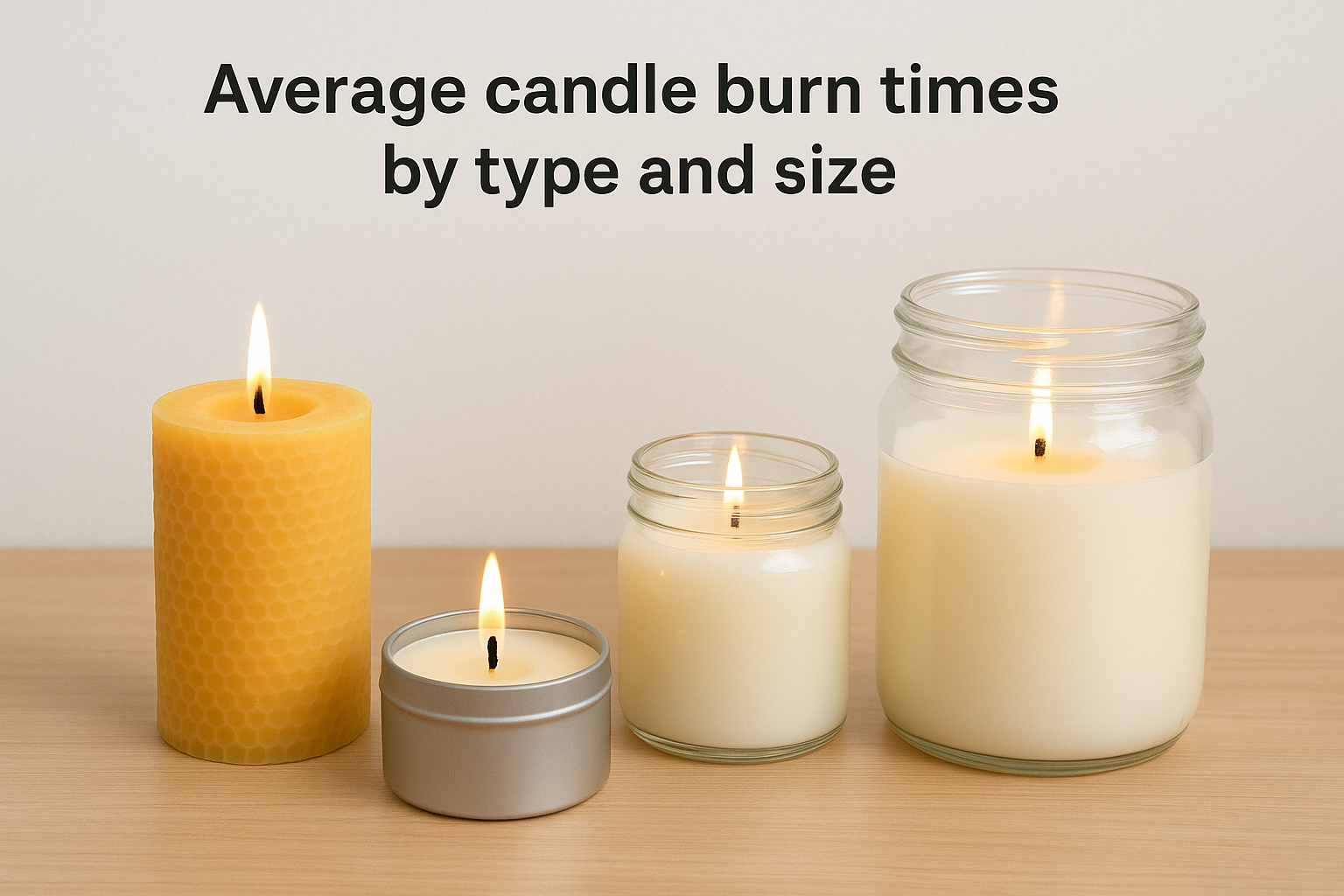
Average candle burn times by type and size
Knowing the typical ranges gives you a reliable baseline when you are shopping or comparing options. Burn time estimates vary by manufacturer and wick design, but the numbers below reflect what you can generally expect based on wax type and jar size. These figures assume proper wick trimming and burning within the recommended single-session window.
Burn times by wax type
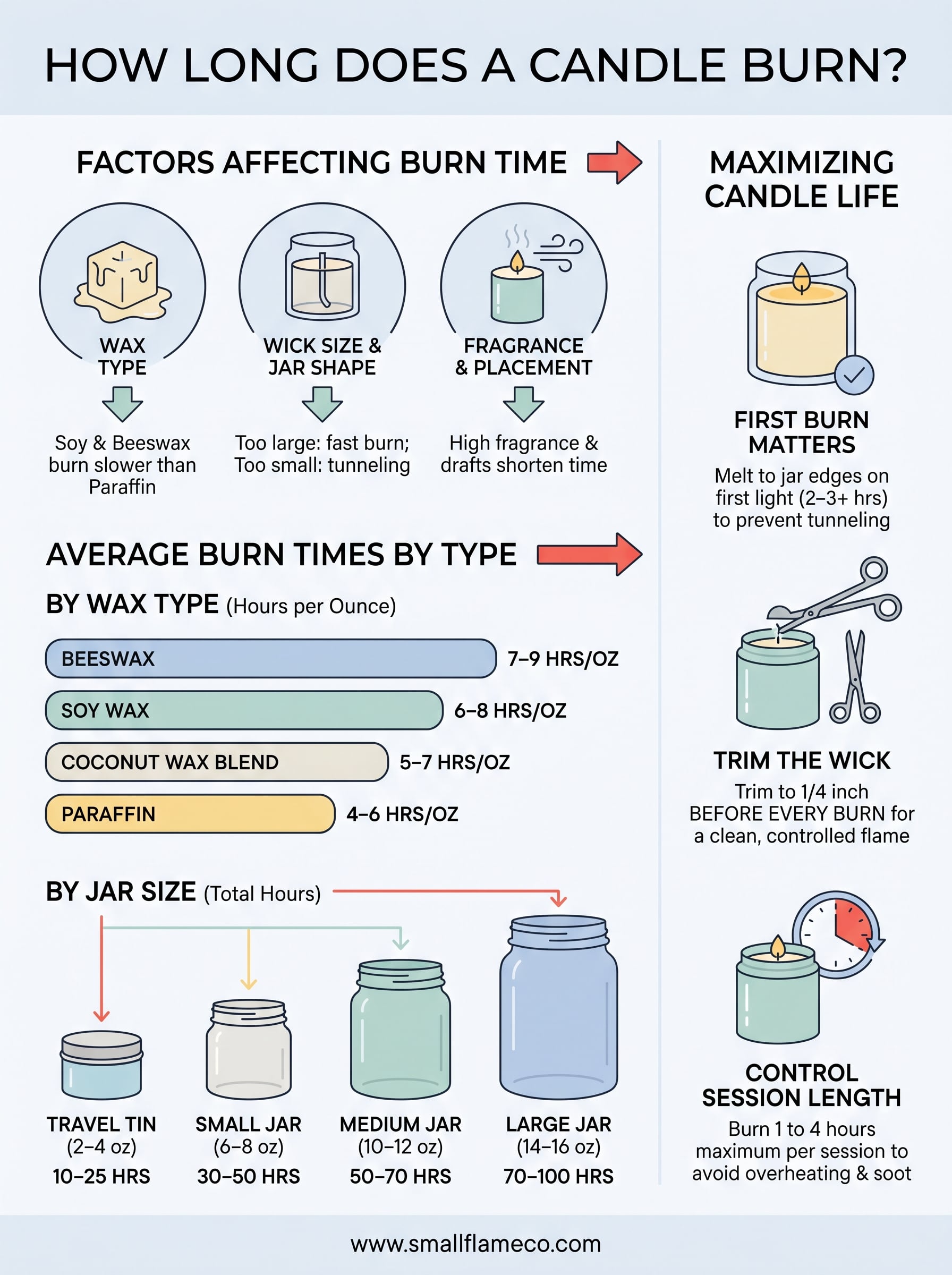
The wax material sets the floor and ceiling on how long does a candle burn from first light to the last of the wax. Here is a quick comparison of what each wax type typically delivers:
| Wax Type | Approximate Burn Time Per Ounce |
|---|---|
| Beeswax | 7–9 hours |
| Soy wax | 6–8 hours |
| Coconut wax blend | 5–7 hours |
| Paraffin | 4–6 hours |
Soy and beeswax candles almost always outlast paraffin candles of the same weight, making them a stronger value if total burn hours matter to you.
Burn times by jar size
Container size is the other half of the equation. Larger jars hold more wax, which directly translates to more usable hours across multiple sessions.
- Travel tin (2–4 oz): 10–25 hours
- Small jar (6–8 oz): 30–50 hours
- Medium jar (10–12 oz): 50–70 hours
- Large jar (14–16 oz): 70–100 hours
Your actual results will land closer to the upper end of each range when you burn with consistent habits and a well-trimmed wick.
How long you should burn a candle each time
Total burn hours tell you how long a candle lasts across its full life, but single-session burn time is just as important for getting those hours. Burning a candle too briefly or leaving it lit too long both damage performance and reduce the value you get out of every pour.
The first burn sets the tone
Your first burn is the most critical session you will have with any candle. Wax has memory, which means the melt pool on that first burn determines the pattern for every burn after it. If you extinguish the candle before the melt pool reaches the jar edges, you will get tunneling on every subsequent burn, and that wasted wax never comes back.
Let the melt pool reach the full diameter of the jar on the first burn before you extinguish the flame, even if that takes two to three hours.
How long each session should last
One to four hours is the safe, effective window for a single candle session. After four hours, the wick begins to mushroom, the flame grows too large, and the jar accumulates excess heat, both of which shorten total candle lifespan and increase the risk of soot or cracking. Use these targets as a guide:
- Small candles (2–4 oz): burn for one to two hours per session
- Medium candles (6–12 oz): burn for two to three hours per session
- Large candles (14+ oz): burn for up to four hours per session
How to make a candle last longer
A few consistent habits can significantly extend how long does a candle burn across its full lifespan. Routine maintenance between sessions and thoughtful placement in your home both make a measurable difference in total burn hours without requiring any extra effort or equipment.
Trim the wick before every burn
Wick length directly controls how efficiently your candle burns each session. A wick that is too long creates a larger, hotter flame that burns through wax too fast, generates excess soot, and causes the jar to accumulate unnecessary heat. Trim it to one-quarter inch before every session for the cleanest, most controlled burn possible.
- Use scissors or a dedicated wick trimmer for a clean, even cut
- Trim before the first burn, not just subsequent ones
- If the wick mushrooms mid-burn, extinguish, trim, and relight
Trimming the wick before every burn is the cheapest and most effective habit you can build to extend your candle's total lifespan.
Store and place your candle correctly
Storage conditions affect wax quality before you even strike a match. Keep your candles away from direct sunlight, which fades the color and softens the surface unevenly. Store them at room temperature with the lid on to protect the fragrance between sessions.
Placement during a burn matters just as much. Drafts from fans, air vents, or open windows cause uneven melting that burns through wax faster than it should. Setting your candle on a flat, stable surface away from airflow gives you the most efficient burn every time.
Common burn problems and quick fixes
Even with good habits, burn issues can still surface. Knowing how to spot and fix the most common problems keeps your candle performing well and helps you get the most out of every session. Most issues trace back to wick maintenance or burn session length, both of which you can correct without any special tools.
Tunneling
Tunneling happens when the wax melts straight down the center and leaves a ring of unmelted wax around the jar edges. This usually traces back to short burn sessions, especially on the first burn. If tunneling has already started, try the aluminum foil method: fold a strip of foil around the top of the jar, leaving a small opening above the wick, and burn the candle for two to three hours. The trapped heat encourages the melt pool to spread to the edges.
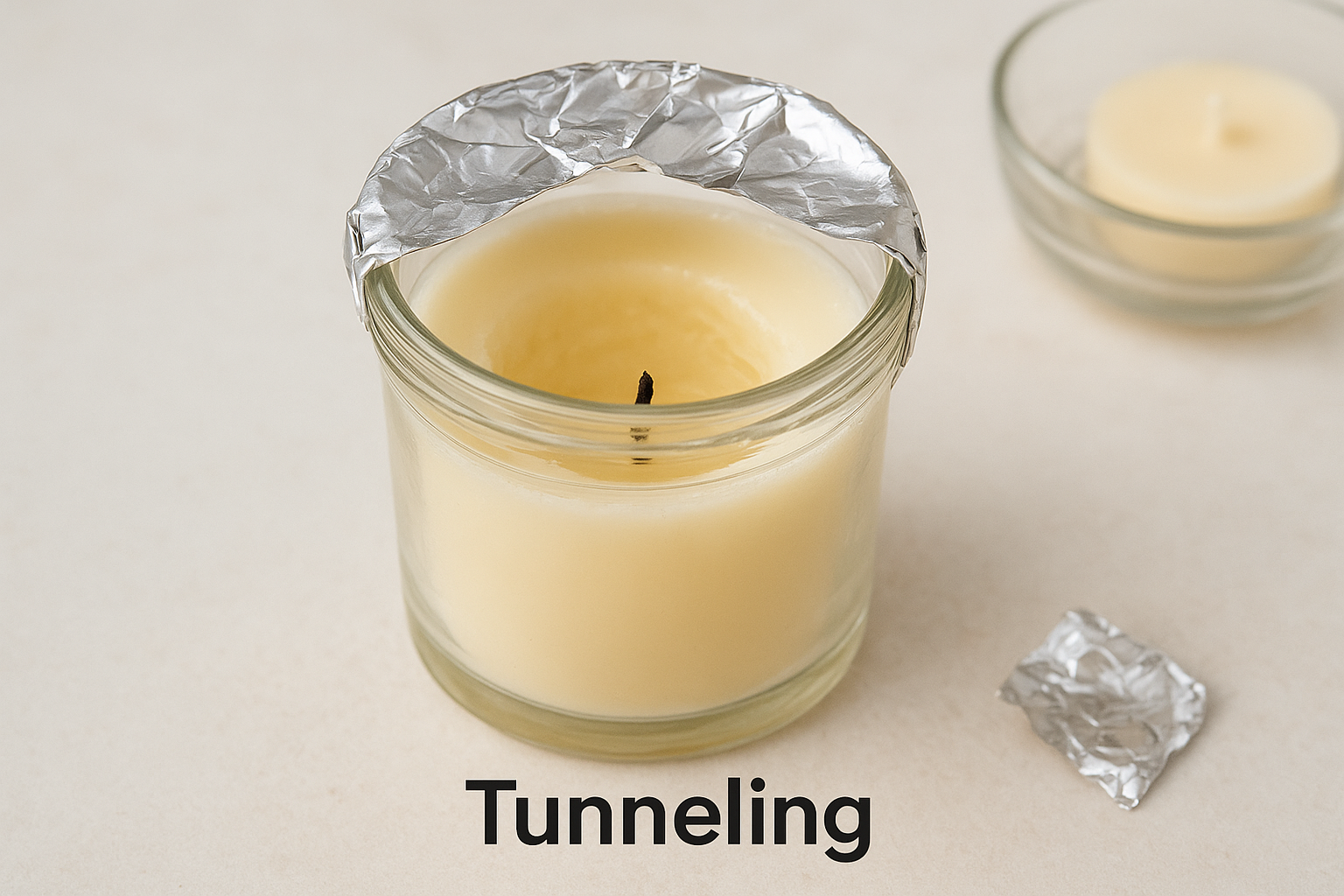
Tunneling wastes a significant portion of your candle's wax, which directly reduces how long does a candle burn in total.
Soot and mushrooming
A black residue on the jar or lid is almost always a sign that the wick is too long. Mushrooming, where the wick tip forms a carbon buildup, causes the flame to burn too hot and produce excess smoke.
Follow these steps to clear it up:
- Extinguish the candle and let the wax cool completely
- Trim the wick back to one-quarter inch
- Wipe the jar interior with a dry cloth before your next session
Quick recap
How long does a candle burn comes down to a handful of variables working together: wax type, wick length, jar size, and how you use it each session. Soy and beeswax candles outlast paraffin by a meaningful margin, and a larger jar always gives you more total hours across its lifespan. Your burn habits matter just as much as the candle itself, and ignoring them chips away at the value of every pour.
Trim your wick to one-quarter inch before every session, let the melt pool reach the jar edges on the first burn, and keep each session between one and four hours maximum. Fix tunneling and soot early, and store your candles away from heat and direct sunlight between uses.
Small details compound over a candle's full life. If you want a candle built for a clean, long-lasting burn, browse our hand-poured coconut wax candles and find a scent worth making last.