

8 Sustainable Packaging for Candles Ideas That Ship Well
Candle wax and glass don't forgive bad packaging. A single rough transit can crack a jar, shatter a vessel, or turn a beautifully poured candle into a returns headache. At Small Flame Candle Company, we ship hand-poured candles across the country, so finding sustainable packaging for candles that actually survives the journey has been a real, hands-on problem we've had to solve, not just a nice idea on a mood board. We've tested materials, swapped suppliers, and dealt with our share of packaging failures along the way.
The push toward eco-friendly packaging isn't slowing down, either. Customers notice what their order arrives in, and excess plastic and styrofoam peanuts send a message most small candle brands don't want to send. But here's the catch: going green with your packaging means nothing if your product shows up broken. Protective performance has to come first, or you're just creating a different kind of waste.
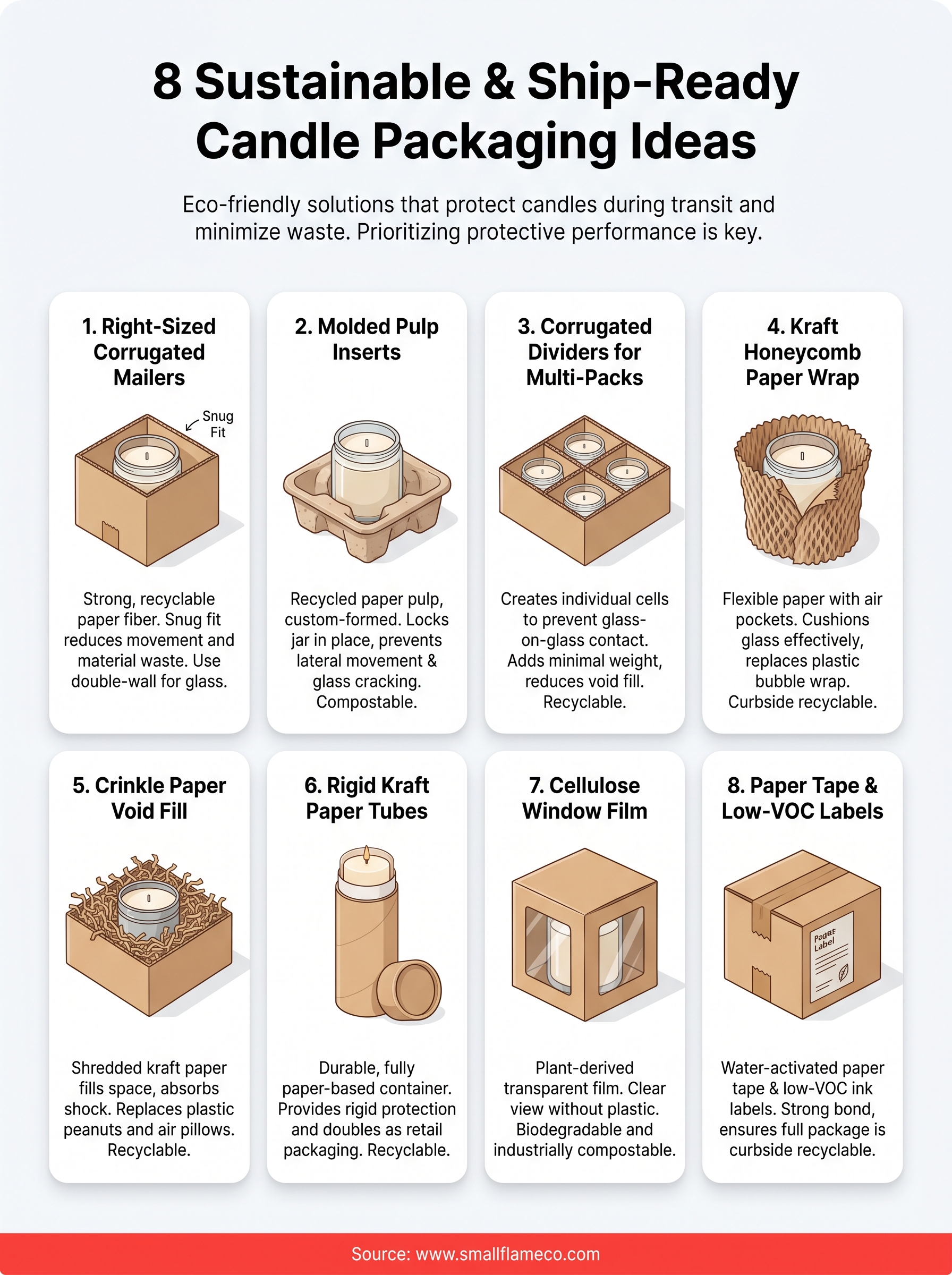
This article breaks down eight sustainable packaging options that hold up during shipping, from corrugated inserts to compostable mailers. Each one is something a candle maker or small retailer can actually source and use without blowing their margins. Whether you're shipping your first batch or looking to replace plastic packaging you've outgrown, you'll walk away with practical ideas you can act on.
1. Use right-sized corrugated mailer boxes
Corrugated mailer boxes are the backbone of sustainable packaging for candles that actually survives transit. They're made from recycled and recyclable paper fiber, they're curbside recyclable in most US cities, and they come in enough size variations that you can stop stuffing every order into one oversized box that wastes void fill and cardboard alike.
What it is and why it works
A corrugated mailer box is a single-piece or two-piece box made from fluted paper board sandwiched between two liner sheets. That fluted middle layer is what gives corrugated its strength. Unlike a regular flat chipboard box, corrugated compresses and rebounds under pressure, which means it absorbs impact during drops and stacking. Right-sizing your box means choosing a box whose interior dimensions match your candle's footprint closely, reducing the need for excessive void fill and cutting down on wasted material on every order you ship.
How it ships well
Carriers like UPS and USPS use dimensional weight pricing, which means oversized boxes cost you more even when the contents are light. A snug corrugated box keeps your dimensional weight low, reduces box movement during transit, and gives the candle less room to shift and hit the walls. Double-wall corrugated is worth the small price premium for glass jar candles, since it handles side compression better than single-wall on longer routes.
A box that fits your candle well does more protective work than a box packed loosely with filler.
Best candle types and use cases
Right-sized corrugated boxes work best for single jar candles, pillar candles, and tin candles shipped individually or in sets of two to four. They're also a strong choice for subscription boxes and gift orders where presentation at opening matters.
Sustainability and compliance notes
Look for boxes certified by the Forest Stewardship Council (FSC) or made with post-consumer recycled content. Most corrugated mailers qualify for curbside recycling without any consumer prep, which matters when your customer base cares about what happens after unboxing.
Cost and sourcing tips
Buying in packs of 25 to 50 keeps your per-unit cost manageable as a small brand. Suppliers like Uline, PakFactory, and Amazon Business all carry stock corrugated mailers in common candle-friendly sizes without requiring a large minimum order.
2. Switch to molded pulp inserts for jar protection
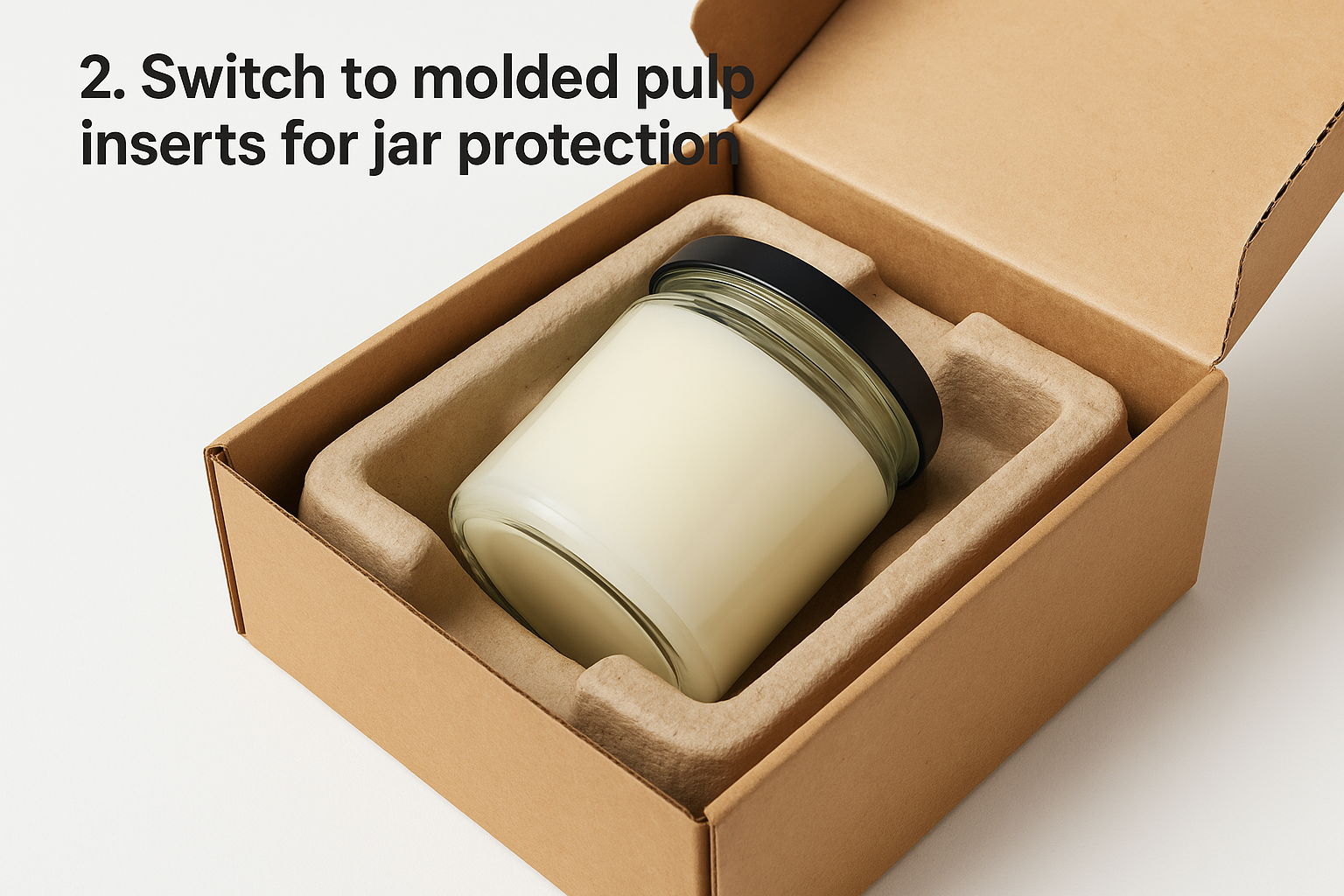
Molded pulp inserts are custom-formed trays made from recycled paper pulp that hold your candle jars in a fixed position inside a shipping box. They're one of the strongest upgrades you can make to your sustainable packaging for candles setup without reintroducing any plastic.
What it is and why it works
Molded pulp is pressed from recycled newsprint or agricultural fiber into rigid shapes that match your jar's exact dimensions. The form-fitting design prevents lateral movement during transit, which is the primary cause of glass cracking in candle shipments.
How it ships well
Because molded pulp is lightweight and rigid, it adds minimal dimensional weight to your package while absorbing shock effectively. The snug fit means your box needs little to no void fill, which speeds up packing and cuts material costs per order.
A well-fitted molded pulp insert does the job of foam and bubble wrap without leaving any of the waste behind.
Best candle types and use cases
Molded pulp inserts work best for glass jar candles with consistent dimensions across your product line. Common use cases include:
- Gift sets with two or three matching jars
- Subscription shipments where the same jar size repeats
- Single jar orders where you want to eliminate cushioning material entirely
Sustainability and compliance notes
Most molded pulp is compostable or curbside recyclable, and many suppliers use 100% post-consumer waste fiber. Look for products certified to FSC or equivalent standards to confirm responsible sourcing.
Cost and sourcing tips
Custom molded pulp requires an upfront mold setup fee, which makes it more cost-effective at higher order volumes. Suppliers like EarthChoice and Pulpac offer stock tray options that fit common jar sizes without any custom tooling investment.
3. Add corrugated dividers for multi-candle orders
When you ship more than one candle in a single box, glass-on-glass contact is the fastest way to end up with breakage and a refund request. Corrugated dividers solve that problem by creating individual cells for each candle inside the outer box, keeping every jar separated and stationary from the moment you seal it to the moment your customer opens it.
What it is and why it works
Corrugated dividers are interlocking cardboard partitions that slot together to form a grid inside a shipping box. Each cell holds one candle upright and prevents it from contacting neighboring jars. The fluted structure absorbs lateral shock the same way the outer box wall does, which means the protection works on every side of each candle.
How it ships well
Dividers add almost no weight to your package, which keeps your dimensional and actual weight from climbing. Because each candle sits fixed in its own cell, your box needs far less loose void fill, which speeds up packing time and reduces the total material you use per shipment.
Dividers turn a multi-candle box into a predictably safe shipment without adding bulk or cost.
Best candle types and use cases
Corrugated dividers work best for glass jar candles and tin candles shipped in sets of two to six. They're a strong fit for gift packs and multi-scent sampler orders where presentation and intact delivery both matter.
Sustainability and compliance notes
Most corrugated dividers use recycled paper content and are fully curbside recyclable. Look for FSC-certified options to keep your sustainable packaging for candles commitments consistent across every component in the box.
Cost and sourcing tips
Stock divider sets in common configurations like 4-cell and 6-cell are available through packaging suppliers without minimum order requirements. Ordering in bulk quantities of 50 or more brings the per-unit cost down quickly and makes dividers a practical choice even for small candle brands.
4. Wrap glass jars with kraft honeycomb paper
Kraft honeycomb paper is a flexible wrapping material made from an expandable paper sheet that creates a honeycomb pattern when stretched. It cushions glass jar candles without any plastic, making it one of the cleanest substitutes for bubble wrap in your packing workflow.
What it is and why it works
Honeycomb paper works by creating dozens of small air pockets between the paper cells, which distribute impact across a wide surface area. Each sheet expands to several times its flat size, giving you more coverage per roll and fast, consistent wrapping on every jar.
How it ships well
The wrapped jar fills the gap between the jar and box wall tightly and resists shifting during transit. Because honeycomb paper compresses and rebounds under pressure, it handles the drops and stacking forces carriers routinely subject packages to.
A single sheet of honeycomb paper wrapped tightly around a jar often replaces two or three layers of bubble wrap.
Best candle types and use cases
Honeycomb paper fits glass jar candles of any size, from small 4-ounce jars to large 16-ounce vessels. It also works well for pillar candles and ceramic vessels where surface protection matters as much as cushioning.
Sustainability and compliance notes
Most kraft honeycomb paper is made from FSC-certified paper and is fully curbside recyclable, keeping your sustainable packaging for candles goals intact. No coatings or plastics are added during manufacturing.
Cost and sourcing tips
Rolls are available through Amazon Business and most packaging distributors without minimum order requirements. Buying a 200-foot roll keeps your per-wrap cost low and reduces how often you need to reorder.
5. Replace plastic void fill with crinkle paper
Plastic packing peanuts and air pillows are easy defaults, but they're one of the simplest parts of your packaging workflow to cut. Crinkle paper fills void space, cushions movement, and looks intentional when your customer opens the box.
What it is and why it works
Crinkle paper is shredded or cut kraft paper formed into loose strips that nest inside a shipping box. Each strip's textured surface creates friction against your jar, limiting movement without a custom insert.
How it ships well
Your candle stays away from box walls because crinkle paper compresses under pressure and rebounds as the box settles during transit. That compression and rebound absorbs the drops and stacking forces carriers routinely apply.
Crinkle paper handles the same job as plastic air pillows without leaving your customer with unrecyclable waste.
Best candle types and use cases
This fill option works across most candle formats, but fits especially well for:
- Tin candles where a molded insert isn't cost-effective
- Smaller jar orders that don't justify custom tooling
- Gift packaging where visible filler adds to the presentation
Sustainability and compliance notes
Most crinkle paper uses recycled kraft fiber and is fully curbside recyclable. Choosing it keeps your sustainable packaging for candles commitments consistent across every component in the box.
Cost and sourcing tips
You can source crinkle paper through Amazon Business or Uline without minimum order requirements. Buying a bulk fill bag drops your per-shipment cost and cuts how often you need to reorder.
6. Package candles in kraft paper tubes
Kraft paper tubes give you a rigid, fully paper-based container that protects your candle and doubles as retail-ready packaging. They're one of the most underused options in sustainable packaging for candles, especially for brands that want their shipping packaging to feel intentional rather than purely functional.
What it is and why it works
A kraft paper tube is a cylindrical container made from wound paper board with a friction-fit or crimped paper end cap. The round form distributes compression forces evenly around the candle's circumference, which makes the tube surprisingly resistant to crushing despite being made entirely from paper.
How it ships well
The tube's rigid walls keep your candle centered and protected without requiring additional void fill in most cases. Taller tubes with snug end caps resist the lateral forces carriers apply during sorting, so your candle arrives upright and intact.
A snug kraft tube often eliminates the need for an outer box entirely on smaller candle orders.
Best candle types and use cases
Kraft tubes work best for pillar candles, roll-on wax melts, and single-wick tin candles with consistent cylindrical profiles. They're a strong fit for gift packaging and retail shelf display where the tube itself serves as the product presentation.
Sustainability and compliance notes
Most kraft tubes use recycled paper content and are curbside recyclable with no consumer prep required. Look for tubes with paper-based end caps rather than plastic plugs to keep every component recyclable.
Cost and sourcing tips
Stock kraft tubes in standard diameters ship quickly through packaging distributors without custom tooling fees. Ordering in quantities of 50 or more brings per-unit cost down and makes tubes practical for small brands.
7. Use plastic-free window packaging with cellulose film
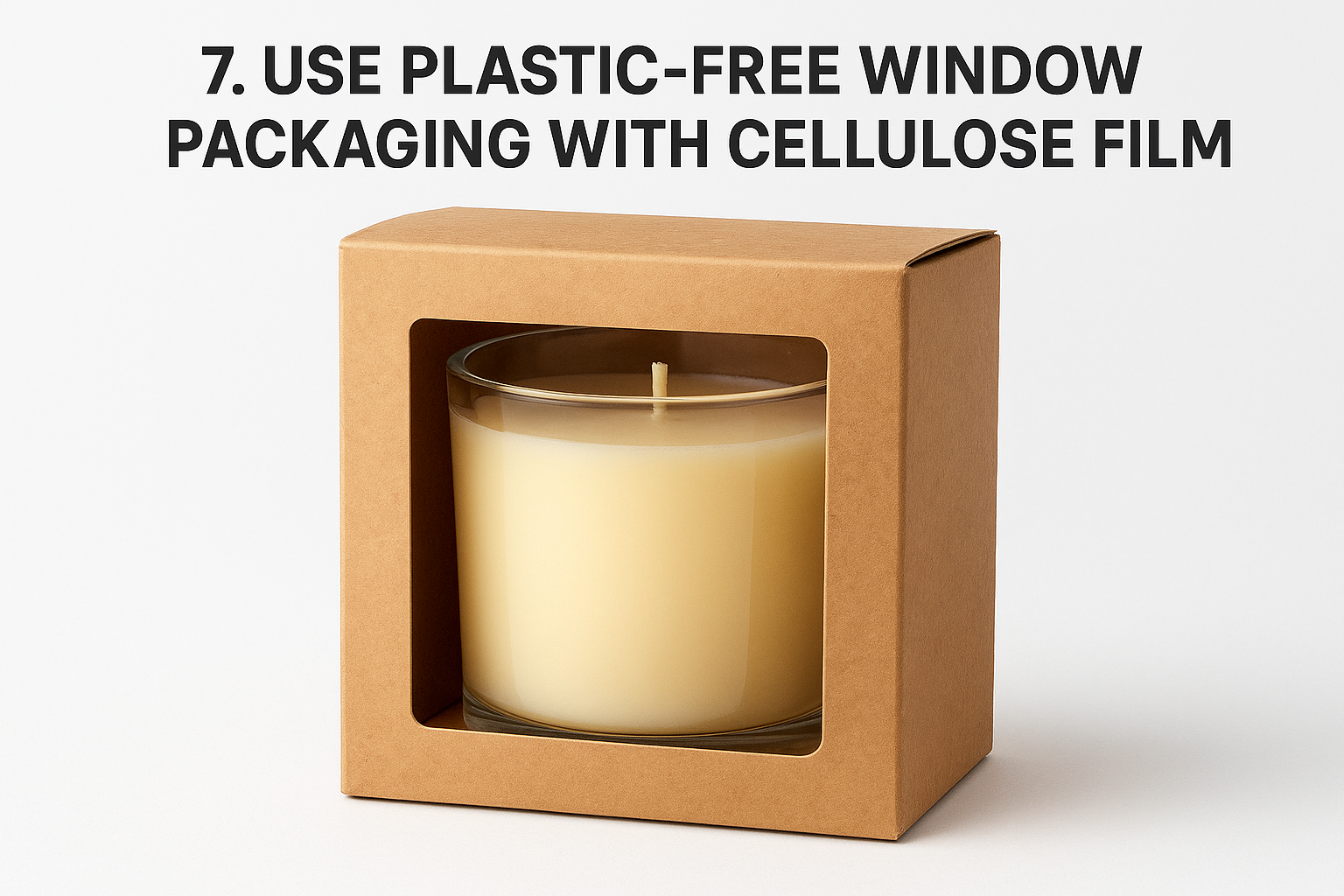
Cellulose film gives you a clear window option for retail-ready candle packaging without introducing any plastic to your supply chain. It looks nearly identical to PET or OPP film but comes entirely from plant-based materials, making it one of the most visually effective upgrades in sustainable packaging for candles.
What it is and why it works
Cellulose film is a transparent, plant-derived material made from wood pulp or cotton fiber. The film bonds to paper-based packaging and creates a clear viewing window so customers can see the candle's color or label before opening.
Unlike petroleum-based films, cellulose breaks down in industrial compost facilities and many home composting environments, removing the end-of-life problem that standard plastic creates.
How it ships well
Cellulose film holds its shape during transit and resists moisture well enough to keep the window intact through standard shipping conditions. The film stays bonded to paperboard even when packages pass through temperature swings in carrier facilities.
A cellulose window delivers the visual appeal of plastic film without the disposal problem plastic creates.
Best candle types and use cases
Window packaging works best for tin candles and small jar candles sold through retail or gift channels where product visibility influences purchase decisions.
Sustainability and compliance notes
Certified compostable cellulose film meets ASTM D6400 or EN 13432 standards. Confirm your supplier holds one of these certifications before making compostability claims to customers.
Cost and sourcing tips
Cellulose window boxes cost more per unit than plastic alternatives, but the retail shelf appeal and eco-positioning typically justify the premium for gift-focused candle brands.
8. Choose paper labels, paper tape, and low-VOC printing
Finishing details like tape and labels are easy to overlook when building sustainable packaging for candles, but they add up fast across every order you ship.
What it is and why it works
Paper labels, kraft paper tape, and low-VOC (volatile organic compound) inks replace the plastic-backed and solvent-heavy alternatives that contaminate otherwise recyclable packaging. Paper labels bond to kraft and corrugated surfaces cleanly and keep your entire box stream curbside recyclable without any consumer sorting.
How it ships well
Water-activated kraft tape creates a stronger bond than plastic pressure-sensitive tape on corrugated boxes, which means sealed flaps stay closed through rough carrier handling. Your boxes arrive securely sealed and fully recyclable on the other end.
Switching to water-activated tape often reduces box failures in transit while eliminating the one plastic component that contaminates an otherwise paper-based package.
Best candle types and use cases
This upgrade applies to every candle format you ship, from single tin orders to multi-jar gift sets. It's especially relevant for brands that print branded labels directly on retail-ready packaging.
Sustainability and compliance notes
Look for labels certified to FSC standards and inks that meet low-VOC requirements under EPA guidelines to support any environmental claims you make to customers.
Cost and sourcing tips
Water-activated tape dispensers and paper label stock are available through standard office and packaging suppliers without minimum order requirements, making this one of the lowest-barrier swaps on this list.
Next steps
You don't have to overhaul your entire packaging workflow at once. Start with the simplest swap first: swap plastic void fill for crinkle paper, or replace your current tape with water-activated kraft tape. Both changes cost almost nothing and immediately move your sustainable packaging for candles setup in the right direction.
From there, work through the list based on your highest-volume candle formats. If you ship mostly glass jar candles, molded pulp inserts and corrugated dividers give you the best return on investment. If gift packaging drives most of your sales, cellulose window boxes and kraft tubes are worth prioritizing next.
Each change you make builds on the last, and customers notice when packaging choices match the values behind a product. If you want to see what a commitment to eco-friendly candle making looks like end to end, browse the hand-poured coconut wax candles at Small Flame Candle Co. for a practical example.