

Wax Warmer Vs Essential Oil Diffuser: 5 Key Differences
So you're stuck on the wax warmer vs essential oil diffuser debate. Both fill a room with fragrance, both look great on a shelf, and both have loyal fans who swear the other option is inferior. But they work in fundamentally different ways, and those differences affect everything from scent throw to long-term cost.
At Small Flame Candle Company, we hand-pour candles and sell wax warmers, so we'll be upfront: we know the wax side of this comparison well. That said, we want you to pick what actually fits your home and preferences, not just what we happen to carry. An honest breakdown helps everyone, and that's exactly what this article is.
Below, we'll walk through five key differences between wax warmers and essential oil diffusers, covering scent intensity, safety, maintenance, cost, and variety, so you can make a decision that makes sense for your space.
1. Scent throw and speed
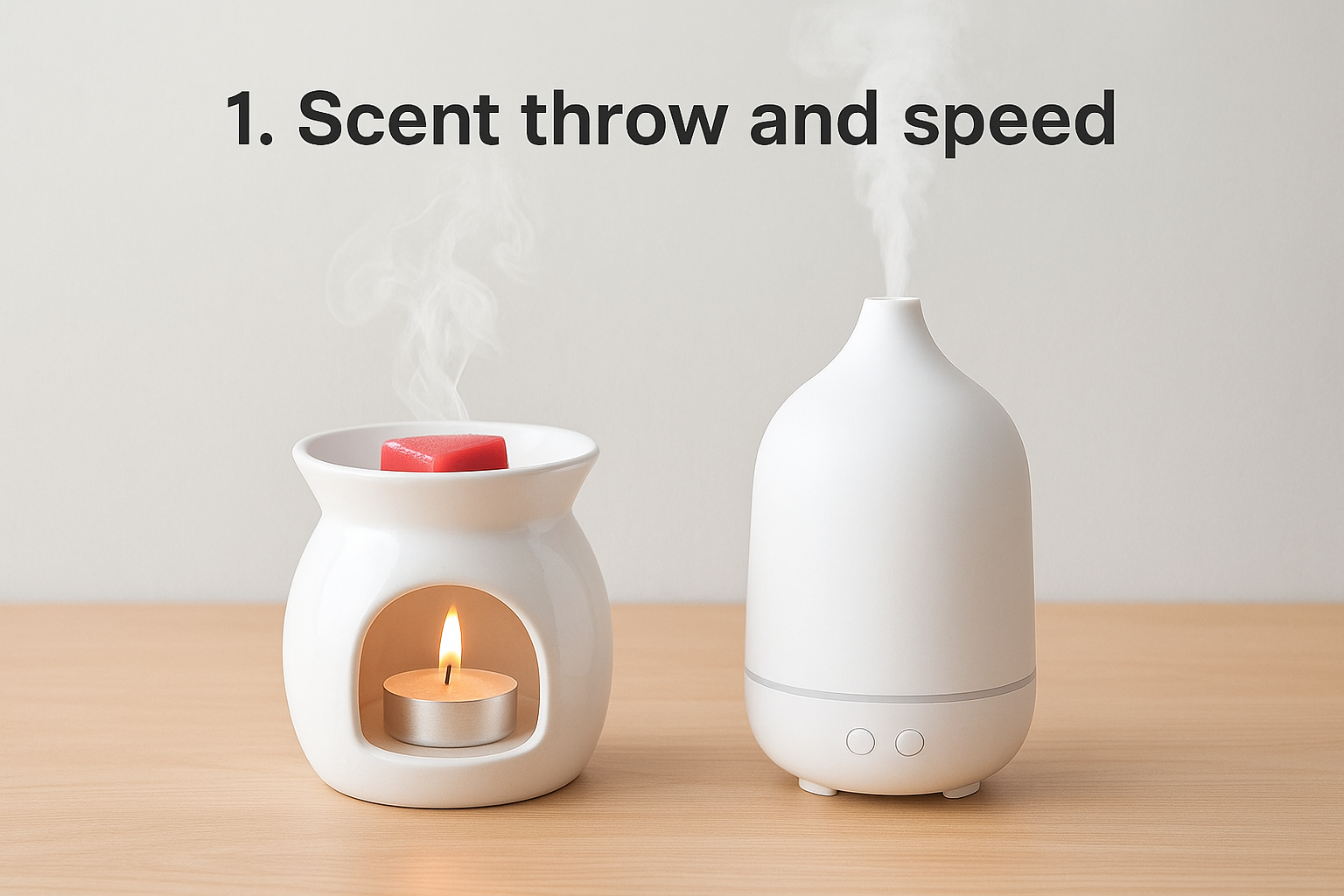
Scent throw refers to how strongly and quickly a fragrance fills a room. This is often the first thing people notice, and the two devices handle it very differently.
What to know
When comparing the wax warmer vs essential oil diffuser, scent throw comes down to how each device releases fragrance molecules into the air. Wax warmers use heat to melt scented wax, releasing fragrance directly and continuously. Diffusers use water vapor or ultrasonic vibrations to spread diluted essential oil particles into the air, which produces a lighter, more subtle effect.
Wax warmer
Wax warmers tend to produce a stronger, faster scent throw. Because the wax melts directly on a heated dish, fragrance fills the room within minutes. This makes them a solid choice if you want immediate, noticeable scent in a larger living room, kitchen, or open floor plan. The scent also tends to linger even after you turn the warmer off, since the fragrance saturates the surrounding air and fabrics.
A wax warmer can scent a medium-sized room in under 10 minutes, which is notably faster than most diffusers operating at standard settings.
Essential oil diffuser
Diffusers produce a lighter, more atmospheric scent that builds gradually. They work best in smaller, enclosed spaces like a bedroom or bathroom, where the mist can concentrate without dispersing too quickly. If you prefer subtle background fragrance over a bold scent impact, a diffuser fits that preference well. That said, in larger or open-concept rooms, a single diffuser often struggles to push scent very far.
How to choose
If bold, fast-filling fragrance is your priority, a wax warmer is the stronger performer. If you prefer gentle, ambient scent for a smaller space, a diffuser is worth considering. Think about the size of the room you're trying to scent and how strong you want the effect to be before you decide.
2. Ingredients and indoor air concerns
What goes into each product matters, especially if you spend long hours at home or have indoor air quality concerns. The ingredients in scented wax and essential oils are quite different, and so are the potential effects each one has on the air you breathe.
What to know
When weighing the wax warmer vs essential oil diffuser debate from an air quality standpoint, the key question is what each device actually releases into your space. Wax warmers emit fragrance compounds through heat without burning anything, while diffusers disperse water vapor mixed with essential oil particles into the air.
Wax warmer
Scented wax typically contains fragrance oils that blend synthetic and natural compounds. Because wax warmers don't use an open flame, they don't produce soot or smoke. However, some synthetic fragrances may release volatile organic compounds (VOCs) at low levels when heated, so ventilation is still worth considering.
Choosing wax made with cleaner fragrance formulations reduces the chance of VOC-related air concerns in enclosed spaces.
Essential oil diffuser
Diffusers use pure or blended essential oils, which are plant-derived. That sounds cleaner on the surface, but high concentrations of certain oils can still irritate airways and trigger sensitivities, particularly in people with asthma or respiratory conditions.
How to choose
If air quality is your top concern, check the specific ingredients in whatever product you buy, regardless of which device you choose.
3. Safety around kids, pets, and surfaces
Safety is a real factor when you're choosing between these two devices, especially if your household includes young children, curious pets, or delicate furniture. Both options carry specific risks that are worth understanding before you buy.
What to know
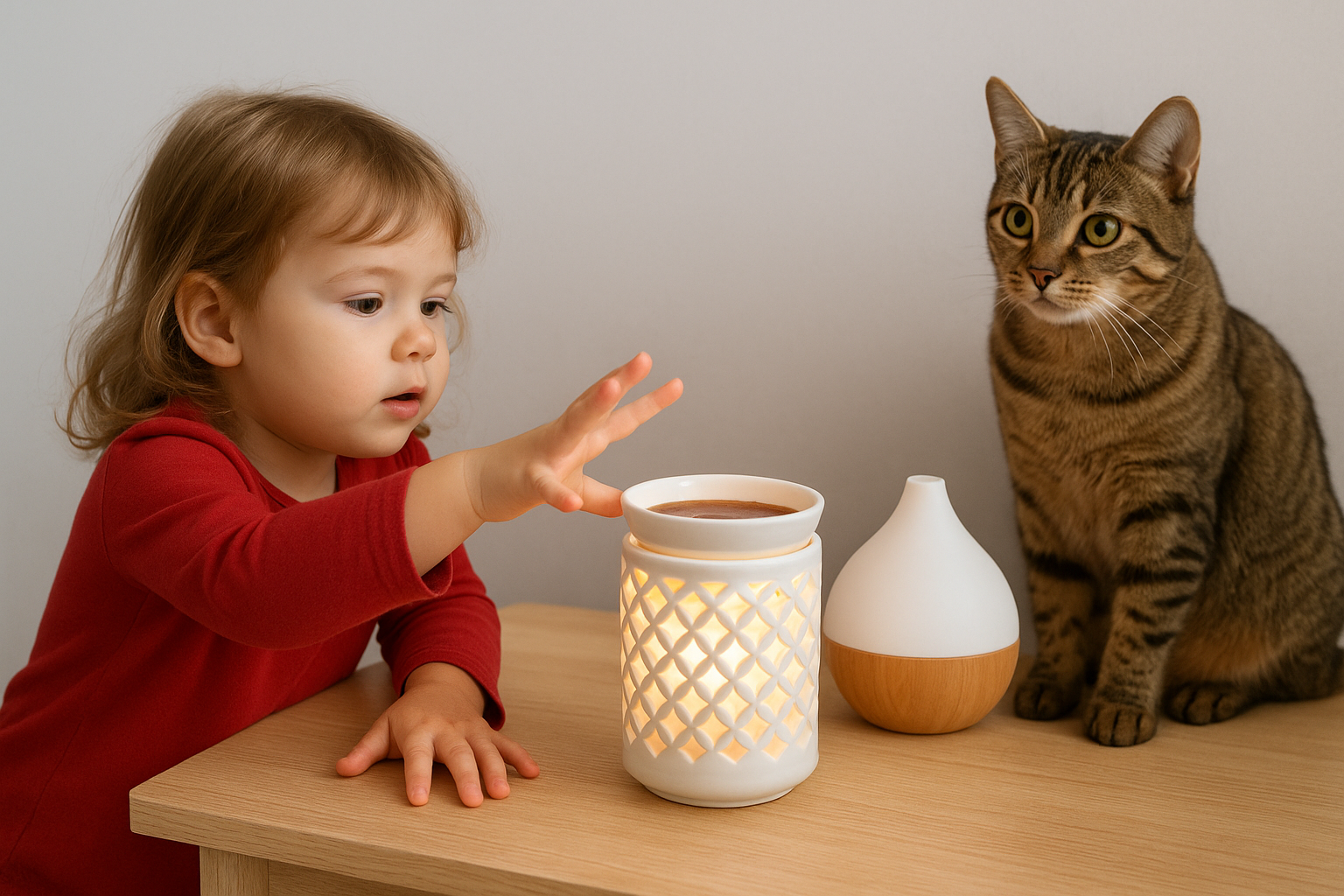
In the wax warmer vs essential oil diffuser comparison, safety breaks down across three areas: heat exposure, spill risk, and toxic ingredients. Knowing which risks apply to your home helps you place and use each device responsibly.
A quick look at your space, including shelf height, floor traffic, and whether pets roam freely, tells you a lot about which setup will actually work for your household.
Wax warmer
A wax warmer uses a heated dish, which can cause burns if touched or knocked over. Keep it on a stable, heat-resistant surface away from edges where kids or pets could reach. Spilled melted wax can also stain fabric and damage finished wood surfaces.
Many plug-in wax warmers sit flush against the wall outlet, which removes cord hazards and reduces tipping risk significantly.
Essential oil diffuser
Diffusers stay cool to the touch, which removes the burn concern entirely. However, several common essential oils, including eucalyptus, tea tree, and citrus varieties, are toxic to cats and dogs. Always check each oil against a veterinary resource before diffusing it in a home with pets.
How to choose
If you have pets or small children, place a wax warmer high and on a stable surface. If you go the diffuser route, vet every oil before you run it around animals.
4. Maintenance and cleanup
Neither device runs itself, and how much upkeep each one requires can tip your decision just as much as scent throw or safety. Before you commit, it's worth knowing what the day-to-day cleaning routine actually looks like for each option.
What to know
In the wax warmer vs essential oil diffuser comparison, maintenance comes down to how often you need to clean each device and how messy that process gets. Residue buildup in either device can affect scent performance over time, so understanding the routine up front saves you frustration later.
Wax warmer
Cleaning a wax warmer is straightforward. Once the wax hardens, you pop it out or wipe the dish clean with a cotton ball while it's slightly warm. Switching scents takes under two minutes, and there's no water reservoir to empty or dry between uses.
Warming the dish briefly before cleanup makes wax removal faster and leaves almost no residue behind.
Essential oil diffuser
Diffusers need more frequent cleaning to prevent oil buildup and mold in the water reservoir. You should rinse and wipe the tank after every few uses, and run a diluted vinegar rinse monthly to remove mineral deposits. Skipping this step leads to off-smells and reduced mist output.
How to choose
If you want minimal upkeep, a wax warmer is the lower-maintenance option. If you're fine with a consistent cleaning routine, a diffuser works well as long as you stay on top of it.
5. Total cost and value over time
The price you pay upfront is only part of the picture. Long-term value depends on how much you spend on refills, replacement parts, and the device itself over months of regular use.
What to know
In the wax warmer vs essential oil diffuser comparison, cost breaks into two buckets: the initial device purchase and the ongoing cost of supplies. Both devices are relatively affordable to start, but the refill costs add up differently depending on how often you use them.
Wax warmer
A quality wax warmer runs between $10 and $40, and wax melts typically cost $3 to $6 per pack, with each pack lasting several hours of use. That adds up to a low per-session cost, especially when you buy wax melts in bulk or variety packs.
Wax melts often cost less per hour of scent than comparable essential oils, making them the more budget-friendly option for daily use.
Essential oil diffuser
Diffusers range from $20 to $80, and quality essential oils run $8 to $25 per bottle depending on the oil type and brand. Synthetic-free or therapeutic-grade options push that cost even higher.
How to choose
If budget is a priority, wax warmers give you more fragrance hours per dollar. Diffusers cost more upfront and per refill, but fit well if you prefer plant-based ingredients regardless of the added expense.
Your next step
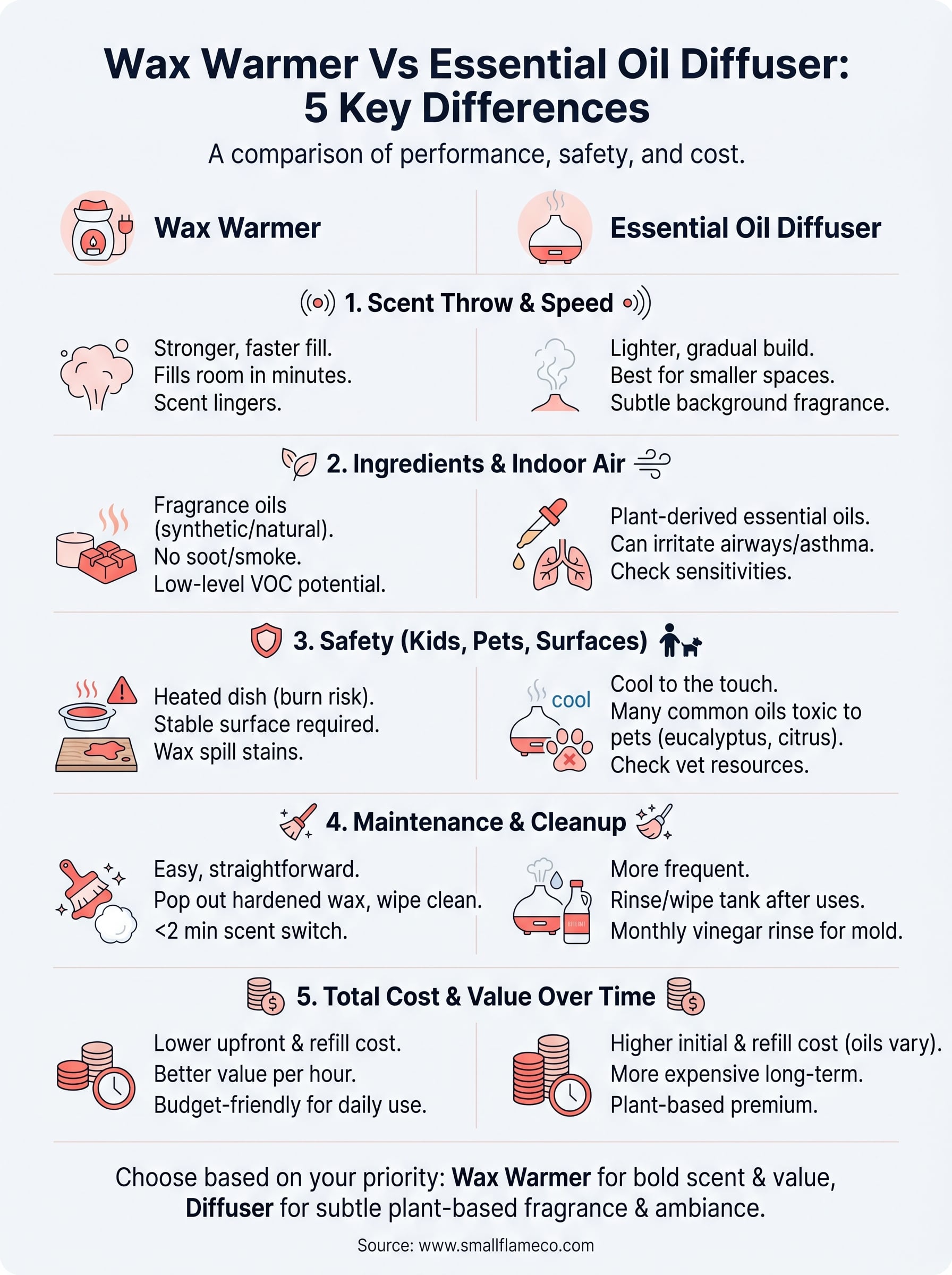
The wax warmer vs essential oil diffuser decision comes down to what your home actually needs. If you want bold scent, lower maintenance, and better value per use, a wax warmer is the stronger fit for most households. If you prefer subtle, plant-based fragrance in a smaller room and don't mind a more involved cleaning routine, a diffuser serves that preference well.
Both options work, but they work differently, and now you know exactly how. The clearest next step is to try a wax warmer with quality melts and see how the scent performs in your space before investing in anything expensive. Small Flame Candle Co. makes it easy to do that without risk. Browse the hand-poured coconut wax candles and wax melts to find a fragrance that fits your home, and start small before you commit to a full setup.