

How Long Should You Burn a Candle the First Time? Tips
You just lit a brand new candle, and it smells incredible, but if you're wondering how long should you burn a candle the first time, the answer matters more than you might think. That first burn sets the tone for your candle's entire lifespan. Get it wrong, and you'll end up with a tunneled mess that wastes wax and cuts your burn time short.
At Small Flame Candle Company, we hand-pour every candle we sell, so we know exactly how wax behaves from the moment you strike the match. We've seen plenty of customers reach out frustrated by uneven burns, and almost every time, the issue traces back to that very first lighting. A proper initial burn creates a full melt pool across the surface, which prevents tunneling and helps your candle perform the way it should.
This guide covers the recommended first-burn duration, why it matters, and practical steps to get the most out of every candle you own. Whether you grabbed one of our hand-poured jars or you're burning something from another brand, these tips apply across the board.
What the first burn changes in your candle
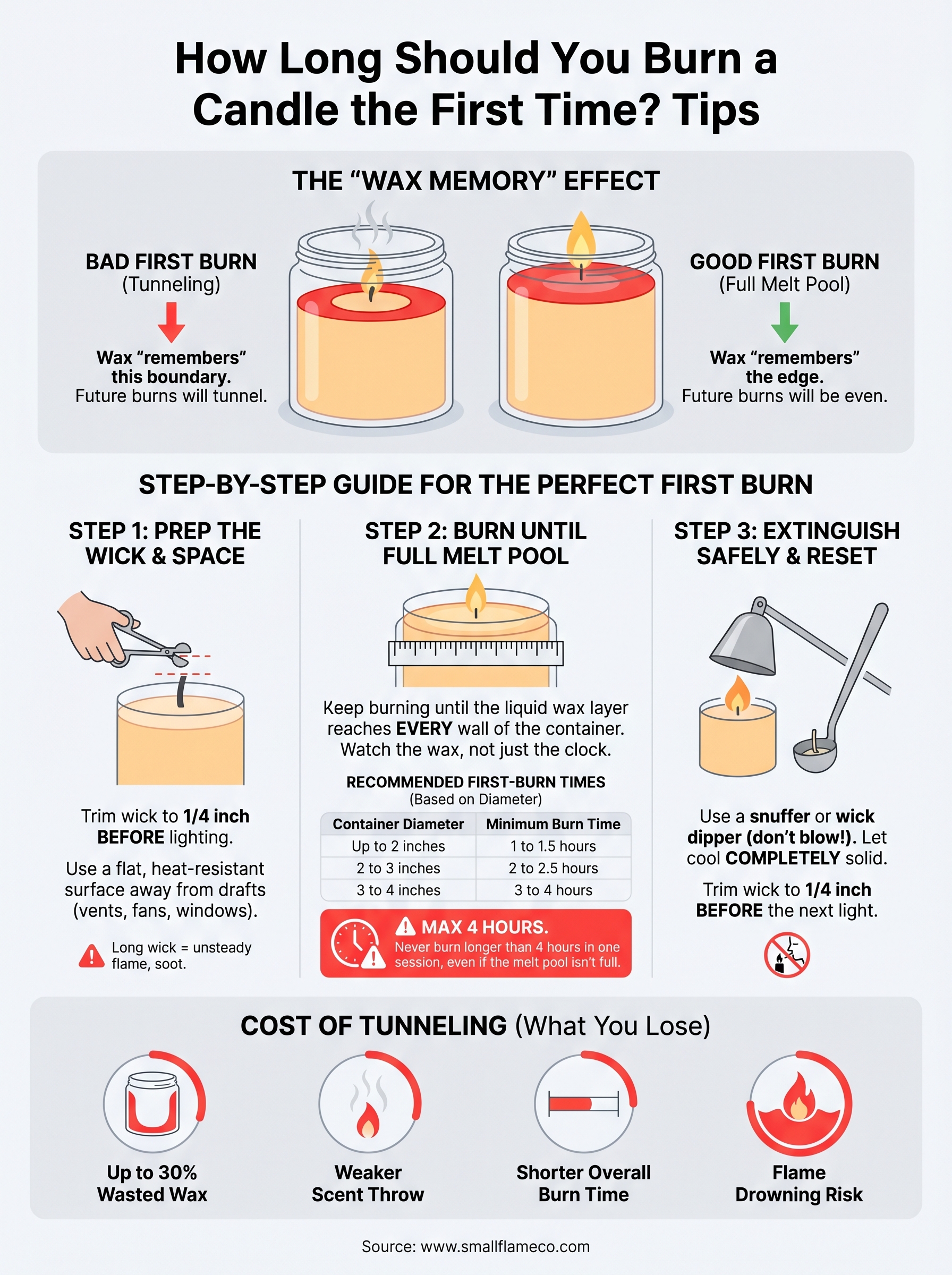
The first burn isn't just about enjoying the scent for an hour. It physically programs the wax in your candle through a process called wax memory, and that memory sticks around for every burn after. When you light a candle for the first time, the wax melts outward from the wick, and wherever that melt pool stops, the wax tends to melt to that same boundary in future burns.
How wax memory works
Candle wax, especially soy and paraffin blends, follows the path of least resistance every time it melts. If your first burn only runs for 30 minutes, the melt pool never reaches the edges of the container. From that point forward, the wax "remembers" that boundary, and the candle keeps burning down through the center while wax along the walls stays solid. That solid ring of unmelted wax is called tunneling, and it shortens your candle's useful life significantly.
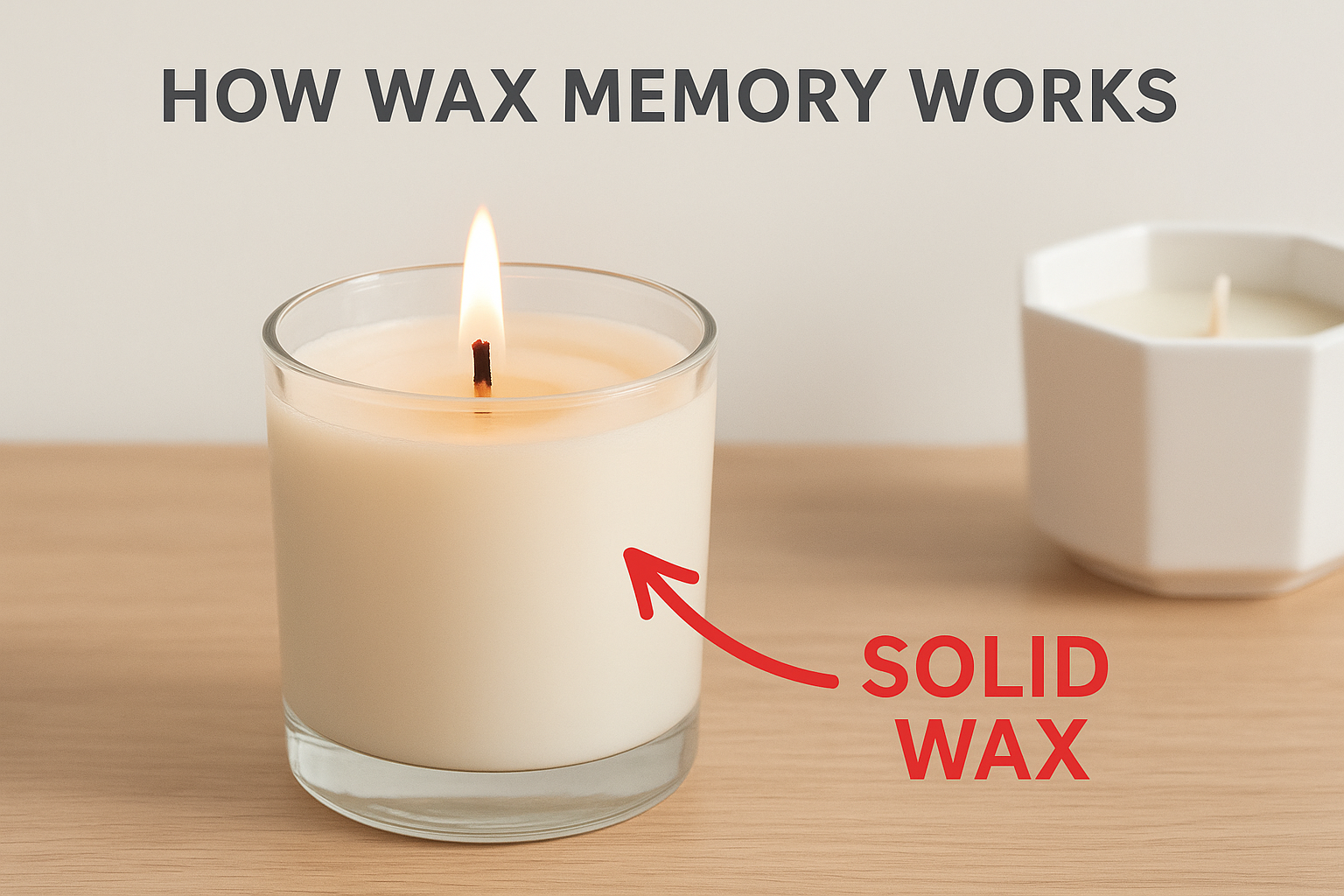
The melt pool from your first burn sets the maximum diameter for every burn that follows, so starting wide matters.
What tunneling costs you
Tunneling does more than look uneven. When wax builds up along the sides, the flame loses access to oxygen as the candle burns deeper into the tunnel. A starved flame burns smaller, throws less scent, and can eventually drown in its own melt pool. You also lose a large portion of the wax you paid for because it clings to the walls and never burns off.
Here is a quick breakdown of what tunneling actually costs you:
- Up to 30% of total wax left unburned on the walls
- Weaker scent throw as the flame shrinks lower
- Shorter overall burn time than the label suggests
- Increased risk of the flame extinguishing itself early
Step 1. Prep the wick, wax, and room
Before you light the candle, take two minutes on setup. Proper preparation before the first burn removes the most common causes of poor performance, and skipping this step is the fastest way to ruin an otherwise great candle. Think of it as a short checklist that protects your investment before you even strike the match.
Trim the wick
Your wick should be no longer than 1/4 inch before every burn, and the first burn is no exception. A long wick produces a large, unsteady flame that burns hotter than the wax requires, creates excess soot, and can scorch the container walls. Use wick trimmers or small scissors to snip it down before you light the candle.
A trimmed wick gives you a cleaner, steadier flame that melts wax evenly right from the start.
Set up the space
Place your candle on a flat, heat-resistant surface away from vents, fans, and open windows. Air movement disrupts the flame and causes uneven melting, which undermines your first burn before it can form a proper melt pool. Choose a draft-free location where the candle can sit undisturbed for the full duration of the session.
Step 2. Burn long enough for a full melt pool
Now that your candle is prepared, the core question comes down to timing. How long should you burn a candle the first time? The answer depends on letting the wax melt all the way to the container walls. Burn it until the melt pool covers the entire surface with no solid wax remaining along the edges.
How long that actually takes
The time required depends on the candle's diameter, not its height. A wider jar needs longer to build a full melt pool than a narrow votive. Use this guide:
| Container diameter | Minimum first-burn time |
|---|---|
| Up to 2 inches | 1 to 1.5 hours |
| 2 to 3 inches | 2 to 2.5 hours |
| 3 to 4 inches | 3 to 4 hours |
Never burn any candle longer than 4 hours in a single session, even if the melt pool hasn't fully formed yet.
How to confirm you're done
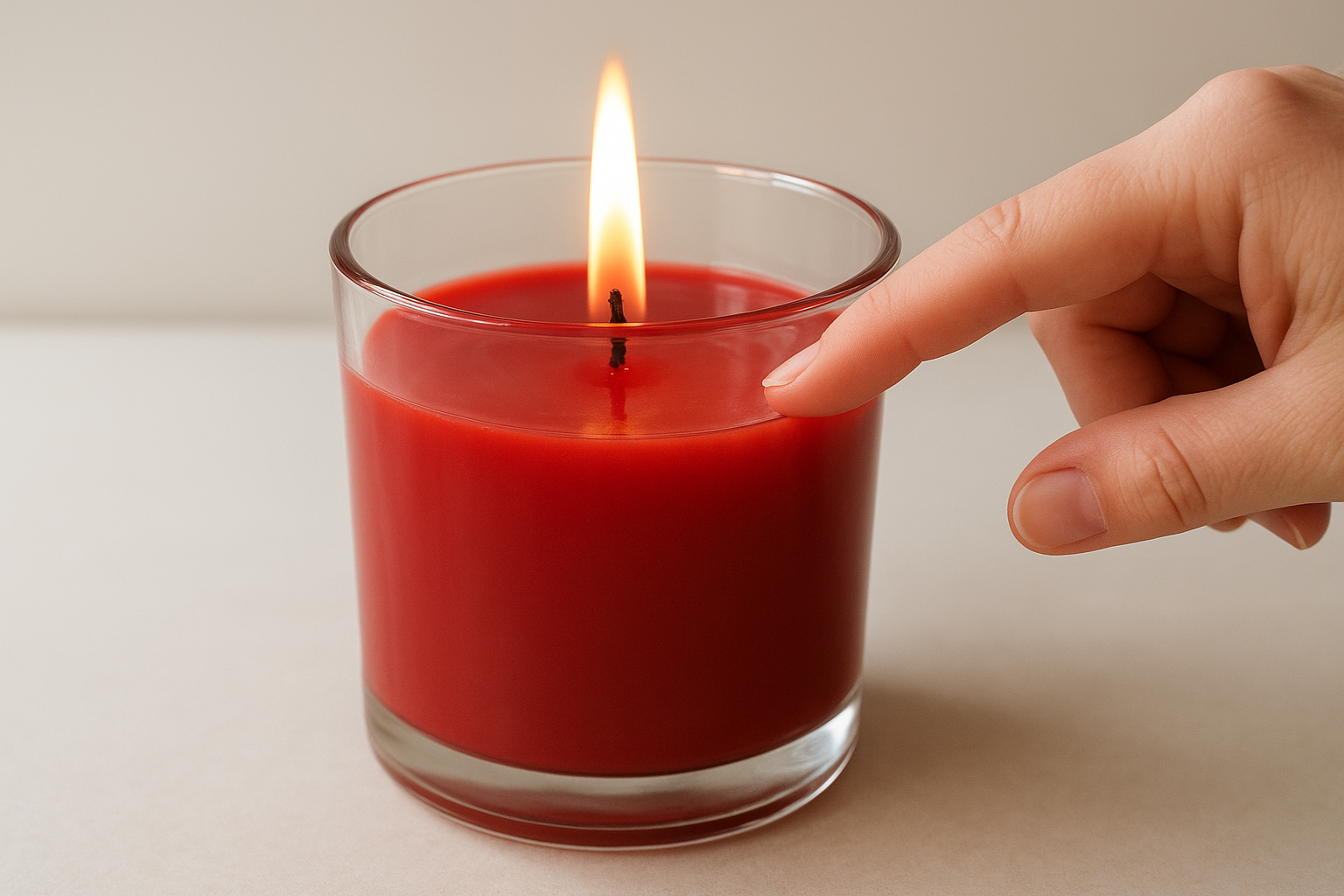
Watch the surface of the liquid wax rather than the clock. When the melted layer reaches every wall of the container with no dry patches visible, your first burn is complete and you can safely extinguish the flame.
Step 3. Extinguish safely and reset for next time
Once the melt pool reaches every wall of the container, you've completed the most important part of how long should you burn a candle the first time. Now the focus shifts to ending the session correctly so you preserve the progress you just made.
Use the right extinguishing method
Blowing out a candle sends a burst of air into the wax, which can splash the melt pool and push the wick off center. Use one of these safer methods instead:
- A candle snuffer placed over the flame cuts off oxygen without any airflow
- A wick dipper lets you bend the wick into the melt pool and lift it back up straight
A snuffer is the cleanest way to end a burn without disturbing the wax surface.
Set up for the next burn
After the flame is out, let the wax cool and solidify completely before you move the candle or replace the lid. Once fully solid, trim the wick back to 1/4 inch to prepare for the next session.
Skipping that trim causes an oversized flame on the next light, which burns through wax too quickly and produces excess soot. Two minutes of prep between sessions protects your candle's performance every time you use it.
Troubleshooting and common first-burn questions
Even when you know how long should you burn a candle the first time, things don't always go perfectly. Here are the most common issues you'll run into and what to do about each one.
The melt pool didn't reach the edges in time
If you hit the 4-hour maximum but still see dry wax along the walls, extinguish the candle and let it cool completely. On your next session, burn again until the melt pool spreads fully to the edges. This two-session approach works better than pushing past safe burn limits.
Never extend a single burn beyond 4 hours to force a full melt pool, since heat buildup becomes a safety risk.
The candle is smoking or flickering
Both problems usually point to a wick that's too long. A wick over 1/4 inch burns too hot, produces black soot, and creates an unsteady flame. Extinguish the candle, let the wax cool completely, and trim the wick back to 1/4 inch before relighting.
Flickering can also come from air movement in the room. Check for nearby vents, fans, or open windows and move the candle to a calmer spot if needed. A steady, even flame confirms that your setup and wick length are both correct.
Final check before your next light
You now have everything you need to get the most out of every candle you own. The answer to how long should you burn a candle the first time comes down to one clear rule: keep the flame going until the melt pool reaches every edge of the container, then stop before you hit four hours. That single session determines how well your candle performs for the rest of its life.
Before your next lighting, run through this quick checklist: confirm the wick is trimmed to 1/4 inch, verify your candle sits on a flat surface away from drafts, and plan enough time to let the session run its full course. Skipping any one of these steps erases the work you put in during the first burn.
If you want candles that reward good burning habits, explore the hand-poured coconut wax candles at Small Flame Candle Co. and find a scent worth doing right.