

7 Beeswax Candles Pros And Cons: Health, Cost & Burn Time
Beeswax candles have earned a reputation as the "premium" option on the candle shelf. They're natural, they smell like honey, and they come with claims about air purification that sound almost too good to be true. But when a single beeswax pillar can cost three to four times more than other candle types, you deserve a straight answer before spending that money. Understanding the real beeswax candles pros and cons helps you decide whether they belong in your home, or whether a different wax serves you better.
At Small Flame Candle Company, we hand-pour candles and spend a lot of time thinking about wax, wicks, and what actually makes a candle worth burning. We've worked with different wax types and know that no single wax is perfect for every situation. That hands-on experience is exactly why we put this guide together, to give you an honest breakdown rather than a sales pitch.
Below, we'll walk through seven specific pros and cons of beeswax candles covering health considerations, environmental impact, cost, burn time, and scent throw. Each point includes practical context so you can weigh the tradeoffs yourself. Whether you're shopping for your living room, comparing candle gifts, or just curious about what you're breathing in when you light a wick, this guide will give you the clarity you need to choose with confidence.
1. Cleaner burn with less soot
One of the most cited advantages when weighing beeswax candles pros and cons is clean combustion. When you burn a beeswax candle under normal conditions, it produces significantly less black soot than petroleum-based alternatives. That matters if you care about what goes into the air in your home, especially in smaller or less-ventilated rooms where candle residue accumulates on walls, ceilings, and air filters over months of regular use.
What "cleaner burn" means for indoor air
A "cleaner burn" refers to how completely the wax fuel combusts when lit. Beeswax has a high melting point (around 145°F) and a dense molecular structure that allows it to burn more completely, releasing fewer unburned hydrocarbons into the air compared to paraffin. Less incomplete combustion means less particulate matter floating around your living space. This isn't a dramatic health transformation, but for people who burn candles daily or in bedrooms, it's a real and measurable difference.
Beeswax burns at a higher temperature and more completely than most wax types, which directly reduces the amount of soot and airborne residue in your home.
How beeswax compares to paraffin and soy for soot
Paraffin wax is a petroleum byproduct, and it produces the most soot of the three common wax types. Soy wax burns cleaner than paraffin but still generates some particulate output, especially when fragrance oils are added at high concentrations. Pure, unfragranced, unblended beeswax sits at the top of the cleanliness scale. Once manufacturers blend beeswax with paraffin or push heavy fragrance loads, that advantage shrinks considerably.
| Wax Type | Soot Output | Key Factor |
|---|---|---|
| Beeswax (pure) | Low | Best unblended and unfragranced |
| Soy | Moderate | Rises with fragrance load |
| Paraffin | High | Petroleum-based byproduct |
What affects soot in any candle, regardless of wax
Even the best beeswax candle produces soot when you burn it incorrectly. A wick that's too long creates a large, flickering flame that pulls more wax up than it can combust cleanly. Keep these habits consistent for a cleaner burn from any candle type:
- Trim the wick to a quarter inch before every burn
- Keep the candle away from fans, vents, and open windows
- Let the melt pool reach the container's edges before extinguishing
2. Longer burn time and a brighter flame
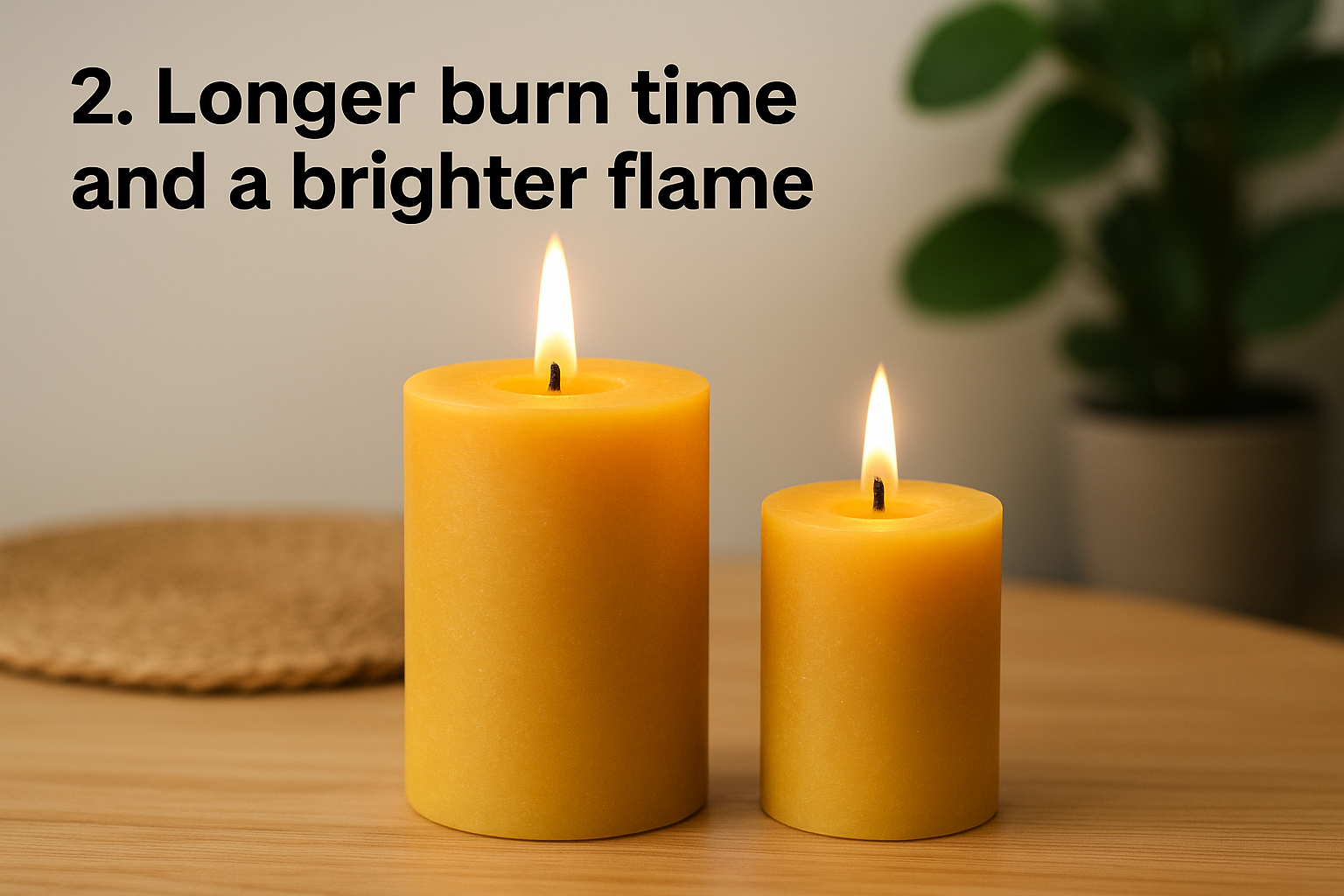
When you look at beeswax candles pros and cons, burn time is one of the clearest advantages beeswax offers. Beeswax burns slower and hotter than most other wax types, which means you get more hours out of a single candle. The flame also tends to burn brighter and more steadily, which adds a noticeably warm quality to the light in your room.
Why beeswax often lasts longer per ounce
Beeswax has a higher density than soy or paraffin, which means each ounce of wax takes longer to consume. A paraffin candle might give you around 7 to 8 hours per ounce, while a pure beeswax candle commonly reaches 10 to 12 hours per ounce under ideal conditions. That difference adds up quickly when you burn candles regularly.
Beeswax delivers roughly 30 to 50 percent more burn time per ounce compared to paraffin, making its higher price easier to justify on a per-hour basis.
How burn time changes by candle type and format
Pillar candles made from pure beeswax typically show the longest burn times because there's no container restricting the melt pool. Container beeswax candles still outperform paraffin equivalents but may show slightly shorter times due to heat retention differences in the vessel. Tapers burn quickly regardless of wax type because of their narrow diameter.
Quick ways to estimate cost per hour of burn
Divide the candle price by the stated burn hours to get your cost per hour. A $20 beeswax candle rated at 50 hours costs $0.40 per hour, while a $7 paraffin candle rated at 25 hours costs $0.28 per hour. The gap is smaller than the sticker price suggests.
3. Natural scent, but fewer fragrance options
Scent is often the first thing people notice about a candle, and it's one of the most important beeswax candles pros and cons to understand before you buy. Beeswax has a naturally appealing aroma, but that same character creates real limits on how much added fragrance it can carry effectively.
What pure beeswax smells like and why
Pure beeswax carries a warm, honey-like scent that comes from the natural compounds left over from its production inside the hive. You'll notice light floral and sweet undertones when the candle is both cold and burning. This built-in scent is subtle, which many people find pleasant without being overwhelming. The natural aroma comes from esters, fatty acids, and pollen residue that remain in minimally processed beeswax.
The natural scent of beeswax is one of its most distinctive qualities, but it's quiet enough that it won't fill a large room on its own.
Why heavy fragrance can be tricky in beeswax
Beeswax has a denser molecular structure than soy or paraffin, which means fragrance oils don't bind to it as easily. Most beeswax candles max out at a 6 to 8 percent fragrance load before the oils pool or separate. Push past that, and you get uneven scent throw or oil that seeps out entirely.
When soy or blends make more sense for strong scent
If you want bold, room-filling fragrance, soy wax or a soy-beeswax blend will serve you better. Soy accepts higher fragrance concentrations and releases scent more evenly as the wax pool spreads. Blended candles give you some of beeswax's burn benefits while still delivering the strong throw you're after.
4. Air purification claims: what to believe
The air purification angle shows up constantly in discussions about beeswax candles pros and cons, and it deserves a direct, honest look. Some candle sellers claim that burning beeswax releases negative ions that neutralize airborne pollutants, dust, and allergens. Here's what the evidence actually supports.
Where the "negative ions" claim comes from
The idea traces back to research on negative ion generators, which are electronic air purifiers shown to reduce certain airborne particles in controlled settings. Proponents borrowed that concept and applied it to beeswax combustion, suggesting the flame produces a similar effect. No peer-reviewed study has confirmed that a beeswax candle flame generates negative ions in quantities meaningful enough to affect indoor air quality.
The negative ion claim for beeswax candles lacks solid scientific backing, so treat it as marketing language until evidence says otherwise.
What we can say confidently vs what we can't
What you can say with confidence: pure beeswax burns cleaner than paraffin and introduces fewer combustion byproducts into your home. That's a real benefit. What you cannot say: that burning beeswax actively cleans or purifies your air the way a dedicated air filtration system does. The distinction matters when you're making purchasing decisions based on health claims.
Practical alternatives for improving indoor air
If indoor air quality is a priority for you, pair your candle use with proven solutions like a HEPA air purifier or regular ventilation. Open a window while burning any candle, regardless of wax type, to keep fresh air circulating and reduce any accumulated particulates from the burn.
5. Higher price upfront, sometimes higher value
When you weigh beeswax candles pros and cons, cost is usually the sticking point. A pure beeswax candle routinely runs two to four times more than a comparable paraffin or soy option, and that gap is real enough to affect most buying decisions.
Why beeswax costs more than soy and paraffin
Beeswax is a labor-intensive byproduct of honey production. Bees produce roughly eight pounds of honey for every one pound of wax, which keeps supply naturally limited. Harvesting, filtering, and processing that wax adds cost at every stage before it ever reaches a candle maker, and those costs pass directly to you.
When the higher price feels worth it
If you burn candles daily or in shared living spaces, the longer burn time and reduced soot output make beeswax a reasonable investment. You pay more upfront, but you replace the candle less often and expose your home to fewer combustion byproducts. For someone who burns a candle two to three hours every day, that trade-off typically works in beeswax's favor over a full year.
The higher price of beeswax candles becomes easier to justify when you factor in burn hours rather than sticker price alone.
How to avoid overpaying for "beeswax" blends
Many candles labeled "beeswax" contain only a small percentage of actual beeswax mixed with paraffin or soy. Check the ingredient list for "100% pure beeswax" before assuming you're getting the full benefit. A blend is not inherently bad, but you should pay a blend price, not a pure beeswax price.
6. Sustainability and sourcing can vary a lot
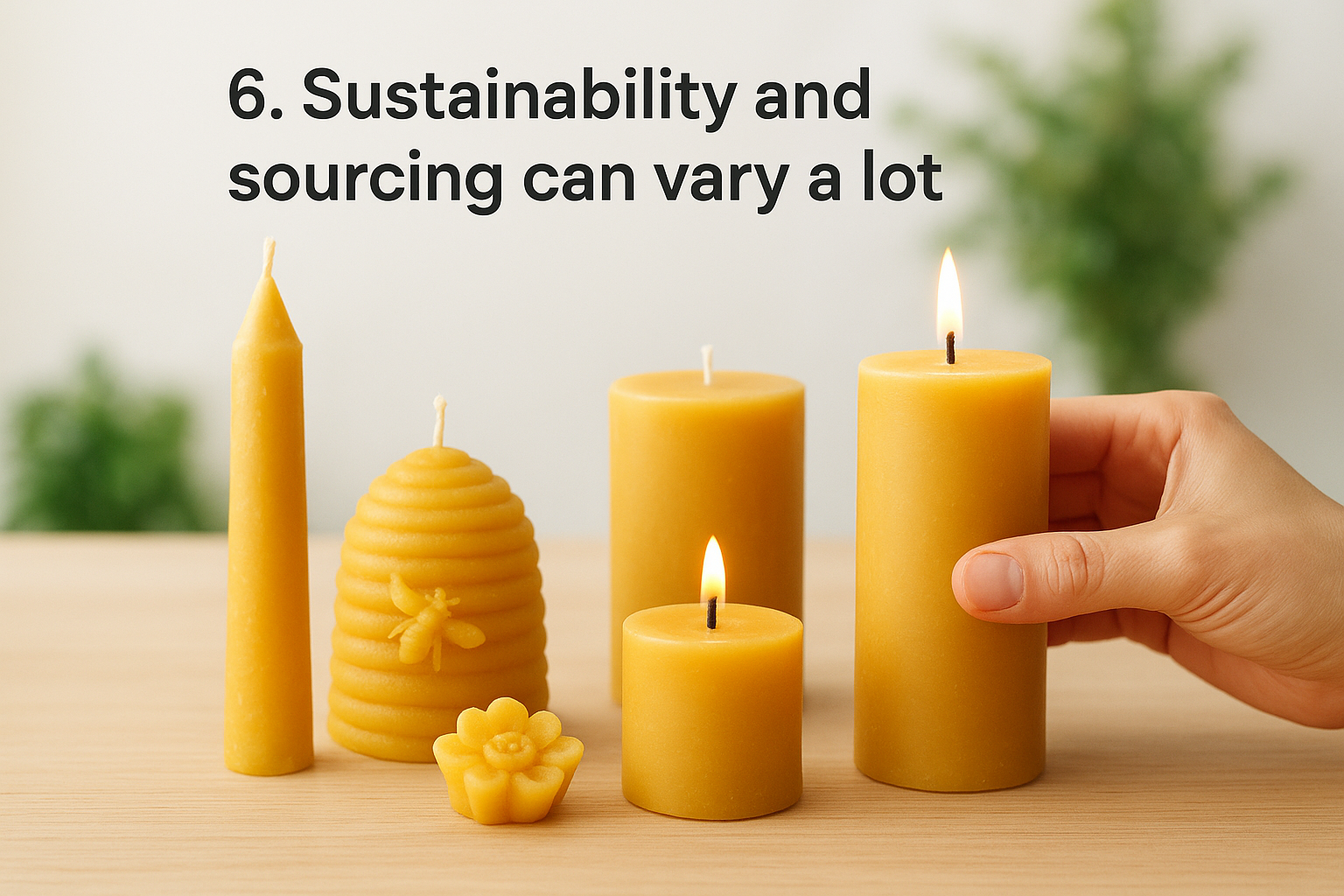
Sustainability is a real factor in the beeswax candles pros and cons discussion, but it's not as straightforward as "natural equals responsible." Where and how the beeswax is sourced changes the environmental story significantly, and not every candle on the shelf tells that story clearly.
Beeswax as a renewable material and the trade-offs
Beeswax is a genuinely renewable material produced by honeybees without synthetic processes or fossil fuel inputs, which gives it a clear edge over paraffin on the sustainability scale. However, large-scale commercial beekeeping raises separate concerns, including colony stress, habitat disruption, and pressure on wild pollinator populations, which offset some of that environmental credit depending on how the operation is run.
Beeswax is renewable, but the sustainability of any specific candle depends heavily on how responsibly that wax was harvested.
What "ethical" beeswax sourcing looks like
Ethical sourcing means the beekeeper prioritizes colony health over maximum yield and works in ways that support local pollinator populations rather than deplete them. Small-scale, regional apiaries generally meet this standard better than mass-production operations.
Makers who name their beeswax suppliers or describe their sourcing practices give you a clearer picture of what you're actually buying. When a brand stays vague about origins, that vagueness usually signals a cost-driven supply chain rather than a values-driven one.
Labels to look for and red flags to avoid
Look for candles that specify "100% pure beeswax" and mention the source region or supplier. Red flags include terms like "natural wax blend" or no ingredient disclosure at all, which often signal a low-percentage beeswax mix sold at a premium.
7. Not vegan, and not perfect for everyone
One final area in the beeswax candles pros and cons conversation is who these candles actually work for. Beeswax is an animal-derived product, which means it doesn't fit every buyer's values or physical needs.
Vegan considerations and common objections
Beeswax comes from bees, so it doesn't meet vegan standards by definition. If you follow a vegan lifestyle, soy wax or coconut wax candles offer a plant-based alternative without sacrificing burn quality.
Some people argue that beeswax harvesting harms colonies, while others point out that responsible beekeeping supports healthy hives. The debate isn't settled, so your personal values and sourcing research will guide the right choice for you.
If vegan sourcing matters to you, soy and coconut wax candles are the most straightforward alternatives to beeswax.
Allergy and sensitivity considerations
Certain people are sensitive or allergic to beeswax or the natural pollen compounds retained from minimal processing.
If you react to honey or bee products in other contexts, test a small beeswax candle in a well-ventilated space before committing to regular use. More heavily filtered beeswax contains fewer pollen residues, which may reduce that risk for people with mild sensitivities.
Safety basics: wick choice, containers, and heat
Every candle carries basic safety requirements, and beeswax is no exception. Because beeswax burns hotter than other wax types, it needs a correctly sized wick to avoid overheating the container. A wick that's too large causes excess heat buildup that can crack glass or scorch surfaces below.
Keep these habits consistent with any beeswax candle:
- Use heat-safe vessels rated for candle use
- Trim the wick to a quarter inch before each burn
- Limit burn sessions to four hours or less
- Never leave a lit candle unattended
Final take
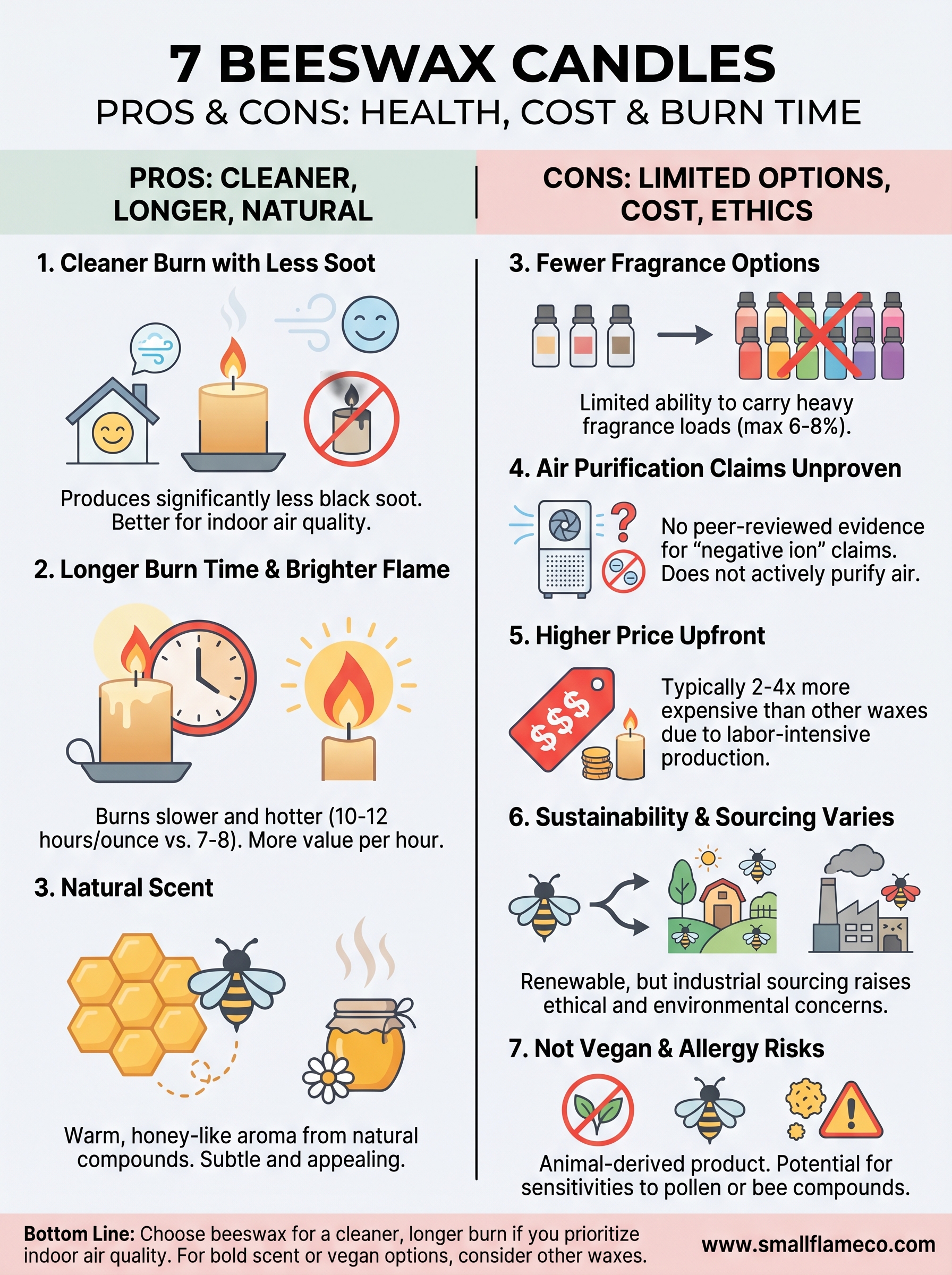
Beeswax candles offer real advantages: a cleaner burn, longer life per ounce, and a natural honey scent that no synthetic wax replicates. But working through the full picture of beeswax candles pros and cons reveals genuine trade-offs around cost, fragrance limitations, vegan considerations, and sourcing transparency. Whether beeswax earns a spot in your home depends on how you actually use candles and what you value most.
If you burn candles daily and want fewer combustion byproducts in your home, beeswax justifies the higher price over time. If you prioritize bold fragrance throw or a plant-based option, a different wax will serve you better without compromise.
Small Flame Candle Co. hand-pours candles using a premium coconut-soy wax blend that delivers a clean, soot-free burn with strong scent throw at an accessible price point. Browse the coconut wax candle collection to find a candle that fits your space and your values.