

9 Best Candle Jars for Candle Making (Heat-Safe Picks)
Every candle we hand-pour at Small Flame Candle Company starts with one critical decision: the jar. Before the wax is melted, before the fragrance is measured, we pick the vessel, because the wrong one can crack, overheat, or ruin an otherwise perfect candle. After years of testing containers for our own product line, we've learned exactly what separates the best candle jars for candle making from the ones that end up in the reject pile. That knowledge shaped this guide.
Choosing a candle jar isn't just about looks. The material, thickness, and heat tolerance of your container directly affect burn performance, scent throw, and safety. Glass, tin, ceramic, each has trade-offs that matter whether you're pouring your first batch at the kitchen table or scaling up a small business.
Below, we break down nine heat-safe candle jars worth your money, covering what they're made of, where to buy them, and which types work best for specific wax and wick combinations. No filler, just the containers we trust and the details you need to pick the right one.
1. Small Flame Candle Company jars you can repurpose
If you've ordered from Small Flame Candle Company, you already have heat-tested glass vessels sitting on your shelf. Our candles ship in thick-walled glass jars chosen specifically for thermal stability and pour performance, which means they hold up just as well on a second pour as they did on the first. Washing them out and reusing them is one of the most cost-effective ways to source containers for a home candle project without ordering anything new.
What it is and why it works
Small Flame jars are thick-walled glass containers with a straight or slightly tapered profile depending on the candle size you ordered. The glass is built to handle repeated heat cycles without stress fractures, which is the baseline requirement for any safe candle vessel. Because these jars have already held a complete candle burn, you can confirm material integrity before you pour a single drop of fresh wax into them.
Repurposing a jar you've already burned through is one of the few ways to verify heat compatibility before committing to a full batch of new candles.
Best for
These jars perform best with soy wax and coconut-blend waxes, which burn cooler than paraffin and put less thermal stress on the glass over time. They suit several candle-making scenarios well:
- Beginners testing custom fragrance combinations without buying dedicated containers upfront
- Makers who want a proven vessel before investing in bulk supplies
- Gift projects where the original jar profile already fits the look you're going for
Sizes and wicking notes
Small Flame candles range from four-dollar sizes up to sixteen-dollar vessels, giving you a practical spread of interior diameters to work with. Smaller jars suit a single CD or ECO series wick, while larger containers may need a two-wick setup to prevent tunneled burns and uneven wax pooling. Always measure the interior diameter precisely and cross-reference a wick manufacturer's sizing chart before your first test pour.
Typical price and where to get it
The jars cost you nothing beyond the original candle purchase since you're repurposing what you already own. Head to Small Flame Candle Company to pick a candle in the size you need, burn it down fully, then remove residual wax with boiling water before your next pour. The free five-fragrance sampler is also worth grabbing if you want a smaller container to test your wick setup before scaling up.
2. Straight-sided thick glass tumbler jars
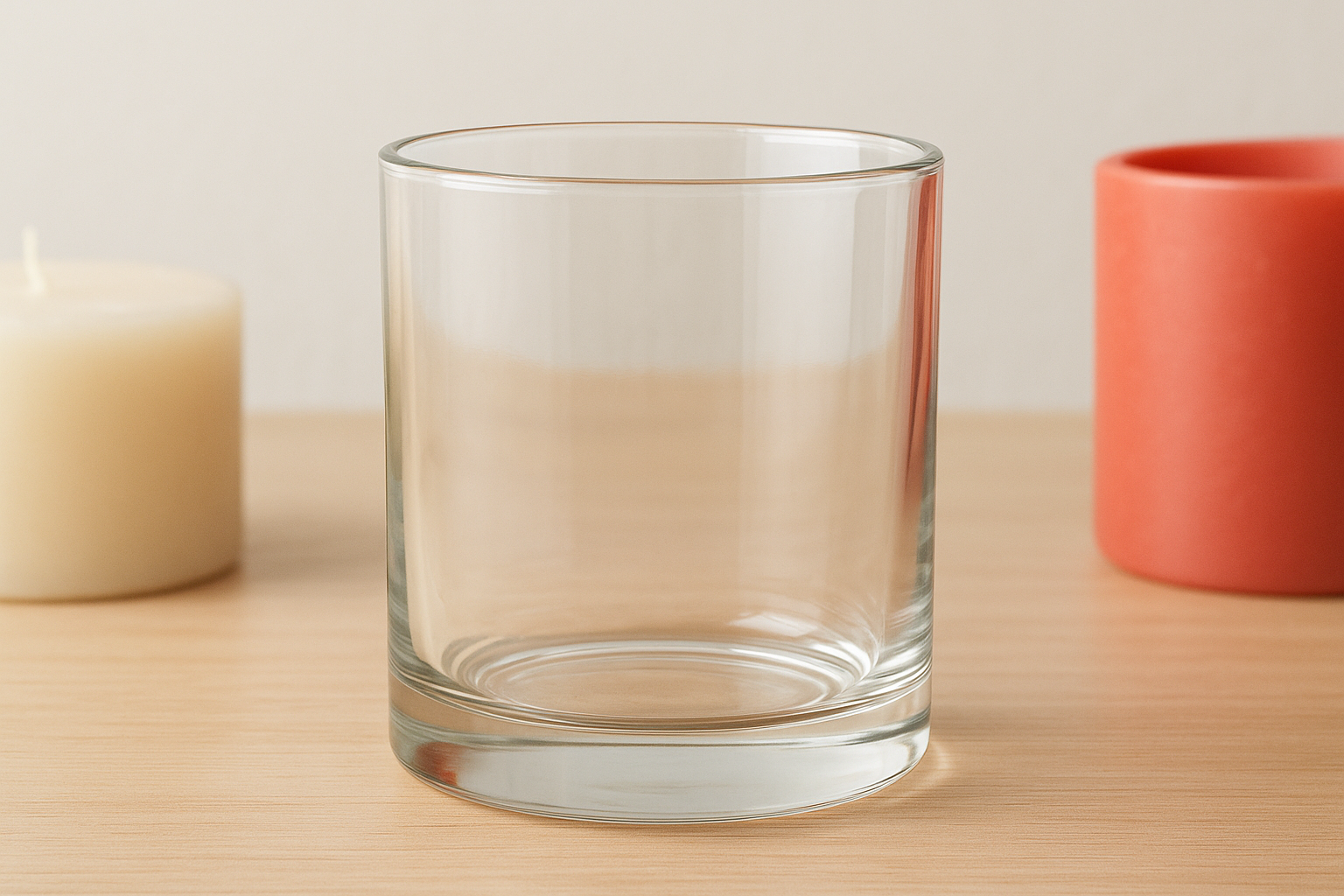
Straight-sided thick glass tumblers are the workhorse container you'll find in most serious candle operations. Their uniform cylindrical shape makes wick centering straightforward and gives you a consistent wax pool from edge to edge, which cuts down the tunneling problems that plague tapered or irregular vessels.
What it is and why it works
These jars are typically borosilicate or heavy soda-lime glass with walls thick enough to handle repeated heat cycles without cracking. The straight sides eliminate the internal pressure variations that thinner or tapered glass develops as wax heats and cools. For anyone researching the best candle jars for candle making, this profile is a reliable starting point because it performs predictably across most wax types.
Thick walls are non-negotiable with glass candle vessels. Thin-walled glass concentrates heat at stress points and raises the risk of fracture mid-burn.
Best for
Straight-sided tumblers suit soy, paraffin, and coconut wax blends without issue. They work especially well for makers who want clean, label-friendly surfaces for branding or gifting, or containers that photograph well for product listings.
Sizes and wicking notes
These jars typically run from 4 oz to 16 oz, with interior diameters between 2.5 and 3.5 inches. A single CD or ECO series wick handles most 8 oz versions well. Anything above 3 inches in diameter usually benefits from a two-wick setup to reach a full melt pool.
Typical price and where to get it
Expect to pay $1 to $3 per jar depending on size and quantity. Amazon carries bulk options from verified glass suppliers, making it easy to order a small test batch before committing to a full case.
3. Ball or Kerr wide-mouth mason jars
Ball and Kerr mason jars are one of the most accessible container options for anyone just getting into candle making. They're widely available at grocery stores, hardware stores, and online, so you can pick up a case without waiting on a specialty supplier.
What it is and why it works
Mason jars are made from thick, tempered soda-lime glass designed to withstand the heat cycles of canning, which makes them well-suited for candle making. The wide-mouth opening gives you easy wick placement and pouring access, and their durability under heat has already been tested by decades of kitchen use.
Wide-mouth mason jars are one of the few containers you can source locally the same day you decide to start a candle project.
Best for
These jars work best with soy and beeswax blends, which burn at lower temperatures and complement the rustic look mason jars naturally carry. They're a strong pick for:
- Gift candles and seasonal batches where cost per unit matters
- Makers who want a recognizable, farmhouse-style aesthetic
- Beginners sourcing containers without a bulk supplier account
Sizes and wicking notes
Ball and Kerr jars come in 4 oz, 8 oz, 12 oz, and 16 oz sizes. The 8 oz half-pint is the most popular for candles, with an interior diameter around 2.75 inches that pairs well with a single CD-18 or ECO-10 wick. Use two wicks on anything 12 oz or larger to avoid tunneling and uneven wax pooling.
Typical price and where to get it
A 12-pack of 8 oz wide-mouth jars costs between $10 and $14 on Amazon, making them one of the most cost-efficient picks among the best candle jars for candle making.
4. Amber apothecary jars with metal lids
Amber apothecary jars bring a vintage pharmacy aesthetic that appeals to buyers who want their candles to look like something worth displaying, not just burning. The amber tint is not purely decorative. It filters light in a way that makes the wax color and texture look intentional rather than accidental, which matters a lot if you're selling or gifting your candles.
What it is and why it works
These jars are thick-walled amber glass containers with a slightly tapered profile and a screw-top metal lid. The amber glass acts as a mild UV filter, which slows fragrance oil degradation in candles that sit on shelves before they're burned. The metal lid seals the jar between uses and helps retain scent throw over a longer shelf life compared to open or lidless glass options.
UV exposure breaks down fragrance molecules over time, so an amber jar gives your candles a longer effective shelf life than clear glass does.
Best for
Amber apothecary jars suit soy and coconut wax blends best. They're a strong match for makers targeting herbal, botanical, or earthy fragrance profiles where the amber tone reinforces the scent story, and for small-batch gift sets where packaging and presentation carry as much weight as the candle itself.
Sizes and wicking notes
Most apothecary-style jars run 4 oz to 9 oz, with interior diameters between 2.25 and 2.75 inches. A single ECO-10 or CD-16 wick handles most of these sizes cleanly without requiring a two-wick setup.
Typical price and where to get it
Expect to pay $1.50 to $3.50 per jar depending on size and quantity. Amazon carries bulk listings from glass suppliers in case quantities that bring the per-unit cost down meaningfully once you're ready to scale beyond a test batch.
5. Status-style candle jars with fitted lids
Status-style jars are the premium tier of candle containers, built to look intentional before anyone lights a wick. These thick glass vessels pair a wide base with a heavy fitted lid that seals between burns.
What it is and why it works
Status-style candle jars are heavy-walled glass containers with a fitted glass or metal lid sitting flush inside the rim. The added mass distributes heat more evenly, cutting the risk of hot spots and thermal fractures.
A sealed lid also slows fragrance evaporation, keeping scent throw stronger over the shelf life and making these a strong pick among the best candle jars for candle making.
Tight-fitting lids protect the wax surface from dust and keep fragrance molecules intact from pour day to burn day.
Best for
These jars suit soy and coconut wax blends poured for retail or gifting. They work especially well for high-fragrance-load scents that benefit from lid retention between uses.
- Gift sets featuring matching vessels across scents
- Retail lines where packaging drives the sale
Sizes and wicking notes
Most status-style jars run 8 oz to 12 oz, with interior diameters between 2.75 and 3.25 inches. A single CD-18 or ECO-12 wick handles the 8 oz size cleanly.
Anything wider than 3 inches in diameter needs two wicks to reach a full melt pool without tunneling toward the center.
Typical price and where to get it
These jars run $3 to $6 per unit, reflecting the heavier glass and lid hardware involved.
Check bulk case listings on Amazon to bring the per-unit cost down once your wick and wax setup is confirmed in this profile.
6. Frosted glass jars with bamboo lids
Frosted glass jars with bamboo lids hit a specific aesthetic that clear glass and metal tins simply cannot replicate. The matte, diffused surface softens the look of the wax inside and pairs naturally with organic, plant-based fragrance profiles like eucalyptus, cedar, or fresh linen.
What it is and why it works
These containers are standard soda-lime or borosilicate glass jars treated with an acid-etching or sandblasting process to create the frosted exterior finish. The bamboo lid sits on top as a fitted cap, adding a natural material contrast that elevates the presentation without adding much cost. The glass wall thickness on quality frosted jars matches that of clear tumbler jars, so heat performance stays consistent across wax types.
Frosted jars hide minor wax imperfections like sinkholes or adhesion lines better than clear glass does, which is a real advantage during early test pours.
Best for
Frosted jars with bamboo lids work best for soy and coconut wax blends since those waxes burn cooler and keep the lid material safe from prolonged heat exposure. They are among the best candle jars for candle making when your target buyer cares about shelf presence and natural materials.
Sizes and wicking notes
Most frosted glass jars run 4 oz to 10 oz, with interior diameters between 2.25 and 2.75 inches. A single CD-16 or ECO-10 wick handles most sizes in this range without requiring a two-wick setup.
Typical price and where to get it
Expect to pay $2 to $4 per jar for bulk case orders. Amazon carries multiple frosted glass jar listings in case quantities that reduce the per-unit cost once your setup is confirmed.
7. Seamless metal candle tins with lids
Seamless metal tins are the most portable and durable container option available to candle makers. Unlike glass, they won't shatter if knocked off a shelf, and their tight-fitting lids lock in scent throw between burn sessions effectively.
What it is and why it works
These containers are aluminum or tin-plated steel vessels manufactured without seams along the sides, which eliminates weak points that could warp or buckle under sustained heat. The metal walls conduct heat differently from glass, spreading warmth across the entire container rather than concentrating it at the base. This makes them a reliable pick among the best candle jars for candle making when portability matters more than visual display.
Metal tins heat up faster than glass, so they pair best with waxes that have a lower melt point to avoid overheating the exterior.
Best for
Seamless tins work best with soy wax and paraffin blends that stay within a controlled melt point. They suit travel candles, outdoor market products, and sample-size gift sets where lightweight packaging and breakage resistance matter most.
Sizes and wicking notes
Most tins run from 2 oz to 8 oz, with interior diameters between 2 and 3 inches. A single CD-12 or ECO-8 wick handles the most common 4 oz size cleanly without producing excess soot against the metal walls.
Typical price and where to get it
Tins typically cost $0.50 to $1.50 per unit in bulk case quantities. Amazon carries verified listings in quantities of 12, 24, and 48 units that bring your per-unit cost down meaningfully as your batch size grows.
8. Glazed ceramic candle vessels
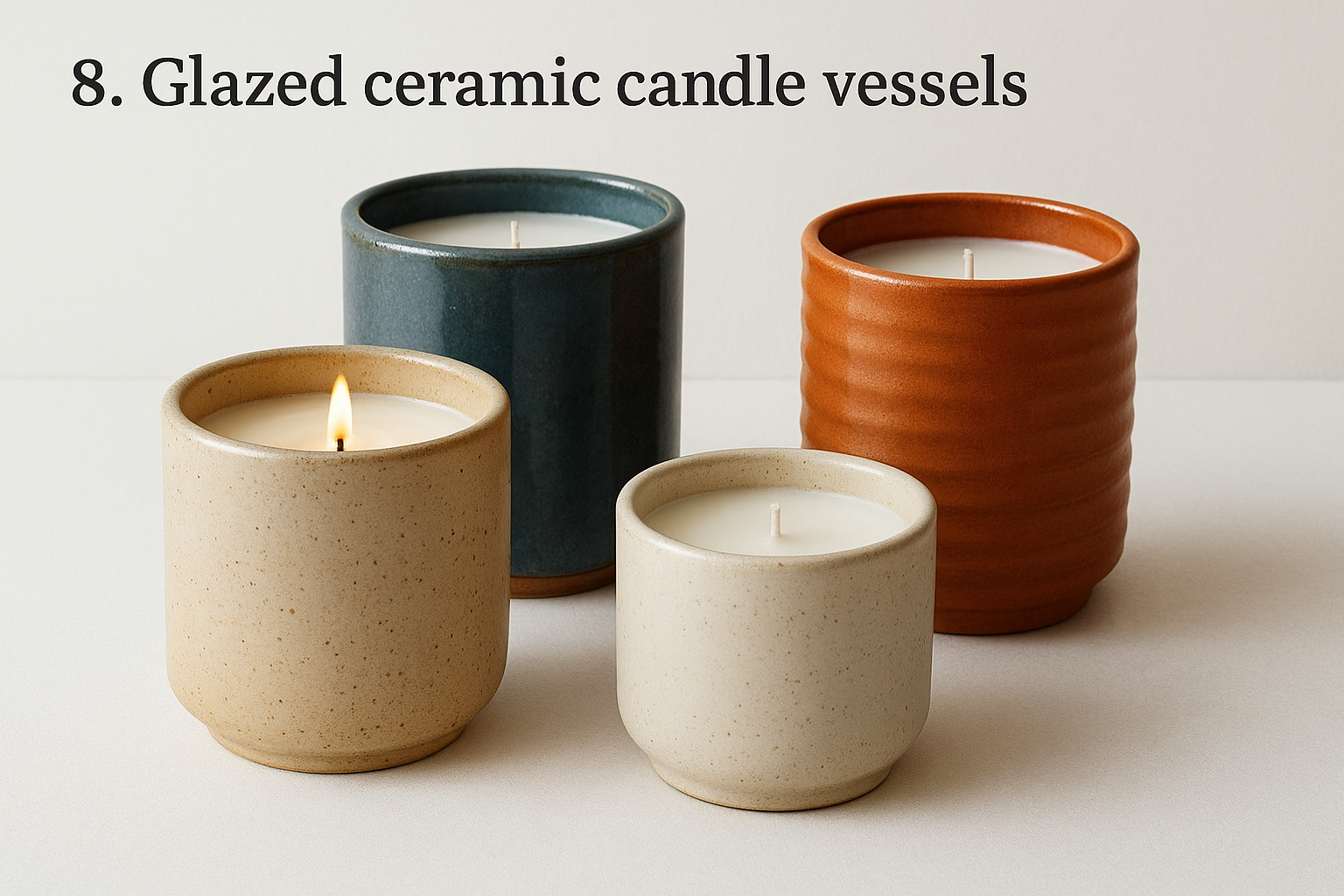
Glazed ceramic vessels bring weight and texture to a candle lineup that glass and metal cannot match. Their dense walls hold heat differently from glass, producing a slower, more even burn that suits waxes needing sustained warmth to release their fragrance load fully.
What it is and why it works
Glazed ceramic jars are kiln-fired clay or stoneware vessels coated with a glass-like glaze that seals the porous surface and makes the interior safe for candle wax. The glaze prevents wax from seeping into the ceramic body, which would cause uneven burns or structural weakening over time. These containers rank among the best candle jars for candle making when visual impact matters as much as burn performance.
Confirm that any ceramic vessel has been kiln-fired to at least cone 6 and carries a fully sealed glaze before you pour wax inside it.
Best for
Glazed ceramic vessels suit soy and coconut wax blends that burn cooler and keep ceramic walls safe from thermal stress. They are a strong pick for:
- Home decor candles where the vessel stays on display long after the wax is gone
- Gift sets where ceramic texture and finish add visual weight to the packaging
Sizes and wicking notes
Most glazed ceramic vessels run 6 oz to 12 oz, with interior diameters between 2.5 and 3.25 inches.
A single ECO-12 or CD-18 wick handles most mid-size ceramic vessels without generating excess heat against the walls.
Typical price and where to get it
Glazed ceramic vessels typically cost $3 to $8 per unit depending on size and finish. Amazon carries bulk listings in case quantities from verified ceramic suppliers that bring your per-unit cost down once your wick testing is complete.
9. Sealed concrete or terrazzo vessels
Sealed concrete and terrazzo vessels fill a niche no other material covers. Their thick cast walls absorb heat gradually, which creates a gentler thermal environment for the wax inside, and their dense, textured exterior gives a finished candle a look that immediately reads as intentional and premium rather than off-the-shelf.
What it is and why it works
Concrete and terrazzo vessels are cast stone or aggregate composite containers sealed with a penetrating polyurethane or epoxy coat that locks the porous surface and keeps it safe for direct wax contact. Without that seal, liquid wax seeps into the material, causes uneven burns, and weakens the vessel structure over time. A fully sealed concrete jar distributes heat evenly and holds up to repeated burn cycles reliably.
Always confirm the interior of any concrete or terrazzo vessel carries a complete, non-porous seal before you pour wax into it.
Best for
These vessels rank among the most distinctive picks in the best candle jars for candle making category. They work best when you want a high-end result:
- Artisan retail lines where the vessel itself drives the purchase decision
- Soy and coconut wax blends that burn cooler and put less thermal stress on cast material
Sizes and wicking notes
Most sealed concrete vessels run 4 oz to 10 oz, with interior diameters between 2.25 and 3 inches. A single ECO-10 or CD-16 wick handles most sizes in this range without overheating the vessel walls or producing excess soot.
Typical price and where to get it
Sealed concrete and terrazzo vessels typically cost $4 to $10 per unit, making them the priciest category in this guide. Check Amazon for bulk listings from verified suppliers once your wax and wick setup is confirmed through test pours.
Final thoughts
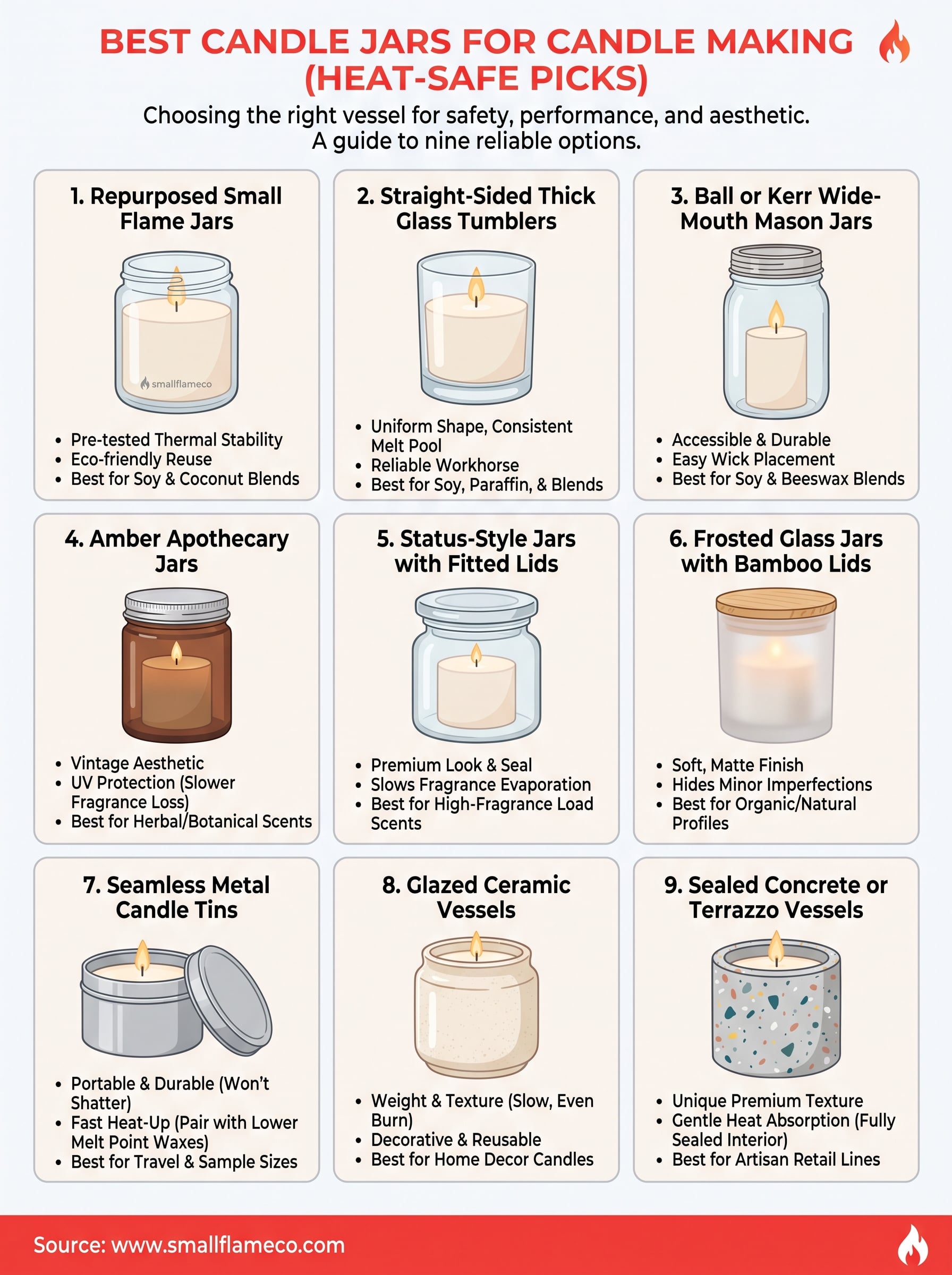
Picking from the best candle jars for candle making comes down to three factors: the wax you're using, the aesthetic you're building toward, and how much thermal stress the vessel can safely handle. Glass tumblers and mason jars cover most beginner needs at a low cost. Metal tins handle portability. Ceramic, concrete, and terrazzo add visual weight when the vessel itself needs to sell the candle.
Start with one or two container types, run proper wick tests before pouring a full batch, and let the burn results guide your next purchase rather than committing to bulk quantities upfront. That approach saves material waste and gives you real performance data before you scale.
If you want to see what coconut-soy blends look like in well-matched vessels, browse the Small Flame hand-poured coconut wax candle collection for a practical reference point before your next pour.