

Scent Throw Meaning: Cold Throw Vs Hot Throw In Candles
You light a candle, wait a few minutes, and… nothing. The room smells exactly the same. That's a scent throw problem, and understanding scent throw meaning starts with knowing that not every candle fills a room the same way. Some candles smell incredible in the jar but barely register once lit. Others seem faint on the shelf, then flood an entire space with fragrance the moment the wax pool forms.
At Small Flame Candle Company, we hand-pour every candle with scent throw front of mind. It's one of the most common questions we get: why does this candle smell strong in the store but weak at home? The answer comes down to two distinct types of scent throw, cold throw and hot throw, and how wax, fragrance load, and wick size all work together (or against each other) to push scent into the air.
This article breaks down exactly what scent throw is, explains the difference between cold and hot throw, and covers the factors that make one candle fill a room while another barely whispers. Whether you're shopping for a candle that actually performs or just curious about why fragrance strength varies so much, you'll walk away with a clear understanding of what to look for, and what to avoid.
Why scent throw matters for candle quality
Scent throw is the measure of how well a candle distributes fragrance into a room. When you buy a candle, you're paying for a fragrance experience, not just a decorative object. A candle that fills your living room costs the same on paper as one that barely registers, but the actual value gap between them is enormous. That difference in performance comes down entirely to scent throw, and it's why two candles at the same price point can feel completely different once you bring them home.
A candle's scent throw is the single clearest indicator of whether that candle will actually perform in your space, or just sit there looking nice.
The connection between fragrance load and scent output
Understanding scent throw meaning gives you a real framework for evaluating candles before you commit to a purchase. Fragrance load, the percentage of fragrance oil blended into the wax before pouring, is one of the first factors that determines how strong a candle performs. A low fragrance concentration often produces weak results, no matter how appealing the scent description reads on the label.
Wax type plays an equally important role. Soy wax, paraffin, and coconut wax each bind and release fragrance oil at different rates. Soy wax holds fragrance well but typically requires a longer cure time before scent throw reaches its full potential. Paraffin wax tends to produce a stronger hot throw right away because of how it releases fragrance when heated.
Why wick size completes the picture
Wick size determines the size of your melt pool, the liquid wax that forms around the flame during a burn. Without a full, even melt pool that reaches the edges of the jar, fragrance oil never fully releases into the air. A undersized wick tunnels straight down through the wax, leaving fragrance oil trapped in unmelted wax around the sides where it does nothing for your room.
Cold throw vs hot throw in plain English
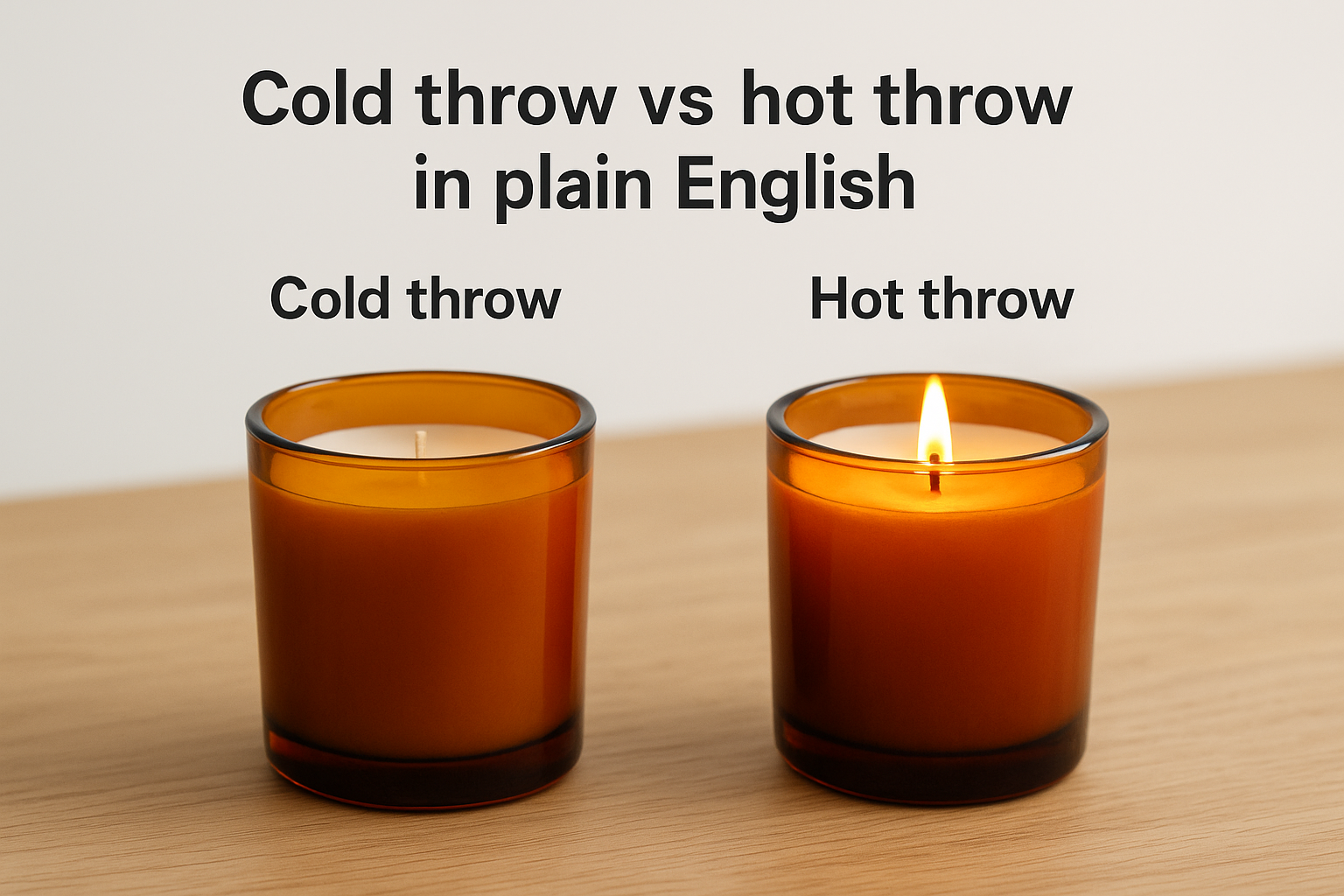
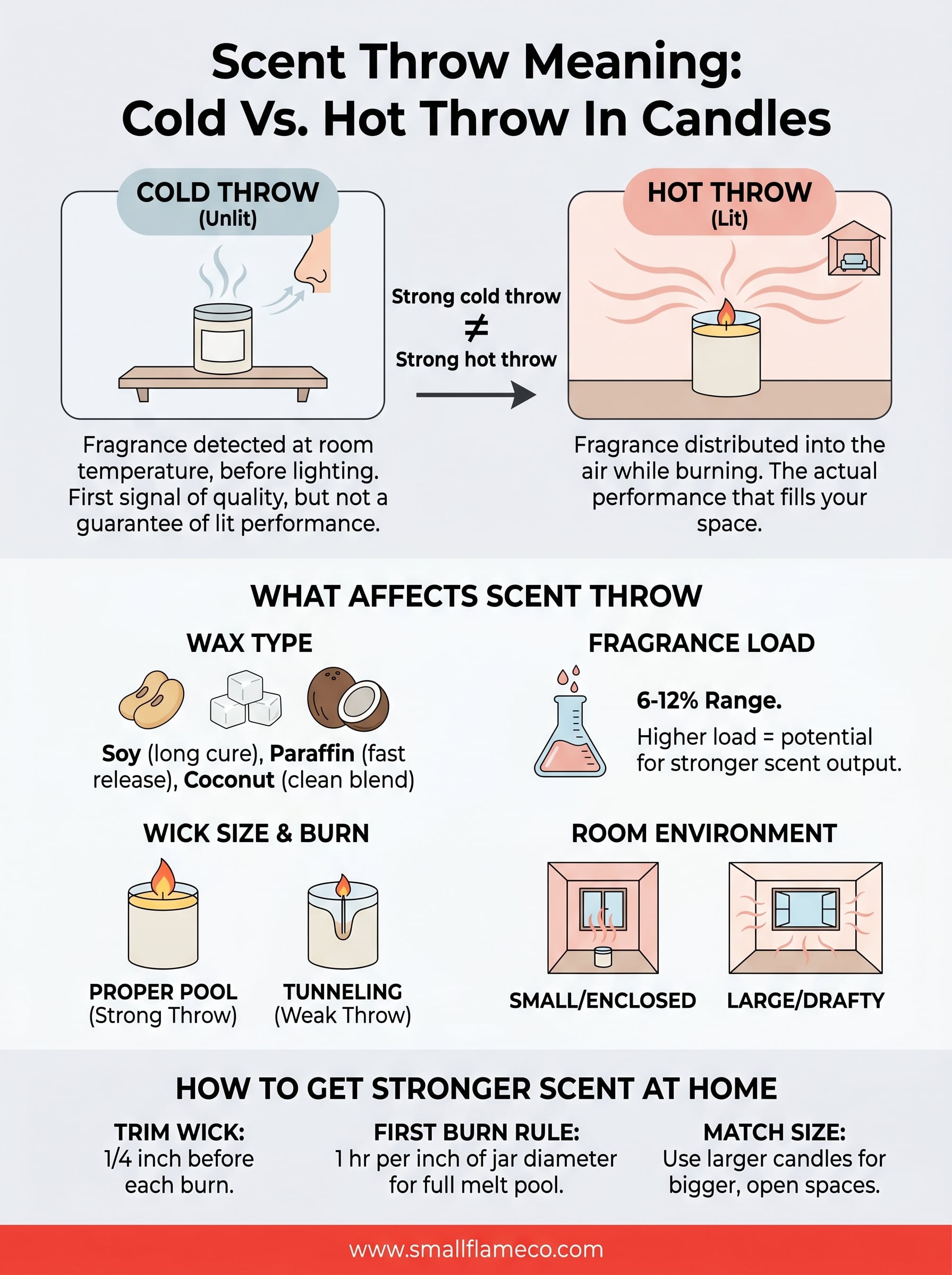
These two terms define the core of scent throw meaning. Cold throw is how a candle smells before lighting. Hot throw is how it smells while burning. Both matter, and a strong cold throw does not guarantee a strong hot throw.
Cold throw: the unlit smell
Cold throw is the fragrance you detect at room temperature when the candle is unlit. You pick this up when you smell a jar in the store or pull a candle from the box. It reflects how well the fragrance oil bonded with the wax during production, and it serves as the first signal of quality.
A strong cold throw tells you the fragrance is present, but it does not tell you how well that scent will project once the wick is lit.
Hot throw: fragrance in action
Hot throw is what actually fills your room. Once lit, the flame heats the wax and pushes fragrance molecules into the air. A candle with strong hot throw noticeably changes how a room smells within 20 to 30 minutes of the melt pool forming.
Your room size matters here. A candle that scents a small bathroom well may barely register in a larger open space, so matching candle size to room size is part of getting real results.
What affects scent throw in a candle
Several variables work together to determine how well a candle performs. Understanding scent throw meaning in practical terms means knowing which of these factors you can spot when shopping, and which ones are locked in at the production stage before the candle ever reaches you.
Wax type and fragrance load
Wax type shapes how fragrance oil binds and releases during a burn. Soy wax holds fragrance well but needs a proper cure time to reach full performance. Paraffin typically delivers a stronger, faster hot throw because of how readily it releases fragrance molecules when heated.
Fragrance load, the percentage of oil blended into the wax, is the single biggest variable a candle maker controls during production.
Fragrance load directly determines the ceiling on scent output. Most quality candles fall between 6% and 12% fragrance oil by weight. Below that range, the result is often a candle that smells pleasant up close but does nothing for your room.
Wick size and burn conditions
Wick size controls how much wax melts at once. A wick too small for the jar diameter creates a narrow melt pool, trapping fragrance in solid wax along the sides where it never releases. Room temperature and airflow also shift results significantly. A drafty space pulls scent away before it builds up, while a closed, warm room lets fragrance accumulate properly.
How to judge scent throw before you buy
You can evaluate scent throw before committing to a purchase if you know what signals to look for. Fragrance descriptions and product details give you useful clues, but testing and reading reviews strategically will tell you far more than any marketing copy on a label.
Test cold throw in the store or with a sampler
When you pick up an unlit candle, take a slow sniff about two to three inches from the jar opening, not with your nose pressed directly to the wax. A candle with a solid cold throw registers clearly at that distance. If you struggle to detect fragrance at all, the hot throw will likely disappoint you once you light it.
Samplers exist precisely for this reason. A small, lower-cost option lets you test real performance before you invest in a full-size candle.
What to look for in reviews
Customer reviews are the most reliable window into actual hot throw performance. Look specifically for comments that mention room size alongside fragrance strength, since that pairing gives you the clearest picture of real-world scent throw meaning. Ignore vague reviews that only describe the scent profile without mentioning how well the candle filled the space during a burn. Those comments tell you nothing useful about performance.
How to get a stronger scent at home
Once you understand scent throw meaning, you can take simple steps to improve performance from candles you already own. Most weak-scent problems come from controllable factors in your space, not from a defective candle.
Burn correctly from the first use
First burns set the baseline for every burn that follows. Always let your candle run long enough to form a complete melt pool that reaches the jar's edges before you extinguish it. Skipping this step causes tunneling, which permanently traps fragrance oil in solid wax along the sides where it never releases.
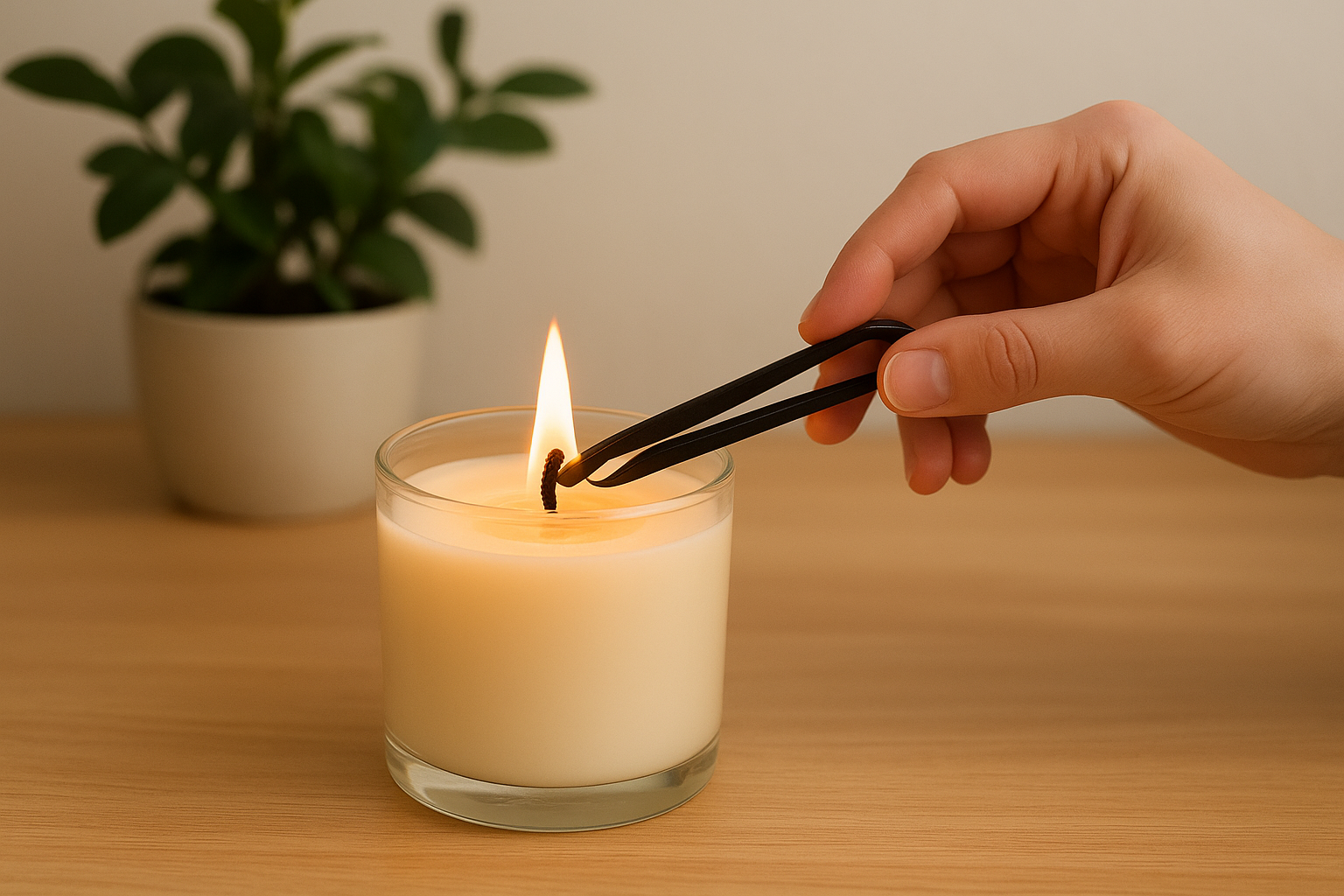
A full first burn is the single most impactful step you can take to protect your candle's long-term scent output.
- Aim for one hour of burn time per inch of jar diameter on that first session
- Trim your wick to 1/4 inch before each burn to maintain a clean, consistent melt pool temperature
Control your room environment
Room size and airflow directly shape how fragrance accumulates around you. Burn your candle in a smaller, enclosed space to let scent build before it disperses. Keep windows closed and eliminate drafts near the flame, since moving air pulls fragrance away before it has a chance to settle into the room.
Final takeaway
Scent throw meaning comes down to one core idea: how effectively a candle moves fragrance from the wax into your room. Cold throw tells you what a candle smells like unlit, while hot throw tells you how it actually performs once the flame heats the wax. Both matter when you're choosing a candle that will genuinely change how your space feels.
Your results at home depend on more than just the candle itself. Burn habits, room size, and wick care all shape what you experience, so understanding the basics puts you in control of your fragrance results rather than guessing why a candle underperforms.
If you want candles built specifically for strong scent throw, Small Flame uses a premium coconut-soy wax blend that delivers clean, long-lasting fragrance on both cold and hot throw. Browse the hand-poured coconut wax candle collection and find a scent that actually fills your room.