

9 Best Candle Dye For Soy Wax: Liquid & Chip Picks (2026)
Soy wax is gorgeous to work with, until you try to color it. If you've ever poured what you thought would be a rich, saturated candle only to pull out something pale and frosty, you already know: not every dye plays nice with soy. Finding the best candle dye for soy wax takes real trial and error, and the wrong pick can wreck an entire batch with mottling, poor scent throw, or uneven color.
At Small Flame Candle Company, we hand-pour every candle we sell, so we've burned through our share of dye chips and liquid dyes figuring out what actually delivers. That hands-on experience is exactly what shaped this list. We've tested products, read through countless candlemaker forums and community reviews, and compared results across different soy wax blends to separate the reliable performers from the overhyped ones.
Below, you'll find nine liquid dyes and dye chips that consistently produce vibrant, even color in soy wax, with honest notes on compatibility, frosting, and value. Whether you're pouring your first batch or your five-hundredth, this guide will help you pick the right dye and skip the guesswork.
1. CandleScience liquid candle dye
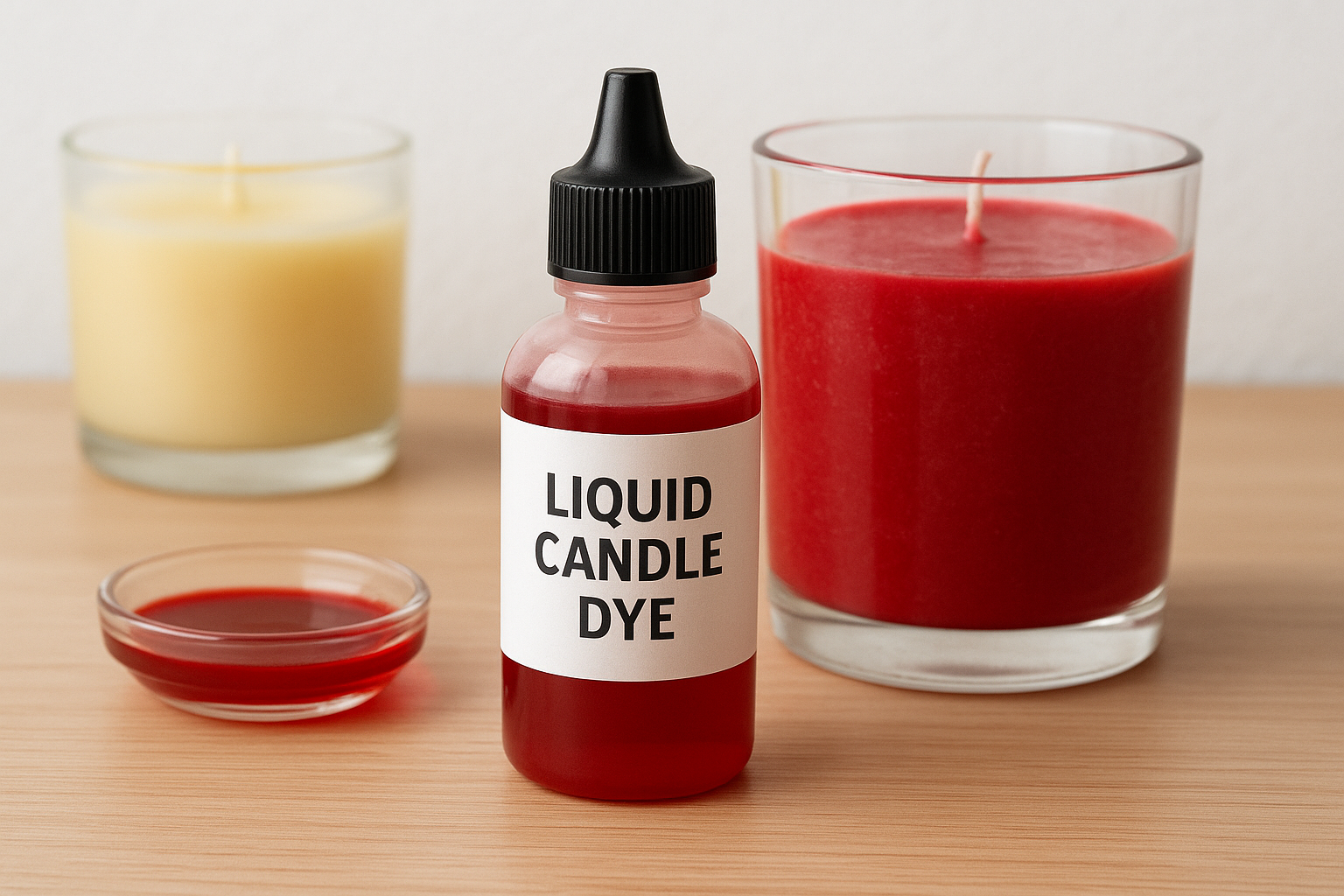
CandleScience is one of the most well-known names in the candle supply space, and their liquid candle dye earns that reputation honestly. It's formulated specifically for candle wax, which means you're not improvising with cosmetic or fabric colorants that can clog wicks or disrupt scent throw.
Color performance in soy wax
CandleScience liquid dye delivers strong, consistent color saturation in soy wax across a wide range of shades. Unlike some dyes that look vibrant in the melted wax but fade dramatically on cooling, this one holds its depth reasonably well through the pour and cure process. You can also layer or blend colors without much muddiness, which gives you flexibility when developing custom palettes.
Frosting and finish notes
Frosting is a natural characteristic of soy wax, and no dye eliminates it entirely. That said, CandleScience's liquid formula disperses evenly through the wax and doesn't contribute additional surface irregularities. Your finished candle will likely show some natural frosting over time, but it won't be made worse by the dye itself.
Frosting in soy is cosmetic, not a sign of a failed batch, and a quality dye won't accelerate it.
How to dose and mix it
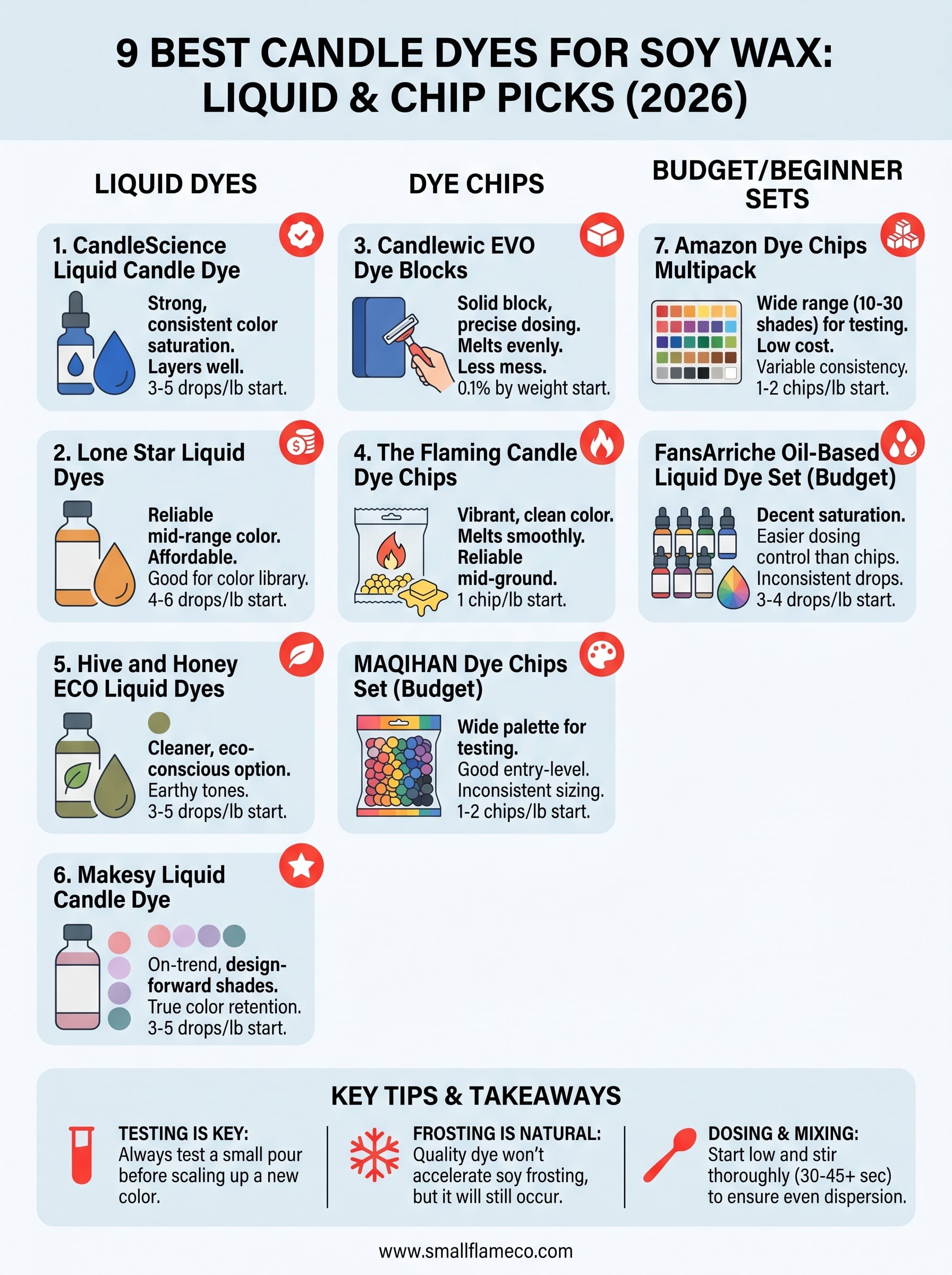
Start with 3 to 5 drops per pound of wax and adjust upward from there. Add the dye to your wax while it's fully melted and stir thoroughly for at least 30 seconds to make sure the color is fully incorporated before you add fragrance oil.
Best for
This dye works particularly well for small to mid-size production batches where color consistency matters. It's also a solid pick if you're working across multiple colorways and want a predictable baseline to start from.
What to watch out for
Liquid dyes can stain surfaces, containers, and skin quickly, so protect your workspace and wear gloves. At high concentrations, some darker shades like red and burgundy may slightly affect wick performance, so always test before scaling up a new color.
Pricing and sizes
CandleScience sells their liquid dyes in 1-ounce and 4-ounce bottles, with the 1-ounce option typically priced under $5. The 4-ounce size offers better value per use if you're producing volume and working with the same core colors regularly.
2. Lone Star liquid dyes
Lone Star Candle Supply has built a steady following among hobbyists and small-batch producers who want reliable color without paying premium prices. Their liquid dye line covers a broad color range and works well with the soy wax blends most candlemakers use regularly. If you're searching for the best candle dye for soy wax on a tighter budget, Lone Star is worth a close look.
Color performance in soy wax
Lone Star liquid dyes produce good mid-range color saturation in soy wax. The results skew slightly lighter than CandleScience in side-by-side pours, but bumping up your dose closes most of that gap. Blending two shades together is straightforward, and the colors stay stable through the cool-down phase without significant shift.
Frosting and finish notes
The dye disperses cleanly and doesn't introduce any additional surface texture issues. Your candle will still frost naturally over time, but Lone Star's formula doesn't accelerate that process or create uneven patches in the finish.
Natural soy frosting is unavoidable, but a clean-dispersing dye keeps the surface looking intentional rather than flawed.
How to dose and mix it
Start at 4 to 6 drops per pound of wax, stirring the dye in thoroughly before adding fragrance. Richer shades like navy or forest green may need a few extra drops to hit full saturation.
Best for
Lone Star works well for beginner to intermediate makers building out a full color library without committing to high-cost supplies upfront.
What to watch out for
Some darker pigments can settle slightly if your wax sits too long before pouring, so stir again right before you pour.
Pricing and sizes
Lone Star sells liquid dyes in 1-ounce bottles, typically priced between $2 and $4, making them one of the more affordable per-unit options available from a dedicated candle supplier.
3. Candlewic EVO dye blocks
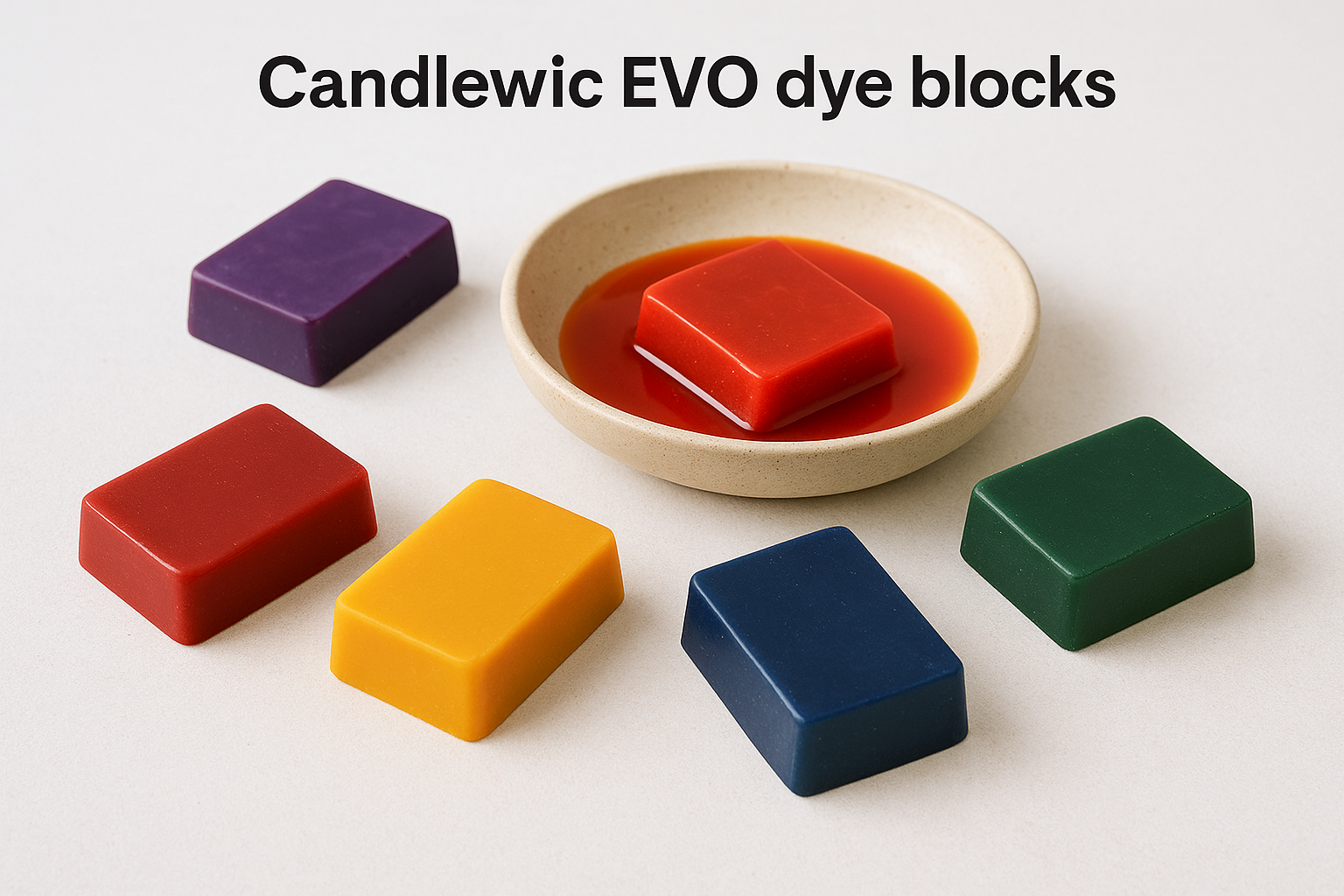
Candlewic's EVO dye blocks take a different approach than liquid dyes, using a solid block format that appeals to makers who want precise, mess-free dosing. Candlewic has been supplying candlemakers for decades, and the EVO line reflects that depth of formulation experience. If you're hunting for the best candle dye for soy wax in block form, these belong on your shortlist.
Color performance in soy wax
EVO dye blocks produce rich, consistent color in soy wax when you use them at the right concentration. The solid format melts gradually into your wax, which helps the dye distribute evenly throughout the batch. Colors hold well through cooling without significant fading or unexpected shifting.
Frosting and finish notes
These blocks don't introduce surface problems on their own. Expect natural soy frosting to appear over time, but the EVO formula keeps your finished candle looking clean and uniform rather than blotchy.
A dye that melts fully into your wax will always outperform one that leaves residue near the surface.
How to dose and mix it
Shave or chip off small pieces and add them to your fully melted wax, starting at roughly 0.1% by weight and adjusting upward for deeper shades. Stir thoroughly until the color is completely even before adding fragrance oil.
Best for
EVO blocks work well for mid-volume makers who want repeatable, batch-to-batch color consistency without the spill risk of liquid dyes.
What to watch out for
Large, unshaved block pieces can leave uneven color pockets in your wax, so always shave finely and stir longer than you think you need to.
Pricing and sizes
Candlewic sells EVO blocks in small and bulk quantities, with starter amounts typically available for under $10, making them easy to test before committing to larger orders.
4. The Flaming Candle dye chips
The Flaming Candle is a well-regarded candle supply company that offers dye chips designed specifically for candle wax, and their product holds up well in soy-specific applications. If you're comparing options for the best candle dye for soy wax in chip format, this brand delivers a solid middle-ground between budget picks and premium formulations.
Color performance in soy wax
The Flaming Candle dye chips produce vibrant, clean color in soy wax that holds well through cooling. The chip format melts smoothly and integrates fully into the wax without clumping, giving you an even result across the entire pour.
Frosting and finish notes
These chips don't introduce surface problems beyond what soy naturally produces. Your candle will still frost over time, but the color beneath stays uniform and consistent rather than patchy or streaked.
Chip-format dyes tend to disperse more predictably than liquid dyes during larger batch pours.
How to dose and mix it
Add chips to your fully melted wax and stir until completely dissolved before adding fragrance oil. A starting point of one chip per pound of wax works well for lighter shades, with additional chips added incrementally for deeper saturation.
Best for
These chips suit hobbyists and small-batch makers who prefer a no-mess, easy-to-measure format and want reliable results across a wide range of standard colors.
What to watch out for
Undissolved chip fragments can pool near the bottom of your pour vessel and create uneven color pockets in finished candles. Stir longer than feels necessary to avoid this.
Pricing and sizes
The Flaming Candle sells chips in small packs and larger bulk bags, with entry-level quantities typically priced under $8, making test orders easy to justify.
5. Hive and Honey ECO liquid dyes
Hive and Honey positions their ECO liquid dye line as a cleaner, eco-conscious option for candlemakers who care about what goes into their products. If you're looking for the best candle dye for soy wax that skips synthetic solvent carriers, this line is worth testing. The brand focuses specifically on candle supply, so the formulations are built with wax compatibility in mind rather than adapted from other industries.
Color performance in soy wax
Hive and Honey ECO dyes deliver solid color saturation in soy wax, though the palette leans toward earthy, botanical-inspired tones rather than ultra-bright primaries. Colors hold well through the cooling phase without significant fading, which makes them reliable for production batches where consistency matters.
Frosting and finish notes
The formula disperses cleanly and doesn't introduce surface irregularities beyond what soy naturally produces. Your finished candle will still develop standard soy frosting over time, but the dye keeps the overall finish looking even and uniform.
A clean-dispersing liquid dye will always give you a more consistent result than one with poor solubility in soy wax.
How to dose and mix it
Add 3 to 5 drops per pound of wax to fully melted soy, then stir thoroughly for at least 30 seconds before adding fragrance oil.
Best for
These dyes suit eco-focused makers and anyone building a natural or organic-adjacent candle brand where ingredient transparency matters to your customers.
What to watch out for
The available color range is narrower than what larger suppliers offer, so if you need bold, saturated jewel tones, you may find the palette limiting.
Pricing and sizes
Hive and Honey ECO dyes typically come in 1-ounce bottles priced between $4 and $6, with occasional bundle options that bring the per-bottle cost down slightly.
6. Makesy liquid candle dye
Makesy has grown quickly as a candle supply brand by focusing on aesthetically driven makers who care as much about how their products look as how they perform. Their liquid candle dye line reflects that focus, with a curated palette built around on-trend, design-forward shades that suit modern home decor. If you're searching for the best candle dye for soy wax and want your color choices to feel intentional, Makesy deserves a spot on your shortlist.
Color performance in soy wax
Makesy liquid dyes deliver strong, clean color in soy wax with solid saturation that holds through cooling and curing. The formula integrates smoothly into melted wax, and the color stays true without unexpected shifting toward yellow or gray tones, which is a common problem with dyes not formulated specifically for soy blends.
Frosting and finish notes
These dyes disperse evenly and don't contribute additional surface irregularities beyond what soy naturally produces. Your finished candle will still frost over time, but the overall finish stays clean and uniform rather than blotchy or streaked.
Soy wax will always frost to some degree, and a well-formulated dye keeps that frosting from looking like a mistake.
How to dose and mix it
Add 3 to 5 drops per pound of wax to fully melted soy and stir thoroughly before adding fragrance oil. Richer shades may need a few extra drops to reach full saturation.
Best for
Makesy dyes suit brand-conscious small-batch makers who want candle colors that align with current home decor trends and a polished visual identity.
What to watch out for
The palette skews toward neutrals and pastels, so if you need bold, saturated primaries, the color range may feel limiting compared to larger suppliers.
Pricing and sizes
Makesy sells liquid dyes in half-ounce and 1-ounce bottles, with prices typically between $4 and $7 depending on the shade and size selected.
7. Amazon dye chips multipack
If you're just getting started and want to test a wide range of colors before committing to a specialty supplier, Amazon dye chip multipacks are a practical entry point. Brands like Candle Dye Blocks by CK Products and similar multicolor sets give you 10 to 30 shades in a single order, which lets you experiment with color blending and find your preferred palette without buying individual colors one at a time.
Color performance in soy wax
Most Amazon dye chip multipacks produce acceptable color in soy wax, though saturation tends to run lighter than what dedicated candle supply brands offer. You can compensate by increasing your chip count per pound, but results vary more batch to batch compared to purpose-built soy dyes.
Frosting and finish notes
These chips disperse reasonably well in fully melted soy wax. You'll still see standard soy frosting develop over time, but the dye itself doesn't typically introduce additional surface problems when you stir thoroughly.
Always melt your chips fully before pouring to avoid color streaks in the finished candle.
How to dose and mix it
Start with one to two chips per pound of wax and add more incrementally until you reach your target shade. Stir for at least 45 seconds to make sure the color is fully absorbed.
Best for
These multipacks suit absolute beginners testing the best candle dye for soy wax on a minimal budget before investing in dedicated suppliers.
What to watch out for
Color consistency between batches is harder to control since chip sizes vary within packs.
Pricing and sizes
Most multipacks run between $8 and $15 for 20 to 30 chips, making them one of the lowest-cost ways to stock a full color range at once.
8. Two more budget-friendly dye sets
When you're building out your color toolkit without spending much upfront, these two sets offer solid entry-level performance for soy wax at a low cost. Neither replaces a dedicated candle supplier long-term, but both give you a workable starting point for testing shades and refining your process.
Pick A: FansArriche oil-based liquid dye set
FansArriche sells a multi-bottle oil-based liquid dye set that covers a broad color range in a single purchase. The oil-based carrier blends smoothly into melted soy wax and produces decent saturation across most shades in the kit.
Pick B: MAQIHAN dye chips set
MAQIHAN offers a chip-format set that typically includes 20 or more colors. The chips melt cleanly into fully melted soy wax and give you a fast way to test a wide palette before committing to larger quantities from a specialty supplier.
Which one to choose for soy wax
If you prefer liquid dyes and want slightly easier dosing control, FansArriche is the better pick. If you want less mess and a larger color variety in one order, MAQIHAN's chip set edges ahead for beginners exploring the best candle dye for soy wax on a tight budget.
How to dose and mix them
Add 3 to 4 drops per pound for FansArriche, or one to two chips per pound for MAQIHAN. Stir thoroughly until the color is fully incorporated before adding any fragrance oil.
Always test a small pour before committing an entire batch to a new dye, regardless of format.
What to watch out for
Both sets show inconsistent chip or drop sizing, which makes exact batch-to-batch replication difficult. Treat these as testing tools rather than production staples.
Pricing and sizes
Both sets typically run between $10 and $16 for 20-plus colors, making them among the most cost-efficient ways to stock a starter palette.
Next steps
You now have a clear picture of which dyes actually work in soy wax and why. The best candle dye for soy wax comes down to your priorities: pick a liquid formula from CandleScience or Lone Star if you want precise control, or go with dye chips from The Flaming Candle or Candlewic EVO if you prefer less mess and easy batch repeatability. Whatever you choose, always test a small pour first before scaling up a new color in production.
Once your colors are dialed in, the next step is making sure your wax, wick, and fragrance work together just as well. At Small Flame Candle Co., we use a premium coconut-soy wax blend with toxin-free fragrance oils to get a clean, consistent burn in every candle we pour. If you want to see what that combination looks like in a finished product, browse our hand-poured coconut wax candles and find a scent worth building your next batch around.