

Bath And Body Works Candle Burn Time: 1-Wick Vs 3-Wick Hrs
Before you grab another three-wick off the shelf, it helps to know exactly what you're paying for. Bath and Body Works candle burn time is one of the most common questions candle buyers ask, and for good reason. A candle that burns out in half the time you expected feels like wasted money, no matter how good it smells.
Bath & Body Works lists official burn time estimates on their packaging, but those numbers don't always match what happens on your coffee table. Wick trimming habits, room size, drafts, and even the fragrance itself can shorten or extend how long a candle actually lasts. The gap between the label and reality matters, especially when you're comparing single-wick versus three-wick options at different price points.
As hand-pour candle makers at Small Flame Candle Company, we spend a lot of time thinking about burn performance, it's central to how we develop our own products. That hands-on experience gives us a practical lens for breaking down burn time claims and helping you figure out which candle format genuinely delivers the best value per hour of burn. Below, we'll walk through the official numbers, real-world results, and what actually affects how long these candles last.
What Bath and Body Works burn time means
Burn time refers to the total number of hours a candle can produce a flame from the first light to the point the wax is fully consumed. Bath & Body Works prints an estimated burn time on the bottom or side of most of their candles, giving you a rough benchmark for how long the product should last under normal conditions. That number is not a guarantee. It is a figure derived from controlled testing in a lab setting, which rarely matches the environment in your home.
How burn time is calculated
Candle brands test burn time by burning candles in a draft-free, climate-controlled room at a consistent temperature, typically trimming the wick to a standard length between each burn session. Sessions usually run for four hours at a time, which is considered the safe maximum for most candles. The brand records how many total hours the candle burns before the wax is gone, then prints that figure on the label.
The number on the label reflects ideal conditions, not the conditions in your living room.
Your home introduces variables that a testing lab eliminates entirely. Open windows, ceiling fans, air conditioning vents, and even foot traffic near a candle can all shorten the burn. These factors pull the flame sideways, which causes uneven melting and faster wax consumption. So when Bath & Body Works lists a burn time of 25 to 45 hours on a three-wick candle, that range already accounts for some variation, but it still assumes a relatively controlled burn environment.
What the burn time range actually tells you
Bath & Body Works uses a range rather than a single number for most of their candles, and that range carries meaningful information. The low end reflects a candle burned carelessly, with an untrimmed wick, in a drafty room, for sessions that run too long. The high end reflects a candle burned with proper care: wick trimmed before every use, sessions capped at four hours, and the candle placed away from air movement.
Most buyers land somewhere in the middle. If you treat the lower number as your realistic expectation, you will rarely feel shortchanged. Treating the upper number as the goal gives you something worth working toward with good habits.
Why wick count changes the math
A single-wick candle and a three-wick candle do not simply differ in how many flames you see. Three wicks consume wax faster per burn session because they generate more heat, which melts the wax pool more quickly. However, three-wick candles are also larger by design, holding significantly more wax to compensate. This is why the bath and body works candle burn time for a large three-wick can still rival or exceed a small single-wick, even though it burns hotter.
The size of the wax pool matters more than the number of wicks alone. A three-wick candle with a wide diameter needs all three wicks to heat the full pool evenly. Running only one or two wicks on a three-wick candle creates tunneling, where the wax melts in a narrow channel down the center and the outer wax never melts at all. That wasted wax directly reduces your total burn time, regardless of what the label says.
Official burn times for 1-wick and 3-wick
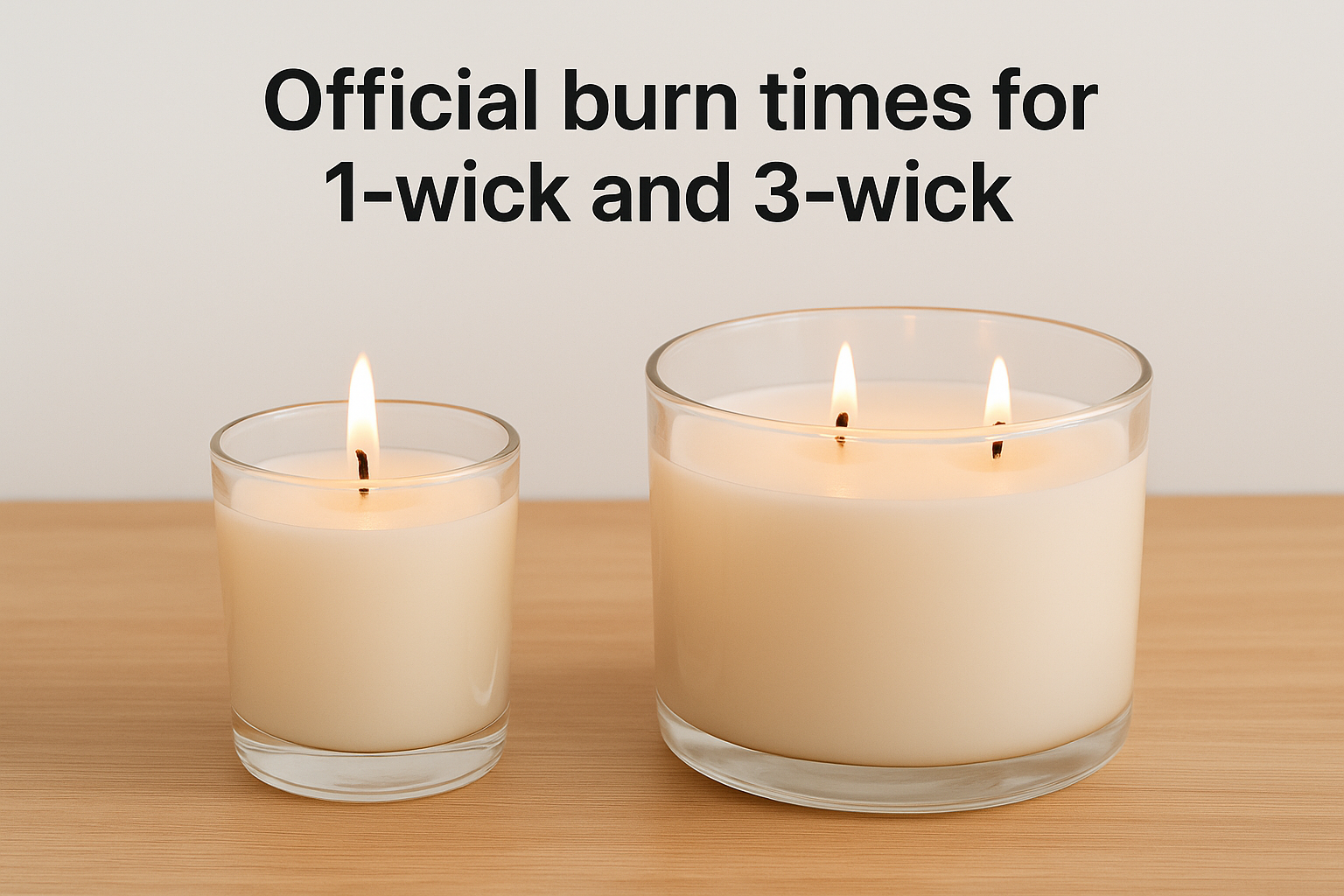
Bath & Body Works publishes estimated burn time ranges on the packaging for their candle lineup. These numbers give you a starting point for comparing value across their sizes, but they reflect lab testing, not your specific home environment. Knowing the official figures for each candle format lets you make a direct comparison before you buy.
Single-wick burn times
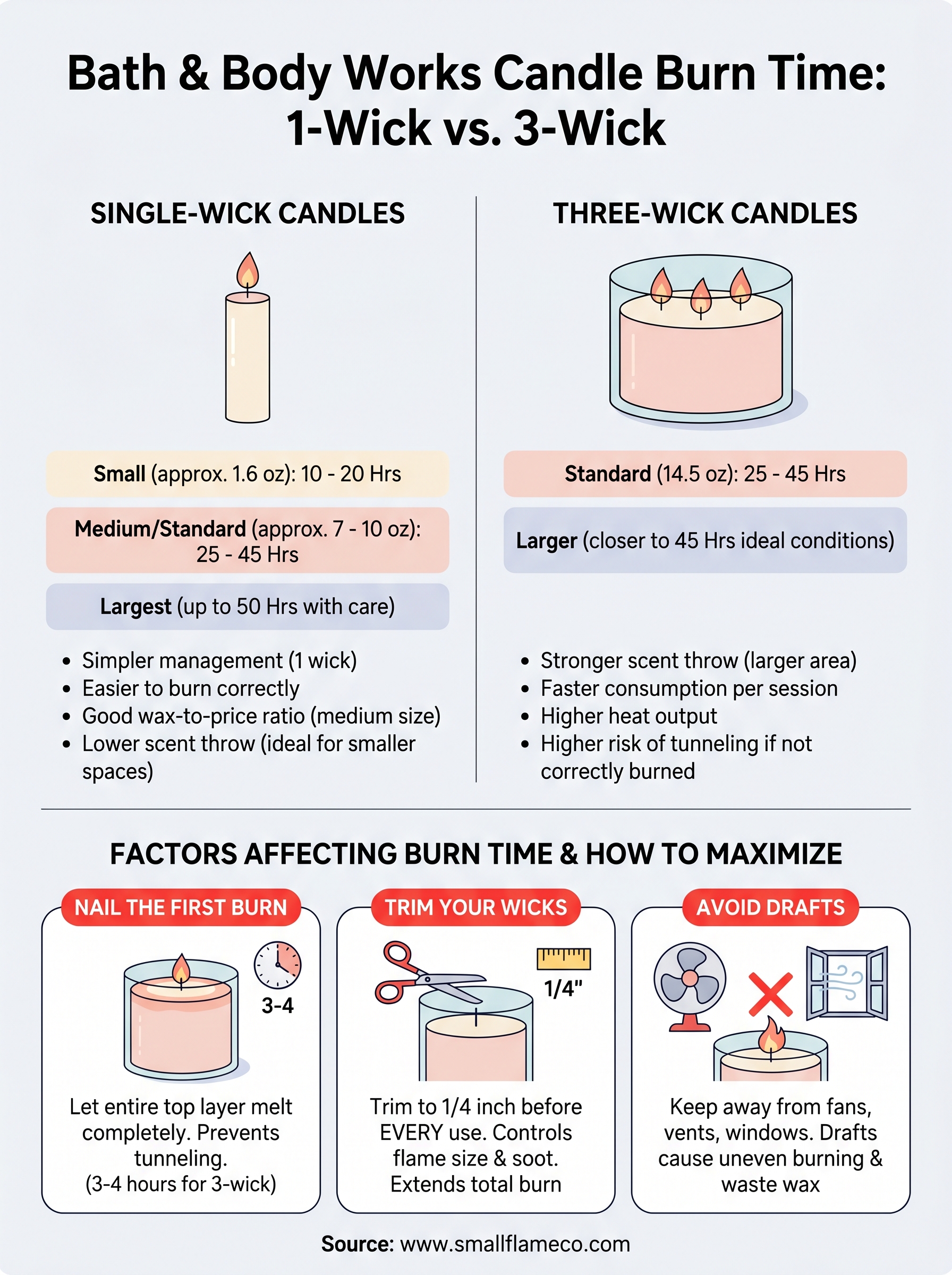
Their single-wick candles come in several sizes, and the burn time scales with the amount of wax. Small single-wick options (around 1.6 oz) typically deliver 10 to 20 hours, while medium and standard sizes (around 7 to 10 oz) push into the 25 to 45 hour range. Their largest single-wick candles can reach up to 50 hours when burned with care and consistent wick maintenance between sessions.
For the best burn time per dollar on a single-wick, the medium size tends to offer the strongest ratio of wax volume to price.
Single-wick candles are also simpler to manage. You only have one wick to trim, one flame to monitor, and one concentrated point of heat working through the wax. That simplicity makes them easier to burn correctly, which raises the odds that you'll land closer to the upper end of the stated range rather than the lower end.
Three-wick burn times
The standard three-wick candle from Bath & Body Works weighs in at 14.5 oz and carries an official burn time of 25 to 45 hours. That range looks wide because it genuinely is. Burn habits, room conditions, and wick care create significant variation in real-world results. Their larger three-wick format pushes that estimate slightly higher, closer to 45 hours under ideal conditions.
Comparing bath and body works candle burn time across formats shows that the three-wick does not automatically outlast the single-wick. The larger wax volume offsets the faster burn rate from three flames, but only if all three wicks stay lit and the wax pool forms correctly across the full surface. Skipping a proper first burn, where the entire top layer of wax melts edge to edge, creates tunneling that pushes your actual results toward the lower end of the range on every subsequent session.
Why your candle may burn faster or slower
The official burn time estimates Bath & Body Works prints on their candles come from controlled lab testing, so any factor that diverges from those conditions will push your results in one direction or the other. Understanding what actually drives variation helps you take real control of how long your candle lasts, rather than guessing why it burned through faster than expected.
Air movement and room conditions
Drafts are the single biggest burn-time killer for most candles. When air moves across the flame, it pushes heat sideways instead of directing it straight down into the wax pool. That creates an uneven melt, wastes wax on one side, and pulls your total bath and body works candle burn time below what the label promises. Even a ceiling fan running on low across the room can shorten your results noticeably.
Position your candle away from vents, open windows, and fans to protect the flame and the wax pool beneath it.
Common sources of air movement to watch for include:
- Air conditioning and heating vents directly above or beside the candle
- Open windows or sliding doors nearby
- Ceiling fans, even on low settings
- High-traffic areas where people walk past frequently
Wick length and burn session duration
An untrimmed wick burns hotter and faster than a properly maintained one. When the wick grows too long, it produces a larger flame that melts wax at an accelerated rate, pulling the wax pool down faster per hour. Trimming the wick to about one quarter of an inch before each burn session keeps the flame at a controlled size and slows wax consumption meaningfully.
Burn session length adds up too. Sessions longer than four hours cause the wax to overheat, thinning the pool and accelerating fragrance oil evaporation. Keeping sessions to four hours or less lets the wax cool and reset properly between uses, which extends the total number of sessions you get from the candle.
Fragrance load and wax blend
Candles with a high fragrance oil concentration tend to burn slightly faster because fragrance oil has a lower flash point than the wax itself. This factor is smaller than wick length or drafts, but it adds up across the full life of a candle. Heavy fragrance loads can also build up residue on the wick, which affects flame consistency over time.
The wax blend itself also plays a role in how quickly your candle moves through its supply. Softer waxes like soy burn cooler and slower, while paraffin-heavy blends tend to run hotter and consume wax at a faster rate per session.
How to get the longest burn time
Getting the most out of your bath and body works candle burn time comes down to three habits: a proper first burn, consistent wick maintenance, and a controlled environment. None of these require special tools or extra time. They just require doing the right thing at each stage of the candle's life, and the payoff is real, often adding several hours to your total burn compared to skipping them entirely.
Nail the first burn
The first time you light a candle sets the pattern for every burn after it. Wax has memory, meaning it tends to melt in the same path it established during the first session. If you burn a candle for only an hour on the first use, the wax melts in a narrow ring around the wick and never fully reaches the edges. Every future burn follows that same channel, leaving unmelted wax along the walls that you will never recover.
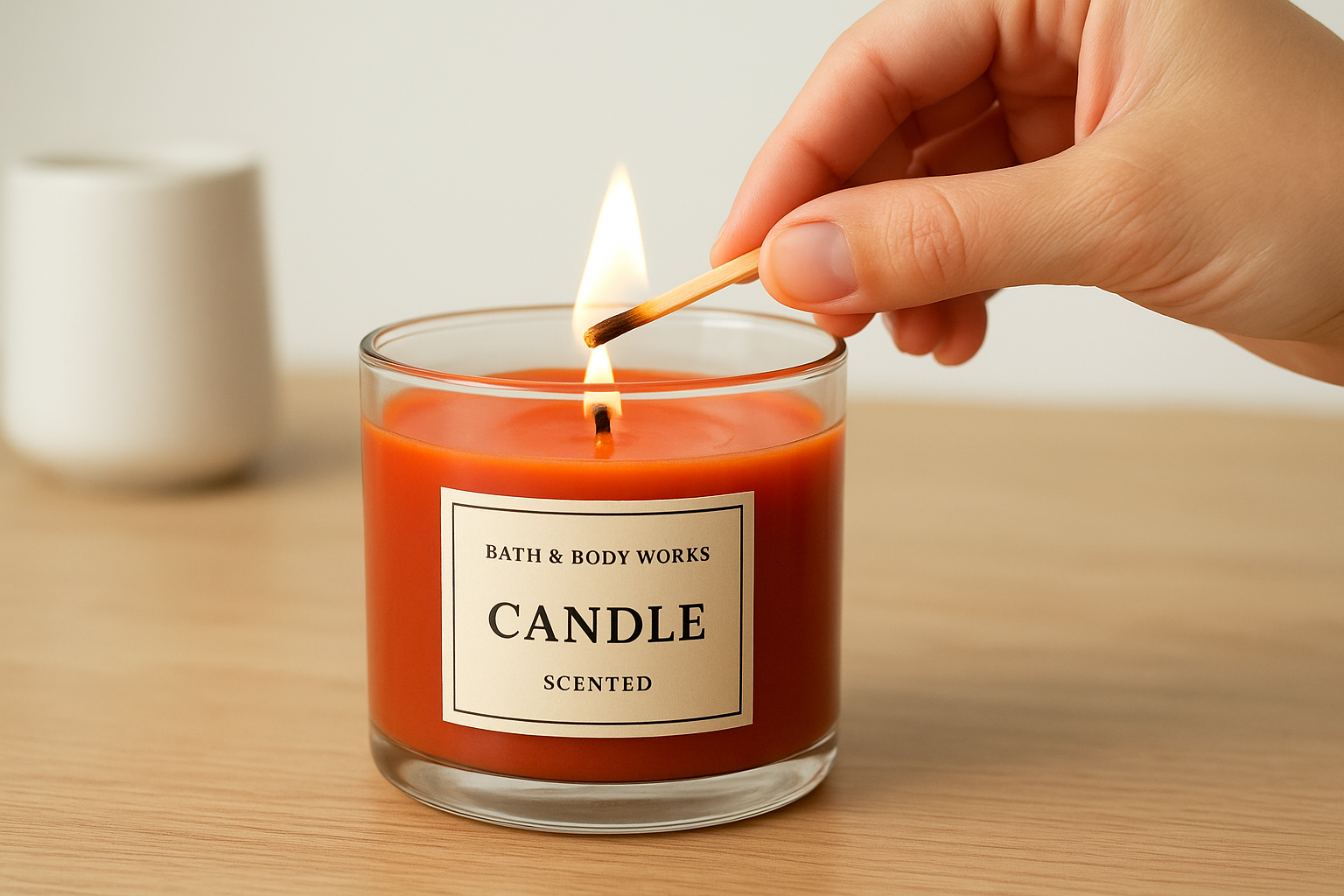
Let the entire top layer of wax melt edge to edge on the first burn before you blow it out.
For a standard three-wick candle, that first full melt typically takes three to four hours. For a single-wick candle, it may take slightly longer depending on the diameter. Set aside the time on the first use and the candle will perform far closer to the upper end of its stated range for the rest of its life.
Trim the wick every time
Trimming the wick to a quarter of an inch before each burn is the single most impactful maintenance step you can take. A long wick produces a larger, hotter flame that consumes wax faster than necessary and leaves black soot residue on the jar walls. Small scissors or a dedicated wick trimmer both work fine for this.
If you notice the flame flickering heavily or growing taller than an inch, that is a sign the wick needs trimming even mid-session. Extinguish the candle, let it cool completely, trim, and relight. It takes two minutes and protects both the wax supply and the jar.
Burn in a controlled space
Placing your candle away from air movement keeps the flame stable and the melt pool even across the full surface. Choose a flat, heat-resistant surface away from windows, vents, and fans. Consistent placement in a low-traffic area means less accidental disruption and a cleaner burn from start to finish.
FAQs and common burn problems
A few questions come up repeatedly when people start paying closer attention to their bath and body works candle burn time. Most problems trace back to one or two habits that are easy to fix once you know what to look for. The answers below cover the most common issues and give you a direct solution for each one.
Why is my candle tunneling?
Tunneling happens when wax melts down the center of the jar in a narrow column while the outer edges stay solid and untouched. The root cause is almost always a burn session that ended too early, particularly on the very first use. Wax memory sets during that first burn, and if the melt pool never reached the edges, every future session follows the same restricted path.
If tunneling has already started, try running a longer burn session (up to four hours) on the next use to encourage the pool to spread outward before the pattern becomes permanent.
Why does my candle keep going out?
A candle that extinguishes itself mid-burn usually has a wick that is either too short or buried in pooled wax. When the wick drowns in the melt pool, the flame loses oxygen and dies. Carefully pour off a small amount of liquid wax to expose more wick length, let the candle cool, then relight. If the wick is too short from over-trimming, use a toothpick to gently reposition it upright before relighting.
Is the three-wick actually worth the price?
That depends on what you value. Three-wick candles throw scent across a larger area because three flames generate more heat and push fragrance oil into the air faster. If you are burning in a big room, the three-wick justifies the cost. For a [small bedroom or bathroom](https://www.smallflameco.com/blogs/news/best-candle-scents-for-bathroom), a single-wick candle delivers strong scent coverage at a lower price point and often burns longer per dollar spent because the smaller jar size suits the space.
Does fragrance type affect how long a candle lasts?
Yes. Candles with heavier fragrance loads burn slightly faster because the fragrance oil burns alongside the wax rather than just evaporating from it. This difference is modest but real across the full life of a candle. Lighter fragrance blends tend to preserve total burn time a bit better, though the gap is smaller than what good wick care or avoiding drafts will accomplish.
Final take
Bath and body works candle burn time comes down to more than what the label says. The official numbers are a useful starting point, but your habits determine where you actually land within that range. Nail the first burn, trim the wick before every session, and keep the candle away from drafts, and you will consistently push toward the upper end of the estimate rather than burning through wax faster than you planned.
The difference between a single-wick and a three-wick is mostly about room size and scent throw, not one being objectively better than the other. Match the candle format to the space, and both formats deliver solid value.
If you want a candle built from the start for a clean, long burn, check out the hand-poured coconut wax candles at Small Flame Candle Company. Coconut-soy wax burns cooler and slower, which means more hours per candle without sacrificing scent.