

How To Prevent Frosting In Soy Candles With Better Cooling
That white, chalky film creeping across the surface of your soy candle isn't a defect in the wax itself, it's frosting, and it's one of the most common frustrations for soy candle makers at every skill level. If you've been searching for how to prevent frosting in soy candles, you already know the problem: you pour a clean, smooth candle, and within hours or days, crystalline white patches start forming on the surface or along the sides of the jar.
Frosting happens because soy wax is a natural, plant-based product. The polymorphic crystals in soy wax want to return to their natural state, and that recrystallization shows up as frost. It won't affect how your candle burns or how it smells, but it can make an otherwise beautiful pour look rough and unfinished. At Small Flame Candle Company, we've worked through this issue across hundreds of hand-poured batches, testing cooling methods, pour temperatures, and wax blends to get the smoothest finish possible on every candle we ship.
This guide breaks down the specific techniques that actually reduce frosting, starting with the factor that makes the biggest difference: how your candles cool after the pour. You'll also find practical advice on wax selection, additives, and environmental controls so you can troubleshoot frosting in your own candle-making process with confidence.
What soy frosting is and why it happens
Soy wax is made from hydrogenated soybean oil, and unlike paraffin, it retains natural polymorphic properties. That means the fatty acid structure inside the wax continues to shift even after the candle has fully hardened. As the wax cools and settles, those fatty acids reorganize into crystalline formations on the surface and along the glass, creating the white, powdery coating you recognize as frosting.
The science behind soy wax crystals
Soy wax contains stearic acid and other saturated fatty acids that go through a process called polymorphic transformation after the wax cools. The molecules shift from one crystal form to another, and this transformation is what drives visible frosting. Your wax is not defective and your candle is not ruined; the crystals are a sign that you're working with a genuinely natural material rather than a synthetic one.
Frosting in soy wax is a natural chemical process, not a manufacturing error. No technique will eliminate it completely, but the right approach can reduce it dramatically.
Temperature swings make this process more visible. When soy wax cools too quickly or unevenly, the crystal growth accelerates, which means more frost and a more pronounced white appearance. When it cools slowly and consistently, the crystals still form, but they tend to be smaller and less noticeable to the naked eye. Understanding this helps you see exactly why cooling conditions are one of the biggest factors in how to prevent frosting in soy candles.
Why frosting shows up when and where it does
Frosting tends to appear first on the top surface of the candle, usually within the first 24 to 48 hours after the pour. You may also notice it forming along the sides of a glass container, especially near the bottom where the wax cools last. Both locations follow the same pattern: wherever temperature gradients are steepest or cooling is most uneven, frosting concentrates.
Fragrance oil also plays a role. Some fragrance oils interfere with how soy wax crystallizes, either slowing the process or accelerating it depending on their chemical composition. High vanillin content, for example, can push wax toward discoloration and uneven crystallization faster than clean, lighter fragrances. The percentage of fragrance oil you add matters too. Going over the recommended fragrance load for your specific wax creates a mixture that doesn't bind cleanly, which speeds up crystal separation and worsens frosting.
Colorants, dyes, and the jar itself can all influence where frosting appears. Clear glass containers make frosting the most visible because there's nothing to obscure the surface or sidewall crystals. Colored or opaque containers don't prevent frosting, but they do make it less obvious to the customer. Knowing these specific variables gives you clear starting points so you can test one change at a time instead of guessing what went wrong with a batch.
Set up a stable cooling environment
Your cooling environment has more influence on frosting than most candle makers expect. The wax doesn't stop changing the moment it solidifies; it keeps shifting at a molecular level for hours after the pour. Keeping your workspace stable in temperature and airflow during that window is one of the most practical steps in how to prevent frosting in soy candles, and it costs nothing to implement if you set up your space correctly before you pour.
Control room temperature and airflow
The ideal room temperature for cooling soy candles sits between 70°F and 75°F. Below that range, the wax surface cools too fast relative to the interior, creating steep temperature gradients that accelerate crystal growth. Above it, the wax takes too long to set, which can lead to sinkholes and uneven texture on top of the frosting problem.
Drafts are one of the biggest hidden causes of surface frosting. Even a ceiling fan running on low creates enough airflow variation to produce visible frost on a batch of otherwise well-poured candles.
Airflow matters as much as temperature. Turn off ceiling fans and air conditioning vents that blow directly toward your cooling area. If your workspace has a vent positioned above or near your pouring table, move the candles to a different surface while they cool. A calm, still-air environment gives the wax the stability it needs to crystallize slowly and evenly across the entire jar rather than in patches.
Use a cooling box or insulated surface
Placing your jars on a cold countertop or tile floor speeds up cooling from the bottom, which is exactly the kind of uneven temperature change that triggers sidewall frosting. Instead, set your jars on a wooden cutting board or folded kitchen towel to insulate the base from whatever cold surface is underneath them. This small change keeps the temperature at the base of the jar much closer to the temperature at the top.
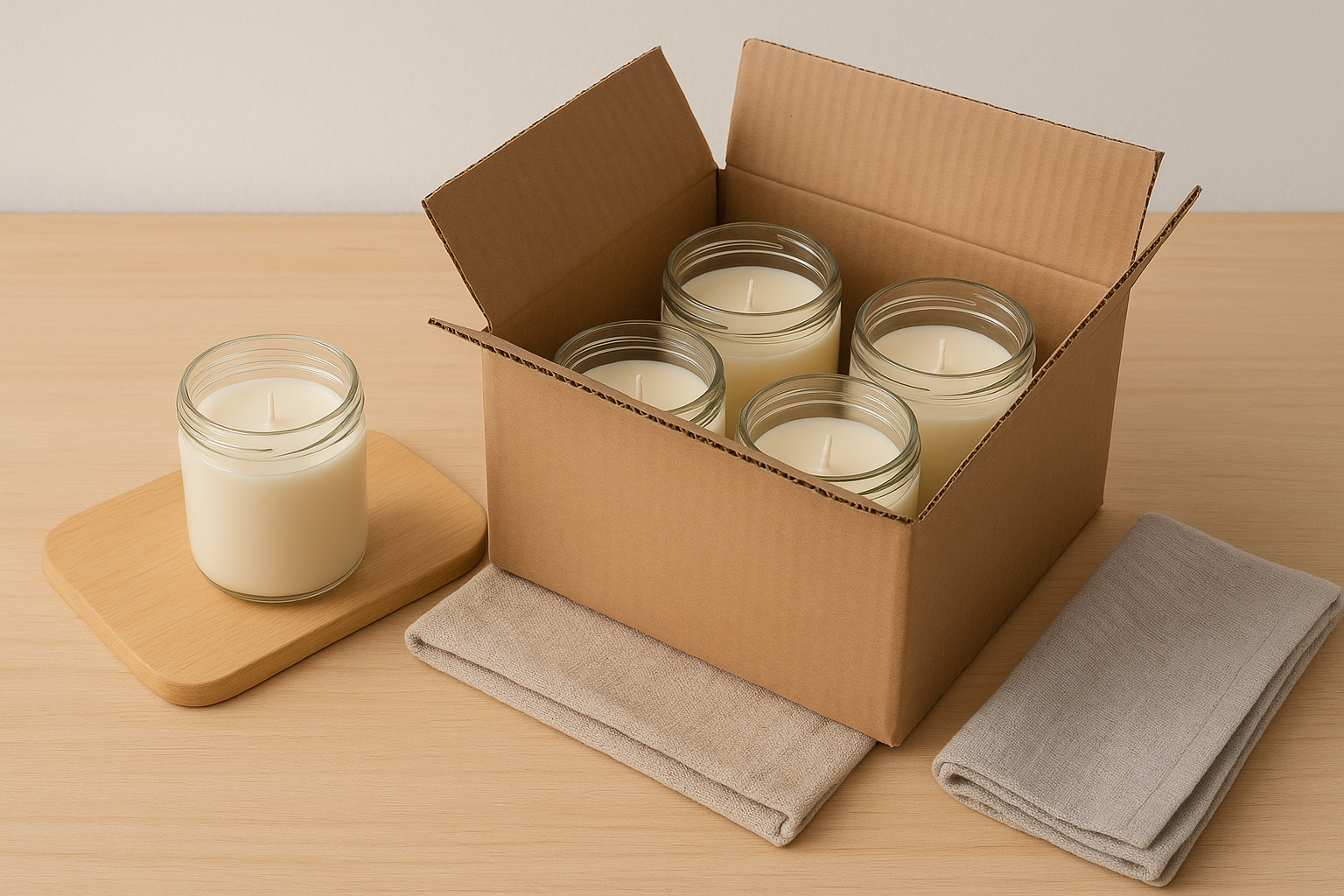
A simple cooling box made from a cardboard box with the flaps folded partway closed gives you even more control. The enclosed space traps ambient heat from the freshly poured wax and slows the overall cooling rate. You don't need specialized equipment; a standard moving box works well for small batches. For larger production runs, use a dedicated interior shelf away from windows, exterior walls, and any door that opens to cold outside air.
Dial in melt, fragrance, and pour temps
Temperature control at every stage of the candle-making process directly affects how much frosting you end up with. Getting your melt temperature, fragrance addition point, and pour temperature right gives the wax a much better chance of cooling evenly. Most frosting problems that candle makers blame on their cooling environment actually start at the stove or hot plate, before the wax ever hits the jar.
Find your melt temperature sweet spot
Most 100% soy waxes melt fully between 170°F and 185°F. You want to bring the wax up to the lower end of that range rather than pushing it hotter than necessary. Overheating soy wax breaks down its natural structure and causes more pronounced polymorphic shifts during cooling, which translates directly into heavier frosting. Use a dedicated thermometer clipped to your pour pitcher so you're reading actual wax temperature rather than guessing based on appearance.
Add fragrance at the right moment
Fragrance oil bonds most effectively with soy wax when the wax sits between 180°F and 185°F at the moment you add it. Adding fragrance to wax that's too cool means it won't fully incorporate, and pockets of unbound fragrance oil accelerate crystal separation as the candle sets. Adding it when the wax is too hot burns off lighter scent molecules and creates a brittle wax structure. Stir your fragrance in for two full minutes using slow, consistent circular strokes to get even distribution throughout the batch.
Fragrance load matters as much as timing. Most soy waxes handle a maximum of 6% to 10% fragrance by weight. Going over that limit creates a wax-to-oil ratio that separates during cooling and causes visible frosting regardless of how carefully you control other variables.
Target a lower pour temperature
This is one of the most reliable techniques in how to prevent frosting in soy candles, and it's also the step most beginners skip. Let your wax cool down to 115°F to 125°F before pouring it into jars. Pouring at this lower temperature means the wax doesn't have as far to travel before it solidifies, which reduces the severity of the temperature gradient between the outer surface and the center mass. Use the table below as a quick reference:
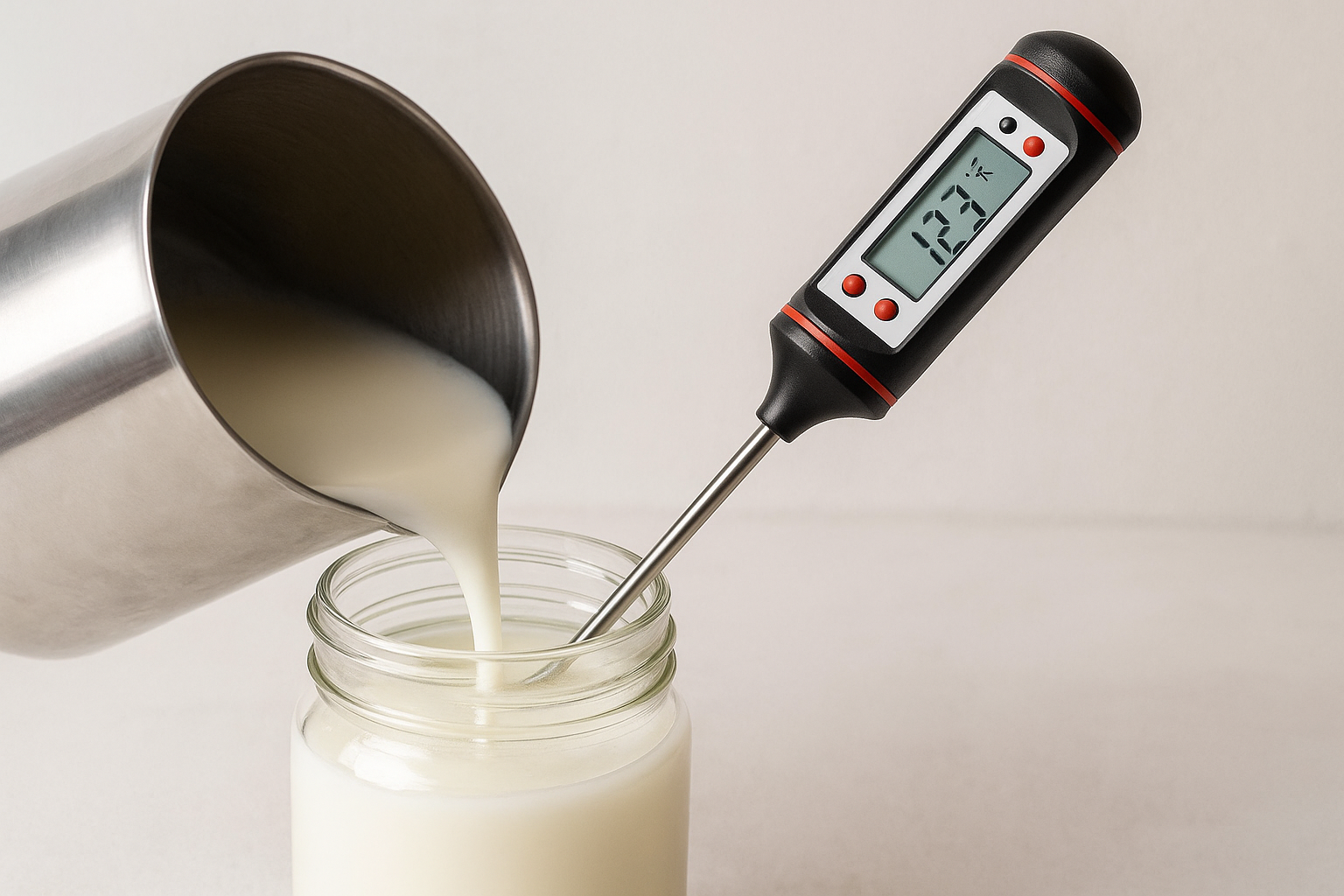
| Wax Stage | Target Temperature |
|---|---|
| Full melt | 175°F to 185°F |
| Add fragrance | 180°F to 185°F |
| Pour into jars | 115°F to 125°F |
Sticking to these ranges consistently across batches gives you a reliable baseline to work from when you're troubleshooting specific frosting issues.
Pouring techniques that reduce crystals
How you physically pour the wax into the jar affects how evenly the wax distributes and how consistently it cools from edge to edge. Uneven pours create hot spots inside the jar that cool at different rates, and those uneven cooling zones are where surface crystals tend to concentrate. Small adjustments to your technique during the pour itself give the wax a smoother path to solidification.
Pre-warm your jars before pouring
Cold jars shock the wax the moment it makes contact with the glass, which is one of the fastest ways to trigger sidewall frosting. Before you pour, place your empty containers in a warm oven set to 150°F to 160°F for about five minutes, then pull them out and pour immediately. The warm glass slows the initial contact cooling and gives the wax more time to spread evenly against the sides before it starts to set.
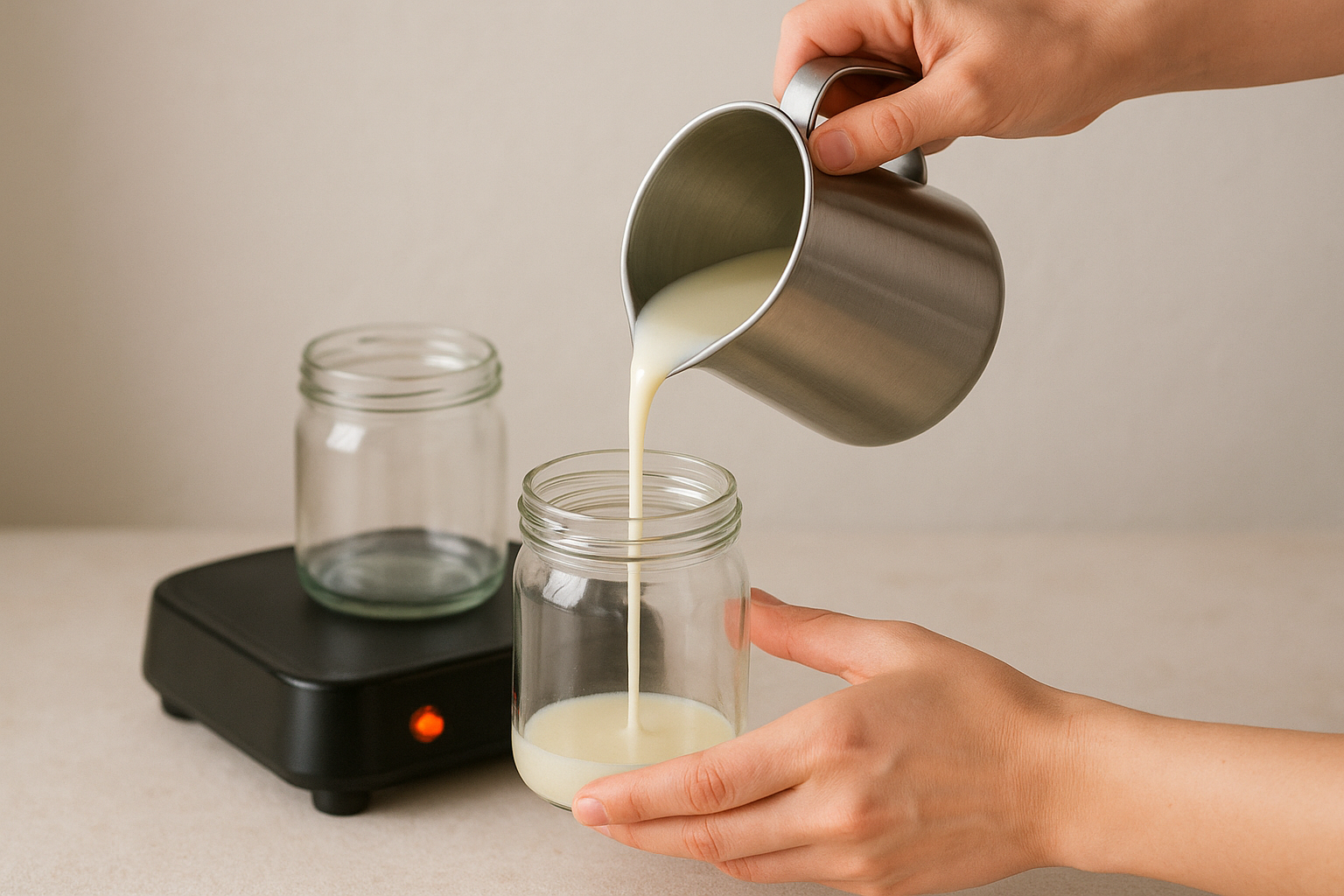
You don't need the jars to be hot, just warmer than room temperature. A jar that feels comfortably warm to the touch is ready to receive the wax. If you don't have oven space, set the jars on a heating pad turned to low for ten minutes before your pour. Either method reduces the temperature gap between the wax and the container, which directly limits crystal growth along the glass walls.
Pre-warming jars is one of the most underused techniques in how to prevent frosting in soy candles, and it costs almost no extra time once it's built into your routine.
Pour in a single, controlled stream
Aim your pour into the center of the jar and let the wax flow outward naturally rather than moving the pitcher around to cover the surface. Pouring in circular motions introduces air pockets and creates uneven wax layers that cool at inconsistent rates. A steady, center-focused stream lets the wax self-level and reach the jar walls at the same temperature all the way around.
Keep the pitcher close to the jar opening, roughly one to two inches above the rim, the whole time you're pouring. Pouring from too high a distance introduces turbulence that traps air and disrupts the even spread of wax across the jar floor. Tip the pitcher slowly and steadily rather than quickly, which gives you better control over flow rate and reduces surface disturbance as the wax settles into place.
Cooling and curing routine for smooth tops
What happens in the first few hours after the pour determines more about your final surface texture than almost any other variable. Soy wax doesn't lock in its final crystal structure the instant it turns solid; it keeps reorganizing internally while the temperature drops. Building a consistent post-pour routine into every batch removes the guesswork and gives you a repeatable path to smoother tops without buying new equipment or switching wax brands.
Let the candle cool undisturbed
Set your freshly poured jars on an insulated surface and leave them alone for a minimum of four hours. Resist the urge to check, touch, or move them during that window. Picking up the jar to inspect the sides introduces vibration that disrupts the wax surface while it's still semi-liquid, which creates ripples and uneven texture that look similar to frosting even though they form differently.
Patience is the cheapest tool in how to prevent frosting in soy candles. Every time you disturb a cooling candle before it fully solidifies, you reset the crystal formation process and increase the odds of visible surface defects.
Room temperature during this four-hour window should stay stable between 70°F and 75°F with no airflow changes. If someone opens a window or turns on an air conditioner while your candles are cooling, that temperature shift can show up as a distinct frost line across the candle surface. Set a timer, note the room conditions when you pour, and check those same conditions again before you consider the cooling phase complete.
Cure your candles before judging the finish
Cooling and curing are two separate steps, and skipping the curing phase is one of the most common reasons candle makers think their cooling adjustments aren't working. After your candles fully solidify, they need an additional 48 to 72 hours of undisturbed rest at room temperature before the wax reaches its final crystal state. During this curing window, some light surface frosting that appeared right after cooling will often fade as the wax stabilizes.
Store your curing candles away from direct sunlight and exterior walls, both of which introduce temperature variation that can intensify frosting during the final stabilization period. A closed interior shelf works well. Once the 48-to-72-hour cure is complete, evaluate the surface under consistent lighting before deciding whether to adjust your next batch.
When to use additives or wax blends
Sometimes temperature control and pouring technique aren't enough on their own, especially if you're working with a 100% soy wax that frosts aggressively or selling in environments where temperature consistency is out of your hands. Additives and wax blends give you an extra layer of protection against frosting without requiring you to overhaul your entire process. The key is knowing which products address frosting specifically and how to incorporate them without disrupting your scent throw or burn quality.
Blend soy wax with coconut or paraffin
Adding 10% to 20% coconut wax to your soy base is one of the most effective ways to reduce polymorphic crystal formation. Coconut wax has a different fatty acid profile than soy, and blending the two disrupts the uniform crystal structure that causes visible frosting. You'll still get the natural, clean-burning benefits of soy while softening the surface finish enough to reduce frost significantly across most fragrance combinations.
Paraffin blends work even faster at suppressing frosting, but they shift your candle away from a natural wax designation, which matters if your brand emphasizes clean or plant-based ingredients.
A small paraffin addition of 5% to 10% by weight creates a hybrid wax that resists frosting better than pure soy and produces a smoother top surface with fewer visible crystals along the glass. Use the table below to decide which blend fits your goals:
| Additive | Frost Reduction | Natural Label Impact |
|---|---|---|
| Coconut wax (10-20%) | High | None |
| Paraffin (5-10%) | Very high | Yes, changes designation |
| Beeswax (5-10%) | Moderate | Minimal |
Add stearic acid for firmer crystal structure
Stearic acid at 1% to 3% by weight gives soy wax a harder, more uniform crystal structure that produces less surface frosting during cooling and curing. You add it directly to your melted wax before you reach your fragrance addition temperature. Stearic acid also improves hot throw and burn time, so it serves multiple purposes in a single adjustment.
This additive works well for candle makers who want to stay close to a natural ingredient list without switching to a blended wax entirely. If you've worked through every other variable in how to prevent frosting in soy candles and frosting still appears on finished batches, stearic acid is a practical next step before committing to a full wax reformulation.
Final checklist for frost-free soy candles
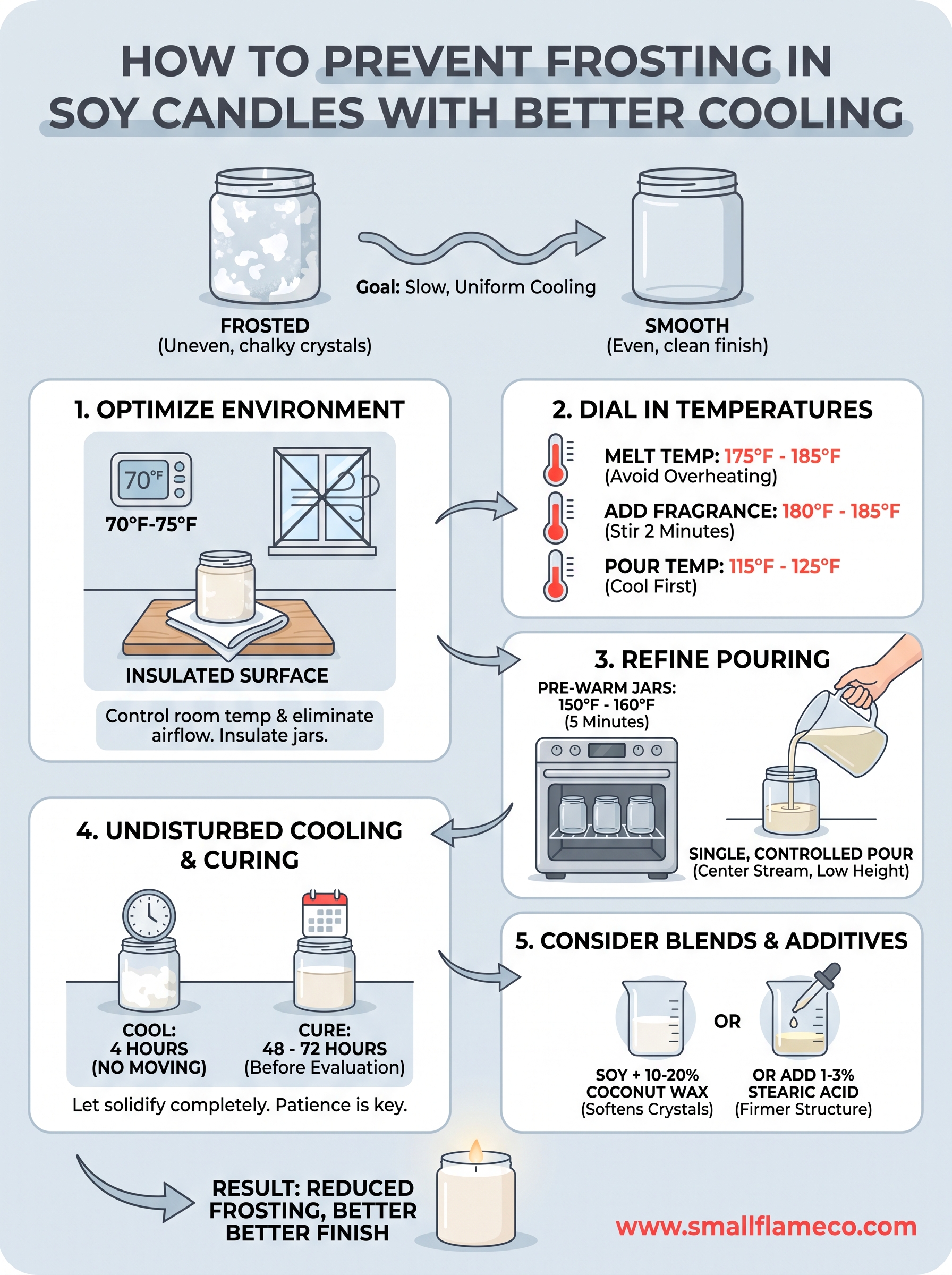
Knowing how to prevent frosting in soy candles comes down to controlling the variables you can actually manage before, during, and after the pour. Run through this checklist before each batch:
- Melt temp: Stay between 175°F and 185°F; avoid overheating
- Fragrance addition: Add at 180°F to 185°F and stir for two full minutes
- Pour temp: Cool wax to 115°F to 125°F before pouring
- Jar prep: Pre-warm containers to 150°F to 160°F before filling
- Room conditions: Keep ambient temp at 70°F to 75°F with no drafts
- Cooling surface: Insulate jar bases with wood or a folded towel
- Cure time: Wait 48 to 72 hours before evaluating your surface finish
- Wax blend: Consider adding 10% to 20% coconut wax for added frost resistance
If you want a head start with a wax blend already optimized for a smooth, clean finish, browse the hand-poured coconut-soy candle collection at Small Flame Candle Company.